The Knights’ loss of Tripoli: the causes, consequences and legacy
The Knights’ 21-year rule over Tripoli was ended by the Ottomans in 1551
A document in the form of a receipt by Charles V, still preserved in the National Library of Malta, was dispatched to Grand Master L’Isle-Adam, bestowing upon the Knights the islands of Malta, Gozo and Comino, “in order that they may perform in peace the duties of religion for the benefit of the Christian community and employ their forces and arms against the perfidious enemies of the Holy Faith” in return for the symbolic annual tribute of a falcon presented on All Saints’ Day to the Viceroy of Sicily.
Yet, as Joseph Attard emphasised in The Knights of Malta, this grant was inseparable from the far more burdensome and strategically exposed possession of Tripoli. Such a condition, though never explicitly foregrounded, was a calculated act of strategic exposure, facing, in the words of the Malta-linked Odyssey – also translated by Fr Victor Xuereb – a “harsh doom” poised to grip the Mediterranean and European world for centuries to come.
Within this framework, a distinct geopolitical constellation emerges, shaped by a nearly continuous geographic plane stretching from Sicily through Malta to Tripoli. The narrow maritime corridor between Sicily and Malta, and the somewhat wider distance to the North African coast, created a single strategic axis at the dawn of the modern era. This alignment placed the Hospitallers at the intersection of European defensive priorities and imperial ambitions, projecting their mission directly into the contested frontier between Christian and Ottoman spheres of power.
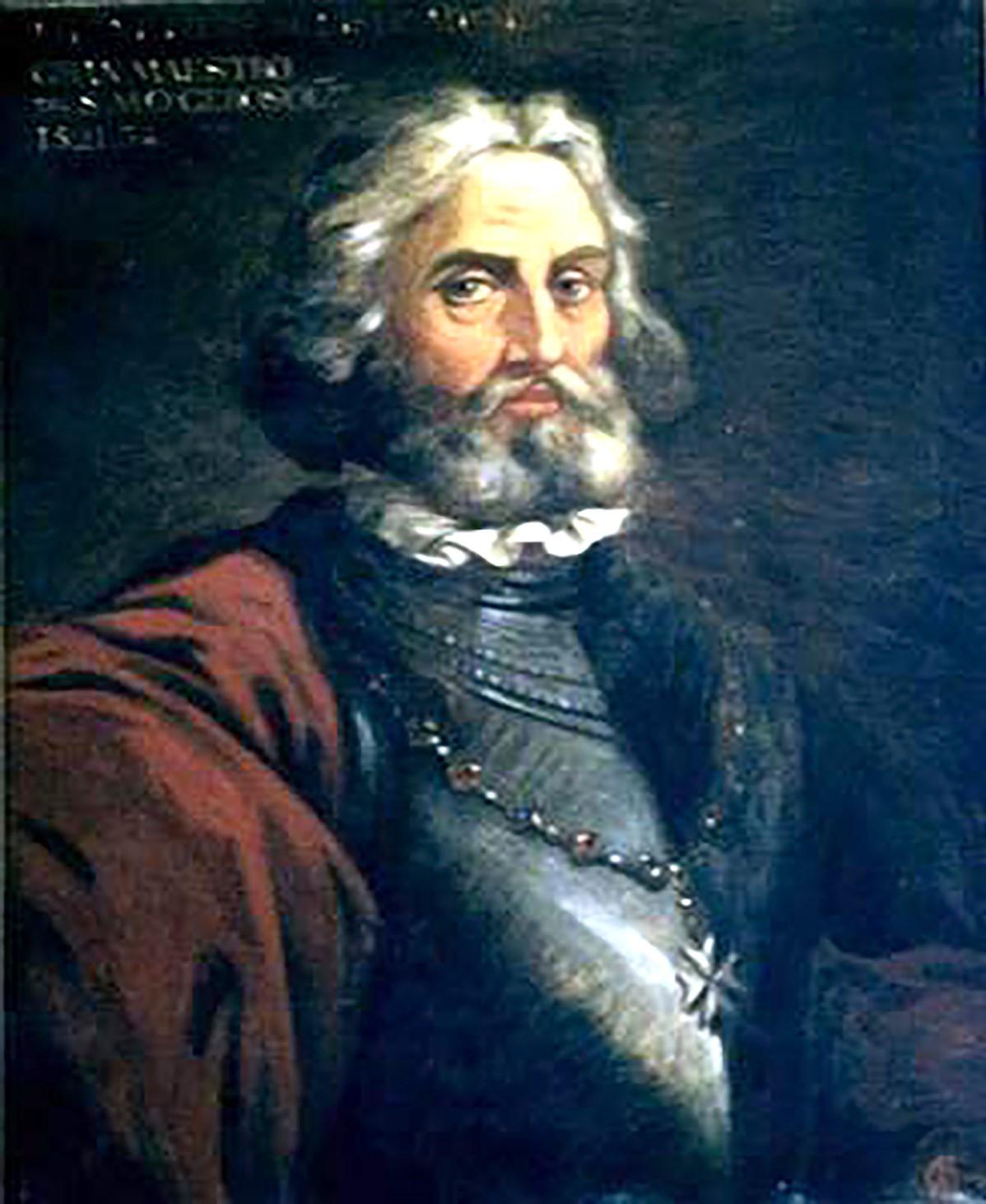
Fra’ Philippe de Villiers de L’Isle-Adam (1464-August 21, 1534), the 44th grand master of the Order.
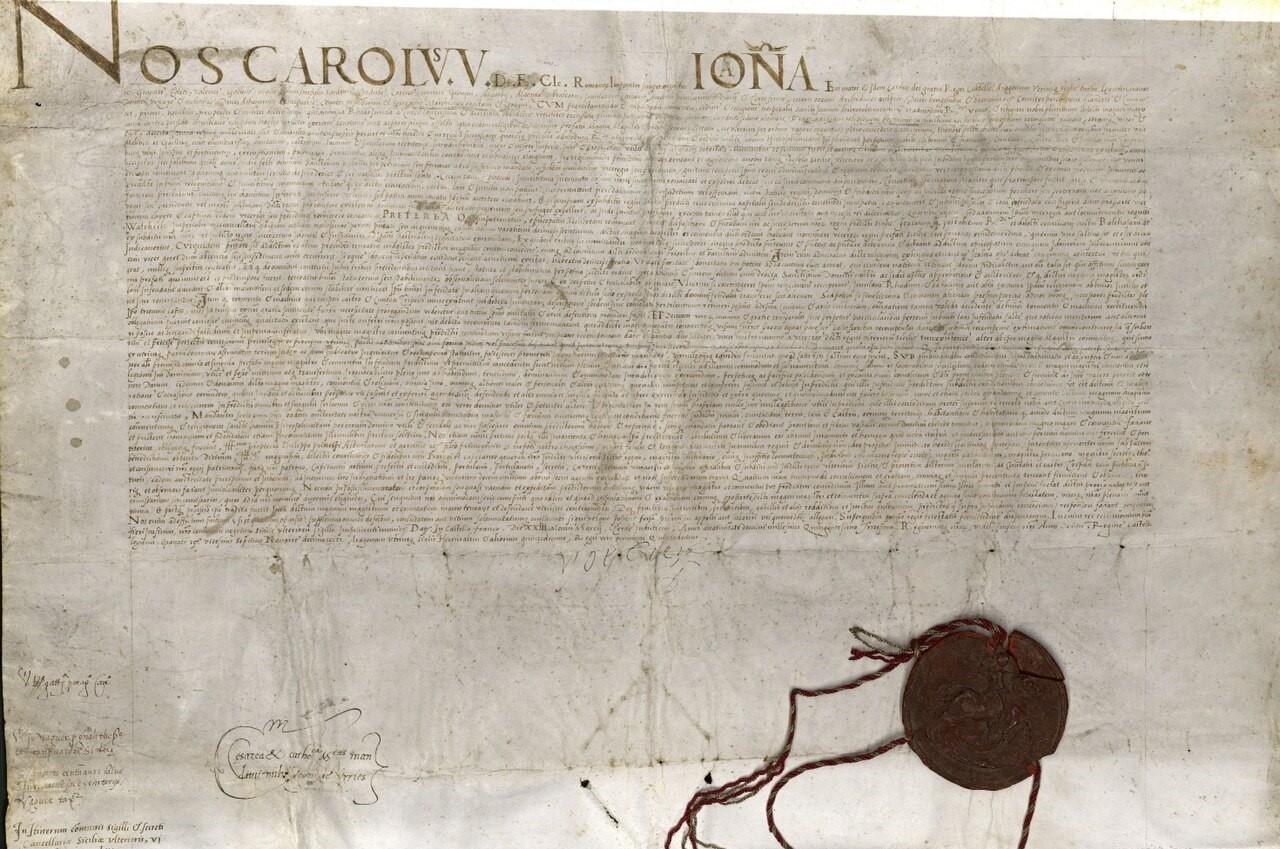
Charles V’s deed of donation of Malta, Gozo and Tripoli to the Knights Hospitallers.
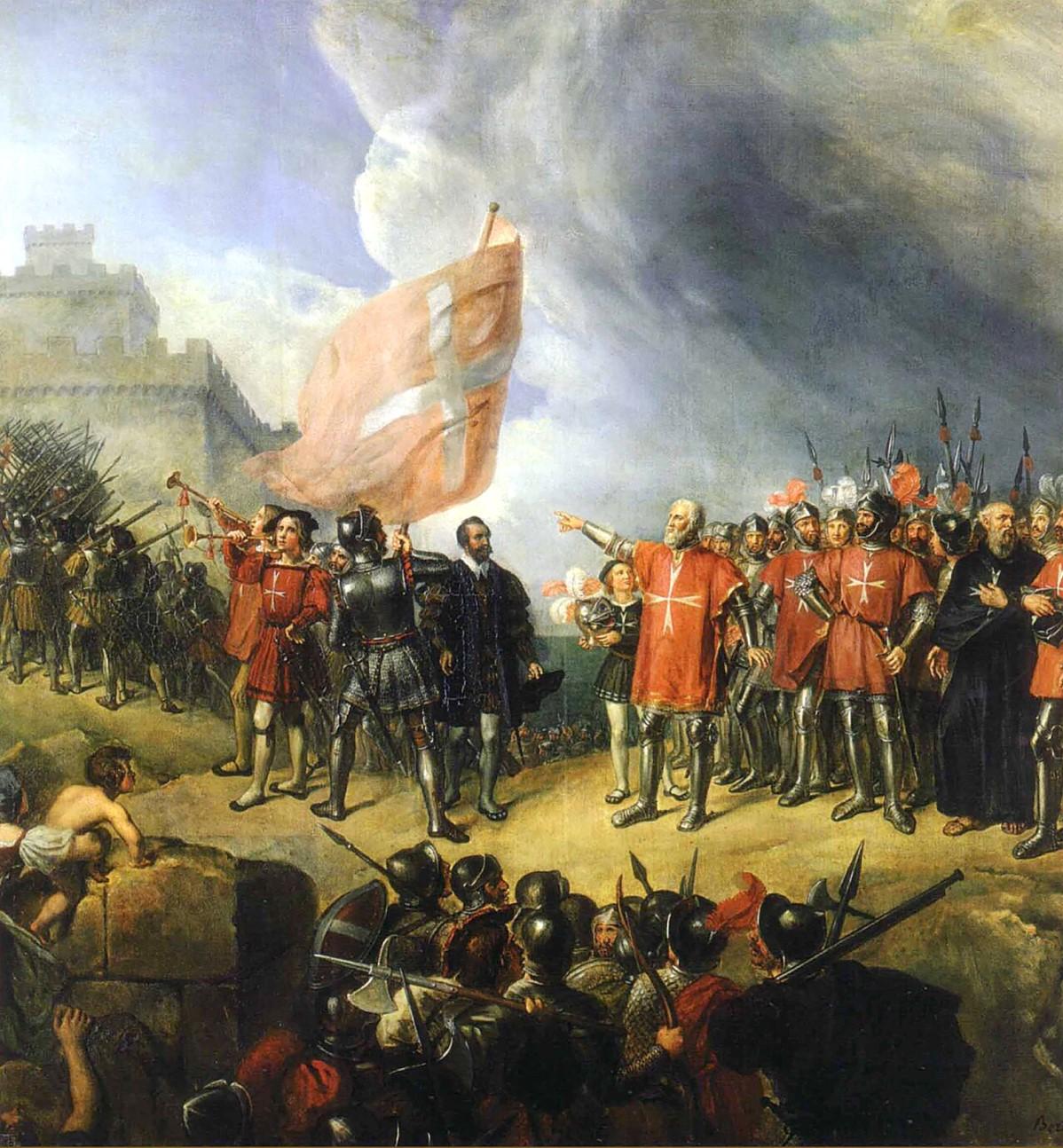
René Théodore Berthon’s painting of Philippe de Villiers de l’Isle Adam taking possession of Malta, on October 26, 1530, at the Musée National de Versailles.
Following their expulsion from Rhodes by Ottoman forces in 1522, which ended their presence there since the early 14th century, the Knights Hospitaller entered into negotiations with Emperor Charles V. The emperor’s offer of Malta, Gozo and Tripoli simultaneously addressed multiple objectives. It provided the displaced Order with a new base from which to continue its religious and military mission, while also allowing Charles V to transfer the costly and vulnerable responsibility of defending Tripoli to an institution uniquely structured for perpetual warfare.
In this sense, the grant reflected a broader ambivalence characteristic of Habsburg imperial policy: an act presented as a pious restoration of the Order’s mission, yet equally driven by the pragmatic demands of imperial defence – reinforcing Charles V’s widespread reputation across Europe for masking strategic calculation behind the language of religious duty, even as he presided over an empire of unprecedented global reach.
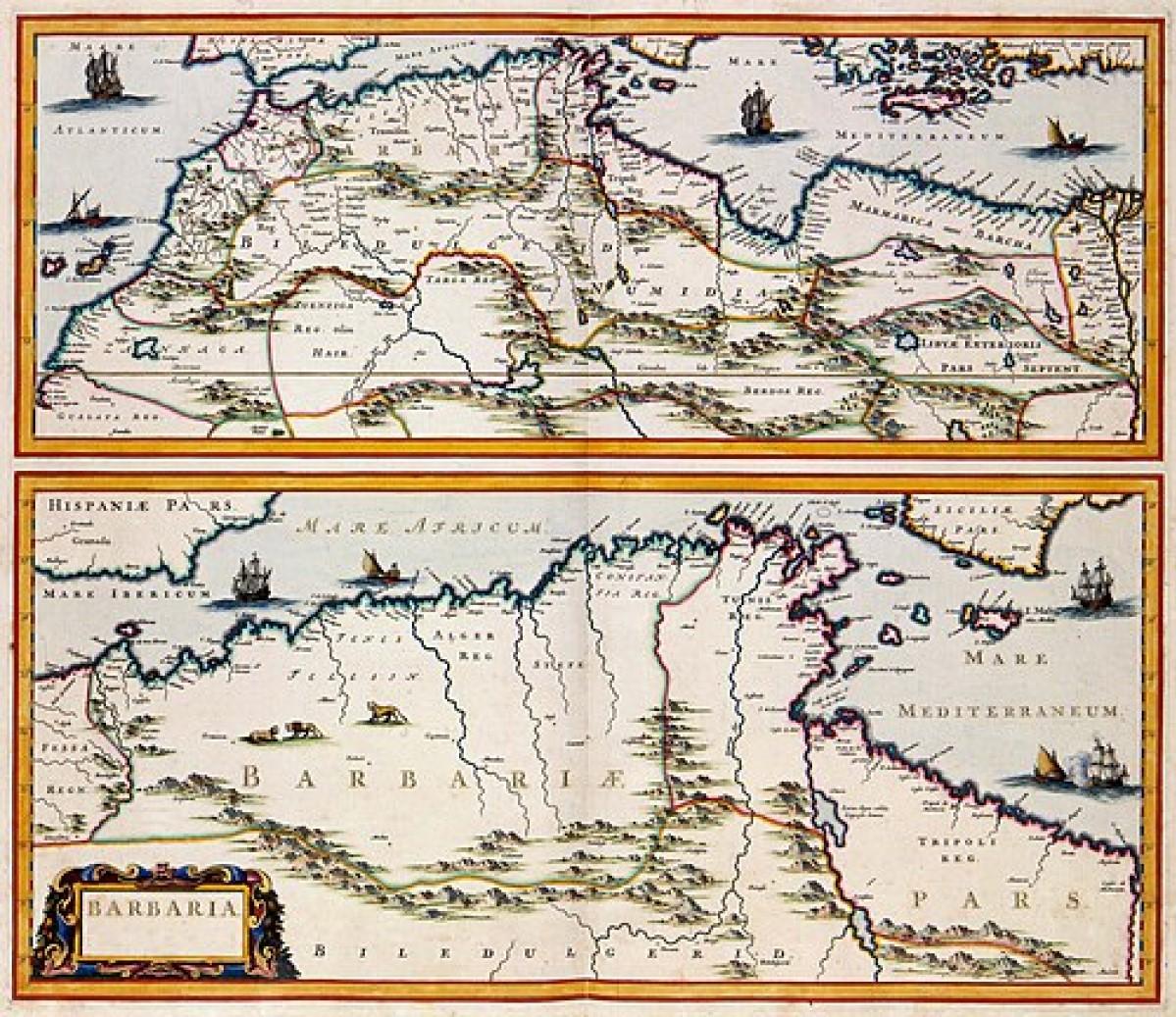 Jan Janssonius’s maps of Barbaria, at Koninklijke Bibliotheek, The Hague.
Tripoli itself had been under Spanish control since 1510, but its maintenance posed persistent logistical and financial challenges. As both Sara Miftaḥ Aṭiyya (2023) and David Mallia (2011) confirm, the Knights initially hesitated to accept these terms, fully aware of the city’s vulnerability and the disproportionate burden its defence would impose. Nevertheless, under sustained imperial expectation and with papal ratification issued on April 20, 1530 – as noted by the Egyptian historian Manṣūr Abd al-Ḥakīm – the Order formally assumed possession of Tripoli alongside Malta and Gozo.
From the outset, the Hospitallers’ presence in Tripoli was shaped by military necessity rather than civic integration. The city was administered by appointed governors, beginning with Gaspare de Sanguessa, while the Order’s central headquarters remained firmly established at Birgu (Vittoriosa) in Malta.
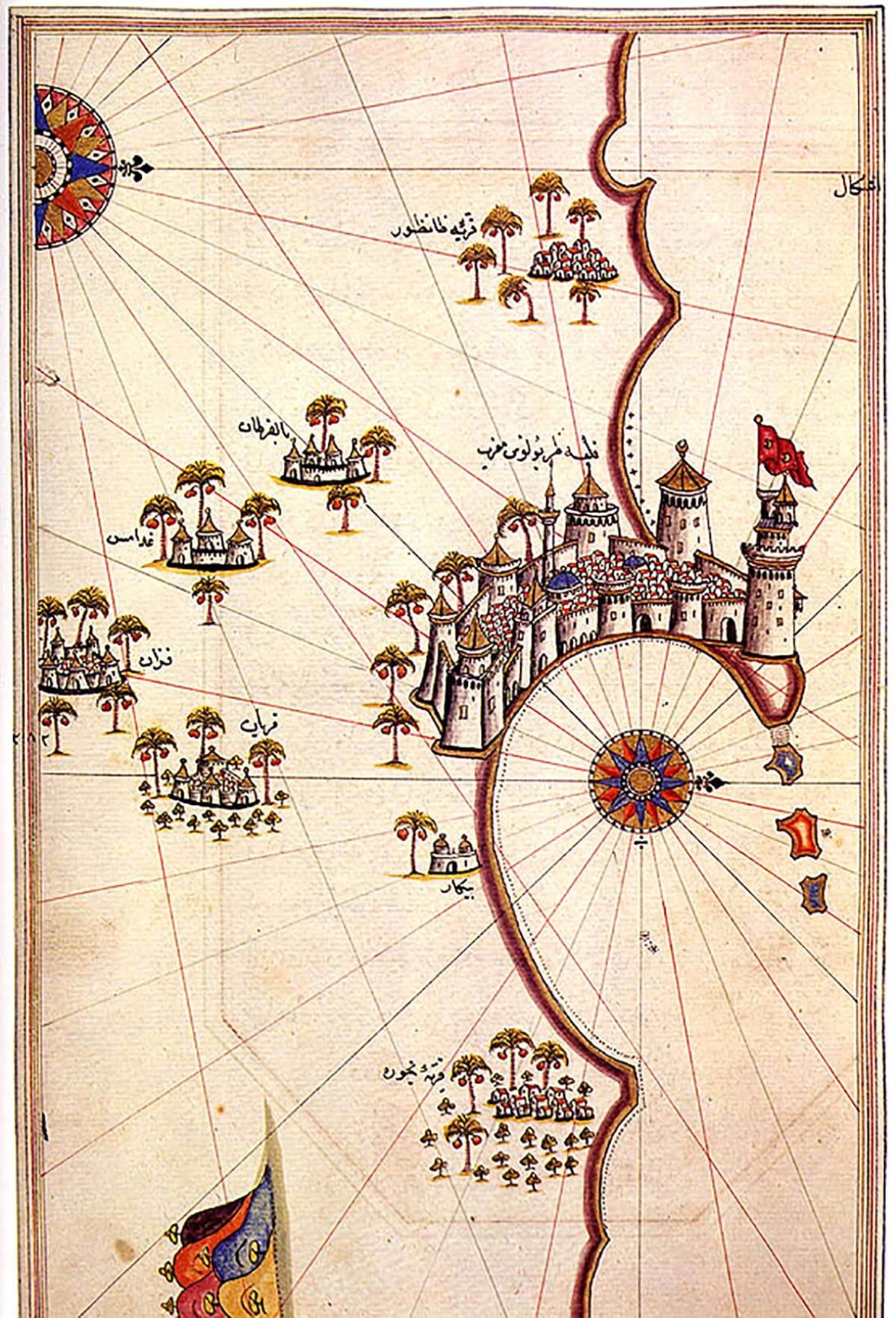 A 16th-century map of Tripoli by Ottoman Turkish cartographer, admiral, navigator and corsair Piri Reis, indicating the Red Castle on the left.
Recognising Tripoli’s exposed position, the Hospitallers invested considerable effort in strengthening its fortifications. Engineering works, initiated in the early 1530s under the supervision of the Florentine military engineer Piccino, continued under successive governors, including Fra Garzia Cortes and Fra Georg Schilling. These measures reflected the Order’s strategic priority: to transform Tripoli into a fortified outpost capable of resisting Ottoman expansion and securing Mediterranean maritime routes.
At the same time, the Order’s arrival coincided with significant economic and political strain. Commercial activity declined, likely due to the diversion of regional trade routes toward nearby Tājūrā, an Ottoman-aligned settlement that emerged as a persistent source of military pressure.
Skirmishes between Hospitaller forces and regional actors became frequent, reinforcing Tripoli’s function as a defensive stronghold rather than a thriving urban centre. Financial constraints further compounded these challenges, limiting the scope of defensive improvements and at times prompting discussions within the Order about the feasibility of maintaining the city at all.
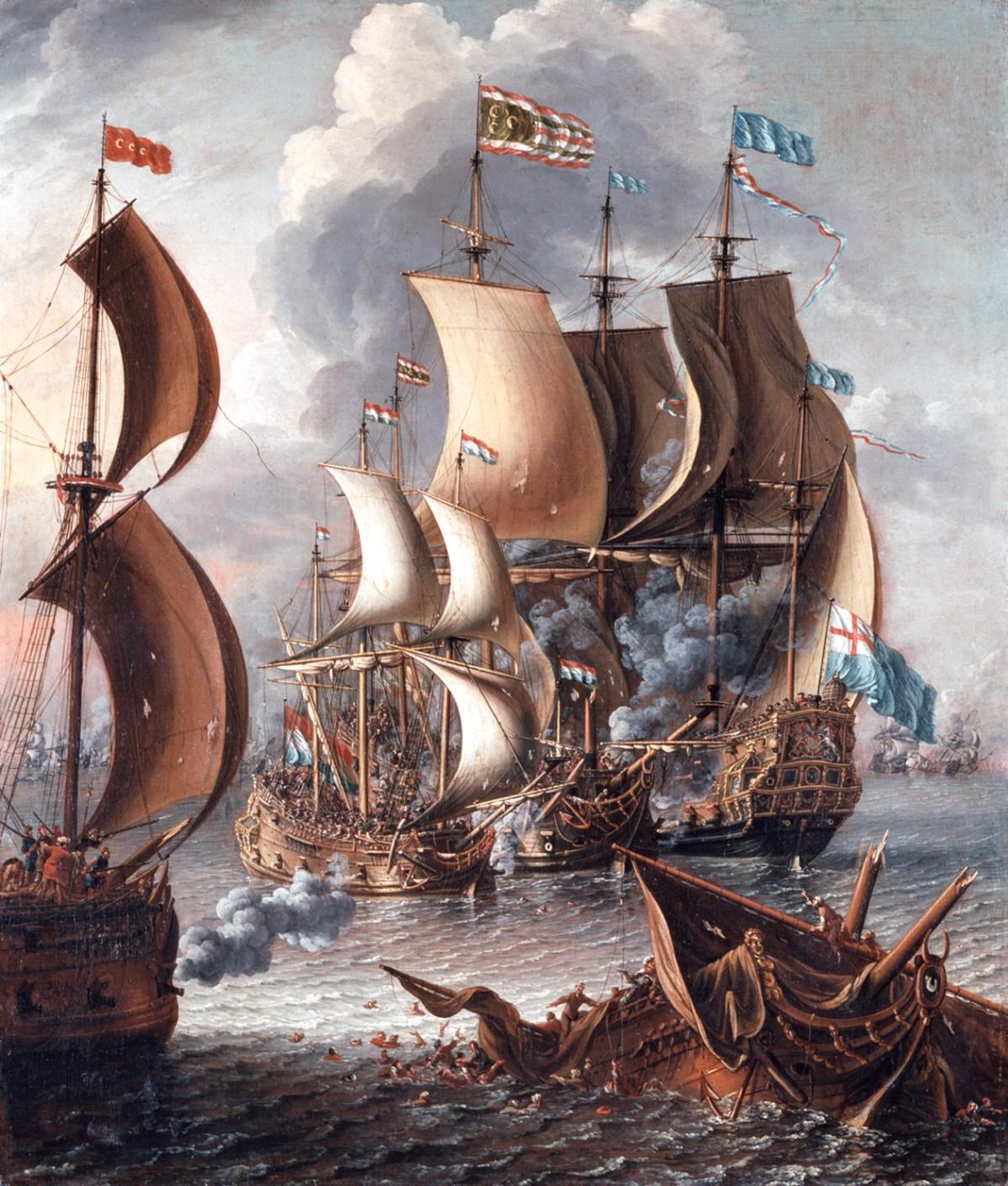
Laureys a Castro’s painting A Sea Fight with Barbara Corsairs, at Dulwich Picture Gallery, London.
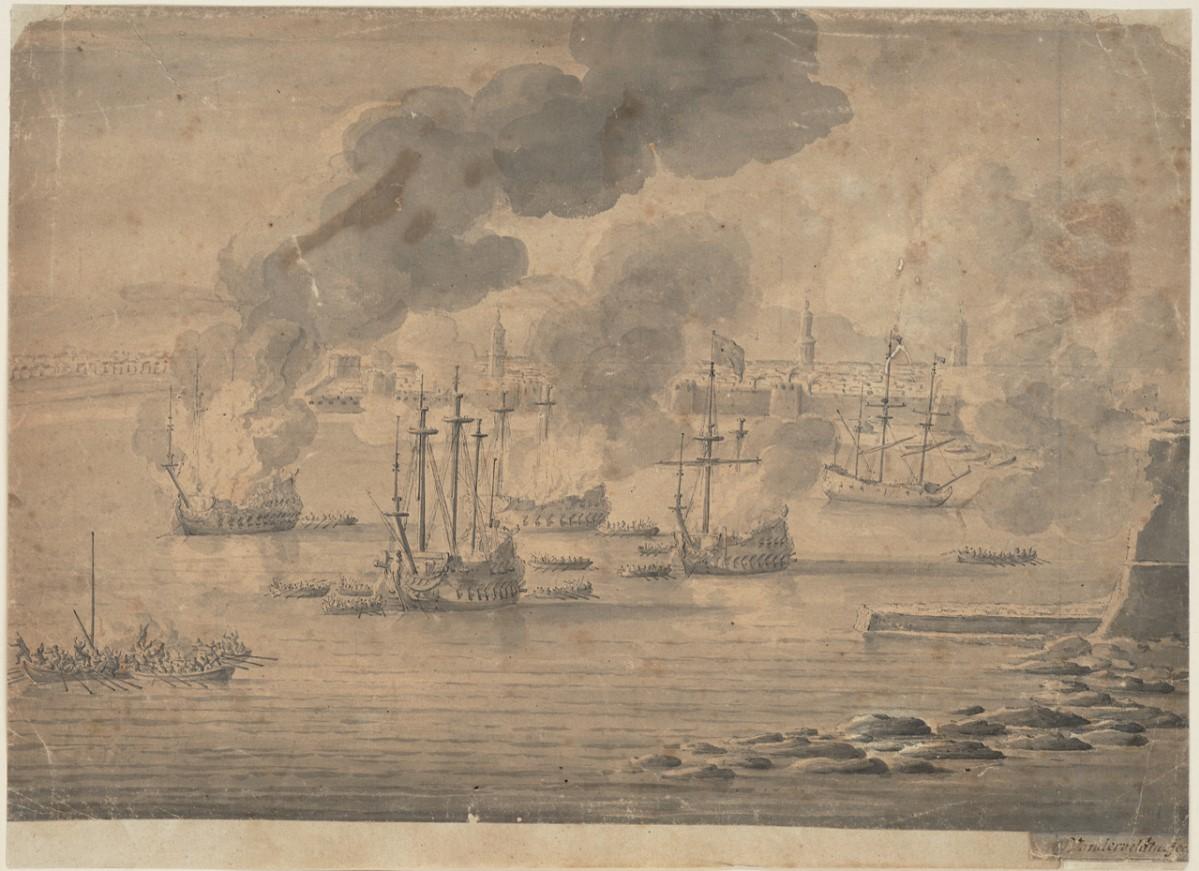
Willem van de Veled the Younger’s drawing Sir John Narborough burns four ships at Tripoli, 14-24 January 1676. National Maritime Museum, Greenwich.
From an Arab historiographical perspective, this period is often interpreted within the broader continuum of Crusader-Muslim confrontation. Dr Balīl Abd al-Karīm (2010), examining the Order’s military and civilisational role, characterises its presence as marked by sustained hostility toward Muslim polities and maritime corsair activity directed against Islamic shipping networks.
More specifically, from the locally grounded “Libyan” perspective articulated by Sara Miftaḥ Aṭiyya, the Hospitallers’ tenure in Tripoli (1530-1551) appears less as a phase of integrated governance than as a renewed expression of frontier militarisation embedded in a broader civilisational continuum linking the Order’s North African presence to earlier Crusader formations. The city was rapidly reshaped into a fortified stronghold, with resources directed primarily toward defensive walls, artillery emplacements and the maintenance of permanent military readiness, while civic and economic development remained secondary.
The Knights’ authority remained externally imposed rather than socially embedded
This structural imbalance proved decisive in shaping the relationship between the Order and the local population. The Knights were unable to secure durable local support and their authority remained externally imposed rather than socially embedded. Urban life became subordinated to the needs of the garrison; movement and access to arms were tightly controlled; and meaningful participation of local inhabitants in governance or security structures was effectively excluded. As a result, Tripoli functioned less as a civic centre than as a forward defensive outpost within a wider Mediterranean confrontation.
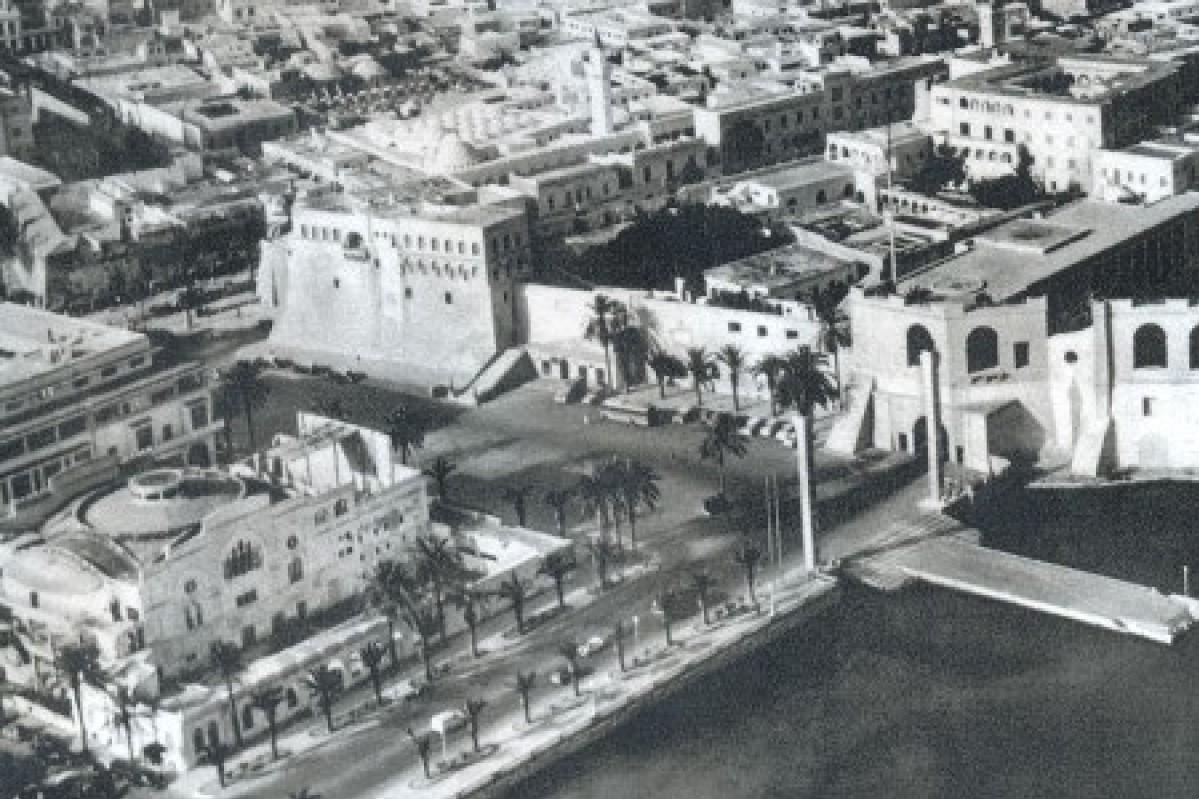 Aerial view of Tripoli’s Red Castle in the 1950s.
In Aṭiyya’s interpretation, this outcome reflects not only material constraints but also the persistence of a crusading strategic logic, one that prioritised fortification, maritime control and confessional defence over political integration. The resulting system, reliant on taxation, coercive oversight and defensive expenditure, failed to generate stability or local loyalty, instead reinforcing social alienation and exposing the city to continued regional hostility.
Viewed from the “Maltese” side, despite intermittent efforts to stabilise the situation, structural weaknesses persisted. A temporary truce between Suleiman the Magnificent and Charles V in the mid-1540s allowed for limited administrative and defensive reforms under Jean de Valette, who governed Tripoli from 1546 to 1549. De Valette strengthened fortifications and reorganised aspects of the city’s administration, even briefly envisaging Tripoli as a potential centre of Hospitaller expansion in North Africa.
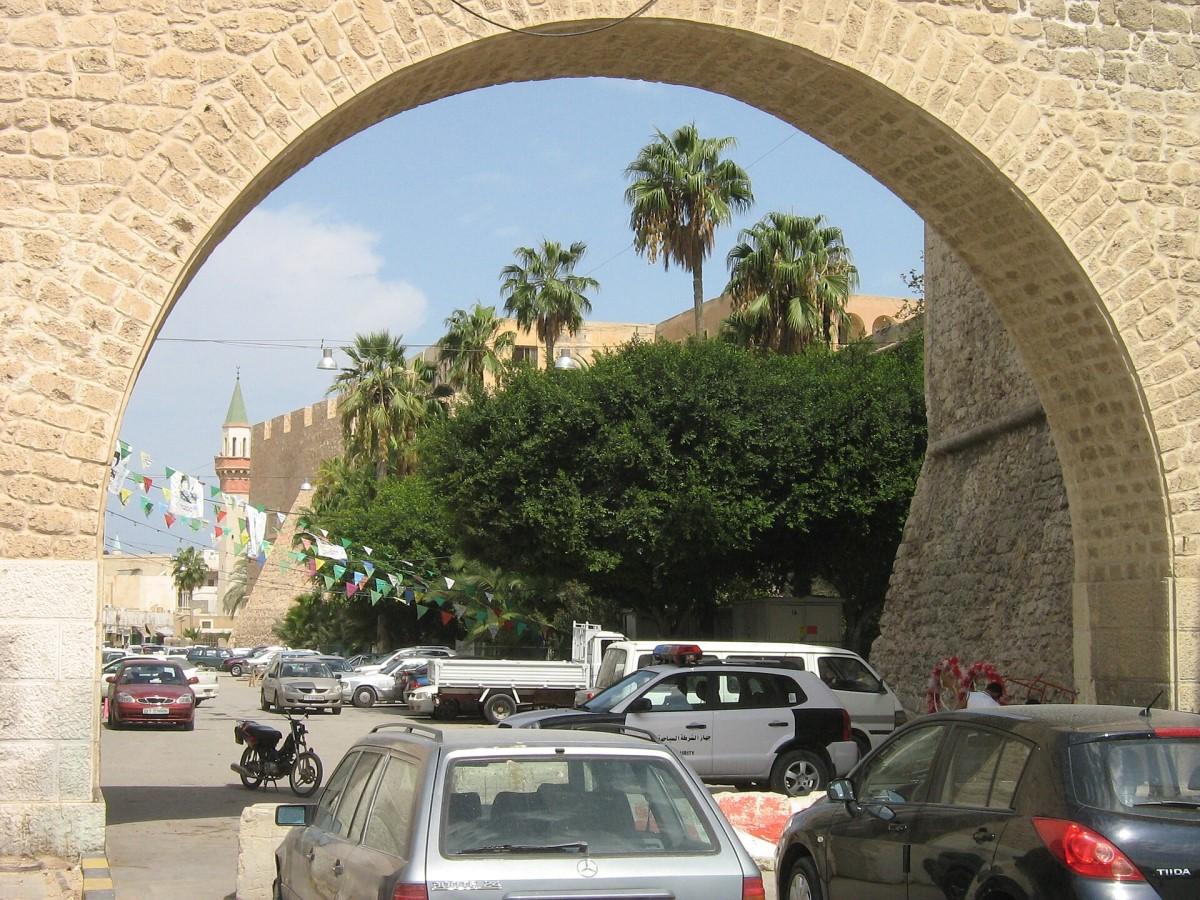 Near the Red Castle, nowadays.
Yet these ambitions remained constrained by limited resources and ongoing external threats. As Attard recounts, repeated requests to improve the city’s defences went largely unfulfilled, leaving Tripoli vulnerable at a critical moment. As Aṭiyya notes, urgent appeals for reinforcement and material support went largely unanswered also after Dragut – later renowned for his role in the Great Siege of Malta – had persuaded the suItan to project Ottoman power well into the western waters and towards the walled strongholds of the Mediterranean world. In practice, this meant Charles V had left the fortress to face the Ottoman conquest without meaningful imperial support.
Thus, in the words of Sir Ernle Bradford, “Tripoli, a Christian outpost in the middle of the hostile Moslem states on the notorious Barbary Coast”, was left isolated.
In 1551, Ottoman forces under Sinan Pasha besieged the city. After approximately two weeks of resistance, Tripoli fell, bringing the Hospitallers’ 21-year presence there to an end. Responsibility for the loss was attributed to Governor Gaspard de Vallier, who was imprisoned upon his return to Malta, though the underlying structural deficiencies had long been recognised. The fall of Tripoli marked a decisive shift in the Order’s strategic orientation, reinforcing Malta’s role as its primary base and defensive centre.
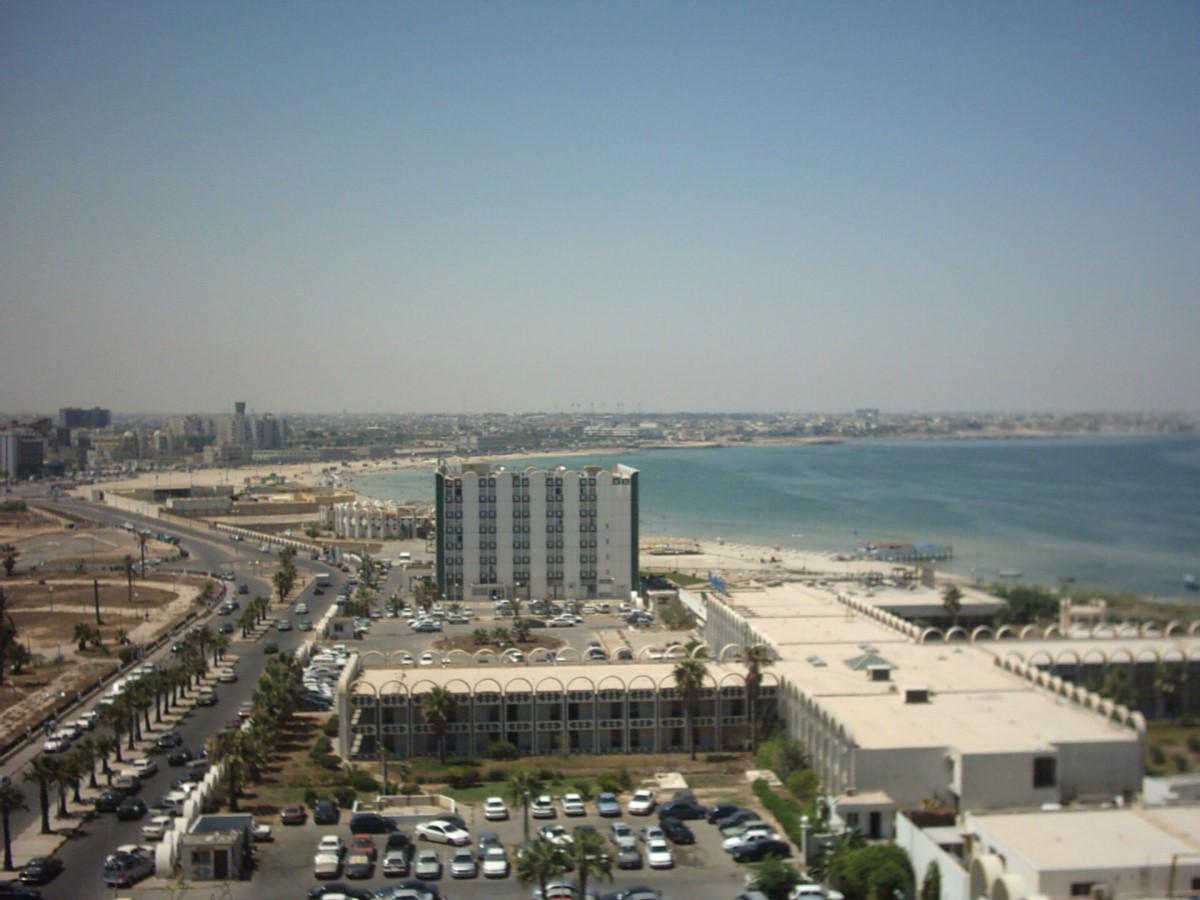 Tripoli’s coast today.
The Tripolitanian episode, indeed, stirred, in Ernle Bradford’s evocative phrase, the “anger of the lion” – Suleiman the Magnificent – who, a decade-and-a-half later, would meet his end before the walls of Szigetvár in Hungary, having already witnessed, only a year earlier, the defeat inflicted upon his forces by Malta and the Order.
The connection between the Order and Tripoli did not disappear entirely. More than a century later, in 1675-1676, British Admiral Sir John Narborough sailed from Malta against Tripoli, securing a treaty that facilitated the redemption of Maltese captives held there.
As Attard notes, correspondence from King Charles II preserved in Malta’s National Library reflects the continued diplomatic and strategic entanglements linking Malta, Tripoli and broader European maritime power. For Attard, these developments illustrate the Order’s gradual transformation from its original religious mission into a more politically embedded Mediterranean institution, operating increasingly within the pragmatic realities of imperial and naval power.
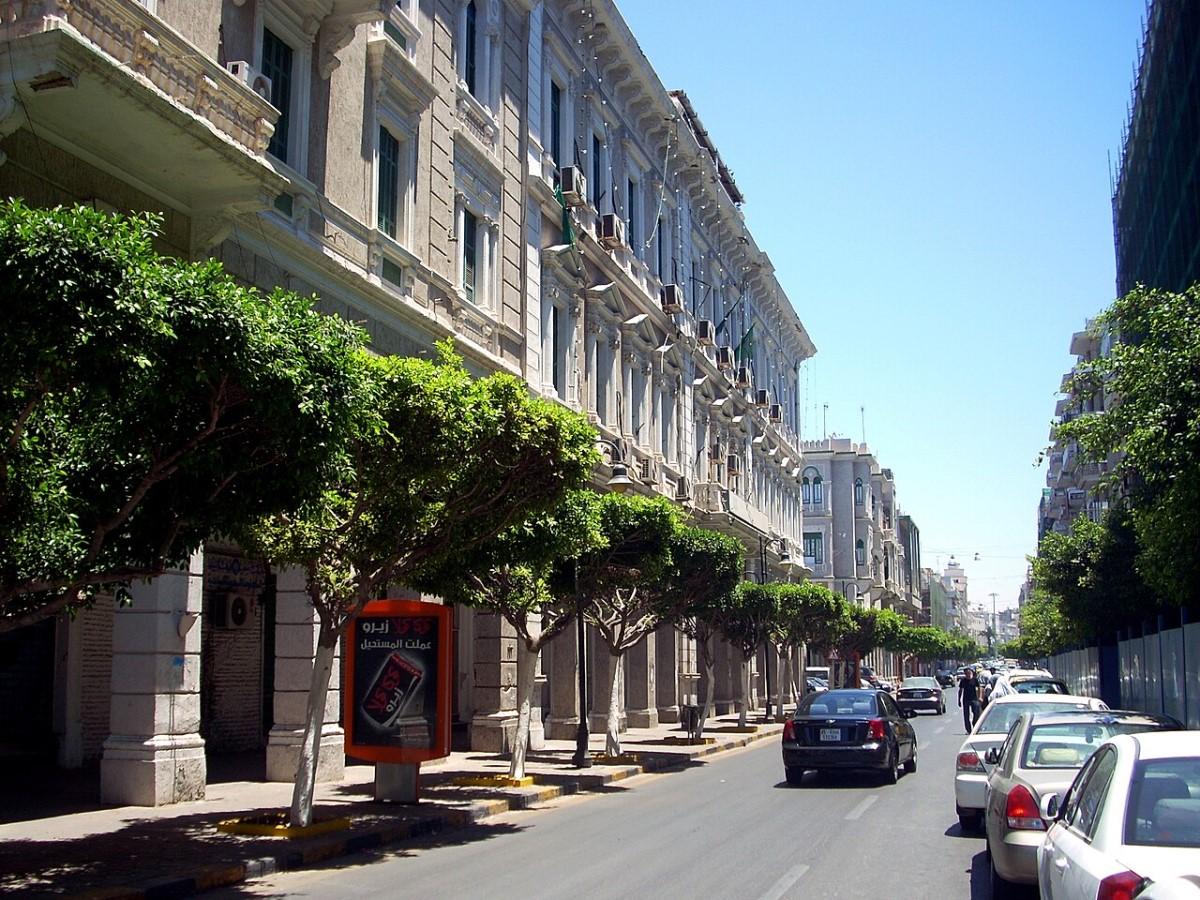 Present-day Tripoli.
Nevertheless, the material traces of the Hospitaller presence in Tripoli endured. Their principal church in the city was later incorporated into the Sidi Darghut Mosque around 1560, and although extensively altered, elements of the original structure remain. These architectural remnants testify to a brief but consequential period in which Tripoli stood at the intersection of imperial ambition, religious mission and frontier warfare – unfolding in the very decades when central Europe and the Balkans were simultaneously engaged in existential struggle against the expanding Ottoman Empire.
Yet this frontier was not defined solely by conflict. As social researcher Tarċisju Zarb highlighted in his Bejtiet il-Lingwa, commercial contacts between the Turks and the Maltese also enriched the Maltese language and, among other things, helped preserve Semitic components of Maltese folklore.
“In my mind the plot is still confused. Multiple episodes are unfocussed. They still lack a concentrating pivot. That’s what I am after and still haven’t got.”
These words of Schiller, author of Die Malteser, written yet left unfinished more than a century after the Narborough expedition, capture with striking precision the intellectual and emotional challenge of approaching the Hospitallers’ heritage. Later echoed in the libretto of Serracino Inglott and Camilleri’s opera, The Maltese Cross, they acquire an almost programmatic resonance.
For what emerges here – perhaps even more than in the heroic memory of the Great Siege – is far from a singular, stabilised narrative; rather, it unfolds as a shifting field of meanings and allegiances. One is thus compelled to move constantly between the ideal and the imperfect, between political contingencies and what claims the authority of principle, between legend and historical reality.
All in all, the Hospitaller legacy of Tripolitania seems to resist any definitive interpretive anchor; its past remains suspended in a fragile equilibrium of competing claims and remembered futures. In this sense, what we ultimately encounter is the coexistence of divergent interpretive approaches, unfolding along a spectrum between the legendary and the real, the ideal and the imperfect, myth and experience, glory and hardship, and, ultimately, promise and reality.

Márton P. Iványi is a researcher of Maltese language and history based in Budapest, Hungary, and a member of Għaqda Internazzjonali tal-Lingwistika Maltija (GĦILM).