Maltese are not too keen on EU's plan to prioritise defence
Only 14% say defence and security should be Europe's top priority
The Maltese seem unconvinced of the need to prioritise defence and security at a European level, according to a recent Eurobarometer survey.
Only 14% of respondents in Malta support the European Parliament (EP) making “the EU’s defence and security” its top priority, three percentage points less than a year earlier and less than half their European counterparts (31%).
The average European seemed to prioritise the topic just as much as last year, however, according to the European Parliament’s special Eurobarometer winter survey 2025.
The results come at a time of increased discussion about defence spending and neutrality in Malta, with both main political parties weighing in on the issue.
While the PL and PN have both ruled out changes to Malta’s neutrality, the two parties have indicated their openness to increased defence spending - at least at a European level.
Earlier this month, Prime Minister Robert Abela joined other EU leaders to sign off on an €800 billion European defence plan.
And last month, he said Malta should increase its defence spending – while on Sunday stressed the government wanted to “build an economy around peace, not war”.
Meanwhile, in a statement last Thursday, the PN said Opposition Leader Bernard Grech had lent his support to increased European defence spending in talks with its EP group the European People’s Party (EPP).
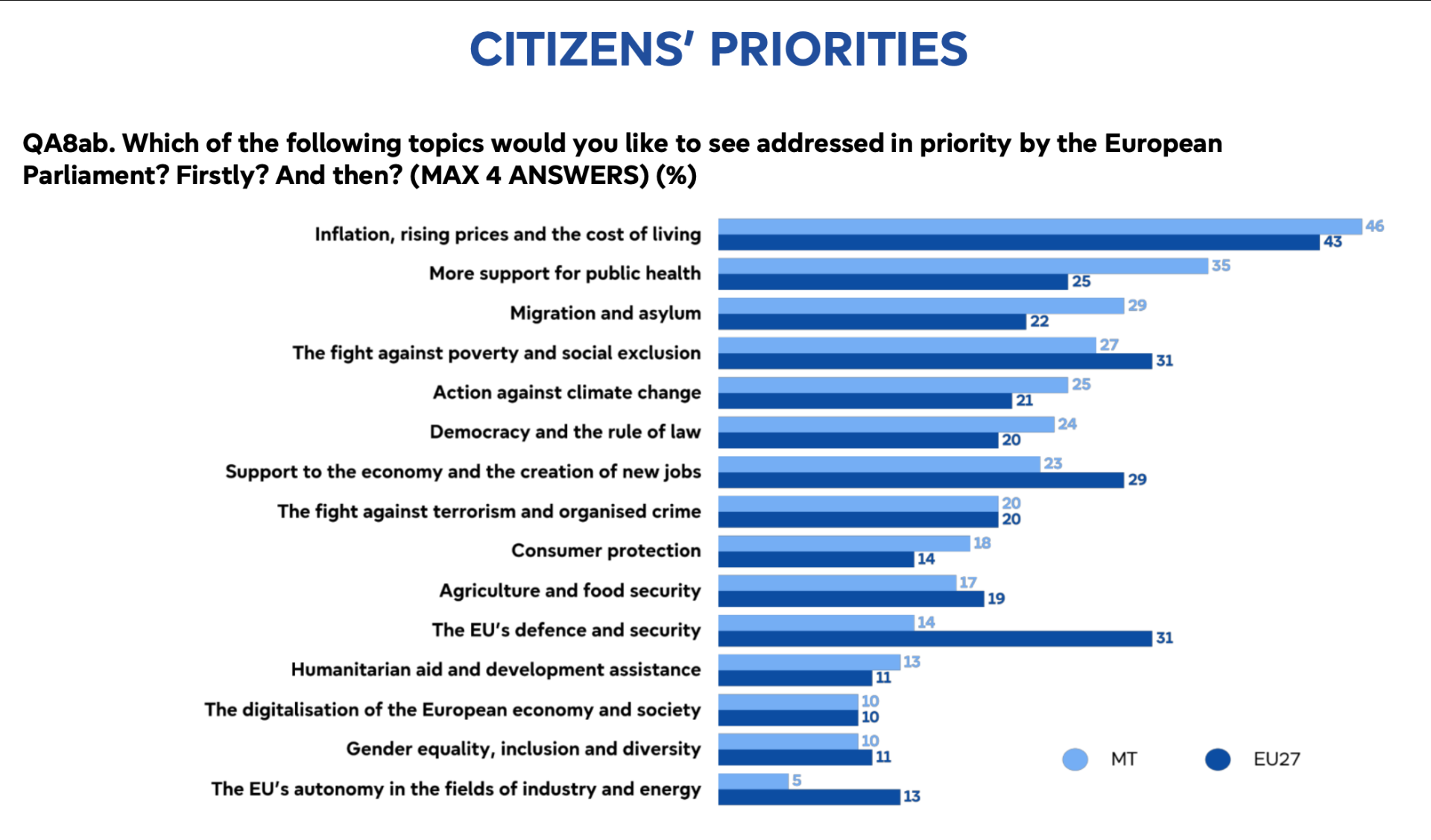 In Malta, less than half the proportion of European citizens want to see the EP prioritise defence and security most. Graphic shows proportions of top choices. Graphic: Eurobarometer.
Four in five say EU needs to protect its citizens
Despite the Maltese’s reluctance to see more EU-level discussions on defence, an overwhelming four out of five said they believe the union should prioritise protecting its citizens more in the future.
When asked about the future priorities of the union, some 82% of Maltese respondents said they thought the EU’s role protecting its citizens against global crises and security risks should become more important. Two-thirds (66%) of Europeans felt the same.
This Eurobarometer marked the first time the bloc asked its citizens about the future importance of its role protecting citizens, according to the authors of the report, and comes at a time of renewed European militarisation amid signs long-standing ally the US is pivoting away from defence of its European allies.
Malta was among the countries to place the most importance on the bloc’s future role protecting its citizens, level with Ireland and Denmark and just behind Cyprus (83%), the Netherlands and Finland (both 84%) and Sweden (87%).
Despite its proximity to besieged Ukraine and Russian ally Belarus, Poland – a strong supporter of Ukraine – placed the least emphasis (44%) on the bloc protecting its citizens against future crises and security risks.
While believing the EU should take a greater hand shielding its citizens, fewer Maltese were confident in the bloc’s future importance, however; only 52% of Maltese and 44% of Europeans said they thought the EU would become more important on the world stage.
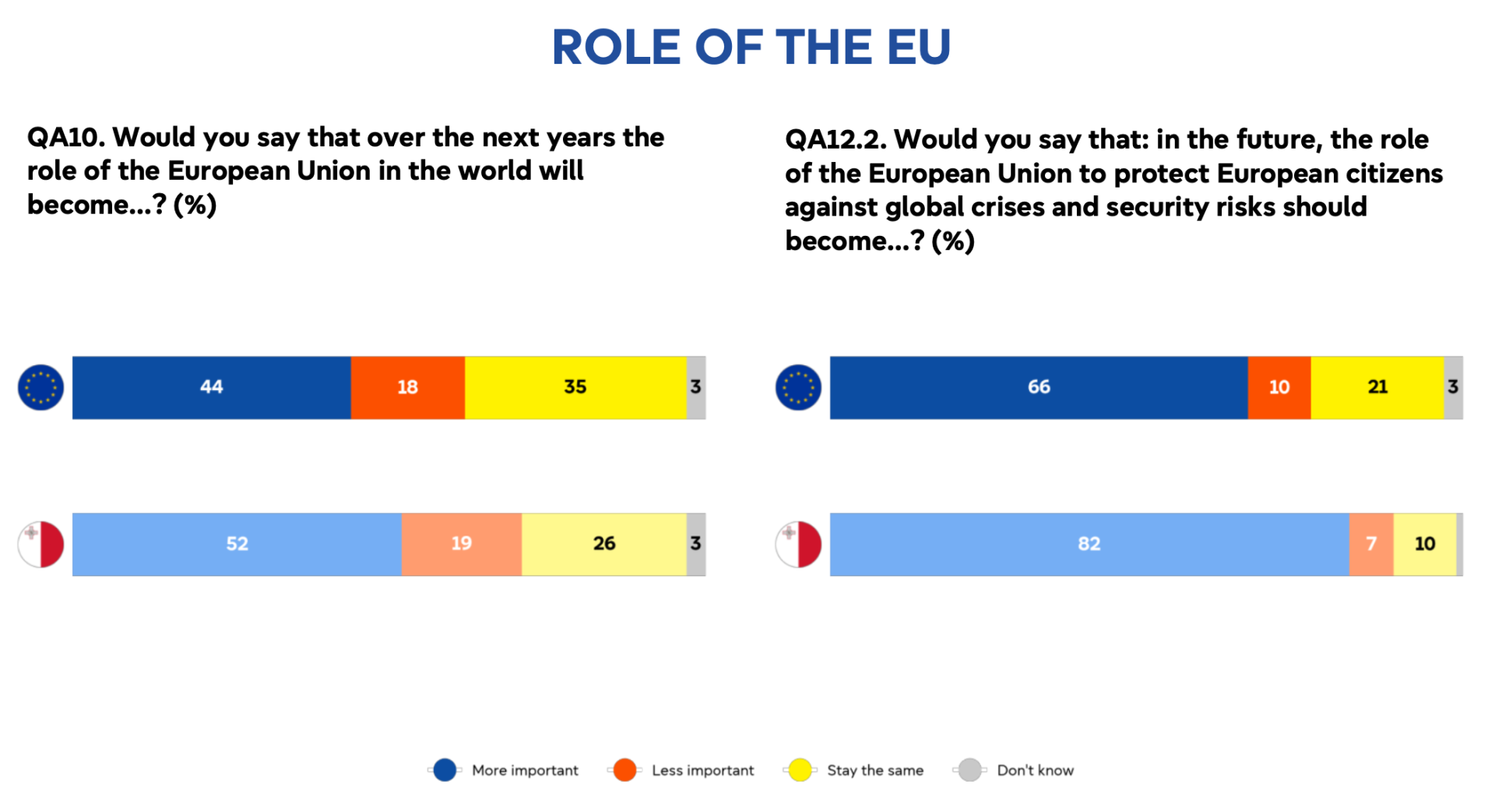 The Maltese believe the EU should do more to protect its citizens, but seem less convinced on the bloc's future importance. Graphic: Eurobarometer.
And despite the Maltese seemed to overwhelmingly support the EU placing more emphasis on protecting its citizens, they seemed reluctant to advocate for the bloc projecting its power.
Only one fifth (20%) of Maltese believe the EU should focus on defence and security to reinforce its position in the world, a nine percentage points decrease since the same time last year and less than the EU average (36%).
Meanwhile, almost all Maltese – an overwhelming 98% - thought EU member states should be more united to face current global challenges. The survey did not specify to which challenges it was referring, however, according to data available at the time of publication.
Recent years have seen renewed fractures starting to show in European unity, with far-right parties seeing a return to mainstream politics and some countries, most notably Hungary, diverging from Brussels on a range of foreign and domestic policies.
Inflation, cost of living still a concern
Away from security and defence, the Maltese thought the EP should prioritise inflation, rising prices and the cost of living ahead of any other issue, with almost half (46%) saying it was their top priority.
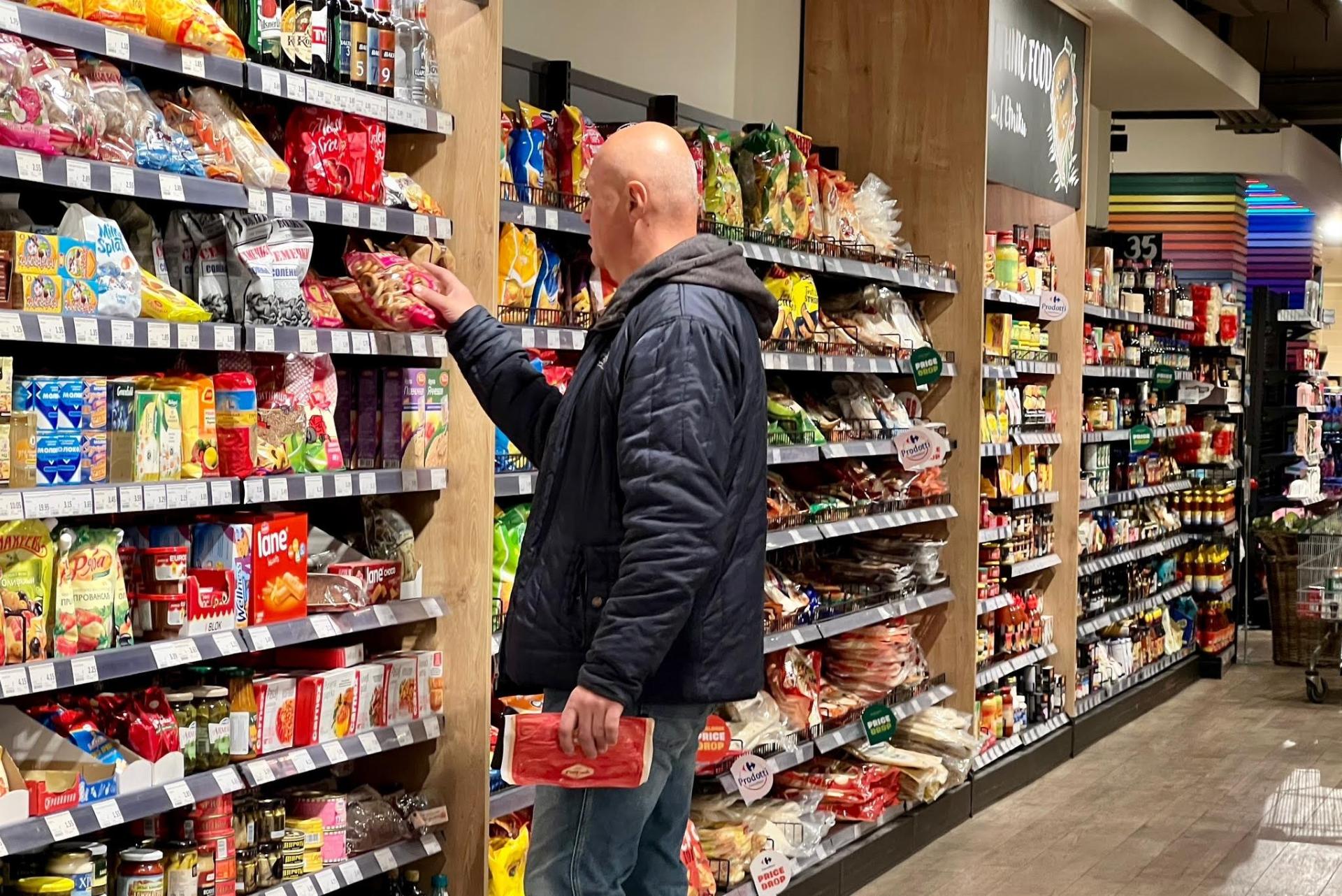 The Maltese indicated they were more focused on the cost of living than defence. File photo: Chris Sant Fournier.
Despite this, those in Malta were markedly more confident than their European neighbours about their quality of life, with a third (33%) believing their standard of living would increase, more than double the 14% confidence levels across the bloc.
Like in the rest of Europe, the largest proportion of Maltese believe their standard of living will not change over the next five years.
Meanwhile, the proportion of Maltese who believe the EP should prioritise migration and asylum dropped sharply to 29% from 50% the same time last year.
Echoing findings of previous surveys, the recent Eurobarometer survey found social media remained the most popular source of news in Malta – albeit dipping in popularity from the high seen in late 2023 – and the Maltese remained supportive of the EU.
The Eurobarometer survey is a comprehensive public opinion study designed to gather information about attitudes to social and political issues across the union.
A total of 503 Maltese participants aged 15 and above were interviewed between January and February this year for the survey.