Latest issue of ‘Treasures’ is a real treat
The cover of this issue carries a detail of Emvin Cremona’s 'Untitled'
Treasures of Malta,
no. 93, Easter 2025, vol. xxxi, no. 2
published by Fondazzjoni Patrimonju Malti and Kite Group Malta
On April 25, 1817, the frigate Austria, carrying on board a number of distinguished scholars, was forced to make it to the Grand Harbour after being buffeted by waves and hindered by contrary winds. The scientists included zoologists, botanists, mineralogists as well as a taxidermist, a flower painter and also the young artist, Thomas Ender, who would become one of Austria’s most famous landscape artists.
The group seized this serendipitous occasion to tour the island of knights. In Valletta, they visited St John’s which they decided is “in bad taste and full of ornaments”. They sort of judged Preti’s paintings to be the best but they missed out on the Caravaggios altogether.
During their five-day visit, they managed to see quite a lot of the island and its people, whom they deemed to have “a malicious look”. They also visited Thomas Maitland’s San Anton Palace where they viewed an ostrich and a lioness because “as is well known, [the Maltese] carry on a trade in live animals”. Plus ça change!
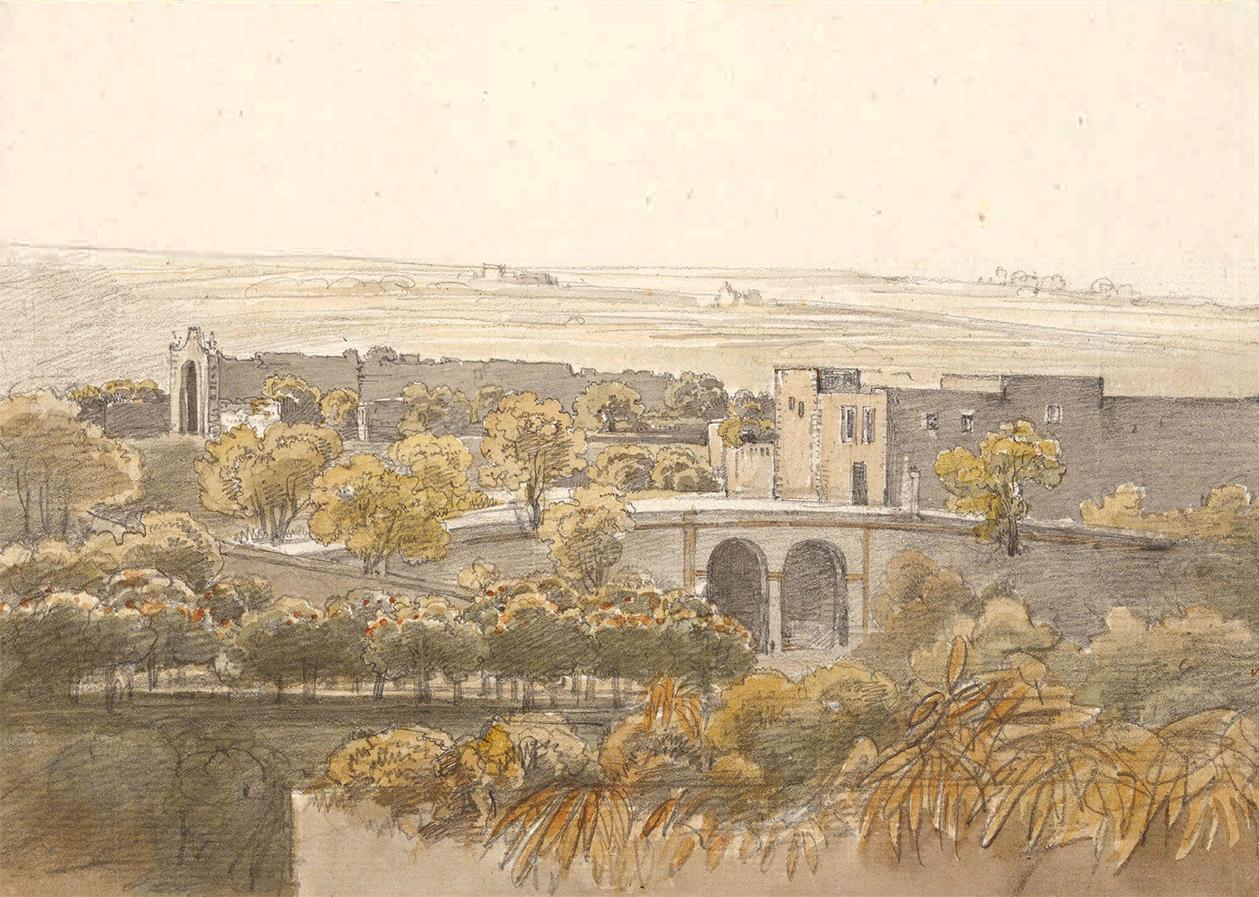 Thomas Ender, Buskett Gardens, watercolour and pencil on paper.
The indefatigable scholar Thomas Freller has teased out yet more Northern visitors to our island to enrich our culture in a paper graced by a few of Ender’s sketches of local sites.
Freller’s paper is just one of the many interesting offerings in the Easter issue of Treasures of Malta, the flagship publication of Fondazzjoni Patrimonju Malti.
The cover of this issue carries a detail of Emvin Cremona’s Untitled in Perspex, glass, mortar, impasto, oil, metallic gold on canvas which ties in with the contribution of his daughter Anna on his 1969 exhibition and enriched by her own memories of her artist father.
Jonathan Farrugia writes about the conservation of the 17th-century Marian paintings at the old parish church of Mqabba based on an extensive analysis of the pastoral visits between 1575 and 1699.
These paintings, originally from the small churches in the area which ended up in the parish church, are attributed to local artists except for the original part of the Coronation of the Virgin which may well be the work of an Italian artist. Five of these paintings can still be seen in the new parish church while a sixth, now in a private collection, has been identified.
Recent restorations are bringing out original features leading to a better artistic appreciation of these paintings, some of which had suffered greatly due to improper storage. Research in the archival documents is bringing out more information about their historical background.
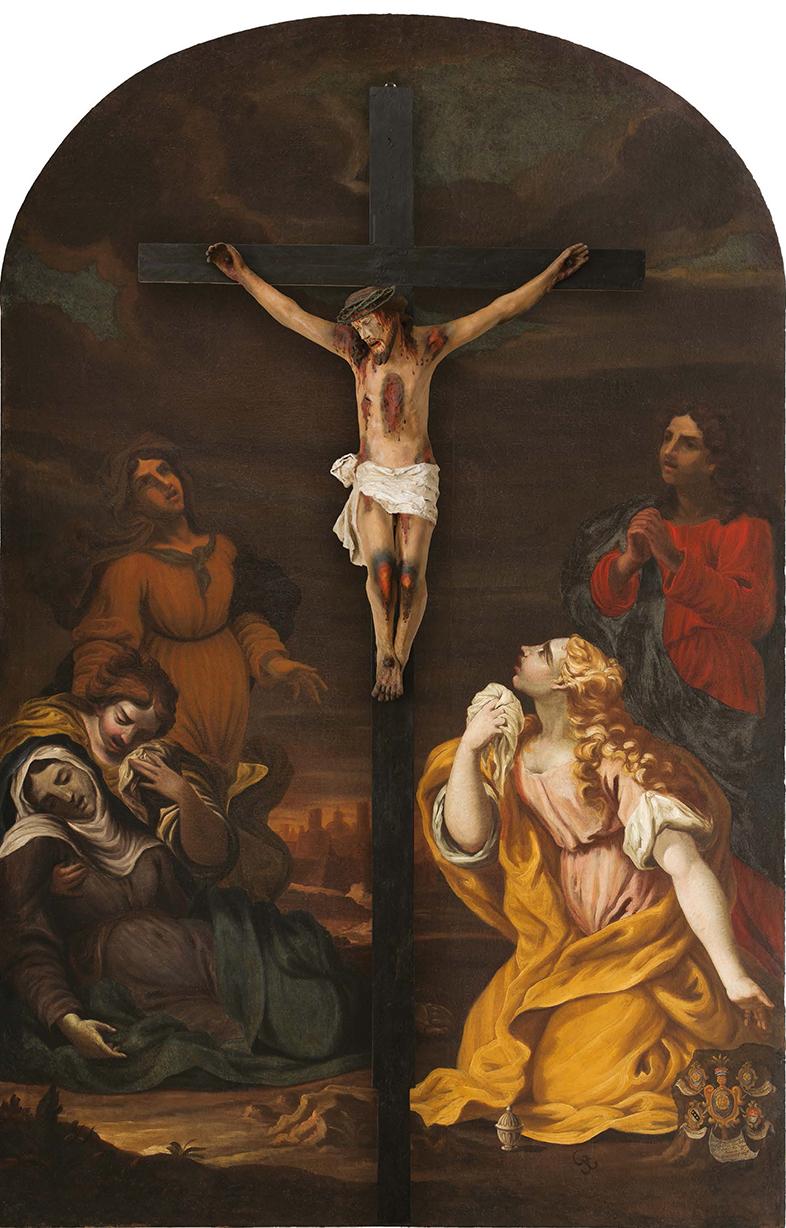 Crucifixion group
An unusual religious work of art, The Crucifixion of Christ on the Golgotha, that lies in the church of Our Lady of Mercy at Qrendi and is only the second such one on the island, has been rescued from incredible extensive damage but has been very professionally restored. It consists of a painting and sculpture where the papier-mâché figure of the crucified Christ is fixed unto a painting. The crucified figure is possibly by Suor Maria de Dominici while the painting has been attributed to Giuseppe Arena, both of whom worked in Mattia Preti’s bottega.
The excellent restoration was carried out by Amy Sciberras who co-authored the paper with art historian Nadette Xuereb. The full-page picture of the restored work shows the beautiful work of art that has been returned to the nation.
The Lazzaretto cemetery of St George on Manoel Island suffered great damage during the war. What survived the Axis bombing has fallen victim to the far more efficient and thorough Maltese vandal. Mario Buhagiar, the doyen of local art historians, gives a brief account of its history since it origins in the early days of British rule when it was started as the final resting place for Protestants who died at the Lazzaretto.
Later, Catholic persons were accepted but with their epitaphs rigorously written in Italian. The cemetery seems to have escaped a recent threat of utter destruction while the remains are being carefully restored under the direction of Edward Said.
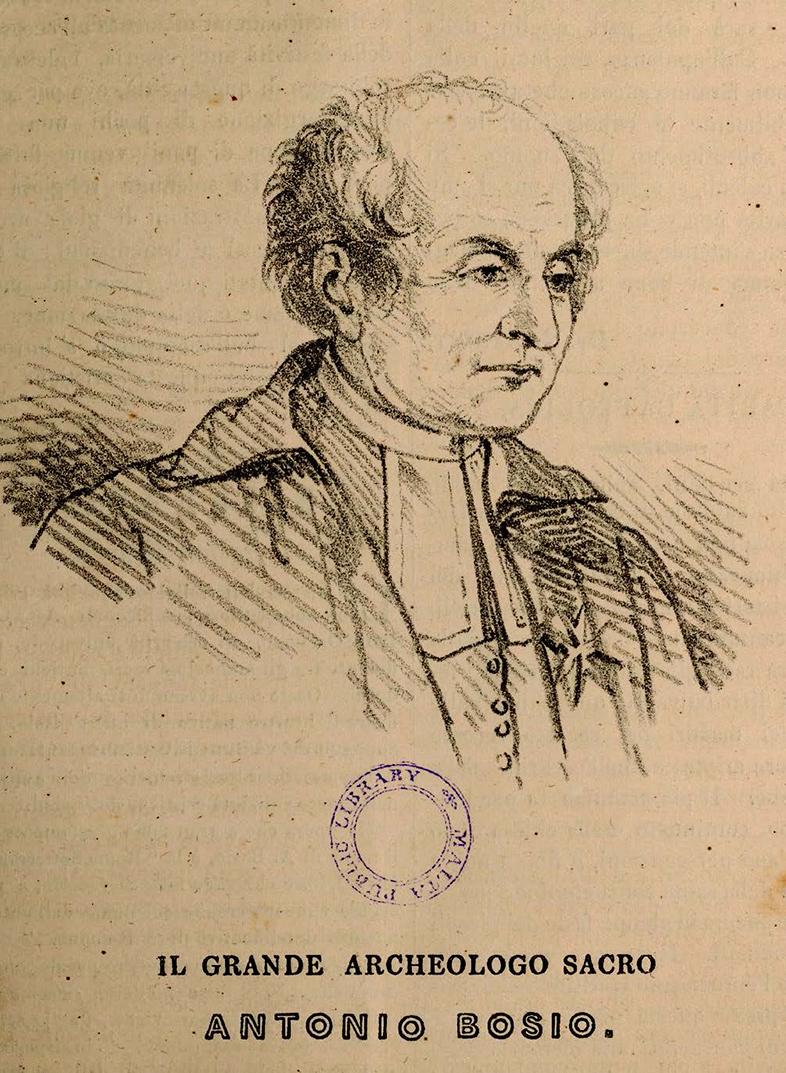 Antonio Bosio, lithograph print
Antonio Bosio (1575-1629) must be one of the least-known Maltese personalities locally although he holds a worldwide reputation. The illegitimate son of Fra Giovanni Ottone Bosio, he was eventually adopted by his uncle Giacomo Bosio, the historian of the Order.
He achieved a great reputation because of his archaeological discoveries in the catacombs of Rome, earning him the appellation of the ‘Christopher Colombus of Underground Rome’.
His posthumously published Roma Sottaranea is a monumental work that remained the major reliable source for Christian archaeology till the end of the 19th century. Chiara Cecalupo, a Marie Curie fellow at the university, supplies the few known facts about this personality and places his pioneering contribution to Christian archaeology in its context.
Nathalie Poutiatine spent half a century teaching ballet in Malta. Exiled from her native St Petersburg after the Russian revolution of 1917, she spent several years in the ballet circles of Anna Pavlova in Paris and whose company she could not unfortunately join due to a severe bout of acute bronchitis.
Kathrina Farrugia-Kriel writes about Poutiatine’s ballet work in Malta using some recollections of her students and making special reference to a unique short 8mm film shot in 1978 of Mimi Borg Testaferrata rehearsing her solo routine in Longing: Lyrical Poem to Poutiatine’s choreography.
Photo-historian Charles Paul Azzopardi’s favourite object is a unique cabinet card taken of a M. A. Berthoud by Adelaide Conroy in her Cherif Pacha Street in Alexandria. Mrs Conroy was actually the second wife of James Conroy who had come to Malta in 1861 with his circus troupe which included the teenager Richard Ellis who would become the legendary photographer and the 22-year-old Adelaide.
After bearing James five children, she separated from her abusive husband, set a studio in Malta for some years, then migrated to Egypt in 1879. This rare card indicates she had a studio there too.