Learning to live together
We can build our national identity based on shared civic values – such as democracy, human rights and embracing diversity – rather than exclusionary ones like race, religion, or ethnic origin, says Evarist Bartolo
Over 130 countries, including Malta, have fertility rates below the replacement level of 2.1 births per woman. We belong to the 71% where birth rates are too low to sustain their country’s populations without immigration. While births continue to decline across most of the world, population is growing mostly in Sub-Saharan Africa.
The European Union’s total fertility rate has reached a historic low of 1.34 live births per woman and is going into a permanent gradual decline. Malta’s is even lower at 1.01. Moreover, out of every three babies born in Malta, two are born to native Maltese mothers and one to foreign born mothers.
The decline is not necessarily because people don’t want children but also because of the high cost of living, inflation and unaffordable housing.
Besides, women find it extremely difficult to reconcile inflexible career structures with raising a family. Throwing money at the problem, increasing parental leave and child allowances and providing free childcare in Malta is not enough. At first, such policies might slow down the decline but, then, usually almost all countries’ fertility rates resume a downward trend.
The government aims to gradually increase birth rates to 1.3 by 2035 through extensive financial support and tax policies. To entirely replace the need for foreign workers, the fertility rate for Maltese women would need to more than double to a minimum of 2.1 births per woman and economic growth would have to be scaled back at the same time.
Even reaching a 2.1 fertility rate would only stabilise the native population. It could not expand the workforce fast enough to sustain Malta’s current high-growth economic model without foreign workers.
Babies born today will enter the workforce in 18 to 20 years’ time. A sudden increase in births cannot address the immediate, ongoing personnel shortages across various sectors including hospitality, healthcare and construction.
The last time Malta neared replacement level was in 1990, registering a rate of 2.02. It dropped to 1.99 in 1991 and has never recovered. By 2000, the rate fell sharply to 1.68. It continued to drop below the ‘ultra-low fertility’ rate of 1.3 by 2017.
Meanwhile, Malta’s property prices have risen by over 40% in the last 20 years. Young couples, especially the 31,000 to 35,000 low-skilled, low-income, Maltese-born workers, face high entry barriers to buying or renting a home. Property owners find it more profitable renting to foreign workers and tourists who choose short let apartments for their holidays.
These high housing costs force young adults to live with their parents longer, delaying, if not giving up, starting a family. When young Maltese manage to buy or rent modern, affordable apartments they are often too small to have more than one child.
Living standards and housing costs mean that both partners in a couple must work.
Malta’s property prices have risen by over 40% in the last 20 years- Evarist Bartolo
Higher educated Maltese women want a career before starting a family. If they do have a baby, they wait till they are over 30.
Inclusive patriotism
The very low birth rate means that we will continue to need foreign workers, irrespective of the economic model we choose and how many automated jobs we create. But we must ensure a liveable Malta and Gozo.
Over the centuries, thousands of Maltese were forced to emigrate in search of employment and a new life. Similarly, Malta itself welcomed many immigrants to its shores. Especially after the Order of the Knights came to Malta and needed workers in construction, for its shipyards and fleet for corsairing, thousands of workers from other countries came to work and live in Malta.
A traveller, Michael Heberer von Bretten, in the 1580s, observed: “There is a great coming and going of people in the harbour... Knights, soldiers, sailors, and merchants of all Christian tongues, together with an unmeasurable number of Moorish and Turkish slaves, making this port look like an assembly of all nations.”
In 1655, Jean de Thévenot wrote: “In the streets of Valletta and upon the marina, you shall see a continuous concourse of people from every corner... Greeks, Italians, Frenchmen, Spaniards, and Turks, some free, some in chains, yet all mingled together in trade and labour so that one might easily believe himself in a city belonging to no single nation, but to the entire world.”
During the 17th and 18th centuries, over a 220-year period, 7,059 foreign men (mostly Sicilians and Italians, but also Frenchmen, Spaniards and Greeks) married Maltese women. Between 20% and 35% of all marriages in the harbour area involved a foreign groom.
In the last 1,000 years, Christians, Muslims and Jews found ways of living together before Maltese Muslims were sent to Lucera in 1249 and the Jews were expelled in 1492. They had their churches, mosques and synagogues. Both Muslim and Jewish slaves had places of worship in Malta during the rule of the Order of St John.
Just as we managed to live with other people coming from countries with different cultures hundreds of years ago we need to learn to co-exist again today. It is not easy. Natives feel displaced, homeless and strangers in their own country when too many people from other countries arrive to work and live in tiny Malta.
Are we going to take more steps towards building an apartheid state where non-Maltese workers are treated as inferiors at work and in society? When we dehumanise and diminish others we dehumanise and diminish ourselves.
Those who come to Malta are not only workers, they are also human beings and must be treated as such. They, in turn, must abide by our laws and our nation’s core principles. Loving our country and our people does not mean that we must reject and hate other countries and other people.
Inclusive patriotism and nationalism are possible.
We can build our national identity based on shared civic values – such as democracy, human rights and embracing diversity – rather than exclusionary ones like race, religion, or ethnic origin.
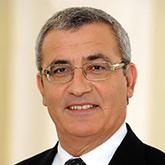
Evarist Bartolo is a former Labour foreign and education minister.