Leo the bridge builder
Pope Leo steps onto a stage where the political discourse is once again dangerously veering towards ‘might is right’
Depending on one’s religious convictions, the successor of Peter is chosen either by a group of elderly cardinals or through the guidance of the Holy Spirit. Regardless of one’s perspective on this matter, one must marvel at how the Church has, in modern history, elected the right man for the right time.
Consider Pope John Paul II, a cardinal from a Communist country, who ultimately played a pivotal role in the dissolution of the USSR. I lived through those turbulent times. I watched in awe as the Berlin Wall, a symbol of oppression, was dismantled, bringing fresh hope for peace and prosperity in Europe. Four men – Ronald Reagan, Mikhail Gorbachev, Lech Walesa and Pope John Paul II – were placed at this particular juncture in time and together, and, because of them, history took a turn for the better.
Almost 40 years later, we find ourselves yet again at a crossroads. Polarisation, hatred for ‘the others’, and disregard for human life are no longer just at the extremity of politics; they have become the norm.
We live in a time where a nation thinks it is kosher to wipe out its neighbour. Israel is making it clear to all that, one way or another, the Palestinians of Gaza need to go. Go as in be forcefully relocated or killed. They say that comparisons are odious. So is the indiscriminate murder of women and children, whether it happens in Krakow or whether it takes place in Gaza.
We live in a time when the leader of the free world shows complete disregard for democratic principles, demonstrates no compassion for the weak and his followers love him for it. President Donald Trump is stripping the US of its democratic credentials. His latest order is to ban foreign students from arguably the world’s best university, Harvard University. Why? Because these students are questioning the US’ current political direction, which favours the strong and oppresses the weak.
The present leadership of the US has destroyed the delicate balance of international politics. Rather than being a counterbalance against oppression and aggression on the world stage, the US has become an enabler. Worse still, it is now threatening to use force to take over Greenland for pretty much the same arguments used by Putin to invade Ukraine.
If the world continues on this path, we could be heading towards global conflict.
Against this backdrop, the Church elected Cardinal Robert Francis Prevost, an American who dedicated his life to the poor, embodying the Augustinian principles of community and service. He stands in sharp contrast to today’s modern populist politicians. He chose the name Leo XIV to honour the legacy of Pope Leo XIII.
Pope Leo XIII’s papacy coincided with the Industrial Revolution. Machines altered the economic and social balance in the industrialised world, heralding both immense wealth and extreme poverty among the populations of Europe. The unfair distribution of this newfound wealth led to the emergence of two new political creeds: capitalism and socialism. The former sought to “protect the enormous fortunes of some few” while socialists demanded a way out from the “utter poverty of the masses”.
Pope Leo stands in sharp contrast to today’s modern populist politicians- Mario de Marco
Pope Leo XIII, rather than shying away from this political minefield, wrote the encyclical Rerum Novarum, arguably one of the best pieces of late 19th century literature. This encyclical, among other things, championed the rights of workers to earn a decent living, to join a union and fight for their rights.
Pope Leo XIV spent most of his life among the poor, serving for many years as a missionary in Peru among communities where inequality still reigns supreme. He steps onto a stage where the political discourse is once again dangerously veering towards ‘might is right’ and ‘I’m okay, muck you, Jack’. This world needs a leader who can offer a humane alternative to the policies promoted by figures such as Trump, Putin, Netanyahu, Orbán, Farage and Le Pen – a leader who works for and views peace, not conflict, as the solution.
It is too early to pass judgement on this papacy. Still, the signs from his first weeks in office are more than encouraging, especially for those who believe in a third way of doing politics – a way where one seeks the middle ground, not as a form of appeasement but as a route to true justice and equality. This third way, championed by none other than Aldo Moro, seeks to bridge the gap between left and right politics.
The world needs a bridge builder now more than ever. I hope and believe that the cardinals in the last conclave have delivered us this bridge builder. His papacy, I suspect, will be judged by how he manages to lead the Church and the world during the turbulent days, months and years that lie ahead. He will engage, wearing the shoes of the fisherman, with resoluteness and spirituality. Whether he will succeed in delivering will depend on the world’s appetite for peace and justice.
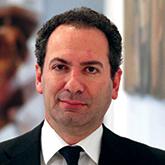 Mario de Marco
Mario de Marco is the Nationalist Party’s spokesperson on tourism.