The first AI pope
Why Leo XIV sees what the rest of the world doesn’t
Something quietly revolutionary happened on May 8. A modest white smoke rose above the Sistine Chapel and with it came a new pope – Cardinal Robert Francis Prevost, who took the name Leo XIV. For many, the headlines focused on his being the first American-born pontiff, a man who once served the poor in the Peruvian desert and later led bishops in Rome.
But what few seemed to grasp at the time – and what now deserves far greater attention – is that this pope may be the only major global figure who fully appreciates the depth of the challenge posed by artificial intelligence. From his first moments as Bishop of Rome, Leo XIV made clear: AI is not a side issue. It is the issue.
In his very first statements, the pope described artificial intelligence as the defining concern of the age. He did not speak of it in passing, as politicians often do when asked about tech trends. Instead, he gave it spiritual weight. He called AI a “new industrial revolution” – a phrase designed to place it within the Church’s long tradition of grappling with profound social change.
And he made the link explicit. His choice of the name Leo was not a coincidence. It was in homage to Pope Leo XIII, whose 1891 encyclical Rerum Novarum confronted the moral chaos unleashed by industrial capitalism. If factories and steam engines reshaped the 19th century, AI, said the pope, would reshape the 21st.
Yet, unlike many tech evangelists or Silicon Valley sceptics, Pope Leo XIV offers neither utopia nor dystopia. What he offers instead is moral seriousness. He sees that AI will not merely change how we work or shop. It will challenge the foundations of human identity, work, justice and dignity. And he is sounding the alarm not in a spirit of fear but of deep responsibility.
Already, artificial intelligence is making decisions about who gets a loan, who gets a job and who is watched by the police. It writes the news, ranks students, analyses resumes and crafts persuasive propaganda. Soon it may be designing weapons, predicting crimes and even drafting laws. These are not distant scenarios. They unfold in real time, often without regulation, oversight, or even much public awareness. Yet, global leaders primarily respond with silence, vague optimism, or market-first slogans.
Pope Leo XIV is not satisfied with this passivity. In addresses to journalists and public audiences in Rome, he has insisted that AI raises urgent questions: What becomes of human labour when machines think and decide? Who is responsible when algorithms cause harm? What happens to the dignity of the individual when data points and predictive analytics measure economic worth? These questions, he argues, are not technical. They are moral and must be answered before the damage is done.
Some critics will say the Church is late to technology debates. But this pope is proving otherwise. His swift engagement with AI suggests a pontificate that sees moral guidance not as reactive but proactive. He is not waiting for disasters before speaking. He is speaking now, in the hopes that disasters might be prevented.
His continuity with Pope Francis is also worth noting. In the final years of his papacy, Francis became an outspoken critic of unregulated AI, warning of its potential to undermine human dignity and global justice. He even called for an international treaty to govern its development. Pope Leo XIV has picked up that mantle and run with it, giving AI a place in press statements and the core of his vision for the Church.
The pope’s message is clear: AI must not be left to the market alone- Alexiei Dingli
His intervention is striking because it treats AI not as a novelty but as a test for our civilisational. Just as Leo XIII utilised Catholic social teaching to respond to the upheavals of industrialisation, Leo XIV appears ready to establish a similar moral framework for the algorithmic age. That will mean updating concepts like fair wages and safe working conditions for a world of gig platforms, algorithmic management and automated labour.
It will mean rethinking what solidarity looks like when workers are scattered across borders, linked only by code and cloud servers. It may even mean asking what it is to be human when machines can mimic our creativity, learn our preferences and anticipate our needs.
The pope’s message is clear: AI must not be left to the market alone. It must serve the common good, not just corporate profit. It must enhance human dignity, not undermine it. It must be guided by justice, not by speed or efficiency alone. Perhaps most importantly, its development must include the voices of the marginalised and the excluded – those most likely to be harmed by technologies built without them in mind.
That’s why this pope matters. In an age where technology often outpaces ethics, Leo XIV tries to align the two. He reminds the world that progress without purpose is dangerous and that wisdom, not just innovation, must shape our future.
If governments and corporations fail to grasp the stakes, it may fall to religious leaders, philosophers and citizens of conscience to ask the more profound questions.
Pope Leo XIV may have begun his pontificate with a blessing of peace. But beneath those gentle words lies a serious challenge – not only to the Church but to all of us. Will we treat artificial intelligence as just another tool, or will we recognise it as the profound ethical turning point that it is?
In naming the truth so plainly and calling the Church to lead, the new pope may be showing more vision than many heads of state. And that, perhaps, is the beginning of wisdom in the AI age.
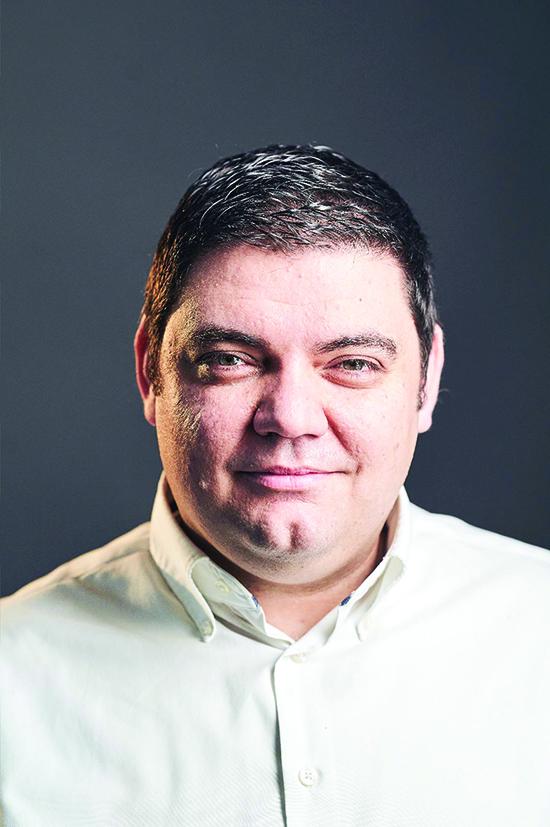 Alexiei Dingli
Alexiei Dingli is a professor of artificial intelligence.