Lest we forget: Inside the last concentration camp liberated by the Allies
Kevin Casha describes his experience visiting Stutthof concentration camp in Poland
Although a bitterly cold day, the clear, cloudless sky was of an incredible blue hue. It was in deep contrast to my reserved and sombre mood as I arrived at the infamous Stutthof concentration camp and hesitantly passed through the entrance of the notorious “Death Gate”.
I have long struggled to understand why, throughout history, humanity has repeatedly inflicted its most abominable acts upon itself. Sadly, torture, unjust imprisonment, freedom of speech violations, killings and maiming are still an everyday occurrence in some parts of the world. It is amazing how mankind has been so successful and brilliant in many spheres but has still not been able to control such basic instincts as hate, rage, envy and lust.
However, rarely in human history have atrocities of such magnitude been perpetrated within so brief a span as during World War II. Two of the most harrowing examples in recent history are Hitler’s “final solution” and Stalin’s “purges”.
My choice of visiting Stutthof was only dictated by location, as it was quite near to Elblag and the northern Polish lake areas where I was staying. It was a strange feeling realising that, nature wise, the site is so beautifully blessed with fir and pine forests interwoven with silver birch and oak. Coupled with extensive plains, this area gives the impression of a land of tranquillity and beauty.
The ground surrounding the camp is quite damp, consisting mainly of a thin layer of sand with underlying marshes and peat bogs. Even now, the camp’s secluded setting creates a jarring contrast: the serene beauty of nature alongside the memory of the unspeakable atrocities that took place there.
While at Stutthof, I could not fail but notice the eerie silence, conspicuous by the absence of birdsong, only broken by the rustling wind through the trees. No wonder that, particularly as dusk crept in, I felt like walking side by side with the ghosts of so many inmates who had met their untimely, tragic death on this same ground.
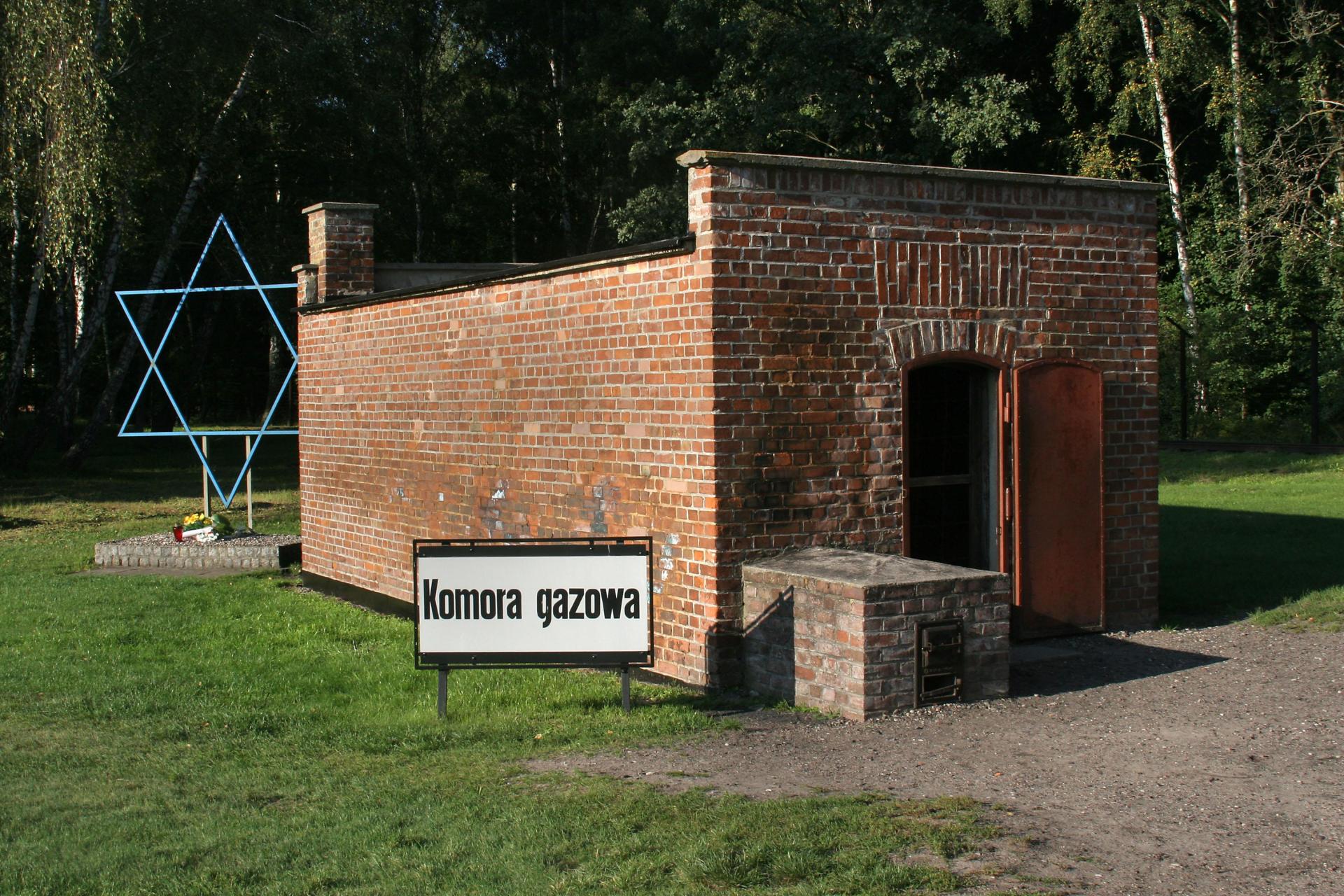 One of the gas chambers at Stutthof.
Inside the camp, I could not actually utter a word, only see, listen and struggle to understand. It is a sobering reminder of what we are at times capable of.
Stutthof (or Sztutowo), in Poland, was the first concentration camp constructed by the Nazi regime outside of Germany. Sztutowo was a fisherman’s village, located 34 kilometres northeast of Gdansk (Danzig) and three kilometres from the Baltic coast. With the German invasion of Poland, the name became Stutthof and entered history as one of the most infamous concentration camps.
Completed on September 1939, Stutthof was the last camp liberated by the Allies on May 9, 1945. More than 85,000 people are estimated to have perished in the camp from about 110,000 hapless people forcibly deported there.
Stutthof began its dark existence as an internment camp under Danzig police, then, in 1941, it was unashamedly changed to a “labour education” camp under German security police, before finally becoming an all-out concentration camp in 1942.
It is documented that Nazi authorities were compiling data and information on Jews, as well as Polish intelligentsia, as early as 1936. The first inmates at Stutthof were around 150 Polish citizens, imprisoned in 1939 after being classified by the Nazis as an “undesirable Polish element” and arrested on the streets of Danzig right after the outbreak of the war. The inmate population rose dramatically to 6,000 in the following two weeks. These were mostly socially and politically active Poles.
The original camp was composed of eight barracks for the prisoners and a huge building (the “kommandantur”) for the SS personnel. It was called “the old camp”. In 1942, the SS began to build a “new” camp and 30 barracks were added. In 1943, the crematorium and gas chamber, holding a maximum capacity of 150 inmates at one go, came into existence. When this eventually became too small to accommodate the sheer number of victims, the SS also employed mobile wagons as gas chambers.
The lowest estimated number of victims at Stutthof is 85,000. But the actual amount is certainly much higher as it is believed that inmates who were selected for execution immediately upon their arrival were not registered.
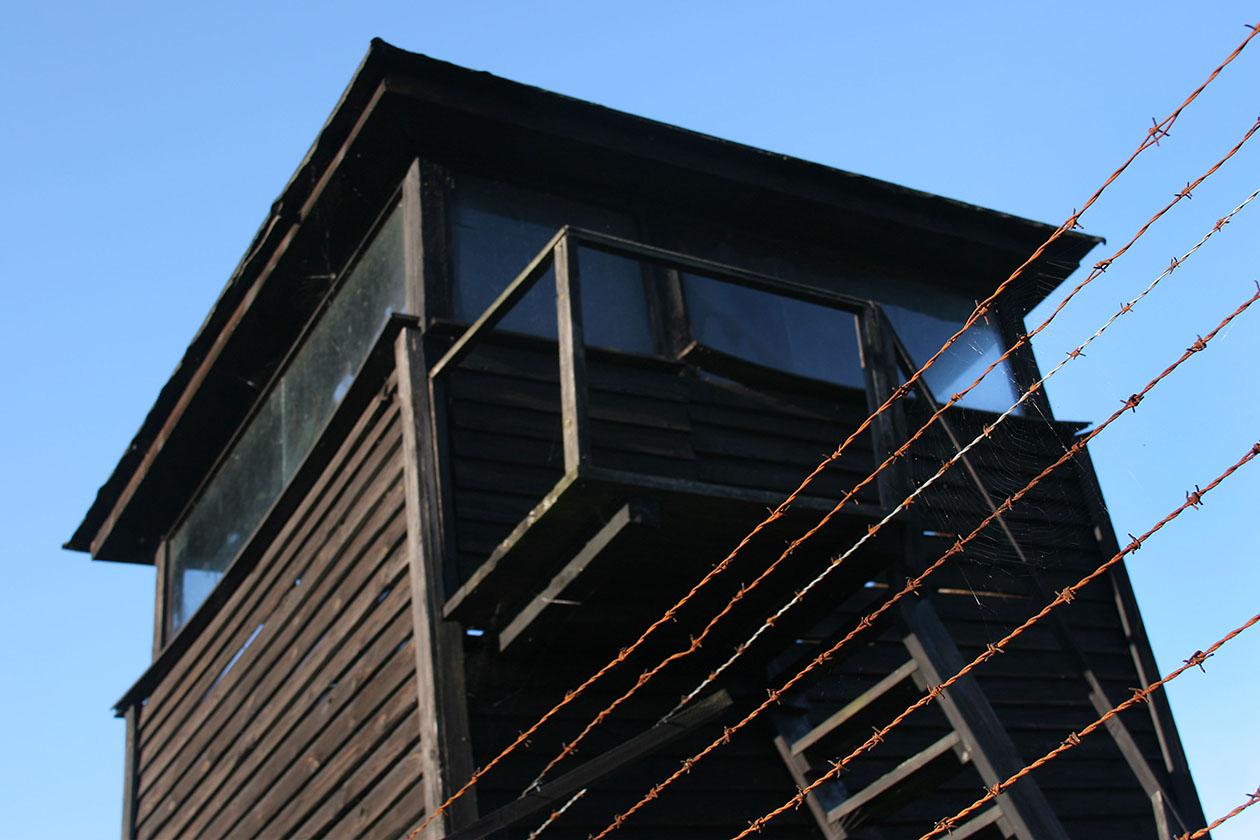 One of the camp's watch towers.
In some cases, prisoners never entered the camp proper, having arrived already condemned to death for alleged “offences” against the Nazi regime. These individuals were taken directly to the crematorium, where they were either shot in the back of the head or summarily hanged.
The commander of the camp was SS officer Max Pauli. After the war, Pauli was tried by an Allied court and sentenced to death.
The security officer of the camp was SS captain Werner Hoppe. Despite evidence of his participation in the murders, the court sentenced Hoppe to only nine years’ imprisonment. This serves as further proof − if any were needed − of the atrocious manner in which the camp was run, as evidenced by the substantial number of camp personnel who were later tried and convicted for war crimes.
Suffice to mention the grisly and inhumane practice of SS officers greeting new arrivals with the following words:
“You are no longer a person, just a number. All your rights have been left outside this gate. You are left with only one right which you are free to do and that is to leave through that (gas chamber) chimney!” (Stutthof Museum Guide)
Newly arrived prisoners were grouped in the ‘Old Camp’ square. Here they sometimes waited for a whole day or even longer, irrespective of weather conditions. Prisoners were often beaten before being entered into the camp register. They were forced to strip in the camp square and surrender all personal belongings to the camp stores. This was followed by the shaving of both men and women, then a body search for hidden valuables and, finally, a bath. Afterwards, the prisoners were issued with camp clothing and a number, and their personal details were recorded.
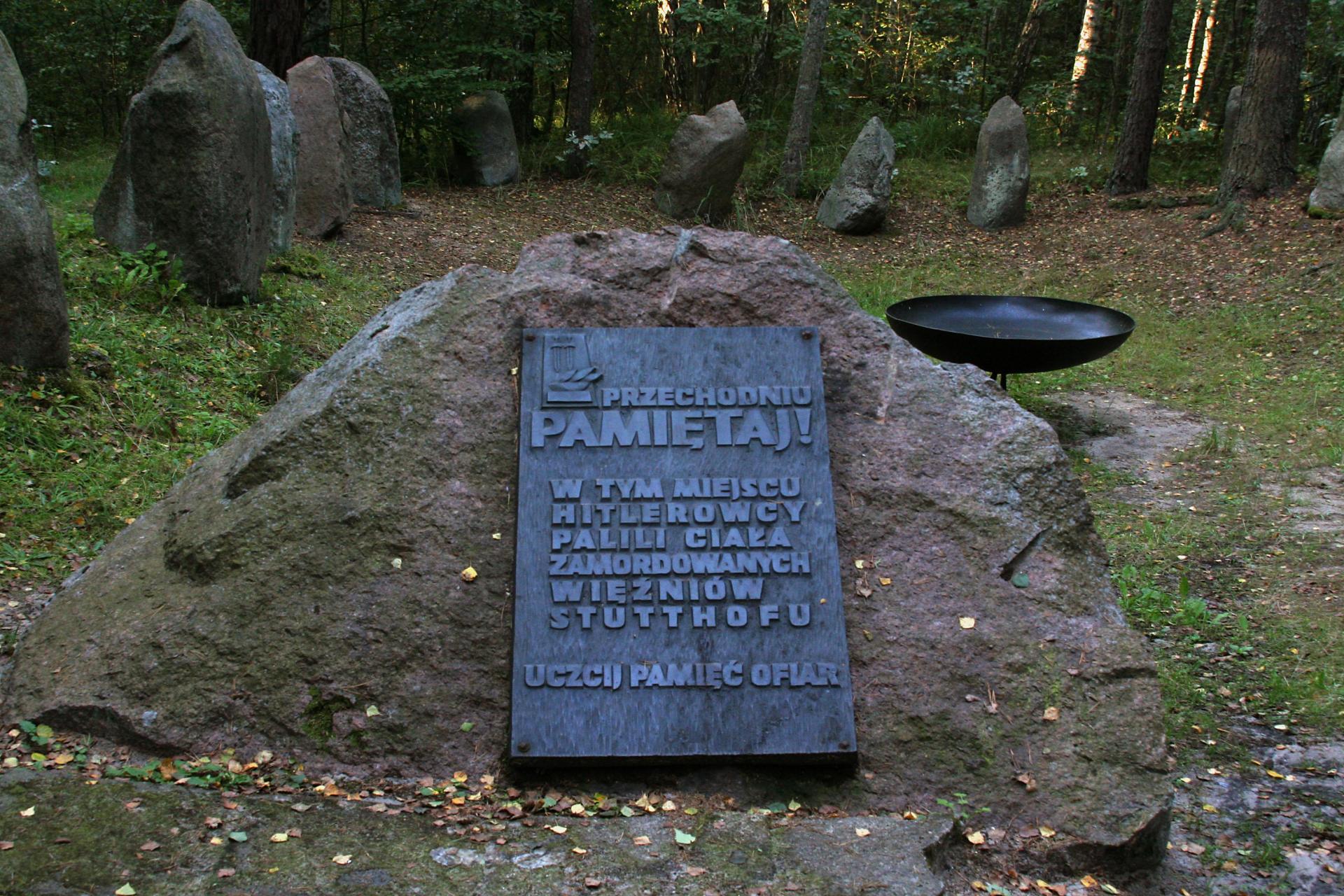 A memorial at the site where inmates were shot and burned.
A prisoner who witnessed the arrival of one such prisoner ‘consignment’ summed up the extent of the horror:
“They arrived in a horrifying physical state, usually from other camps, mainly Auschwitz, to die here. They plodded on and on fatigued, with black faces, hair growing from their skin in bristle. Staring with their huge black eyes with what seemed to be an inhuman expression. They wore only torn summer dresses, through the tears in which their grey bodies could be seen. They were without vests, gaunt with their pointed shoulders, sunken chests – they were more like some weird ugly birds. In their hands they gripped pieces of bread but were unable to eat.” (Stutthof Museum Guide)
Living conditions in the camp were brutal. Many prisoners died during typhus epidemics that swept the camp in 1942 as well as in 1944. Overcrowding was rampant, with the barracks often housing three to four times their intended capacity. During detention, death often resulted not only from illness. Those deemed incurable were deliberately killed, sometimes by phenol injections or by drowning in the baths at night. Few were spared.
Those prisoners who managed to endure the starvation, excessive forced labour, beatings and disease were often killed anyway, either by a shot in the back of the head or by lethal gas.
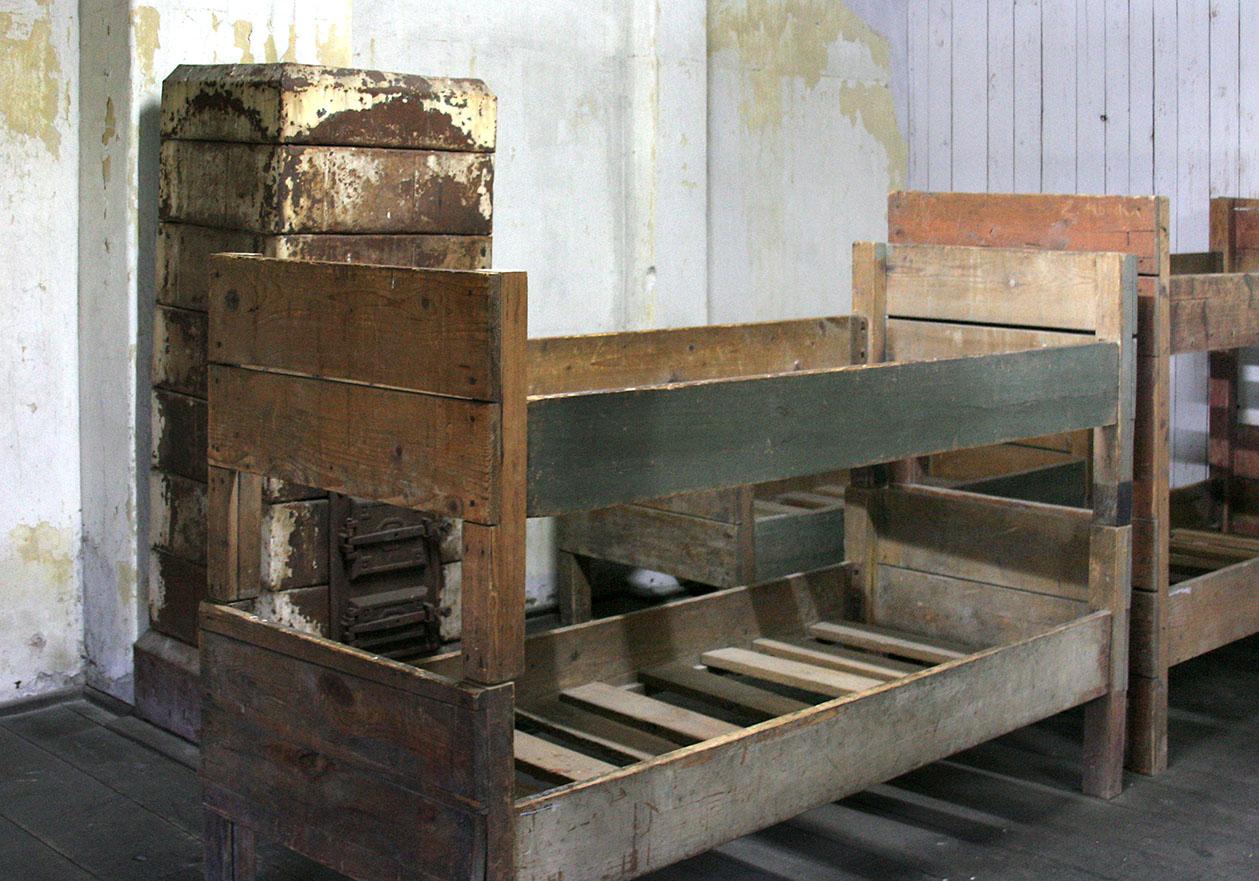 Bunk beds used at the camp.
Gassing was executed with the deadly Zyklon B. (Zyklon B was the trade name of a cyanide-based pesticide infamous for its use by the Nazis in the extermination camps during the Holocaust.)
I passed reverently and in complete silence through each section of the camp. I viewed in horror the small wooden bunk beds, the photographs of prisoners in their daily struggles, the piles of prison clothes and shoes, the inhumane washroom “facilities”, the Nazi camp registers, the personal files of the inmates, the medical rooms, the wagons and gas chambers where the “final solution” was implemented. The gaunt drawings by inmates of their own friends inside the camp are particularly haunting.
As the course of the war turned against the Nazi regime, the evacuation of prisoners from the Stutthof camp began in January 1945. When the final evacuation began, there were still around 50,000 prisoners, the overwhelming majority of them being Jews. About 5,000 prisoners from Stutthof subcamps were forced to march to the Baltic Sea coast and into the water, and barbarically machine-gunned. The rest of the prisoners had to march towards eastern Germany. Here their progress was cut off by advancing Soviet forces, with the Nazis redirecting the surviving prisoners back to Stutthof. Thousands perished during these brutal marches.
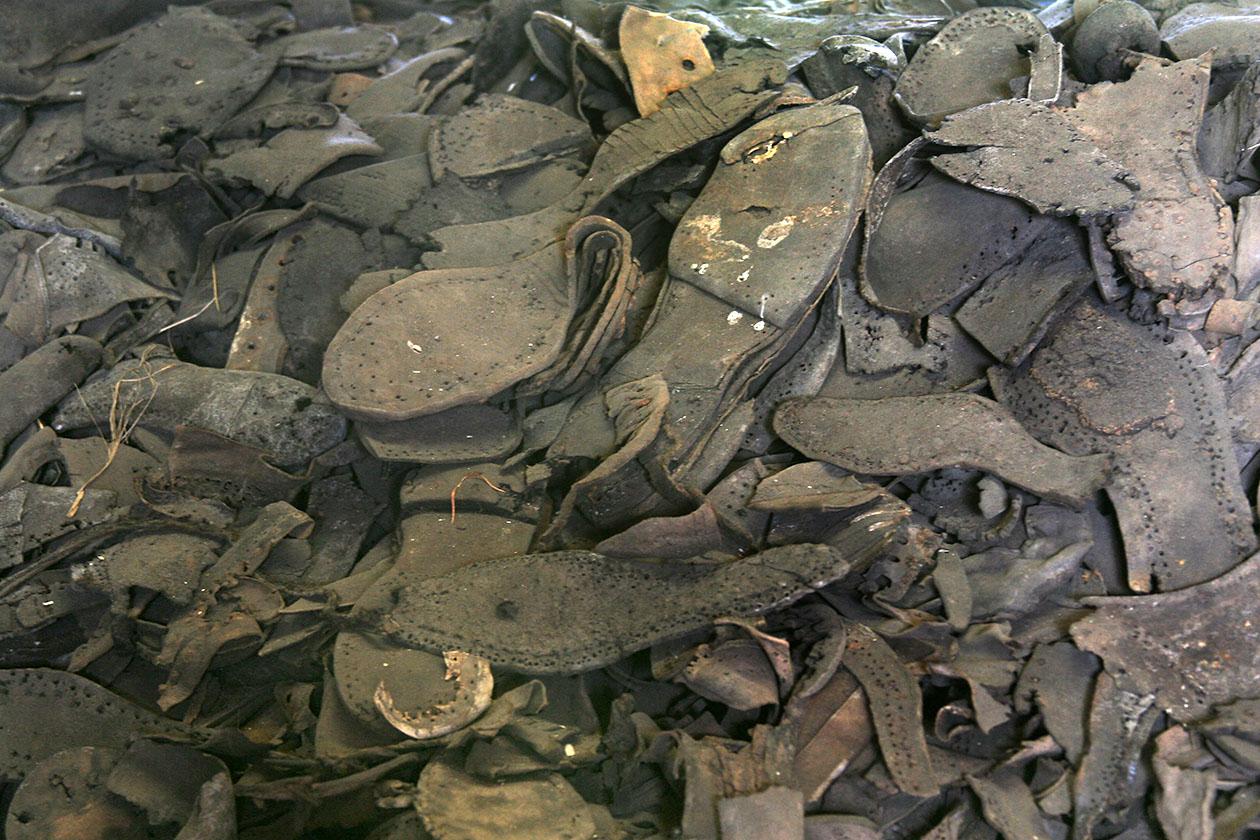 Piles of prisoner shoes at the museum.
In late April 1945, the remaining prisoners were removed from Stutthof by sea, since the area was then completely encircled by Soviet forces. The evacuation, which commenced at six in the morning, was under the command of SS Teodor Meyer. The march was expected to last seven days.
One of the few surviving prisoners described it as follows:
“How many of them fell down on the road, they were marching so long, until their legs could be pulled forward. When they fell down, a blow with the rifle butt tried to lift them up. They were too weak to continue the march; some of these falls were their last falls. An SS-man’s kick removed the body to the side of the road. Sometimes one kick was enough, or one knock with a rifle butt in the face, to finish life.” (Stutthof Museum Guide)
Again, hundreds of prisoners were forced into the sea and shot. Over 4,000 were sent by small boats to German concentration camps near Hamburg or to camps along the Baltic coast. Many drowned along the way.
It has been estimated that over 25,000 prisoners, one in two, died during the evacuation from Stutthof and its subcamps. The march actually lasted 10 days, with the Germans only issuing some form of rations for two days. The sounds of artillery fire from the Red Army’s guns could be heard from the east and south. The columns marched on through snow drifts with the SS guards murdering anyone who fell behind.
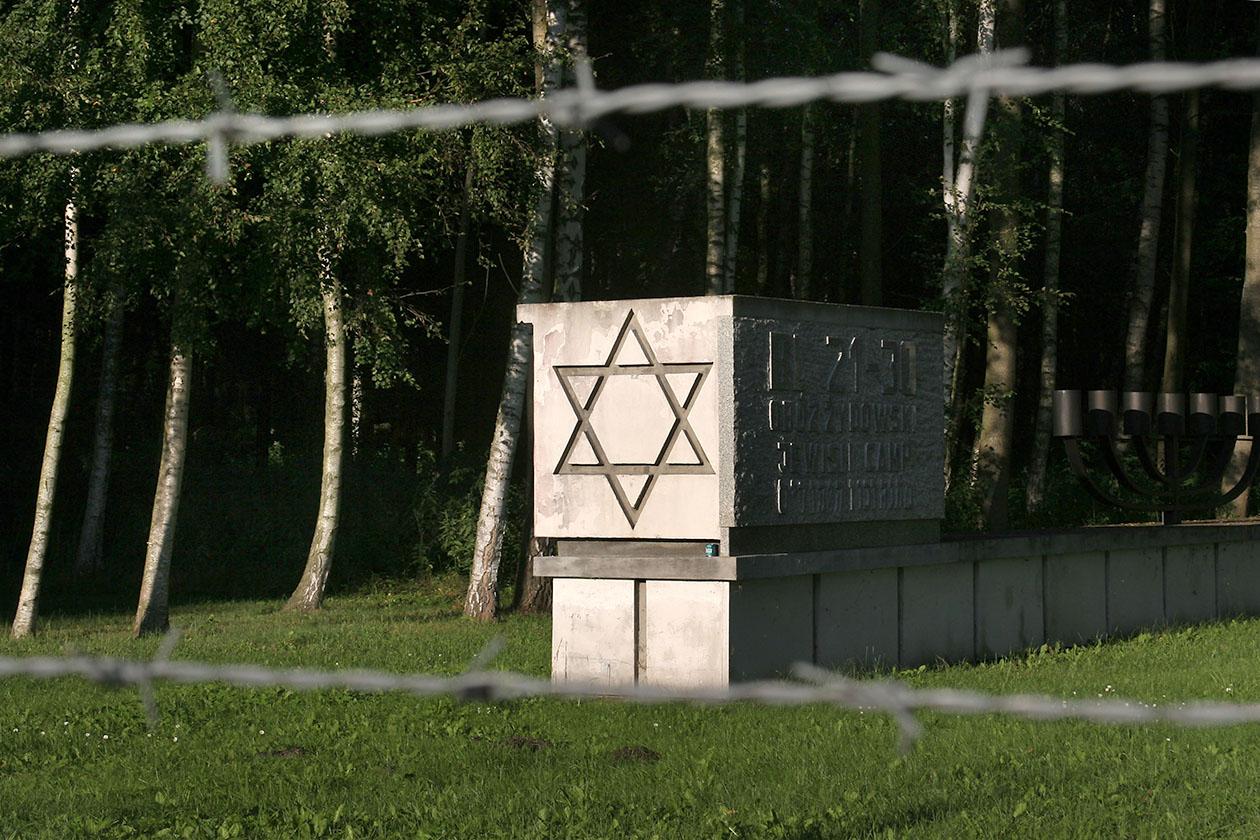 A memorial at the Jewish camp.
Soviet forces eventually liberated Stutthof and this martyred piece of land on May 9, 1945. Alas, they released just around 100 prisoners. These survivors had managed to hide during the final evacuation of the camp.
One cannot be indifferent to places like Stutthof. I think it is not only a monument to the courage and suffering of the people who experienced them but should be forever kept open as a constant reminder of mankind’s ferocity and evil against fellow human beings.
It is sickening that, after so much proof and facts on this dark episode of history have emerged, there are people, as well as a few country leaders, who still deny that all this ever happened.
No wonder we need to be jolted back into our senses from time to time.
I left Stutthof wearily, as the sun slowly disappeared, filled with shock, horror and anger.