Letters to the editor – January 11, 2026
Today’s letters by Times of Malta readers
Hurrah for untruth
Hugh Peralta of Valletta writes:
In her ‘The age of untruth’ (December 21), Anne Marie Galea states that her jaw hit the floor when she read that Standards Commissioner Joseph Azzopardi had concluded in a case under his review that a member of parliament “intentionally or otherwise presented a false picture” and that, despite this damning conclusion, the commissioner said that ethics had not been breached because “the obligation of honesty is only found in the Code of Ethics for Ministers”. I am sure that many other jaws hit the floor.
Azzopardi’s decision was not welcomed by Prime Minister Robert Abela who is reported as wanting an amendment to the code of ethics so that MPs and ministers would be legislatively equally in duty bound to tell the truth.
I applaud Abela’s concern but I question the remedy. His remedy is a legislative one; but is it really necessary? Abela’s proposed solution presupposes that Azzopardi’s decision is correct. But one can reasonably argue that Azzopardi’s decision is incorrect and that, therefore, the remedy is not amending or passing a new law but in the reversal of Azzopardi’s decision.
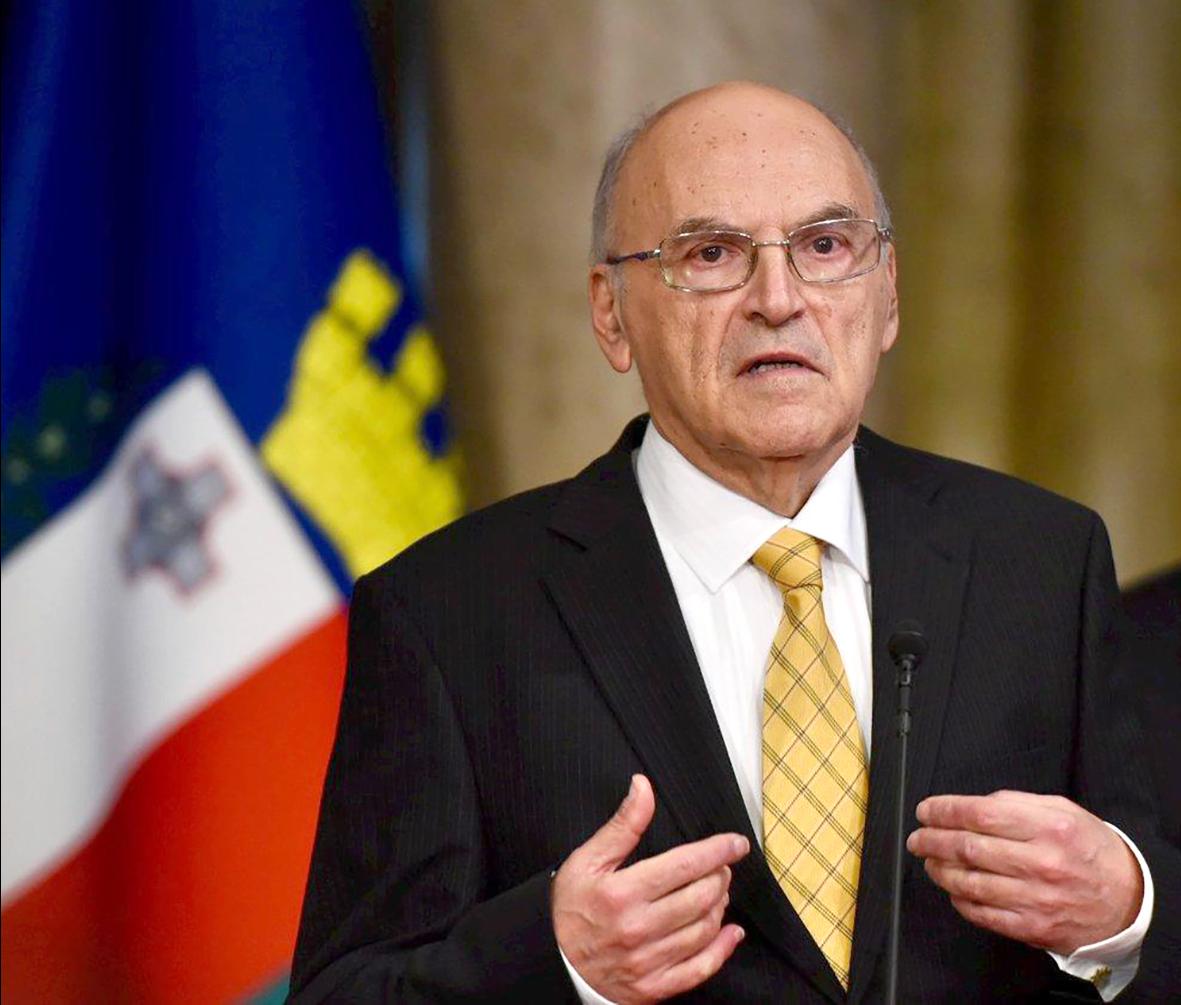 Standards Commissioner Joseph Azzopardi. File photo: Matthew Mirabelli
My preliminary basic considerations (in principle, and not this case) are as follows:
Azzopardi’s decision seems to be based on the fact that the written code of ethics does not provide that it is the duty of parliamentarians to speak the truth. In considering criminal breaches one finds that there is no crime without the relative legal enactment specifying the breach, nullum crimen sine lege.
But the present case is not being examined as a breach of the criminal law: it is being examined as a breach of ethics. And ethics can be breached even if the act is not in breach of the prohibitive written law. A simple but valid definition of ethics provides that ethics “deals with the science of morals; it is the branch of knowledge that deals with the principles of human duty... the whole field of moral science; the rules of conduct recognised in a particular profession or area of human life”.
The code of ethics and the application of ethical values has a purpose in that it is complementary to, but distinct from, the common law.
I think that, even if ethics may change in time and place, it is safe to say that, in our present-day society, our citizens expect public officers to speak the truth, especially when carrying out their duties.
Therefore, the public may well consider that an untruth, even if not in breach of the written code of ethics of that particular sector of public office, may nonetheless be a breach of ethics and, therefore, subject to censure.
If this consideration is upheld, and this is applied to this case, then one would have to logically accept that Azzopardi’s decision is incorrect. And, furthermore, that there is no need for specific legislation proposed by the prime minister to remedy the situation.
The road to legislation leads to further questions: Where does this legislation commence and end? Do we have to revisit all codes of ethics? Say, of all professions? For example, would we have to legislate that judges are to tell the truth as, otherwise, a standards commissioner could condone an untruth?
If we have legislation en masse what would then be the need of a code of ethics?
It is held that, with no specific legislation, the code of ethics can still be competently and fairly applied in accordance with contemporary ethical values.
I respectfully suggest that the prime minister’s proposal (knee-jerk reaction?) is studied in further depth and that the government does not rush into carrying out legislation which may not be necessary. Another solution can be found.