Letters to the editor - July 30, 2023
Today's letters by Times of Malta readers
Open letter to the education minister
Our education minister hit the proverbial nail on the head when, talking about the Maltese language, he was quoted as saying that we need to “make a big difference in the way we must look at this subject”.
Ask any pupil who is taking a course in the Maltese language how he is enjoying the subject and, more often than not, the reply would be that since taking up the course he has started to dislike Maltese.
Comparisons are odious but with English, language and literature are two completely different subjects and the student is asked to study a limited set of pieces of literature – four or five, if I’m not mistaken. To pass an examination in Maltese, language and literature are thrown in together and the student has to muster no fewer than 25 pieces.
What is even worse is the choice of the pieces. A happy-go-lucky 15-year-old has to face some Stejjer tal-Waħx or some Oqbra Mbajda of some sombre author who must have gone through a miserable childhood or had been subjected to domestic violence; or Qsari tal-Fuħħar about war in the Middle East; or Il-Ħarsa ta’ Rużann that takes him through five generations of socio-political issues in archaic Maltese. The amount of material is ridiculous while the maturity expected of our children is beyond their years.
When we were first introduced to English, we had child-friendly books about Peter and Jane who spent lovely holidays on their grandparents’ farm. There we were introduced to the basic day-to-day words of the language and came to discover the more sophisticated vocabulary as we moved on.
Yes minister, Maltese is an albatross around our children’s necks. It makes them unhappy and cheats them out of hours and hours they would gladly have spent on other subjects. This is bad enough to the Maltese-speaking children. You can imagine what a Calvary it is to English-speaking ones of whom there are many in Malta.
We are a product of our history and culture and English is the mother tongue of a number of Maltese nationals. Retorting that a Maltese should speak Maltese is running against the tide and ultra-nationalistic.
That Maltese is a pre-requisite to university admission is furthermore discriminatory when so-called foreigners can go to our university, get a stipend and have this requirement waived on the pretext of having a non-Maltese passport. Waiving this pre-requisite can also happen with children whose parents belong to the network of friends of friends.
JOE PSAILA SAVONA – Żejtun
Counter-history of the Maltese islands
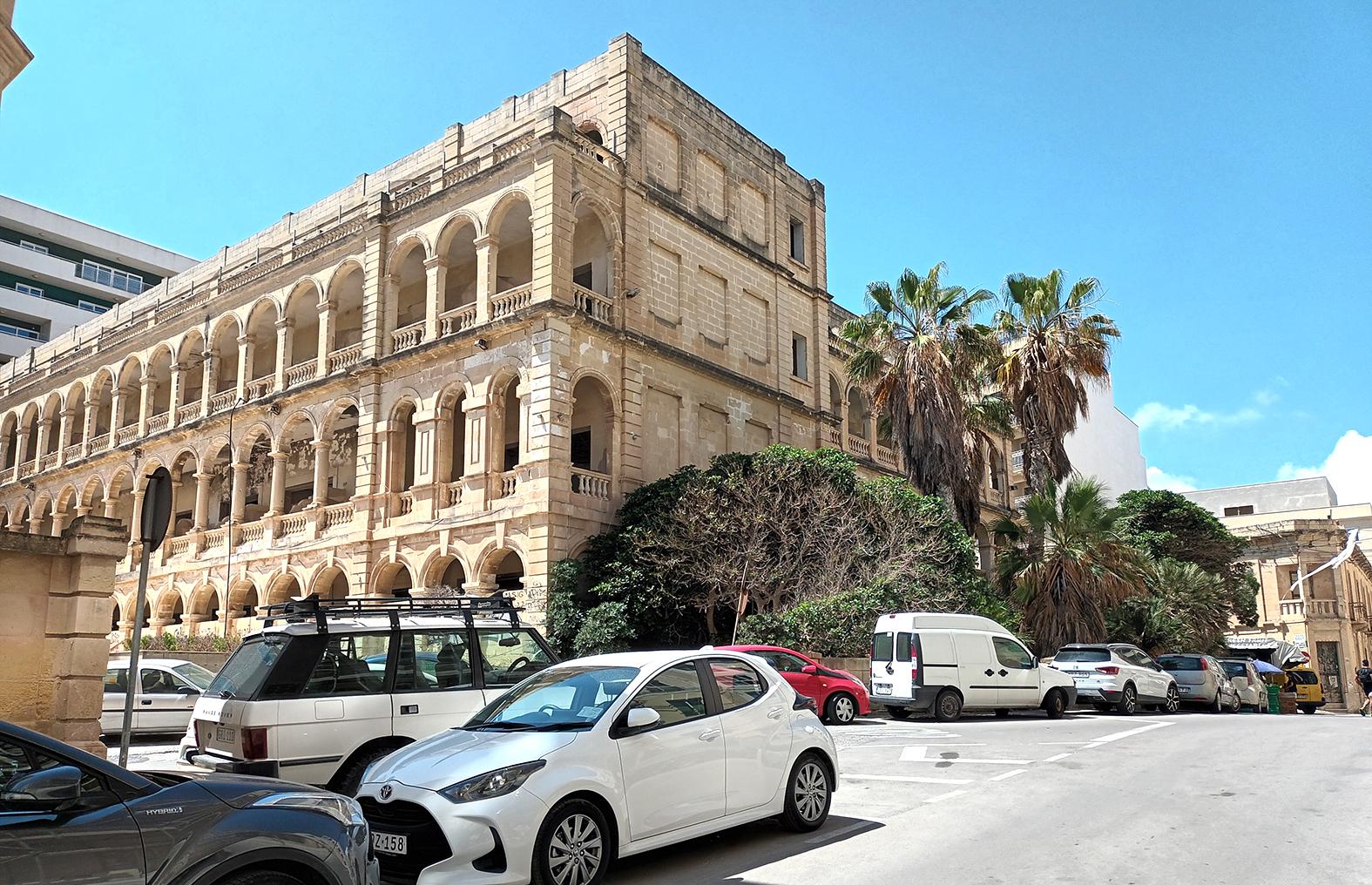 Fort Cambridge, in Tigné, Sliema is going to be turned into a 30-floor superstructure making it the highest in the area. Photo: Charles Xuereb
Marketing benefits apart, if it were not for academic value in respect to this paper’s esteemed readers, I would just be amused and not respond to such letters as those of Albert Cilia Vincenti and Alan Cooke (July 23), both known for their obsession with the British Empire. Or should I say obsessed with me?
Instead of seriously debating an issue, they keep taking personal digs at my scientific research as if Malta’s past periods formed part of some piqued football tourney, vying for a win.
Today, I ask readers to kindly forgive me if I have to abandon this game to concentrate on the second edition of my book. It will reproduce the commended reviews undertaken by scholars including Judge Giovanni Bonello, former EU Commissioner Tonio Borg, sociologist Godfrey Baldacchino, educationalist Charmaine Bonello, historians Alex Farrugia and Mark Sammut Sassi, journalist Charles Flores and researchers Mark Vella and Christian Keszthelyi.
Critiques appearing in Routledge’s Commonwealth journal of international affairs, The Round Table and Australia’s The Voice of the Maltese will also be included.
I am also using the summer break from academic tasks by authoring my next book, this time about the counter-history of the Maltese islands.
In view of the current heat cycle of the planet and Malta’s reckless overbuilding and overpopulation, chances are that, unfortunately, tourism would certainly wane and it could only be our opulent heritage, especially that left by the Baroque legacy, that could save us with quality tourism rather than the like-anywhere-else skyline.
CHARLES XUEREB – Sliema