Is Maltese like water or stone?
If Maltese does not enter the digital, creative and imaginative lives of children, it will not be chosen, and if it is not chosen, it will not survive, says Jacqueline Zammit
“Nothing in the world is softer than water. Yet nothing can surpass it in overcoming the hard” - Laozi.
We are taught to admire resistance, to defend, to hold the line, to stand firm. Strength, we assume, must be rigid. But water tells a different story. It does not fight the stone; it moves around it. It yields, but it does not surrender. And, in that quiet persistence, it reshapes even the hardest stone.
What endures is not what resists change but what adapts to it.
Our language now stands before that same choice. Maltese is not a monument. It is not something to be frozen, protected and admired from a distance. It is a living cultural current. And if it is to live, it must move. Keeping it unchanged does not protect it. It suffocates it.
This is not about weakening Maltese or lowering standards. It is about ensuring it remains a language that is lived, not merely preserved.
We reassure ourselves that Maltese is safe. People still speak it. We are bilingual. And, indeed, Maltese remains widely spoken across society. But this reassurance is misleading. We are looking in the wrong direction, drawing comfort from what we hear around us while ignoring where the future is being shaped.
The future of a language is not decided by those who already speak it. It is decided by those who are still growing into it. And today’s children are growing up in a world where Maltese is barely present at all. We already know this. Maltese is largely absent from the digital environments that shape everyday experience. It is missing from the tools, platforms and systems where younger generations spend their time, from games to smart technologies. What we have not yet accepted is what that absence will cost us.
For children, life unfolds through screens, games, streaming platforms, social media such as TikTok and immersive digital worlds. These are not distractions. They are where identity is formed, where humour lives, where creativity happens and where belonging is negotiated. In those spaces, Maltese is almost invisible. That is not a minor problem. It affects the very existence of Maltese in the future, not just its quality, status or prestige. Languages do not disappear because people reject them. They disappear when they are no longer needed. This is how loss begins, not with resistance, but with absence.
Each generation tells part of this story. For many, Maltese was life itself, shaped by a multilingual past and enriched by Italian through films and television. Later generations moved comfortably between Maltese and English. The balance has now shifted and English dominates the spaces where meaning is created. Children are born into a digital world, not simply raised in one. They no longer inherit language in the same way; they encounter it. What is not encountered is not chosen. What is not chosen does not survive.
This is why the question is no longer simply whether Maltese is spoken at home, in the kitchen or around the table. Those spaces still matter and they always will. But they are no longer enough. For children today, language is formed as much beyond the home, now largely in digital and virtual environments, as inside the home. If Maltese is absent from the worlds they inhabit, it will not be resisted. It will simply not be needed.
This is not about competing with English. That battle has already been decided. English is the ocean, shaped increasingly by global, often American, digital culture. The question is whether Maltese becomes a living current within it or a distant shoreline, visible but no longer inhabited.
The challenge today is not preservation. It is transformation.
Maltese is largely absent from the digital environments that shape everyday experience
Like cultures and languages everywhere, Maltese cannot stand still. Language is a mirror of culture and cultures today are changing rapidly; Maltese culture is no exception. If culture moves and language stands still, the mirror cracks. If Maltese is to survive, it must become irresistible to children. Not merely taught but desired. Not imposed but discovered, explored and made their own. It must feel natural, relevant and alive in the worlds that children inhabit.
Children do not choose languages out of duty. They choose them because they play, laugh, create, express themselves and dream in them. Right now, Maltese is missing from those experiences. Confined to classrooms and formal contexts, it risks becoming something respected but irrelevant. A language that becomes irrelevant will not endure.
Some will say this concern is exaggerated. That Maltese is not dying. That is true. But languages do not vanish overnight. They disappear while everything appears stable. The real question is not how many people speak Maltese today but whether children will still find it relevant tomorrow. Already, a significant share of children is growing up identifying more strongly with English as a first language.
Others will argue that Malta is too small, that resources are limited and that, with declining birth rates, the question is not how to protect Maltese, but whether we still need it at all. But this is precisely the wrong question. Survival has never depended on size. It depends on intention. If fewer children are being born, the language does not become less important; it becomes more so. Every lost domain carries greater weight, not less.
In such a context, allowing Maltese to retreat from key areas of life is not neutrality; it is abandonment. A language is not justified by numbers alone, nor by utility in a global market. It is the medium through which a culture thinks, imagines and understands itself. Even small, targeted investment in Maltese digital content, games, media and storytelling can turn absence into presence and presence into attachment. What is missing is not possibility but priority.
What Malta needs now is not reassurance but a decision, a commitment to investment, imagination and the courage to place Maltese at the centre of future making, not past keeping. If Maltese does not enter the digital, creative and imaginative lives of children, it will not be chosen, and if it is not chosen, it will not survive.
Languages rarely die loudly. They fade quietly, while everyone believes they are safe. Maltese does not need protection through stillness. It needs movement, presence and courage. It needs to flow. Because, like water, it can endure but only if we let it. If we do not, we will remain bilingual but we will have lost something we cannot replace and may not even notice until it is gone.
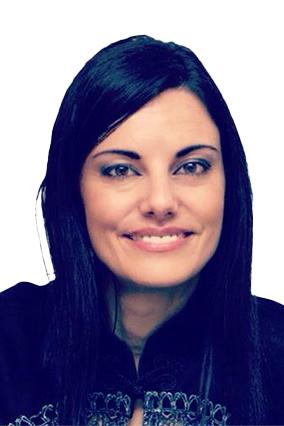
Jacqueline Zammit is a senior lecturer at the University of Malta specialising in Maltese pedagogy and the teaching of Maltese as a foreign language and writes on the future of Maltese in a rapidly changing digital world.