Plan A was to shoot Daphne. Plan B to 'ensure she dies', Maksar trial told
Four charged in connection with murders of Carmel Chircop and Daphne Caruana Galizia
Daphne Caruana Galizia was murdered "for her journalistic work" while lawyer Carmel Chircop was shot dead "for €20,000", the trial against four men implicated in their murders has been told.
The prosecution began outlining the case against Tal-Maksar brothers Adrian and Robert Agius and their associates Jamie Vella and George Degiorgio in the first day of their trial on Thursday.
They deny a raft of crimes that could land them with life sentences in prison if convicted.
While all four stand accused of crimes in relation to Chircop's 2015 murder, only two of the four - Robert Agius and Jamie Vella - face charges related to supplying the bomb that killed Caruana Galizia.
Attorney General lawyer Anthony Vella began to outline the prosecution's case against the four during a sitting that was largely taken up by deciding the jury and outlining their responsibilities.
He told them that the October 2017 murder of Caruana Galizia was motivated by her journalistic work and was highly premeditated.
Vella said the first plan was for Alfred Degiorgio, who is already serving a sentence for his role in the assassination, to shoot her dead inside her home in Bidnija.
“The plan was changed to use a bomb, and the bomb was placed inside the car to ensure that she dies," the lawyer said.
He said the motivation for the murder of Carmel Chircop was financial. One of the accused, Adrian Agius, owed money to the victim, and he committed the crime so as not to honour the debt. Agius is accused of commissioning the hit in October 2015.
“They cut his life short not to pay the money they owed him. That’s how much life costs, €20,000 (the sum allegedly paid to the hitmen),” Vella said.
The case continues on Friday.
Live blog
Trial concludes for today
5:05pm Attorney General lawyer Anthony Vella informs the court that he has some more to go. But will conclude on the points he is making, and continue tomorrow morning at 9am.
Defence lawyer Noel Bianco said that the defence is still without the witness list. The list will be sent to him tonight.
The jurors leave and so do we. Thank you for following along with us.
Plan A was to shoot her. Plan B was to 'ensure she dies'
5.06pm Vella tells the jury that the first plan was that Alfred Degiorgio (George’s brother) would shoot her dead inside her house. That plan was scrapped, and instead they decided to kill her using a bomb.
“The plan was changed to use a bomb, and the bomb was placed inside the car to ensure that she dies," the lawyer says. "To ensure a big and powerful explosion. They also took a container filled with fuel and stuck it to the bomb to ensure that the bomb was powerful enough.”
He said the bomb has been reconstructed and will be shown to the jurors.
'A macabre scene'
5.04pm The prosecutor gives a very graphic description of what the jurors will see in connection with the actual explosion that killed Daphne Caruana Galizia. An eye witness is set to testify on what he saw on the day. That is her son, Matthew, who heard the bang and saw the ball of fire.
“It was a macabre scene,” Vella adds. “The wilful homicide of Caruana Galizia was highly premeditated as you shall see."
Daphne was 'killed for her journalism'
5.03pm After earlier outlining the motive in the Chircop murder, the lawyer for the Attorney General turns to Daphne.
"She was killed because of her journalistic work," he says. “Whether you agree or not with her, prejudice has no place in this courtroom. We also know the consequences after the murder both nationally and internationally, since she was killed on the job. Each person is important and precious. No one has a right to kill another person irrespective of their work, their writings,” Vella says.
'Leave your prejudices at home'
5pm The prosecutor says that there was a certain exposure to the murder of jounalist Daphne Caruana Galizia and tells the jurors to discard any prejudice they may have against the victim. He notes that critics denigrated Caruana Galizia using words like “witch”, “biċċa blogger” among others. “Such prejudice has no place in the courtroom. Caruana Galizia was a mother to her children, a daughter to her parents, her father was in this courtroom this morning, and her life was cut short,” Vella says.
Lawyer shot for €20,000
4.50pm Anthony Vella starts to set out the case for the prosecution. He says the accused shot at Carmel Chircop. Because Adrian Agius owed money to the victim, he committed the crime and interrupted his life, not to honour the debt.
“They cut his life short not to pay the money they owed him. That’s how much life costs, €20,000 (the sum allegedly paid to the hitmen),” Vella says.
Court break
4.07pm We're on a short break from this case. But that doesn't mean the work of court reporting stops.
There's been an interesting development in the case of a worker killed in a building collapse in Sliema. You can read that here.
Motive in Carmel Chircop murder
3:30pm AG lawyer Anthony Vella is speaking about Carmel Chircop’s murder in October 2015. Vella says the motive behind the murder, allegedly commissioned by the Agius’ brothers, was that Chircop was owed a substantial sum, amounting to hundreds of thousands of euros, by Adrian Agius.
Presidential pardons
3.25pm The Attorney General's lawyer turns his attention to two key witnesses.
The first is convicted murderer Vince Muscat, who is serving a 15-year sentence after reaching a plea deal with prosecutors to provide infomation about Caruana Galizia's murder. He was also given a presidential pardon in Chircop’s case. The presidential pardon lays down a condition that he has to testify the whole truth.
Another notable witness, Melvin Theuma, will also be summoned to testify. Theuma, who has confessed to acting as a go between in Caruana Galizia's murder, was granted a presidential pardon.
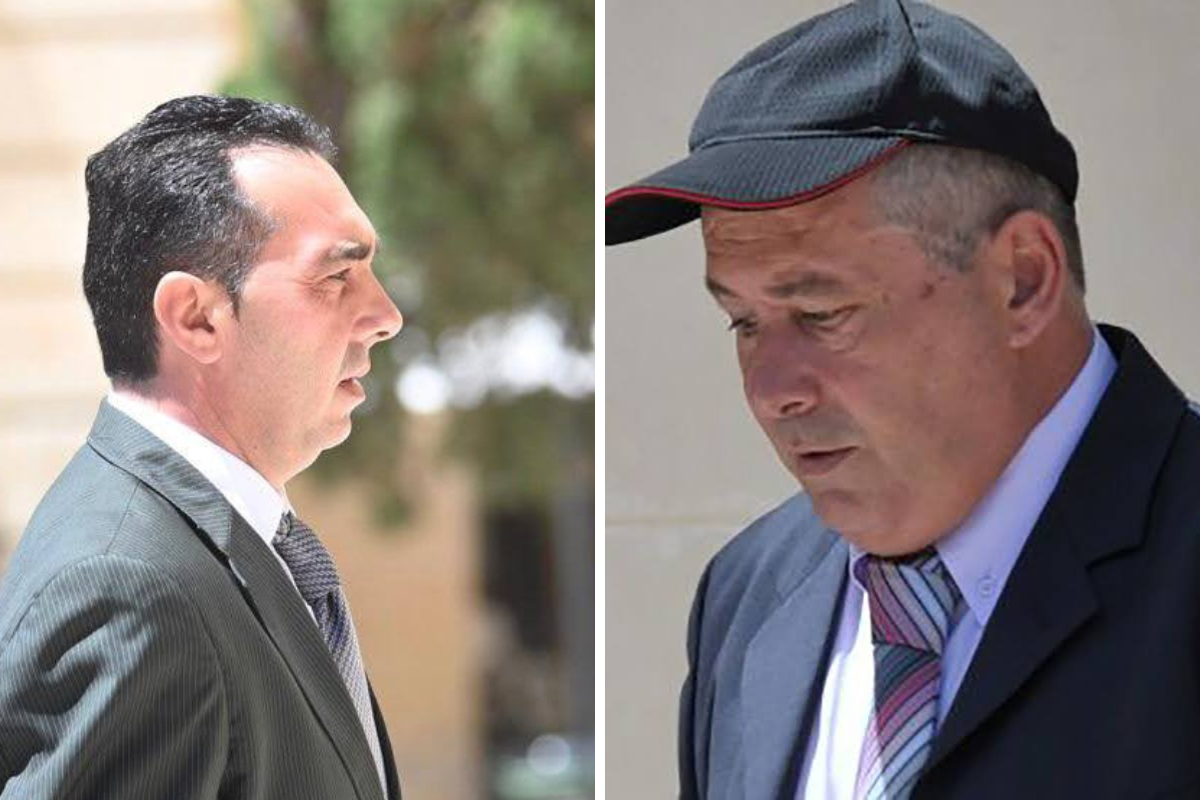 Melvin Theuma, left, and Vincent Muscat
How the trial will unfold
3pm The lawyer for the Attorney General is still addressing the jury, explaining how the trial will unfold.
- First the AG lawyers will outline the facts, state the evidence to support those facts and demand a declaration of guilt against the accused;
- Witnesses will be examined by AG lawyers, with only indirect questions allowed. So no 'yes or no' questions;
- Then the witnesses will be cross-examined;
- The jurors can pose their questions at this stage by submitting them to the judge, who will also ask questions of witnesses;
- The defence stage will start and defendants will state whether they want to testify or not. The defence will make its case and bring forward any evidence they want;
- After the close of the defence, the AG will reply, and the defence will have a rejoinder - the final address where the defence can rebut the prosecution’s arguments;
- The judge will then sum up by addressing the jury and explaining to them the nature and ingredients of the offence in the bill of indictment and points of law which may be connected with the functions of the jury.
“Each one of you needs to examine the evidence separately, and once you go into deliberation, you will analyse and judge accordingly,” Anthony Vella, from the Attorney General's office says.
Daphne family members in court
2.53pm Daphne Caruana Galizia's family members are expected to be called as witnesses at some point during this trial. Today, her son, Paul, who followed her footsteps and works as a journalist, is here. So is her father, Michael Vella and other family members, including her youngest sister Helene Asciak.
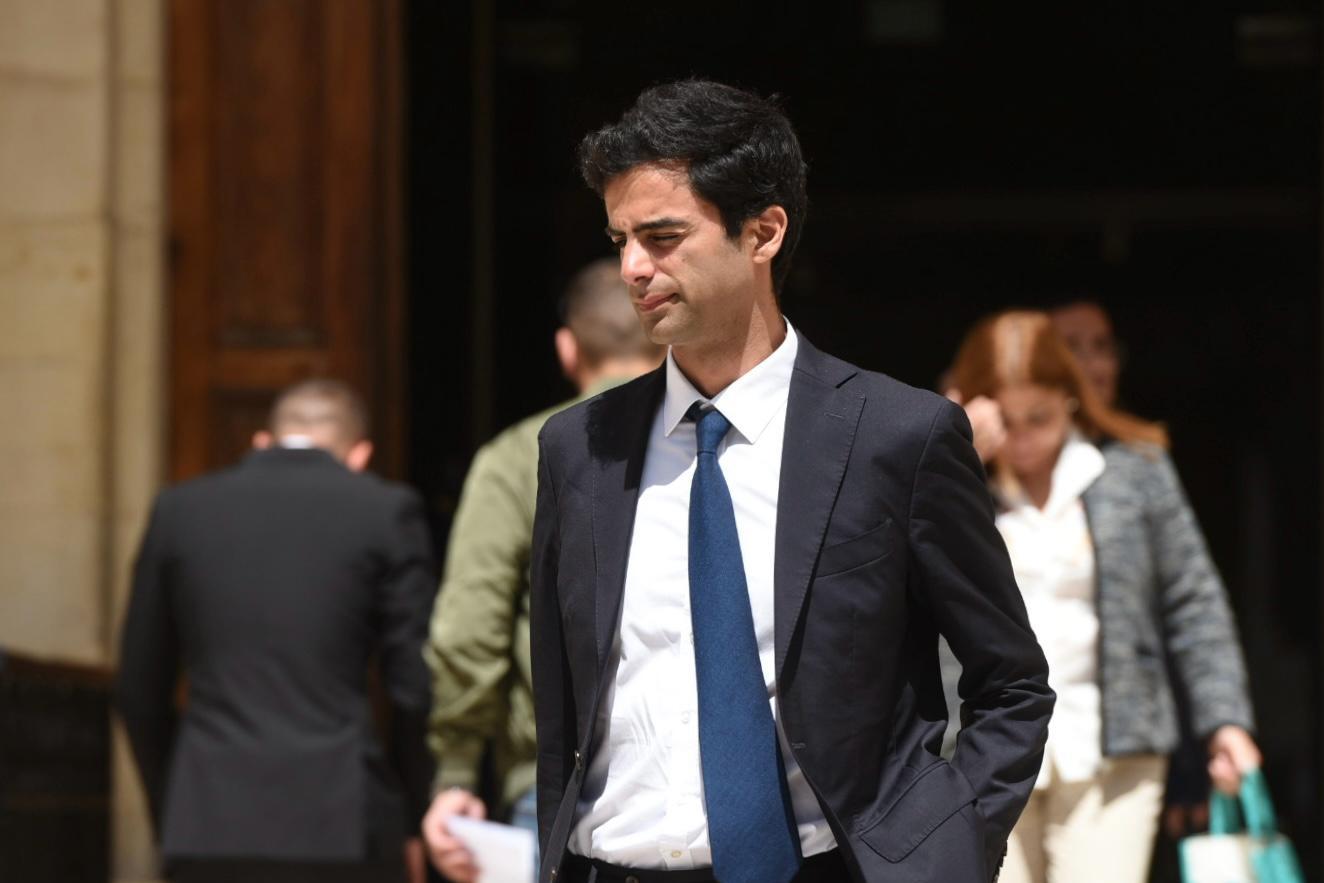 Paul Caruana Galizia outside court. Photo: Chris Sant Fournier
 Daphne Caruana Galizia's father Michael Vella and her youngest sister Helene Asciak outside court on Thursday. Photo: Chris Sant Fournier
Jurors return
2.41pm Attorney General lawyer Anthony Vella starts addressing the jurors that will decide this case. He welcomes them to the jury. He introduces fellow prosecutors Godwin Cini, who will be examining and cross-examining the witnesses, and Danika Vella.
He explains that the AG office prosecutes cases against individuals brought before the court accused of having committed an offence. Serious cases are prosecuted by the AG. Here we’ve got two homicides, and therefore the AG office prosecutes in the name of the Republic of Malta.
"We are prosecutors not persecutors," he says. "We are here for justice to be done".
He tells the members of the jury that their role is to determine guilt or lack of it and reminds them that the Attorney General "does not accuse individuals on a whim". This case comes after "massive investigations", he says.
Complaints
2.37pm Defence lawyer Ishmael Psaila tells the court that the defendants informed him that by the time they ate the food prepared by Corradino Correctional Facility, it was cold. He suggest they are taken to CCF to eat and are then brought back to court. Alfred Abela says his client, Robert Agius, is complaining that the chair is not comfortable and asks to change it. It is changed.
Sitting resumes
2.27pm We're back, along with the prosecution, defence and the accused.
'This case is important for Europe'
12.50pm Flutura Kusari leads the European Centre for Press and Media Freedom’s legal support programme.
She’s flown to Malta to attend the first day of the trial. We caught up with her outside court during the lunch break.
“This case is important not only for Malta, but for Europe,” she told us, noting how journalists have been killed in various countries in the past years.
“The way this case will be resolved will send a signal to Europe on how seriously impunity against journalists is taking. We hope that this case shows that Malta takes cases of assassination of journalists seriously.”
Lunchtime
11.54pm Jurors get a few final words of instruction: they cannot leave, and they cannot communicate with the judge directly. If they wish to speak to her, they must do so through the deputy registrar.
The judge then pauses proceedings for a lunch break. Jurors can call their family members, fetch their belongings, grab a bite to eat and then settle in for what is shaping up to be a lengthy trial.
Proceedings will resume at 2pm, when the prosecution will make its opening address.
Two in one
11.40am This is a somewhat unusual trial, because prosecutors chose to combine charges related to two separate murders into one case.
Carmel Chircop was killed in 2015. Daphne Caruana Galizia was killed two years later.
Not all four defendants stand accused of the same crimes: While all four face charges in connection with Chircop’s murder, just two - Robert Agius and Jamie Vella - stand accused of providing the bomb used to assassinate Caruana Galizia.
The judge explains to jurors that they will need to decide on the seven charges the accused face separately. The first four counts concern crimes in relation to the murder of Chircop, while the other three relate to Caruana Galizia’s murder.
Judge to jurors: 'Nobody can interfere in your decision'
11.22am The judge addresses the jurors and gives them some guidance.
“You will judge the facts. This is your decision alone. My role is on legal matters, I will guide you accordingly,” she tells them.
The judge makes it clear to jurors that their decision has to be based on legal rules. Sympathy, antipathy or fear cannot come into it.
How will the trial play out?
11.10am With the jury sworn in, the court registrar is now reading out the indictment against the defendants.
Jurors will be given a copy and told the defendants are pleading not guilty to charges.
A prosecutor from the Attorney General’s office will then address the jury, laying out the facts of the crime and the evidence the prosecution intends to present to support those facts.
Once that’s done, the court will begin summoning witnesses to be questioned and cross-examined. Jurors can ask witnesses questions if they need to.
When the prosecution rests its case, it will be the defendants’ turn to present their evidence.
At the end, both sides – prosecution and defence – will get an opportunity to rebut the other. And then, following closing statements by the two sides, it will be down to the nine-person jury to decide on the defendants’ fate.
Who are the lawyers?
11am Madam Justice Edwina Grima is presiding over proceedings.
The prosecution is being led by Attorney General lawyers Godwin Cini, Danika Vella and Anthony Vella.
Jamie Vella is being assisted by lawyers Ishmael Psaila and Amadeus Cachia.
Robert Agius is being assisted by lawyers Alfred Abela and Rene Darmanin.
Adrian Agius is being represented by lawyer Nicholas Mifsud.
George Degiorgio is being assisted by lawyers Noel Bianco and Leslie Cuschieri.
The Caruana Galizia family is represented by lawyers Jason Azzopardi and Therese Comodini Cachia. The Chircop family is represented by lawyer Vincent Galea.
Welcome
10.50am Good morning, and welcome to this live blog. We’re live from the law courts in Valletta for day one of this major trial.
The hearing’s first 90 minutes were taken up with jury selection tasks. The jury has now been defined and empanelled, meaning the trial can now begin in earnest.