Local artist Victor Agius showcases works at Faenza ceramics biennale
'Being one of only 109 artists is an extraordinary recognition'
Maltese artist Victor Agius is one of 109 artists from over 1,300 international submissions for the 63rd edition of the International Biennale of Ceramics in Faenza, Italy, considered one of the world’s most respected ceramics biennales.
“Being one of only 109 artists is an extraordinary recognition,” he says.
“Personally, it was both humbling and satisfying to be chosen by an international jury to participate in such a prestigious biennale.”
Supported by the Malta Arts Council, the artist says this achievement affirms that his current research in ceramics and mixed-media interventions – particularly installations – resonates with contemporary artistic discourse not only locally but also internationally.
 Victor Agius. Photo: Anthony Grech
Held at the Museo Internazionale della Ceramica (MIC) in Faenza – home to one of the world’s largest collections of ceramics – the Premio Faenza has been mapping global trends since 1938.
“During my time at the MIC in Faenza last June, I became acutely aware that concerns shared across the globe – such as our relationship with nature, ecological crises, identity, unsustainable development, wars and climate change – are increasingly influencing contemporary ceramic practice,” he says.
For Agius, the biennale reflects how ceramics today is “no longer seen solely as a functional craft but is increasingly recognised for its sculptural and conceptual possibilities”.
This shift, he notes, is also visible in Malta, where a new generation of artists is “ensuring that Malta continues to contribute meaningfully to the international ceramic dialogue”.
Agius’s exhibited work, Rite of Destruction, intertwines ritual, ecology and the transformation of matter. He believes strongly in the “inherent energy and memory that inhabit matter and nature”.
For him, every fragment of clay, stone or found object carries traces of time, use and transformation. These materials – often eroded, discarded or excavated – embody both human intervention and natural renewal.
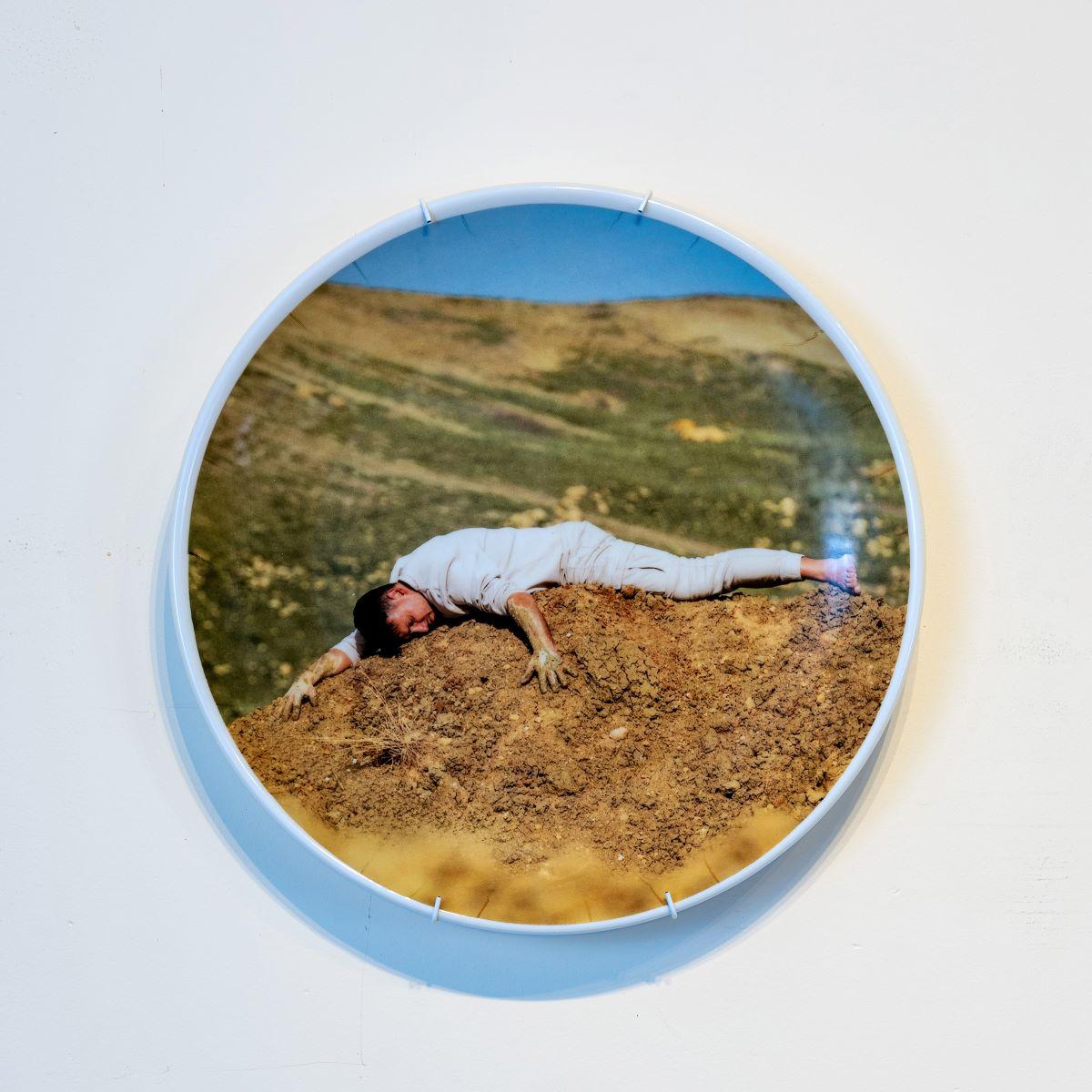 Part of the Rite of Destruction installation
“The concept of giving new life and other layers of meaning to materials that are eroded or discarded is central to my artistic practice and research,” Agius explains. His approach resembles that of an archaeologist, “excavating painstakingly through layers of debris and history to search for new meanings within the abyss of Earth”.
He often collects remnants from construction sites – places where “the landscape has been torn open, its layers disturbed, and its natural balance and charm erased”. These fragments become “witnesses to human intervention”, carrying “both ecological trauma and potential for renewal”.
In Rite of Destruction, the act of breaking becomes “a ritual act – not one of renewal but of confrontation and awareness”.
Through rugged fragments of broken concrete and brick, a porcelain plate depicting a performance at a construction site, and textured ceramics fused with natural oxides and gold, Agius reveals “the essence of matter – returning it to its raw state and exposing the cycles of decay and transformation that define all existence”.
“My process of internalising this act of using matter – much of which originates from previous rites of destruction – becomes in itself a vital ritual,” he says. It “reflects my personal concerns with humanity, nature and ecology, while also tracing our relationship with the Earth from the dawn of human existence to our current anthropocentric drama.”
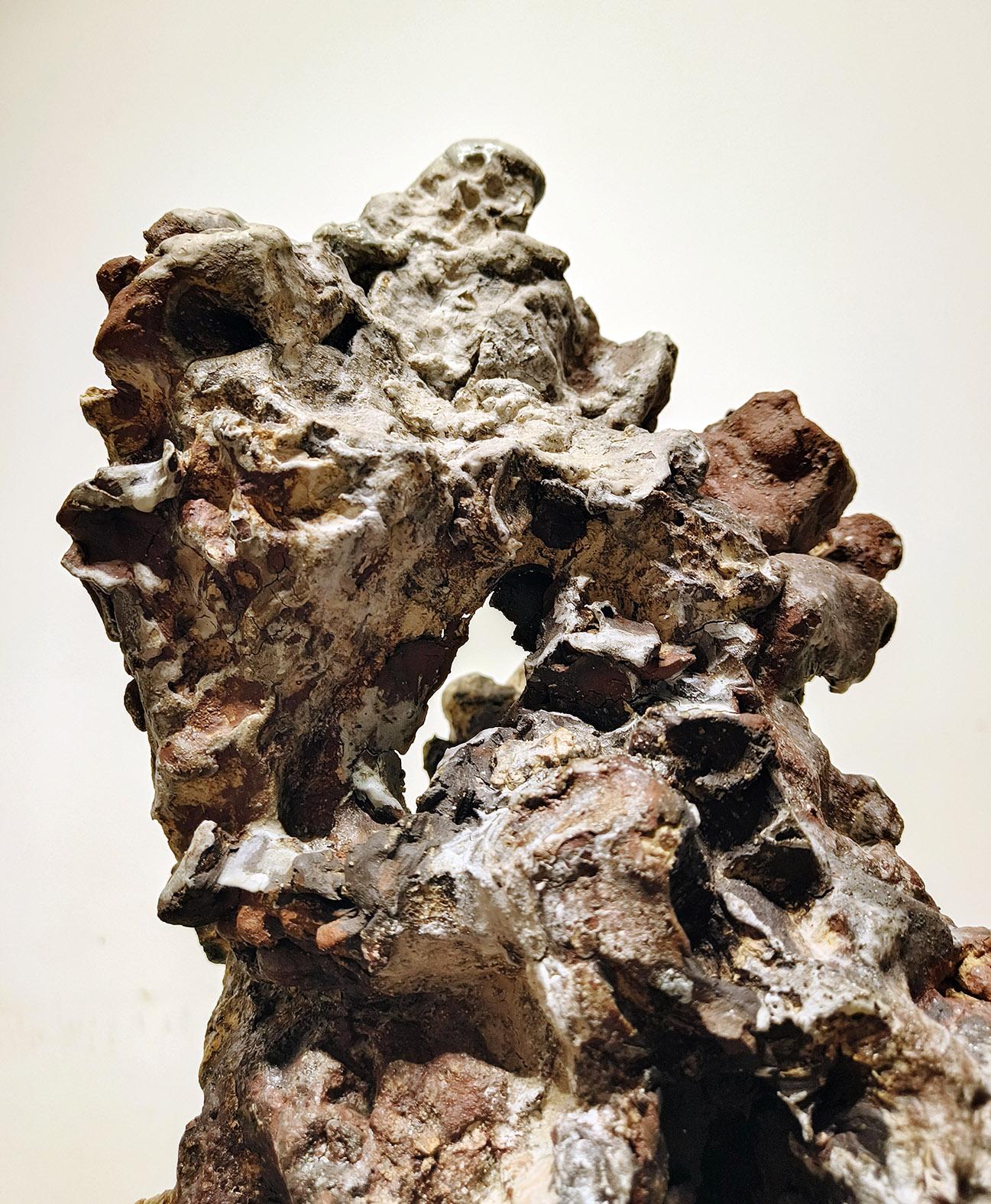 Detail from Rite of Destruction
Destruction, he adds, becomes “a space of humility – a confrontation with our own fragility and excess”. Within that tension, he seeks “to rediscover a spiritual presence embedded in the matter, where even ruin carries the potential for awareness and renewal”.
“I see clay and earth as a connecting vessel, an umbilical cord between humanity and nature, reflecting our existential place in the cosmos and on earth,” Agius says.
Through ritual and performance, he “continues that dialogue, exploring humanity’s evolving relationship with nature, memory and place, while acknowledging the deep histories embedded in the land.”
The 63rd edition of the International Biennale of Ceramics at the Museo Internazionale della Ceramica (MIC) in Faenza is taking place until November 30. For more information, visit premiofaenza.it.