Loneliness needs a collective response
Loneliness may be deeply personal but overcoming it must be profoundly collective, says Andrew Azzopardi
A proposed private member’s bill spearheaded by Nationalist MP Ivan Bartolo aimed at combating loneliness and strengthening social well-being is being tabled in parliament.
This has once again pushed an uncomfortable truth into Malta’s national conversation: loneliness is no longer a private struggle but a growing social reality; this we have shown through incessant initiatives.
An essential point is that, while legislation matters, genuine change demands a collective national effort that reaches far beyond parliament. I really hope this doesn’t become a polarised political matter. We really can’t afford this to happen and, hence, my appeal to the government to harness this legislation as one of its own.
Research on the Maltese population confirms the scale of the challenge. In a number of studies I led during these last years together with Prof. Marilyn Clark, Dr Anna Grech and a host of research support officers at the Faculty for Social Well-being (in 2019, 2022 and 2025), thousands of people reported experiencing some form of loneliness.
This data signals deeper structural and cultural shifts within Maltese society, changes in family life, community cohesion, work patterns, loss and irreplaceable rituals and social expectations that are quietly reshaping how people connect with one another.
Loneliness is not merely an emotional state. Evidence shows it is associated with serious physical and mental health consequences, including depression, cardiovascular disease, weakened immunity and a reduced quality of life.
It also carries economic costs through increased healthcare spending and lost productivity.
In this sense, loneliness is not just a personal hardship; it is a national public-health concern that demands urgent and coordinated action.
Equally troubling is who loneliness affects most.
Higher levels are reported among adolescents, young adults and those aged 55 and over, as well as among individuals with lower income, poorer health, weaker neighbourhood belonging and limited coping ability.
These patterns reflect broader social inequalities and transitions rather than individual failure. Loneliness follows people across the life course, shaped by education, employment, relationships and community structures.
This reality challenges a comforting national assumption that Malta’s traditionally strong families and tight-knit communities naturally protect against isolation.
Loneliness should be understood as a symptom of societal change rather than a weakness of character- Andrew Azzopardi
While these bonds remain important, rapid urbanisation, migration, changing family structures and an increasingly individualistic lifestyle are transforming the social fabric.
Loneliness, therefore, should also be understood as a symptom of societal change rather than a weakness of character.
During the past 10 years, efforts to bring this issue into public awareness have intensified.
Five documentaries were produced, all based on stories of people who found themselves at the deep end of the pool; two sharing real stories of people living with loneliness, one examining the prison experiences and its social consequences and two focusing on mental health.
Together, they reveal a sobering truth: loneliness sits at the centre of many social crises. It is, in many ways, the mother of our social problems, feeding mental distress, exclusion, addiction and despair. Recognising this connection is essential if policy responses are to move beyond surface solutions.
The proposed legislative initiative is therefore welcome but legislation alone cannot manufacture belonging. Laws can allocate resources, coordinate services and signal political priority but they cannot replace human relationships, community participation or cultural change.
Social justice must extend beyond policy frameworks and become a shared civic responsibility rooted in empathy, integrity and everyday solidarity.
Education has a particularly crucial role. Schools shape not only knowledge but also emotional resilience, social skills and a sense of belonging.
Embedding well-being, inclusion and mental-health awareness within the education system could help prevent loneliness before it becomes chronic, offering long-term societal benefit rather than short-term intervention.
Support for older adults is equally urgent. Mobility challenges, declining health and financial pressures often deepen isolation in later life, undermining dignity and well-being. When loneliness strips individuals of meaningful connection, it becomes not only a social issue but a moral one testing the compassion of the country as a whole.
Yet, responsibility cannot rest solely with the government. Communities, families, employers, voluntary organisations and citizens must all play their part. Research shows that active citizenship and social participation significantly reduce loneliness, demonstrating that connection grows through engagement, not passive support.
Rebuilding neighbourhood life, encouraging intergenerational interaction and valuing time for relationships are cultural choices as much as policy ones.
Malta now stands at a crossroads. One path treats loneliness as a technical problem to be managed through programmes and legislation. The other recognises it as a warning sign calling for deeper reflection on the kind of society we are becoming. The second path is undoubtedly harder and slower but it is also the only one capable of real transformation.
If the new law succeeds in sparking a broader national awakening one that mobilises communities, reshapes priorities and restores human connection it will achieve far more than regulatory reform. It will remind us that well-being is not delivered by institutions alone but created through relationships, solidarity and shared responsibility.
Loneliness may be deeply personal but overcoming it must be profoundly collective.
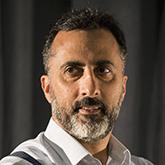
Andrew Azzopardi is the former Dean of the Faculty for Social Well-being at the University of Malta.