Long-term vision for education
A sustainable education system can only be built through collaboration, continuity, and policies that transcend electoral cycles, writes Jerome Caruana Cilia
Education is the bedrock upon which the future of our country is built. It dictates our economic resilience, our social cohesion and the individual well-being of our citizens. Yet, for too long, our classrooms have been treated as ideological laboratories and our curricula as political footballs. This instability has been compounded by frequent shifts in policy direction tied to changes in leadership, with a significant turnover of ministers of education over the past 13 years,as well as the permanent secretaries and directors they appoint.
If we truly wish to build a society that thrives in an increasingly complex global landscape, education must become a foundational national priority, not a transient political battleground. We must step away from partisan skirmishes and short-term point-scoring, recognising instead that the development of our children is a shared national duty that requires stable, forward-looking commitment.
To achieve this, we need a paradigm shift in how educational policy is formed and executed. We need a long-term vision for education that extends far beyond five-year electoral cycles.
True educational transformation does not happen overnight, nor does it fit neatly into a manifesto window. It requires a sustained, strategic blueprint designed to outlast political tenures, ensuring that schools can embed deep, meaningful improvements without the perpetual anxiety of the next political shift.
The strategy for establishing this enduring framework is straightforward yet impactful: I will start by listening. Genuine leadership in education is not found in imposing rigid mandates from a detached administrative office. It comes from learning from those on the front lines. I will strive to understand the pedagogical culture of the Maltese education system: its strengths, its traditions, its everyday practices and the very good qualities that already sustain learning in our classrooms.
Reform must not mean dismissing what exists but building thoughtfully on what works, while addressing with honesty those areas that require change. I am committed to engaging in deep, active listening with teachers, parents, students, learning support educators, school leaders and all those working tirelessly within our education ecosystem.
These individuals possess the practical wisdom, the lived experience and the everyday insights that no statistical model can fully capture. By opening a genuine dialogue with everyone who has a stake in education, we can co-create a system that is responsive, practical and universally supported.
In doing so, we must actively confront the structural issues plaguing our educators. It is well-documented that school communities are frequently subject to ‘reform fatigue’: a condition driven by the constant introduction of new initiatives by educational authorities, leaving schools and educators struggling to sustain momentum before the next uncoordinated policy directive arrives. Educators deserve greater respect, trust and the essential tools they need to succeed.
As prominent voices in children’s welfare have noted, if we are to make real progress in enriching the lives of children and enhancing their education, we must put the people responsible for their upbringing and daily growth - parents and educators - first.
We must cultivate a professional culture built on mutual trust rather than top-down surveillance, empowering school leaders to nurture a healthy everyday culture within their schools.
Central to this vision is an absolute commitment to equity. Every single child should have the opportunity to fulfil their potential, regardless of their background, socio-economic status, or personal circumstances. Universal access to high-quality education is a moral imperative and a fundamental human right. We cannot allow a child’s family income, or learning differences, to determine their future achievements.
To translate these principles into action, we must dismantle the rigid, outmoded barriers that isolate our educational pathways. Educational research demonstrates that the true challenge in our Maltese educational system is its intense centralisation, which strips individual schools of their autonomy and leaves them disempowered.
Intense centralisation strips individual schools of their autonomy- Jerome Caruana Cillia
This suffocating top-down control locks general schooling, vocational training, higher education and adult learning into inflexible silos, crippling the capacity for local innovation and preventing school leaders from responding dynamically to the unique needs of their students and community.
We must also move toward creating a comprehensive, multi-level system bound together by flexible articulation mechanisms. By providing multiple pathways into and through the system, we can ensure that no student is permanently locked out of advancement by an early academic filter.
This requires embracing a philosophy of both lifelong and life-wide learning, recognising and valuing the acquisition of knowledge wherever it occurs, whether
inside formal academy walls or through informal, community-based and work-based settings. Breaking down these rigid binaries allows us to foster a more holistic learning environment that accommodates the changing demographics of our society.
Moreover, this new approach requires a fundamental rewrite of the rules of political engagement. Good ideas deserve support, regardless of which political party proposes them.
Innovation and sound pedagogical practices have no partisan affiliation. When the government introduces policy measures that are genuinely beneficial to students and educators, they will find in me an ally, not an automatic opponent.
Conversely, where the government falls short, I will offer constructive alternatives, not criticism for its own sake. My objective is to elevate the national debate by presenting robust, viable and well-researched policy options that challenge the government to do better, serving as a catalyst for positive change rather than an obstacle.
I pledge to be an accessible, constructive and evidence-led shadow minister who always puts students and educators first, recognising that their interests are not in opposition but deeply interconnected.
Educational policy must be guided by facts, independent research and rigorous international benchmarks, not by political intuition or fleeting trends.
Crucially, we must also invest in and prioritise research rooted in our local context, ensuring that policy decisions are informed by the specific realities, challenges and opportunities within our own education system. Every alternative policy I present will be thoroughly vetted against empirical evidence and real-world outcomes, drawing on successful models both locally and globally.
The path forward requires courage, transparency and a collective willingness to do things differently tomorrow than we are doing them today. It also requires genuine respect for the strengths already present within our educational system: the dedication of educators, the resilience of school communities and the everyday practices that continue to sustain our children’s learning.
Reform must therefore be rooted not in disruption for its own sake but in careful listening, serious research and a shared commitment to build on what works while addressing what must change.
By building an educational framework that rises above the political fray, respects our educators, equips our youth for the complexities of the modern world and prioritises the lifelong potential of every student, we can ensure a bright and prosperous future for our nation.
The invitation to dialogue is open. Let us work together to build an education system that truly delivers.
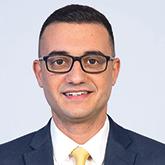
Jerome Caruana Cilia is Shadow Minister for Education and Citizenship.