Was Lord Strickland’s father poisoned?
The extraordinary story of how Lord Strickland’s father, Walter, was an indirect witness in the greatest impostor story in mid-Victorian Britain
Most who are familiar with Maltese political history know that Lord Strickland, Malta’s fourth prime minister, had narrowly escaped an assassination attempt in 1930 at the height of his confrontation with the Church over its interference in politics.
But that his father, Walter, a Royal Navy commander, might have been poisoned in what is regarded as the most extraordinary impostor story in mid-Victorian Britain, the Tichborne Case, is not as widely known.
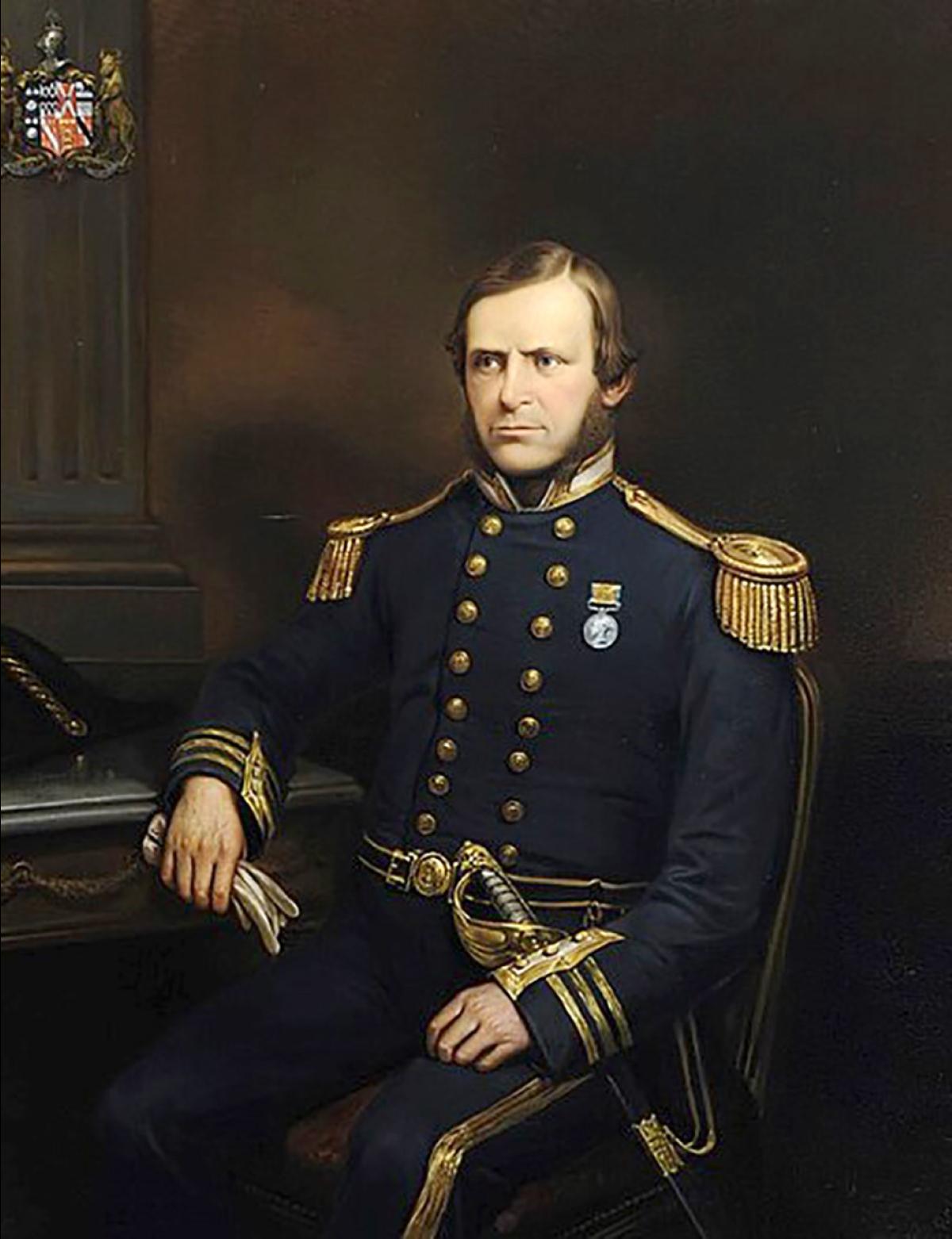 Cdr Walter Strickland (1824-1867), painting by Giuseppe Calì.
Lord Strickland dismissed the story, arguing his death was “probably due to former naval service in the West Coast of Africa”.
But his mother, Donna Louisa, Walter’s wife, “always” believed he was “poisoned by secret societies”. There does not appear to be any hard evidence that Walter was indeed poisoned, but based on the evidence presented in court, Louisa’s conviction can hardly be ruled out.
It may well be argued that her belief was somewhat speculative, more so when Walter was known to have suffered from African fever contracted in the time he served in West Africa and when he had “complained of its return” in the year he died.
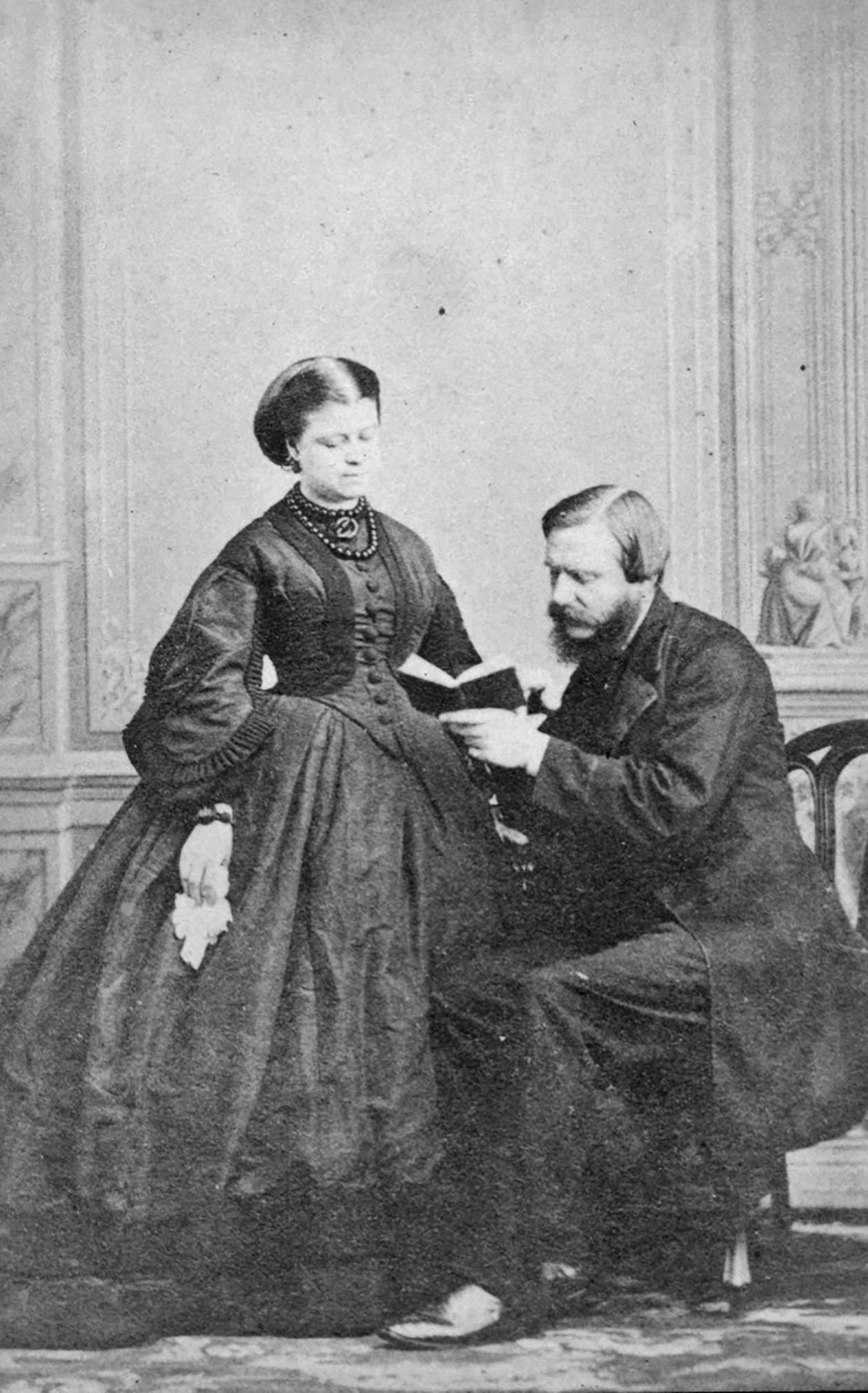 Donna Louisa with her husband Walter Strickland. Louisa was convinced Walter was poisoned.
Lord Strickland gave no credit to what he called his mother’s romantic theory of his father’s death.
However, since he did not know for certain what the cause of death was, for he would otherwise not have used the word “probably”, the question as to whether he was poisoned or not remains unresolved.
Louisa was a highly cultured woman. Besides Maltese, she spoke good English, French and Italian, and, according to Lord Strickland’s biographer, Harrison Smith, “took not a little pride in her knowledge of Latin, Greek, and German”.
This, and a sound upbringing, do not suggest she was given to speculation.
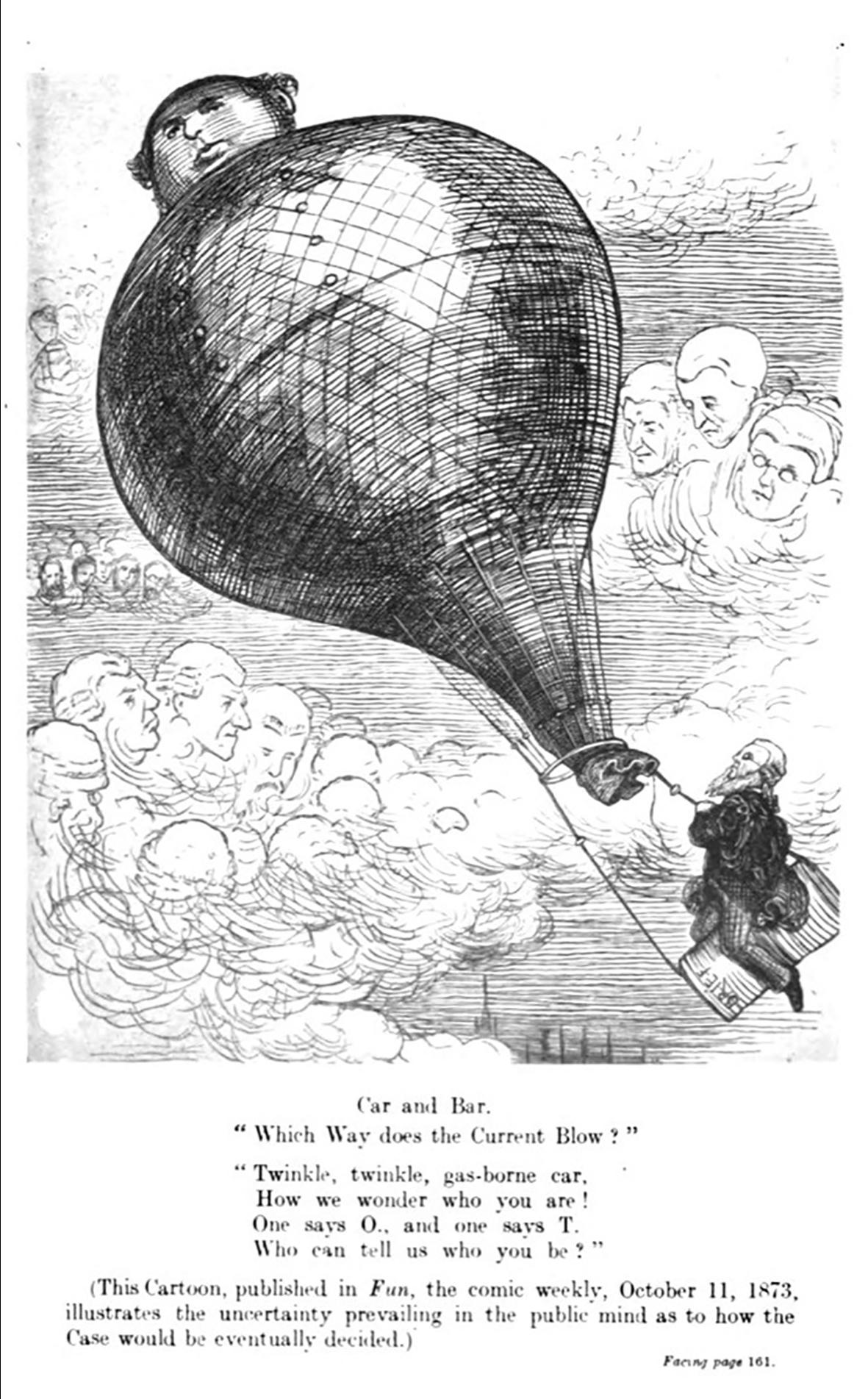
The Tichborne Case was considered the greatest impersonation case in common law history in Britain
How did Walter become involved in the story? Did he hold the key to the uncovering of the impostor?
He got involved because of the very close friendship he had had in his youth with Sir Roger Tichborne, the man whom the impostor, Arthur Orton, the butcher, wanted to take the place of long after Roger died to take his title and huge estate.
When he first presented himself as Sir Roger, Orton called himself Thomas Castro.
Walter did not hold the key to the unravelling of the deception because he suddenly “died” before he was called to the witness box, but to the courts, his indirect contribution was significant in the body of evidence mounted against the impostor.
To add spice to the story, even Walter’s elder brother William, a Jesuit, had a say, though brief and somewhat controversial. However, this was of little importance in the context of the case.
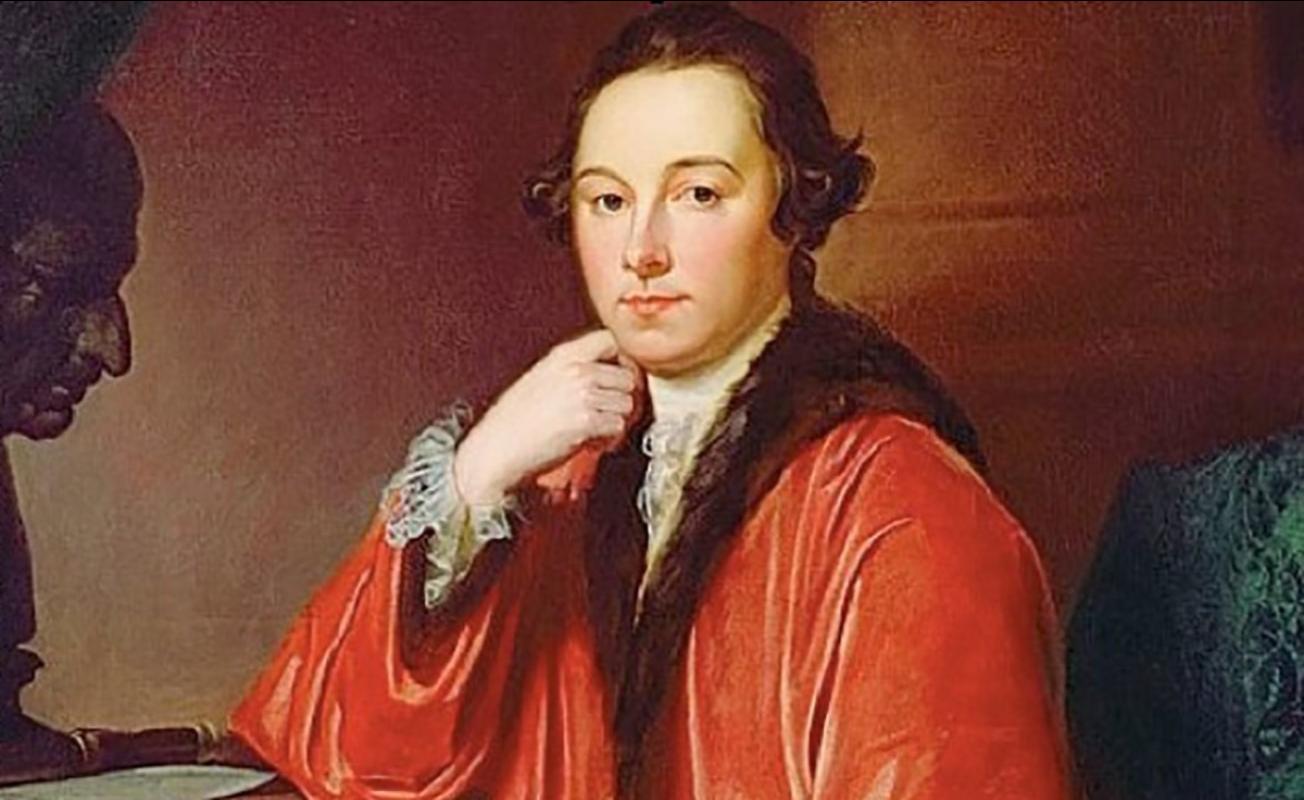 Walter Strickland’s brother, William, a Jesuit.
The Tichborne Case, as it had become known, was a cause célèbre. Widely considered the greatest impersonation case in common law history in Britain, it was also a melodrama, more compelling than fiction.
It had all the ingredients: a shipwreck, a legal fight for an inheritance, fraud, deception, a ‘struggle’ between the lower class and landed gentry, and even a love story. In no time, it had become a national obsession, a symbol of resistance.
It led to sensational civil and criminal trials, the longest in British legal history until the mid-1990s, and spawned books, plays, films, poems, ballads, and even newspapers.
Madame Tussauds in Baker Street, London, did not miss out. She quickly made a wax model of the impostor. The story stirred as much interest in English-speaking countries as it did in Britain.
The claimant was perceived simultaneously as a legitimate baronet and as a working-class man denied his legal rights by a ruling elite
Mark Twain made it a point while he was in London at the time to attend an event at which the impostor was present. He described Orton as “a fine and stately figure” and observed that the people in attendance were educated men, moving in good society. They were clearly among his growing legion of self-serving supporters.
Even George Bernard Shaw, the Irish playwright, weighed in. Shaw highlighted the paradox whereby the claimant was perceived simultaneously as a legitimate baronet and as a working-class man denied his legal rights by a ruling elite.
Which is why the case was also considered a symbol of class tensions.
Before going into the impostor story proper, a word first about the Tichbornes.
Like the Stricklands of Sizergh, they were traditionally most devout Catholics, counting themselves among a string of other wealthy families – the Berkeleys, Egertons, De Traffords (one of whom married one of Lord Strickland’s daughters, Cecilia), the Tempests, Arundels and so many others.
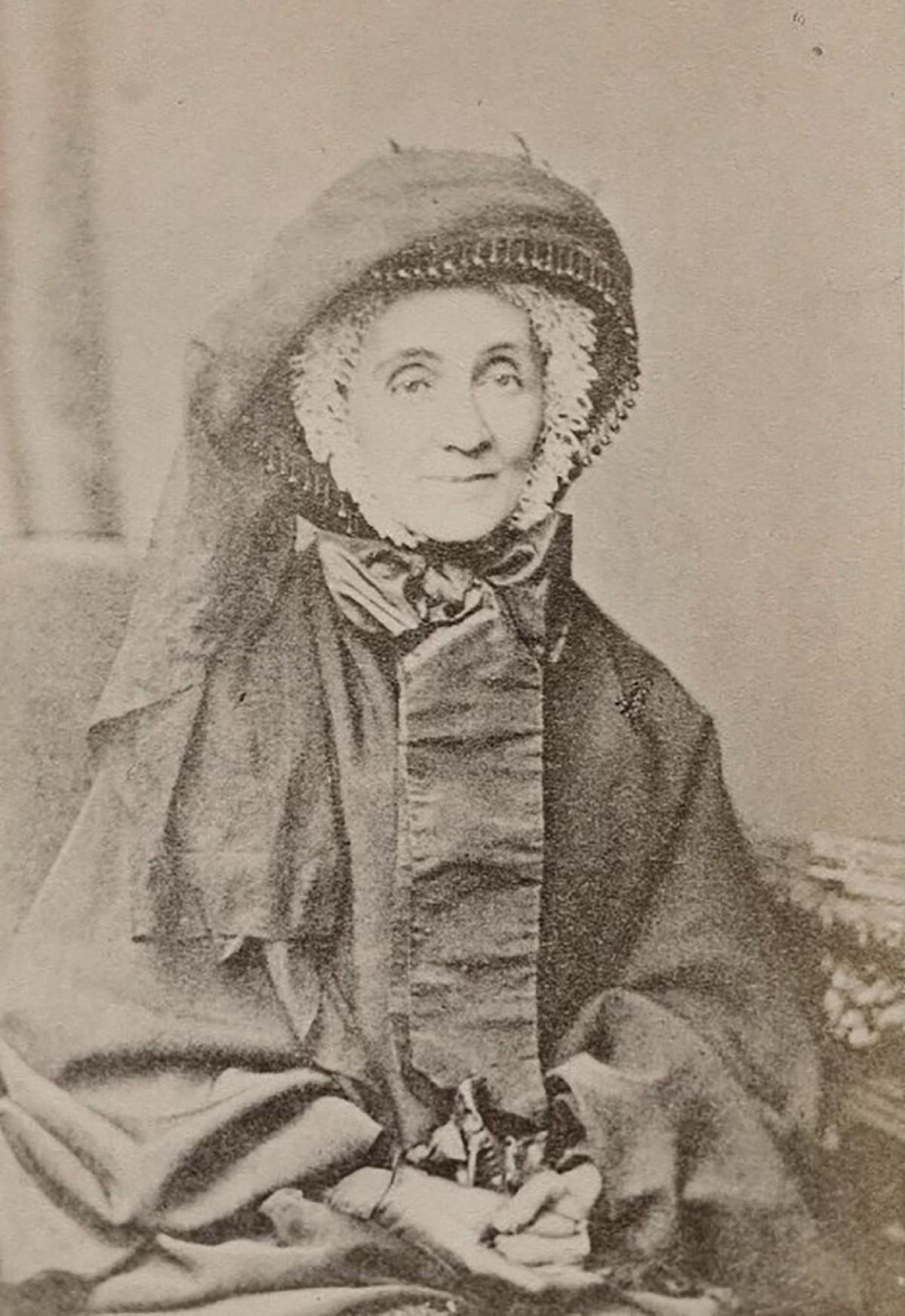 Lady Tichborne, mother of Sir Roger.
Roger was the eldest son of Sir James and Henriette Felicité Tichborne. Their estate was in Hampshire, but Henriette did not like England and rural life, and, since she was half-French, she wished to have her son brought up as a Frenchman.
But her husband had other ideas; he placed his son at Stonyhurst, a leading Jesuit school in Lancashire.
It was at Stonyhurst where young Walter came to know Roger. The Stricklands had always had strong links with the college.
As it later transpired in court hearings, Roger and Walter had become very close friends. With some other college boarders of their age, they even used to go swimming together. For years after their college days, they kept up their friendship through correspondence.
Roger used to spend his holidays with his uncle and aunt, Sir Edward and Lady Doughty. It is said that he fell in love with their daughter, Katherine, known as Katty. Some writers considered their attachment as having been “innocent”.
However, since they were first cousins, his parents objected to the relationship.
In frustration, Roger decided to take a trip to the West Indies, but it so happened that the schooner in which he sailed, Bella, was lost at sea in a storm, and all on board were presumed dead.
But Roger’s mother believed her son had somehow survived.
On dark nights, she is said to have kept a light burning to guide the feet of the wanderer. When her husband died, she placed advertisements in leading newspapers all over the world calling for news of her long-lost son.
Meanwhile, Katty had married into a wealthy Yorkshire family, and Roger’s younger brother, Alfred, became the 11th baronet.
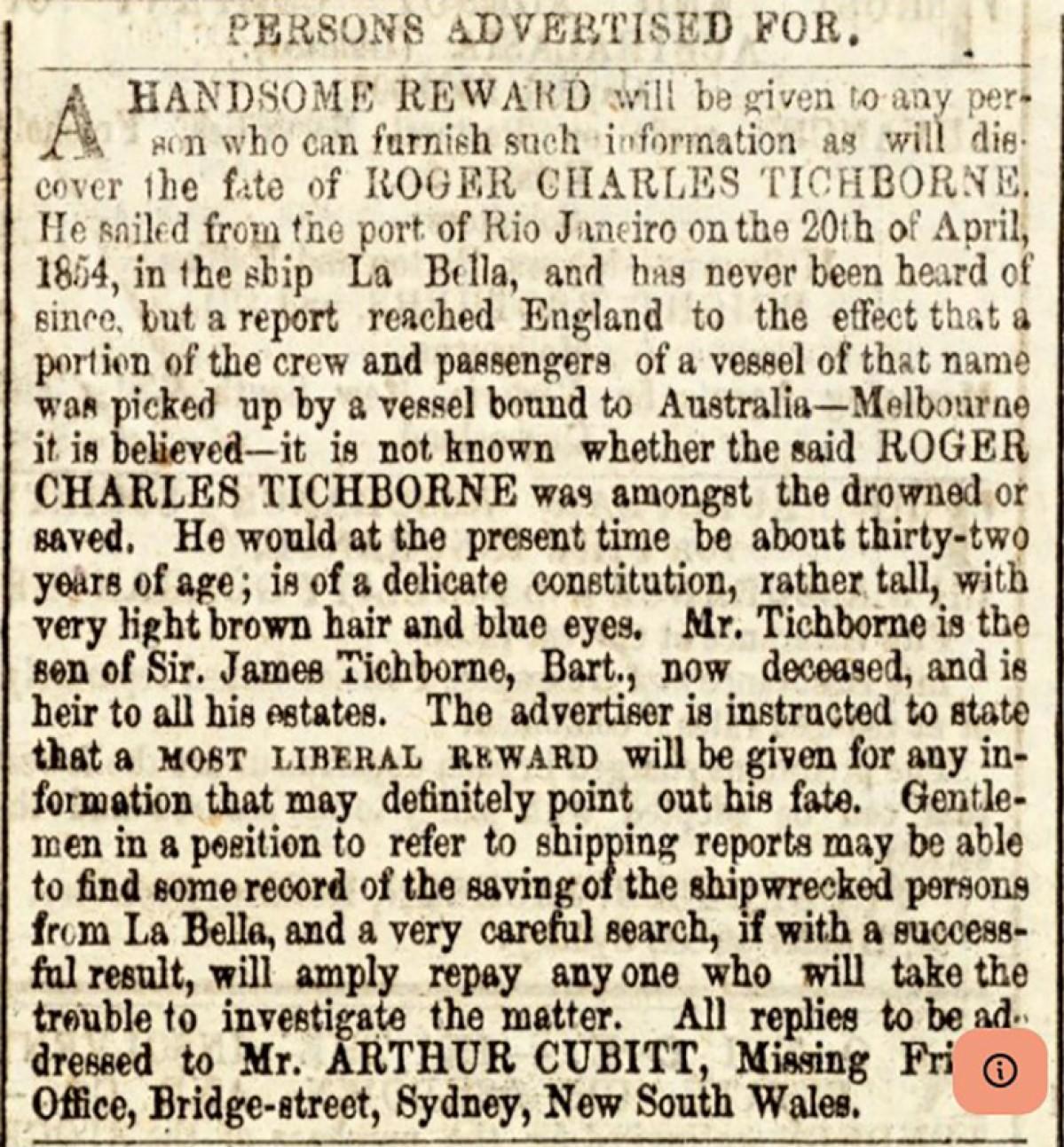 An advertisement calling for news of long-lost Sir Roger placed by his mother in the Sydney Morning Herald, July 26, 1865.
It was at this point that a butcher by the name of Thomas Castro from Wagga Wagga, a city in New South Wales, Australia, stepped forward, claiming he was Sir Roger. He was British from Wapping in East London, but had first gone to Chile to try his luck there.
After staying 18 months in Melipilla, a commune bordering Valparaíso, he decided to go to Australia, where he settled in Wagga Wagga.
He took the name of Castro, the name of a family that had shown him much “kindness” in Chile. He first worked as a bushranger and, later, as a butcher. He was a hard drinker and had brushes with the law.
When he sailed to England to claim the title and estate, he made a very big mistake. He first called at his home in Wapping, leading investigators to find out in no time that Castro was none other than Arthur Orton, the son of a butcher there.
But amazingly, Roger’s mother accepted him without question, even though there were marked physical dissimilarities between her son and Castro. He did not recognise the rest of the family.
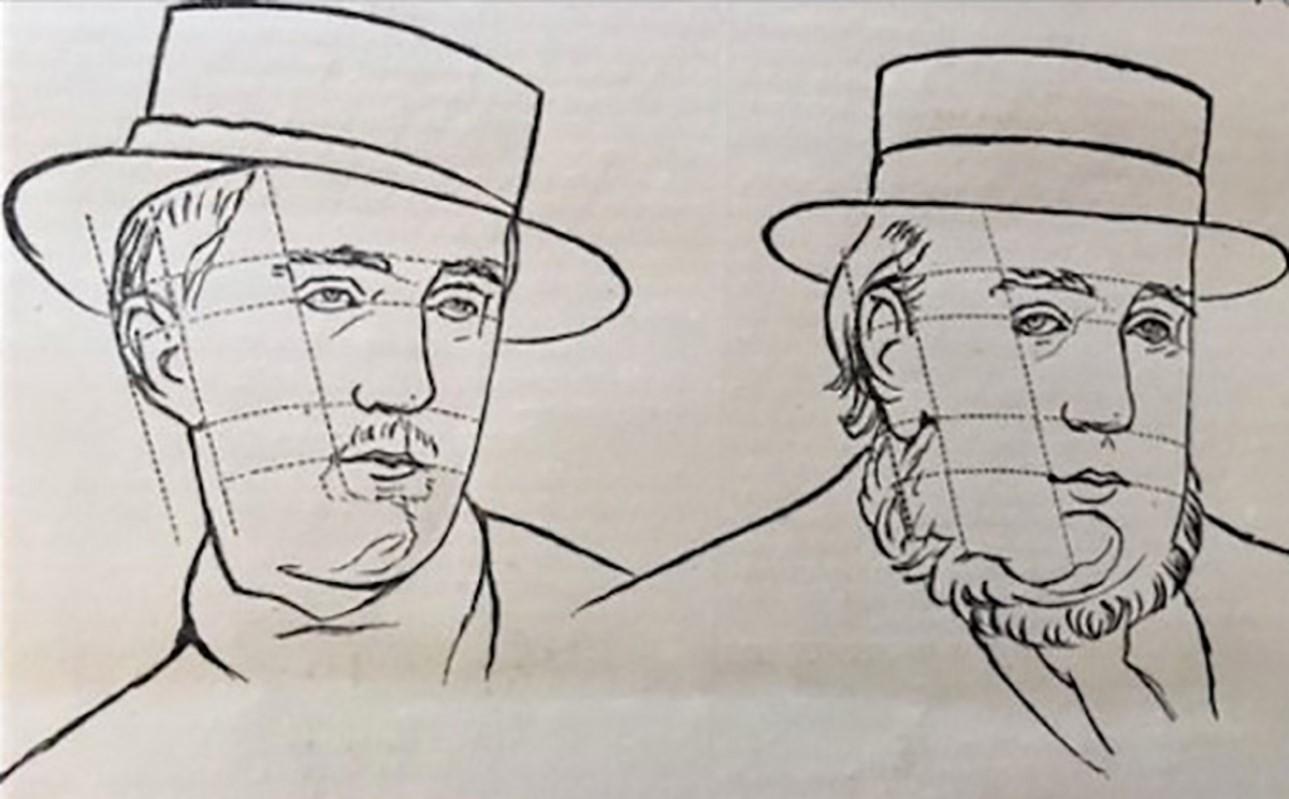 Is there a facial similarity between Sir Roger and the claimant?
It did not take long for the family and Roger’s old-time friends, including Walter Strickland, to conclude that Orton was an impostor.
The claim led to two legal cases, the first a civil one filed by Castro to prove his identity as Roger, and the second, a criminal one, in which the impostor was accused of perjury.
Speculators up and down the country rushed to financially support Castro, by now generally referred to as the claimant.
In the four years he took before filing his suit, he did all he could to learn about Roger’s life, and incredibly managed to produce more than 100 witnesses in his favour. But on cross-examination, he showed he had cleanly forgotten 16 years of his life, and much of the information he produced was false.
He could not remember anything of his college life, not even, at first, his friendship with Walter Strickland, whose contribution at a later stage added further evidence that Castro was, in fact, Orton, not Roger.
Orton had even forgotten his mother’s maiden name and had no idea of the size of the estate. He did not know of Roger’s habits, his amusements, books, music, and games.
Roger spoke and wrote French fluently, but Orton did not speak the language. Even his handwriting was different. On his left arm, he also had a partially obliterated tattoo, “A.O.”, the initials of his name.
However, although all the physical discrepancies were quite obvious, he had a strong likeness to several male members of the Tichborne family.
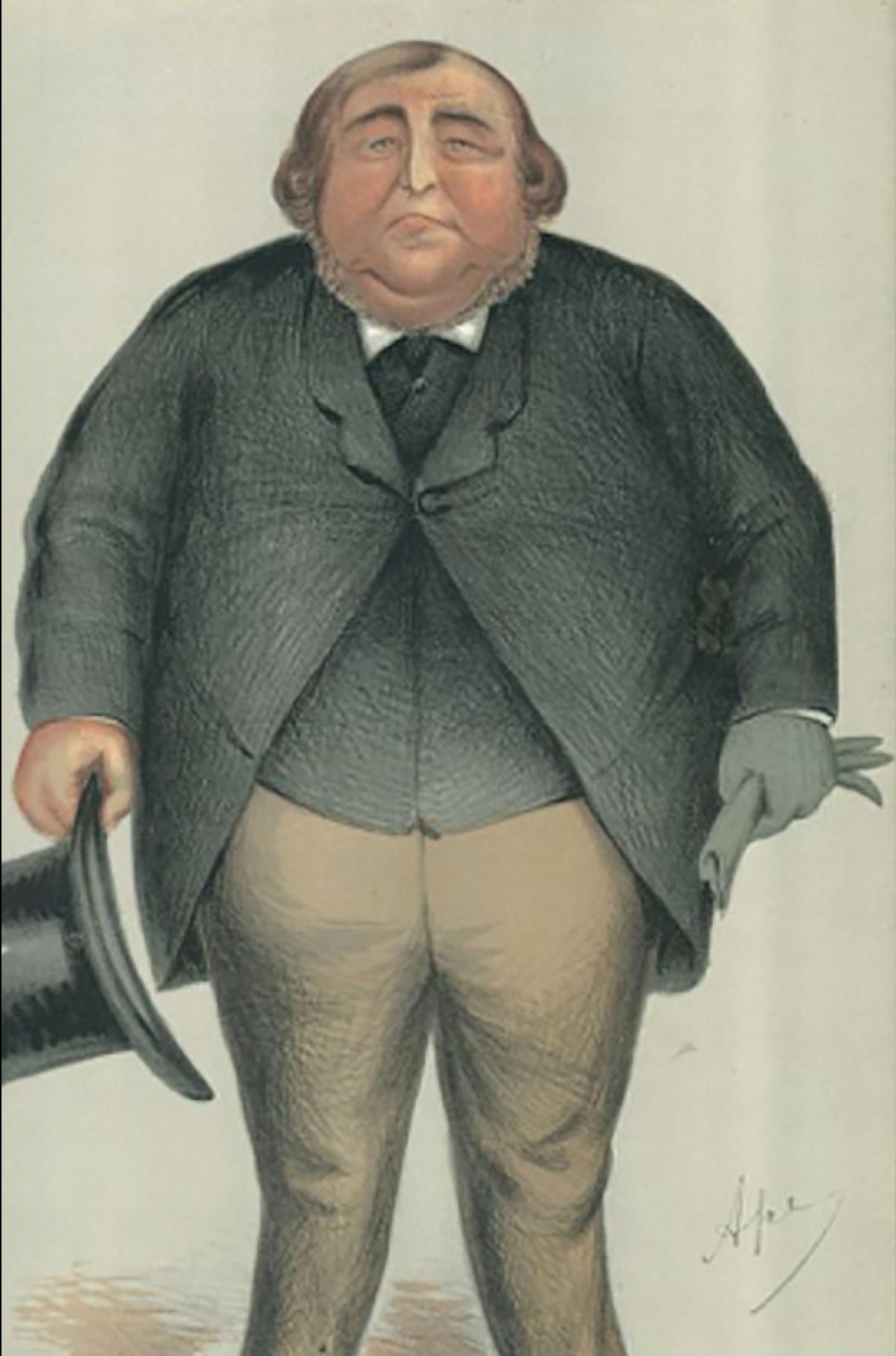 A Vanity Fair caricature of Arthur Orton.
To raise funds, Orton innovatively issued personal bonds, selling them at between £40 and £50 each. He raised half a million dollars.
Speculators believed that, had he won, the bonds would have at least doubled in value. But he lost the civil suit and was tried on no fewer than 32 separate counts of perjury.
In the second jury, a notable witness, Jean Luie, claimed he had been a crew member on a ship, Osprey, that had picked up rescuers from the Bella, which had been bound for Jamaica before it was lost.
Osprey, he said, had been on its way to Melbourne at the height of the gold fever. But investigators soon found that Luie was lying through his teeth. He had actually been in employment in Hull at the time, and he had never been a seaman, and, to boot, he was a known criminal and convict.
At one point, Luie, who knew all along that the claimant had in fact been Orton, not Sir Roger, and who, despite this, was on his side in the deception, had also indirectly confirmed to Walter’s brother, Fr William Strickland, that Castro was Orton.
It is useless to go further into the convoluted story of Luie, for this was peddled by a writer who believed that the real Sir Roger was an inmate at a lunatic asylum in Sydney, but more of the second claimant later.
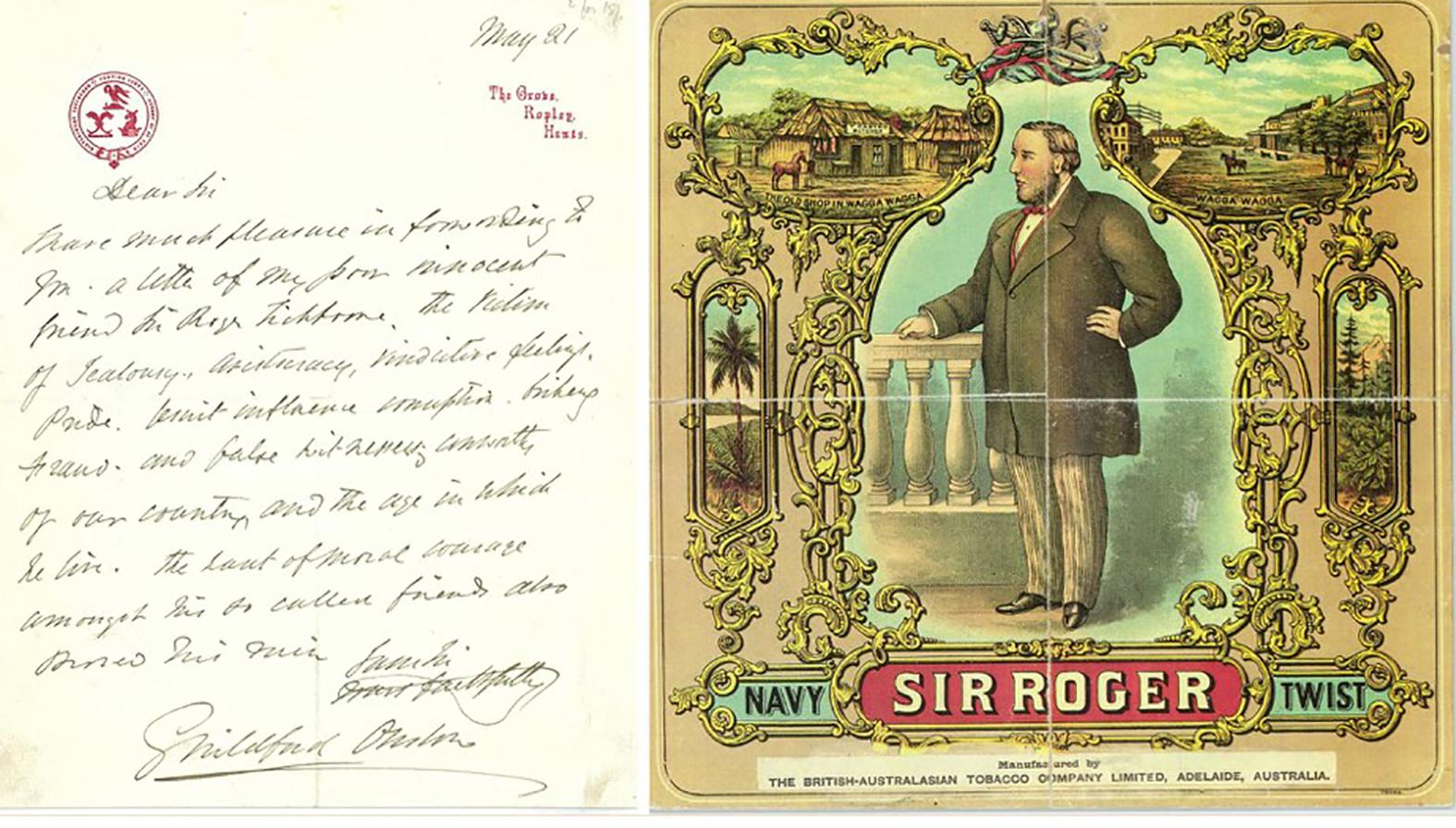 A letter of support for the Tichborne claimant and an Australian tobacco advert showing ‘Sir Roger’. (British-Australian Tobacco Co. Ltd, of Adelaide).
Lord Strickland was only 10 at the start of the first trial in the Tichborne Case, an impostor story that captivated the imagination of mid-Victorian Britain.
In a legal battle that is still being written about today, an uncouth butcher claimed he was a wealthy landed aristocrat, Sir Roger Tichborne, long lost in a shipwreck.
Lord Strickland’s father, Walter, who had been close to Roger when they were young, was a key figure in the case, even though he died before being called to the witness box.
Walter’s wife, Louisa, believed her husband was poisoned.
 .
.In several hearings, the courts made it a point of bringing into sharp focus the friendship Walter Strickland had had with the Tichborne family.
A friend of the family, Lady Doughty, wife of Sir Edward, appeared to have taken an interest in Walter, “and an intimacy sprang up between Roger and this young Strickland”.
As if to emphasise the extent of this friendship, and also Walter Strickland’s high sense of patriotism and most upright character, one court quoted a letter Walter wrote to Roger when he heard of his prospects of getting a commission in the British army.
Walter wrote: “You will easily imagine that I am better pleased at this prospect than if you had entered the Austrian (army), a foreign service.
It was all very well for young English Catholics to enter such armies when the laws of their country rendered it impossible for them to join their own, but now let every Englishman lend his arm to defend ‘the flag that has braved a thousand years the battle and the breeze’.
“I am sure you are becoming more English in your thoughts, for your letter shows it… The more I see of this strange world, and the stranger people in it, the more convinced I am that the next is the only life worth living for.
"Reflect on this, dear Roger and do not defer any longer… to make a clean sweep of your conscience, but for God's sake, I conjure you not to dare to approach the Holy Communion without the most ample and awful preparation. I say awful for who can think of receiving his God! The great being who by his word only created! without a feeling of awe.”
No wonder Walter was generally held by the family to have been a staunch Catholic. But then the Stricklands were all held to have been very strong Catholics. Walter’s sons – Gerald, Joseph, Paul and Charles – had all been boarders at Mondragone, the Jesuit college for young aristocrats at Frascati.
Joseph had become a Jesuit, and Gerald was once believed to have thought of the idea of joining the Society of Jesus as well. The Stricklands have had two bishops in the family, one in Carlisle and the other in Namur, Belgium.
Walter used to sign his letters to Roger “your very affectionate friend”, which shows that theirs was not a friendship that could be easily forgotten in adulthood. In one instance, Roger tells his family when he received a letter from Walter: “It gave me much pleasure to hear from him”.
In another, Walter tempts Roger to go grouse shooting together on the wild bogs, “though books and chat must be sufficient to amuse us”.
One letter was found only valuable by the courts because it showed the confidential “intimacy that existed between those two young men”. In this letter, sent in April 1850 from HMS Amphitrite, then at Valparaíso, Walter congratulates Roger on his army commission and on his 21st birthday.
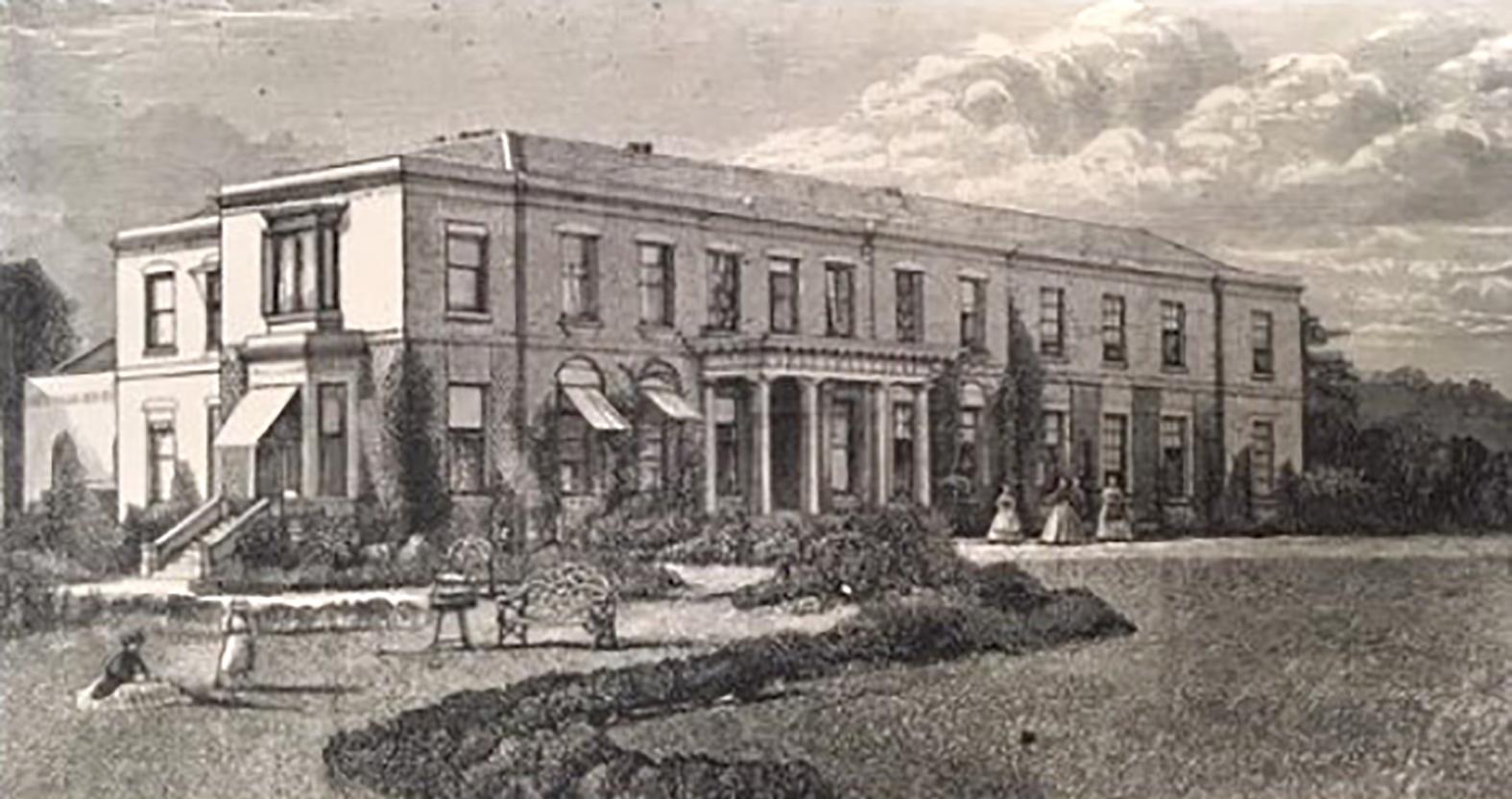 Tichborne House, 1875
Walter’s name and friendship with Tichborne were brought up several times in the two trials. A witness in the first trial told the court that he, Roger and Walter used to spend time swimming together in a moat near the river where they lived. Indeed, said the lord chief justice, Sir Alexander Cockburn, Strickland’s name was mentioned “perpetually in the correspondence” with Roger.
How could Orton now not recognise Walter?
The court even remarked on the claimant’s habit of mistaking names, such as Litchfield for Strickland.
Again, said the lord chief justice, “we have another instance of the extraordinary forgetfulness of this defendant, showing that he really has no accurate memory of even the most common thing”.
Orton gave memory loss as the reason for not claiming the title and estate earlier, and for staying in Australia for so long after the shipwreck, but his version of the story was far too weak to convince the jury and most of the people who followed the saga.
A remark made by counsel to claimant Edward Kenealy that Walter “was in great favour at present” at the Tichborne estate, produced a highly intriguing twist to the story.
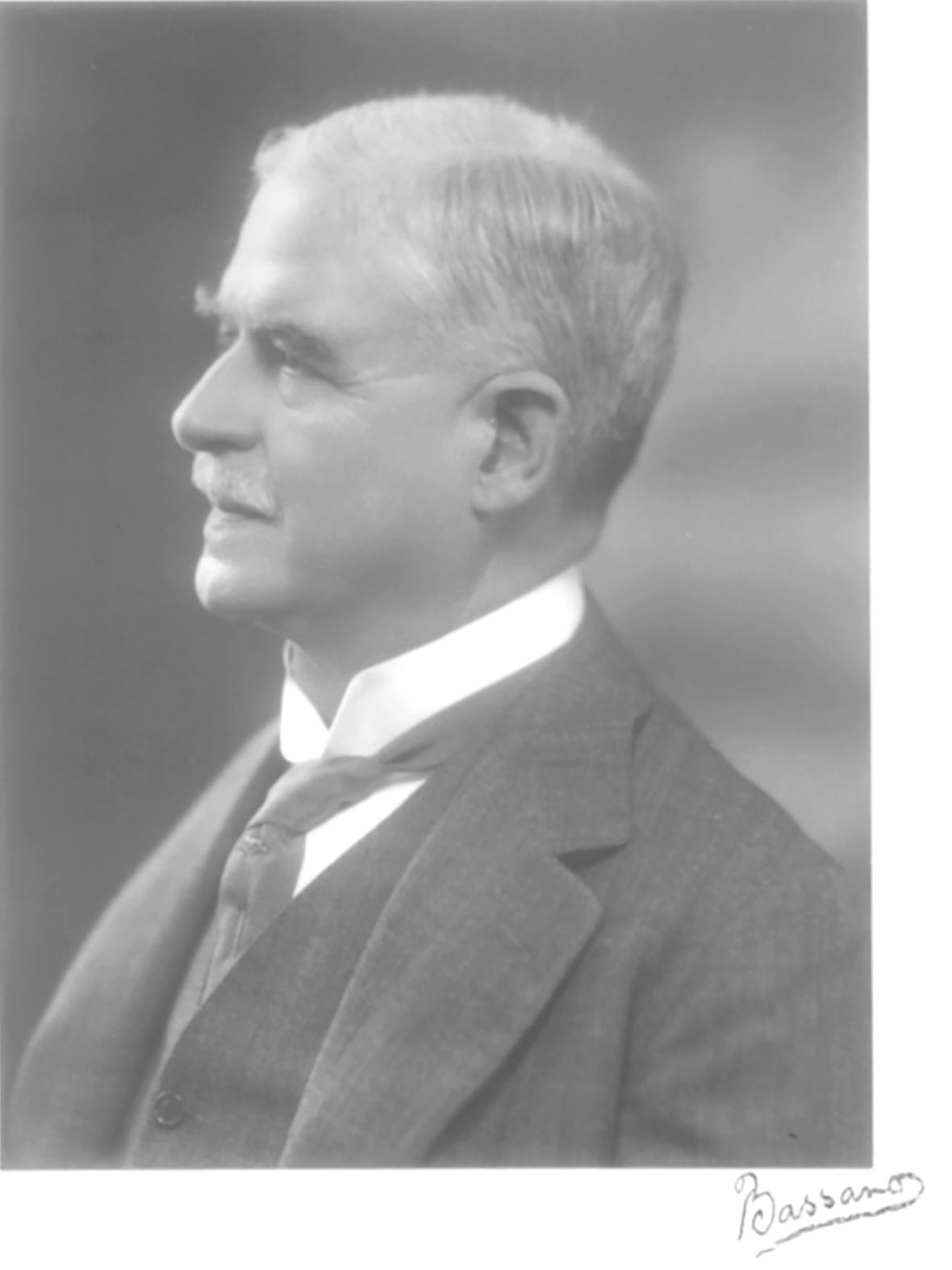 Lord Strickland. He disagreed with his mother that his father had been poisoned.
Lord Chief Justice Cockburn: “That is not in favour of the young lady (Katty, daughter of Sir Edward and Lady Doughty) but in favour of the aunt. That is how I understand that.”
Kenealy: “I do not know.”
Lord Chief Justice: “Surely?”
The lord chief justice went on to remark that he did not think the allusion to Walter could have any reference to Katty, “and I will tell you why, because he was a midshipman in Her Majesty’s navy at that time, and they could hardly think of a marriage of Miss Doughty with a midshipman in the navy”.
Kenealy: “But if Walter Strickland was in great favour with the young lady, they could not help that.”
Lord Chief Justice: “Yes, but I should think that Lady Doughty would very soon have shown him the door.”
No more seems to have been said or remarked upon in the hearing about this most interesting revelation, which, had it taken its course to its ultimate conclusion, that is, if it were at all true (which is what is most important), might have altogether altered the history of the Stricklands’ association with Malta.
Orton must have surely realised the moment he set foot in England again that Strickland had already discovered he was not Tichborne.
Orton told his “mother”, Lady Tichborne, that Strickland had called, but that he had been warned against him, and therefore he would not see him. Orton had absolutely refused to see Roger’s “dearest and best friends”, said the court. He even believed there had been a Jesuit conspiracy against him.
Walter had, in fact, called on Orton on June 12, 1867, but the claimant again remarked that he had been forewarned that his visit was intended to play a trick on him and that, therefore, he would not see him. “He swore awful because I would not see him.”
Walter swearing awfully? Most unlikely.
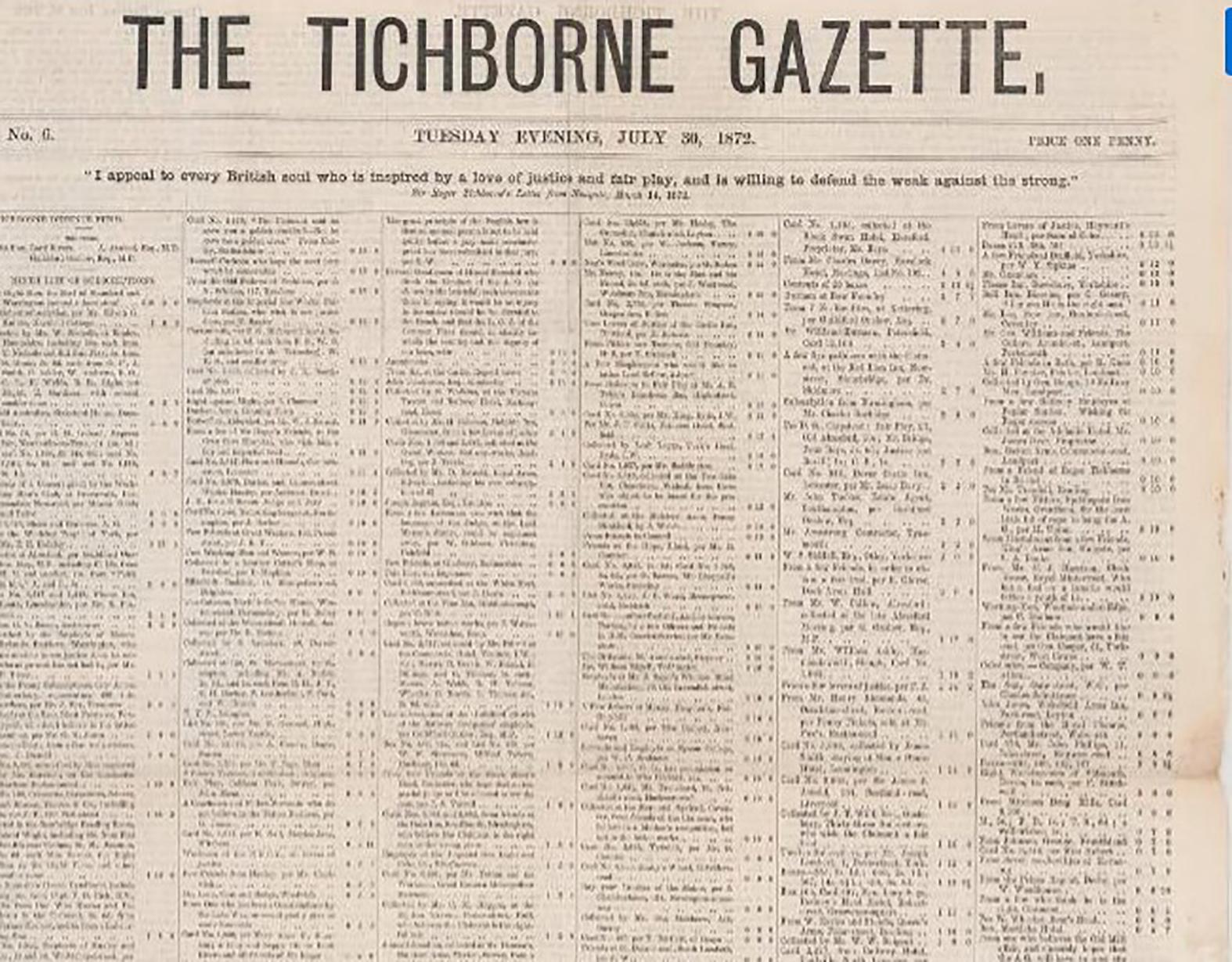 The Tichborne case had even spawned newspapers.
In one letter to a friend, also read out in court, Orton said Strickland, “who made himself so great on the other side”, had gone to Stonyhurst to see his brother (Alfred), and died there. “He called on me a week before and abused me shamefully.” His enemies, he said, seemed to be going by degrees. “So they will all go some day.”
The court remarked claimant was not exhibiting a “charitable spirit”.
Was this what made Donna Louisa believe that her husband was poisoned? Walter died that same year, 1867. He was only 43.
At another point during cross-examination, Orton said that when Strickland called on him, he was ill in bed and that the doctor ordered that nobody was to see him.
He claimed Strickland had then gone to town about the visit, and it was reported all over London that he had rushed upstairs and found him in bed with his clothes on, which, he said, was false.
The court remarked it appeared that Walter did not see the claimant, but Henry Hornyold, Lord Strickland’s son-in-law (he had married his eldest daughter, Mary) writes in his book Strickland of Sizergh that when Walter called on Orton, he jumped into bed and turned his face to the wall. (Interestingly, neither Hornyold nor Smith gives an account of the courts’ references to Walter’s letters in their work.)
Walter had been called to give evidence, but died before he had time to do so. He had told his wife, Louisa, that the “one answer” he would give on the witness box would end the litigation.
Which, of course, meant he would have confirmed on oath that the claimant was definitely not Roger.
The chief justice remarked that from the correspondence quoted in court about Walter’s visit to Orton, it learned a fact it had not known before, that is, that Walter had declared himself to be on the other side and was taking an active part against him (Orton), “which we can only suppose, from a man of his position, must have proceeded from a conviction on the part of Capt. Strickland that the defendant was not the man he represented himself to be”.
In the end, Orton admitted he was not Sir Roger. It made no difference that he later retracted his admission, for the evidence in the two trials overwhelmingly showed he was an impostor
Orton was found guilty of perjury and sentenced to 14 years’ penal servitude, reduced to 10 years for good conduct. He afterwards lived in poverty and obscurity.
The story did not end there, for there had been another claimant to the title, William Cresswell, an aged inmate at the Parramatta Asylum for the Insane in Sydney.
It appears the assumption was based on his extraordinary likeness to Roger and, also, on certain cryptic remarks he had made. The story goes that Cresswell had remained in Australia when he learned of Katty’s engagement to another man.
Significantly, it was after Cresswell’s death that Orton laid claim to Roger’s title and land.
In the end, Orton admitted he was not Sir Roger. It made no difference that he later retracted his admission, for the evidence in the two trials overwhelmingly showed he was an impostor, though to this day, you would still find those still holding a lingering doubt about it all.
Orton seemed to have had the last laugh; his coffin carried an inscription reading “Sir Roger Charles Doughty Tichborne”.
Victor Aquilina is a researcher, author and a former editor of the Times of Malta.