Magnifica Humanitas: a beacon for humanity
Pope Leo XIV’s encyclical Magnifica Humanitas is arguably the most ambitious religious intervention yet into AI governance and ethics, writes Philip Micallef
As a former telecom regulator of two small islands, one in the EU and one opposite the coast of the US, I appreciated the publication of the Pope Leo XIV encyclical on artificial intelligence, which proves the Holy See is moving and observing technology.
Pope Leo XIV’s encyclical Magnifica Humanitas (‘On Safeguarding the Human Person in the Time of Artificial Intelligence’) is arguably the most ambitious religious intervention yet into AI governance and ethics. Rather than treating AI as merely a technical issue, the document frames it as a civilisational turning point comparable to the Industrial Revolution addressed by Leo XIII’s Rerum Novarum in 1891.
And Rerum Novarum had a profound positive impact on many global leaders like Konrad Adenauer, Alcide De Gasperi, Robert Schuman, Eduardo Frei Montalva and Aldo Moro. Even here in Malta Rerum Novarum influenced the thinking of politicians like Malta’s first Labour prime minister, Pawlu Boffa and his finance minister, Arthur Colombo.
Magnifica Humanitas’s central achievement is reframing AI as a moral and political question. The encyclical’s strongest contribution is its insistence that AI is not “neutral”. Leo argues that systems reflect the priorities and values of those who design, finance and deploy them.
This aligns with mainstream scholarship in AI ethics, which has repeatedly shown that datasets encode historical bias, optimisation functions embody hidden assumptions and platform incentives shape social outcomes.
The encyclical, therefore, pushes back against a common Silicon Valley narrative that technology simply “evolves” independently of human agency.
Its key insight is anthropological: the real question is not “What can AI do?” but “What kind of humanity does AI cultivate?”
That shift is intellectually serious and philosophically richer than many corporate AI ethics frameworks, which often reduce ethics to compliance checklists.
Human dignity as the organising principle
The document consistently places human dignity above efficiency, profit or automation. It argues that humans are not reducible to data-processing entities and that consciousness, moral responsibility, embodiment, love and suffering cannot be replicated by machines.
This is a direct challenge to strong techno-utopianism, transhumanism and purely utilitarian models of governance.
From a philosophical standpoint, the encyclical is drawing from: Aristotelian-Thomistic anthropology, Catholic social teaching,and personalism (especially John Paul II’s influence).
Even nonreligious readers may find value in its critique of reductionism – especially at a moment when AI systems increasingly mediate hiring, policing, education, healthcare and warfare.
The encyclical is most persuasive when discussing structural risks. Leo warns that unchecked automation could create mass displacement and deepen inequality if productivity gains accrue mainly to technology owners.
The encyclical is best understood not as a technical AI policy manual but as a moral framework for evaluating technological civilisation- Philip Micallef
This concern is economically credible: AI’s benefits are currently concentrated among a small number of firms, labour market disruption is already visible in knowledge industries and governance mechanisms remain underdeveloped.
The encyclical’s comparison to the Industrial Revolution is historically apt.
The document repeatedly warns against AI monopolies and opaque control over data and algorithms. This is one of its most contemporary and politically relevant themes. It intersects with current antitrust debates, surveillance capitalism and concerns over democratic accountability.
Its opposition to AI-enabled warfare follows earlier Vatican statements warning that autonomous weapons weaken human moral responsibility.
Even critics of religion may find this position ethically compelling, especially given rapid military AI development.
It offers broad principles more than operational guidance. Like many AI ethics documents, it excels at diagnosis but is less concrete about implementation.
It calls for regulation, shared responsibility, ethical oversight and protection of workers but does not provide detailed institutional mechanisms for global governance, technical auditing, model transparency or enforcement.
This mirrors a broader criticism of AI ethics frameworks generally: principles are abundant; enforceable structures are scarce.
It sometimes risks technological essentialism. Although the encyclical explicitly says technology is not inherently evil, its rhetoric occasionally leans toward civilisational anxiety and ‘Tower of Babel’ symbolism.
Critics may argue this framing overstates discontinuity, underestimates human adaptability or romanticises pre-digital forms of life.
Some technologists would also say the document insufficiently acknowledges AI’s potential for medical discovery, accessibility, education and scientific acceleration.
Still, even outside theology, the document contributes meaningfully to debates about meaning, agency, dependency and social cohesion.
Why the encyclical matters beyond Catholicism
The significance of Magnifica Humanitas is not merely religious. The Vatican has historically influenced labour rights, human rights discourse, peace ethics and development debates.
This encyclical positions the Church as a counterweight to both uncritical techno-optimism and purely market-driven AI development.
Importantly, it also elevates AI ethics from a niche technical issue into a mainstream moral question affecting billions of people. That alone is consequential.
The encyclical is best understood not as a technical AI policy manual but as a moral framework for evaluating technological civilisation.
Its greatest strengths are its defence of human dignity, its critique of concentrated technological power, its concern for labour and inequality and its insistence that AI governance is fundamentally ethical and political.
It is one of the most intellectually substantial public interventions on AI ethics to emerge from a global institution in recent years. Whether one agrees with its theology or not, it raises questions that technologists, governments and citizens increasingly cannot avoid.
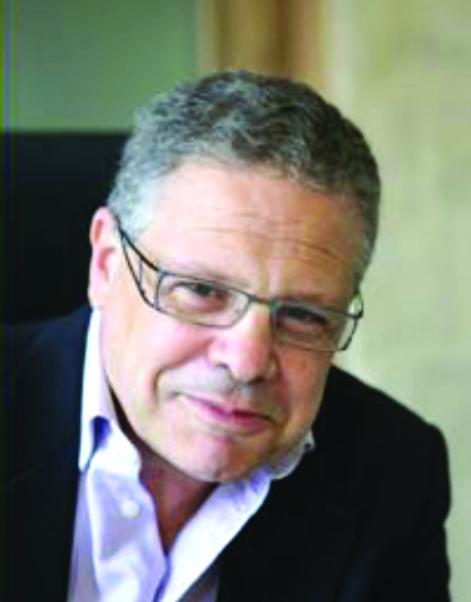
Philip Micallef is a former executive chairman of Malta Communications Authority and a former chief executive of the Bermuda Regulatory Authority.