Major building projects should be decided through international competitions
A proposal for how Malta can approach its most important projects
Public scepticism toward architectural projects in Malta has become almost routine. New proposals are often received with doubt, sometimes even before they are properly understood.
This hesitation did not appear from nowhere. Too many recent projects have settled into what can be described as architectural caution.
Buildings appear that function but rarely challenge our expectations, rarely move us and rarely expand our imagination of what Malta could become.
Architecture carries a different responsibility. It is not simply the arrangement of materials. Through architecture a society reveals what it values, what it dares to attempt and how seriously it takes its own future.
The question Malta faces today is therefore larger than any individual project. How do we rebuild trust in what is built and how do we create a form of public architecture that feels worthy of this island?
One clear path is to open the design of major projects to international architectural competitions.
Competitions introduce a productive tension. Different architects confront the same site, the same brief and the same limitations. The ground remains the same but the ideas multiply.
In that moment architecture becomes visible again as a field of thought rather than a technical exercise.
At present, Malta is discussing several projects of national significance. The proposed parks at White Rocks, Fort Campbell and Manoel Island. The regeneration of Marsa harbour. The possible reconsideration of Valletta’s Evans Building. Ongoing discussions about a new convention centre.
Each of these projects will quietly define the island for decades. They will influence how Malta is experienced by its inhabitants and how it is understood by the world. They deserve a level of ambition that matches their importance.
Long after political debates fade, the buildings remain. They speak with a calm persistence about the intelligence and courage of the society that produced them.
An international competition allows many voices to reflect on the same place. Local studios and international practices would approach Malta from different distances. Some from within its culture. Others from the outside, where certain things can suddenly become visible again.
The result is not simply a project. It is a moment of collective reflection.
Through architecture a society reveals what it values- Anthony Bonnici
For such competitions to be credible, they must be judged carefully. An independent jury would assess the proposals and ensure that the chosen project reflects architectural intelligence, technical rigour and genuine public value.
The process itself could also become public. Exhibiting the shortlisted proposals would allow citizens to see the range of possibilities before a decision is made. When architecture becomes visible, suspicion tends to dissolve. People begin to recognise that a building is not inevitable. It is a choice.
History has shown the power of this approach. Many of the most significant buildings of the last century emerged from competitions: the Sydney Opera House, the Guggenheim Museum in Bilbao and many others that gradually became inseparable from the identity of their cities.
For Malta, the intention would not be spectacle. The intention would be seriousness. Clear parameters would guide each competition from the beginning, developed together with the relevant authorities and technical experts. Costs, environmental conditions, community needs and feasibility would all be embedded within the brief.
In time, the same principle could extend beyond the largest national projects. A school, a town square, a housing development or a new park could each benefit from similar competitions scaled up or down. After all, a site contains more possibilities than the first solution that arrives.
Architecture advances through comparison and ideas sharpen when they stand next to other ideas.
The underlying question is simple. Does Malta believe that contemporary architecture matters?
If the answer is yes, then the way we choose our buildings must also change.
 A
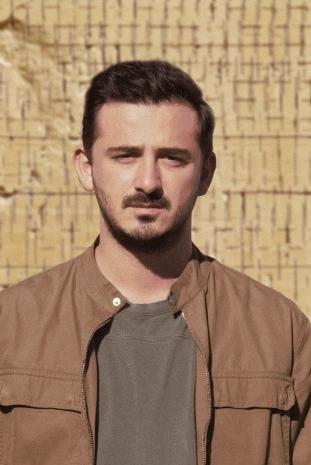
AAnthony Bonnici is an architect and partner at Ebejer Bonnici.