Malta’s 100-ton 'monster' gun at Rinella Battery
Firing it just once involved a huge expense: £100 per round, the equivalent of the daily salaries of 2,400 soldiers in those days
 Lord William George Armstrong (1810-1900) whose company developed and produced the 100-ton guns. Photos: Fondazzjoni Wirt Artna (Malta Heritage Trust)
The second half of the 19th century saw the advent of ironclad (armoured) warships that combined the advantages of heavy armour with the speed of steam-powered engines and the concentrated firepower of a few, high-calibre guns. This was the birth of the modern battleship, capable of successfully bombarding shore defences.
To beef up shore defences against this new seaborne threat, technological developments led to the creation of a muzzle-loading 100-ton cannon. This monster gun, with a calibre of 17.72 inches (45cm), was developed by the English company of Sir William George Armstrong (1810-1900) & Co, within its massive Elswick plant at Newcastle-upon-Tyne.
Although it was developed in England, the British government showed no interest in acquiring the gun, probably because it was a muzzle-loader. Muzzle-loading was fast becoming obsolete due to the advances made in breech-loading, which had already been introduced in breech-loading rifles. However, the Italian government was not only interested but actually armed two of its very modern ironclads, each having 22 inches (55.9cm) of protective armour – the Duilio and the Dandolo – with two pairs of these monsters each.
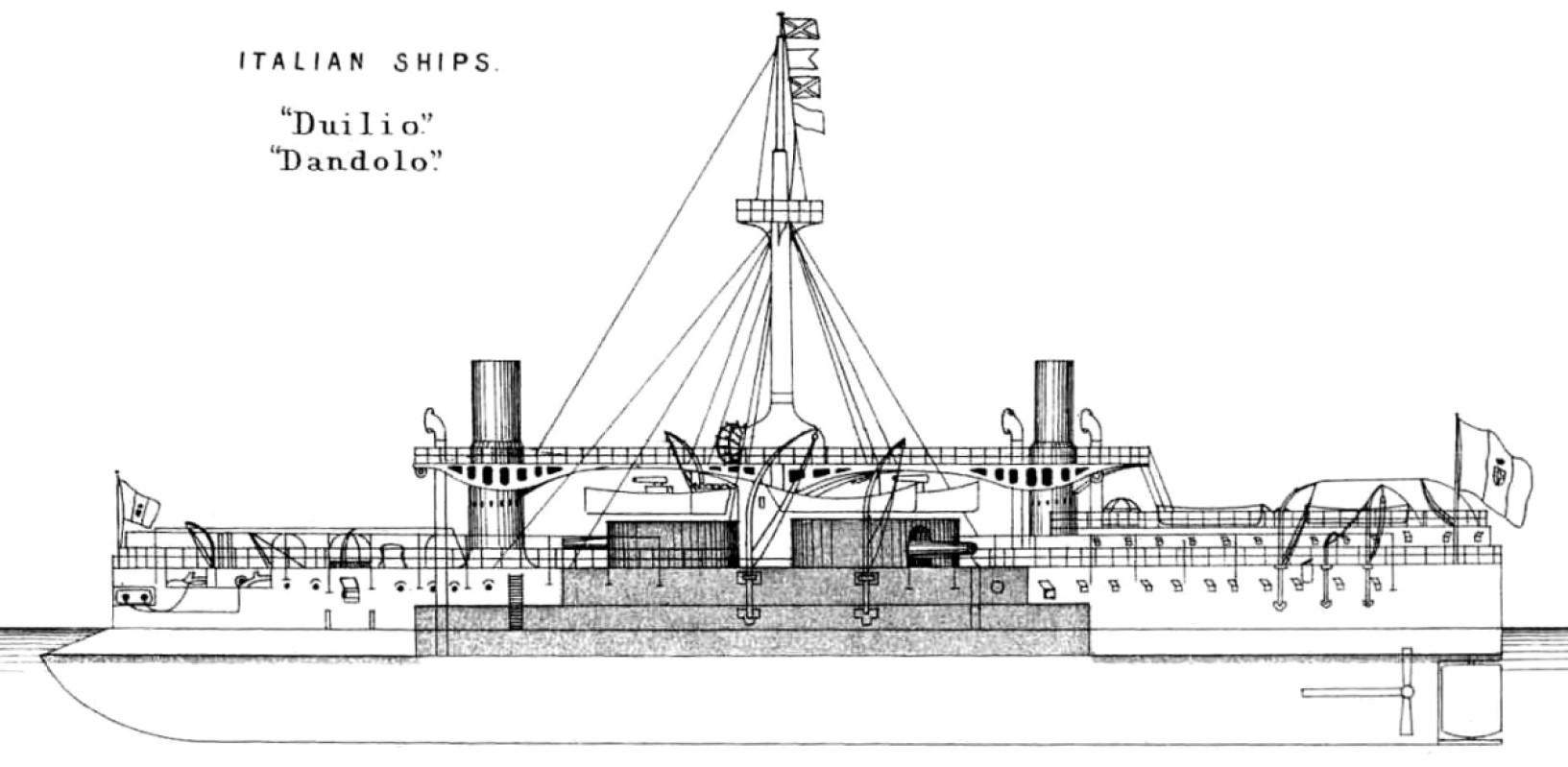
Line drawings of the Italian battleships Duilio and Dandolo.
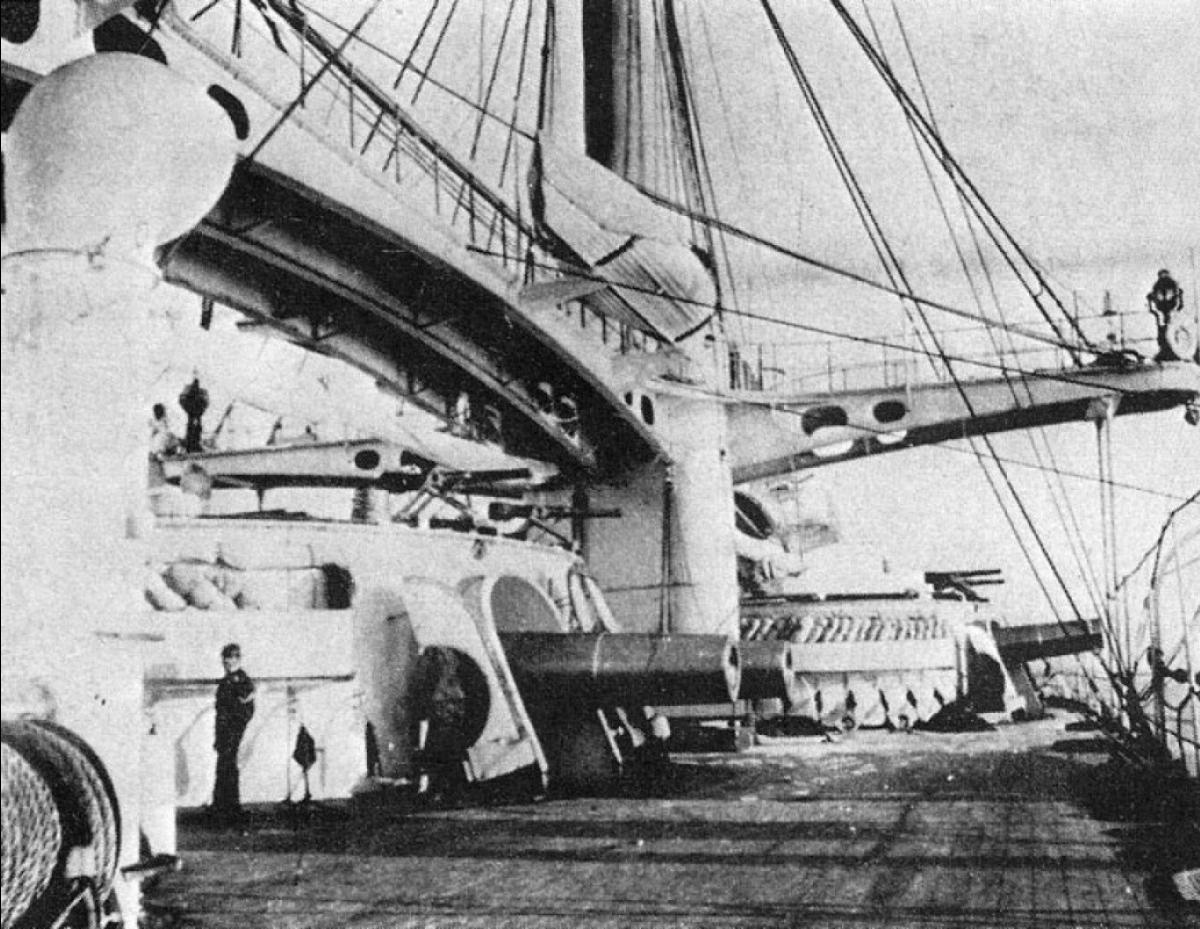
The 100-ton guns mounted on the Italian battleship Duilio.
The largest ordnance available till this time for the defence of Malta were 38-ton guns, meaning that the shore defences could, and very probably would, be heavily outgunned in the event of a conflict. This deficiency was pointed out by the Inspector-General of the Fortifications – Field Marshal Sir John Lintorn Simmons (1821-1903), a future Governor of Malta (1884-88) – in his 1877 report.
The opening of the Suez Canal in 1869 had placed Malta in the middle of the shortest sea route linking the UK with its very important possession of India, thus making Malta’s security a necessity.
Simmons proposed the installation of at least four 100-ton guns (two each for Malta and Gibraltar) to keep a possible enemy at bay. The English Admiralty was forced by circumstances to order four 100-ton guns, two for Malta and two for Gibraltar.
None of the existing fortifications could house these monster guns, so in 1878 it was decided to build two purpose-built batteries, one on either side of Grand Harbour, to be known as Fort Cambridge and Fort Rinella, even though, technically, they were just batteries.
The Rinella Battery, completed in 1886, is in the shape of an irregular pentagon pointing seaward and surrounded by a seven-metre-wide dry ditch provided with three caponiers and a counterscarp that were provided with loopholes for defence purposes and were reached from within the fort. Entry was through a gate, while a glacis surrounded the battery.
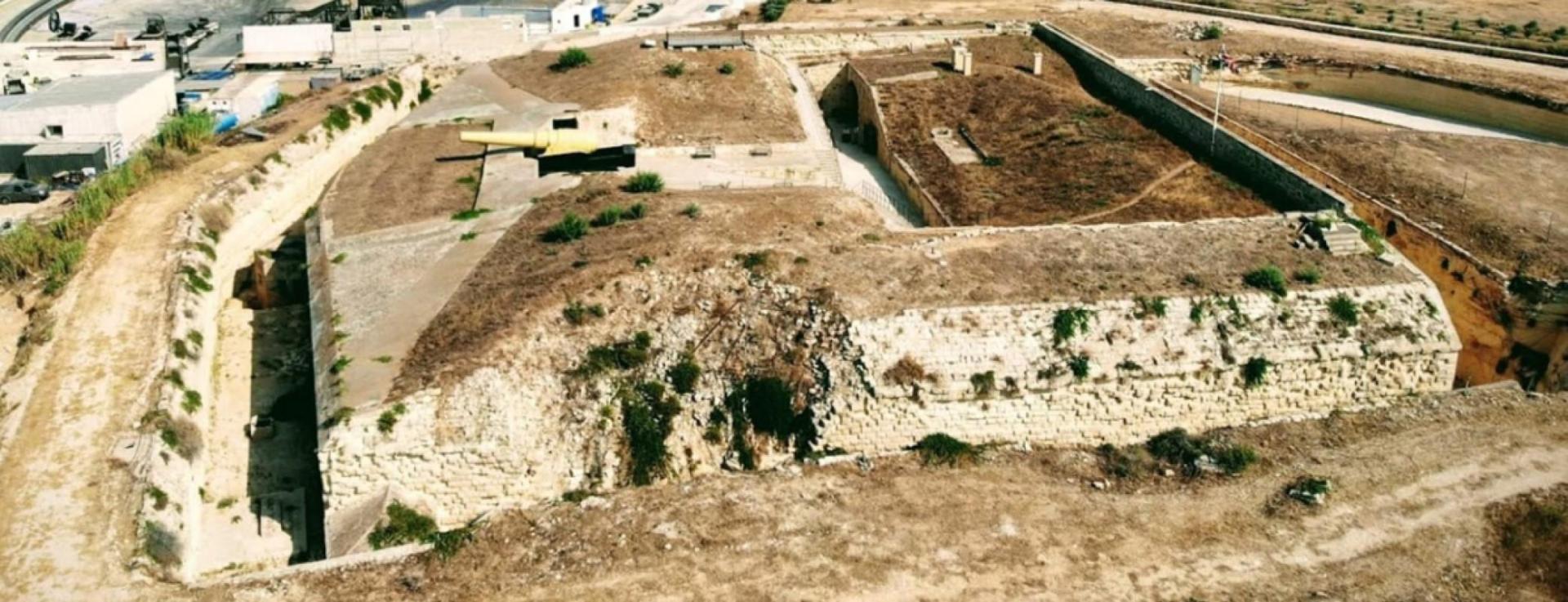
An aerial view of the Rinella Battery with the 100-ton gun in place.
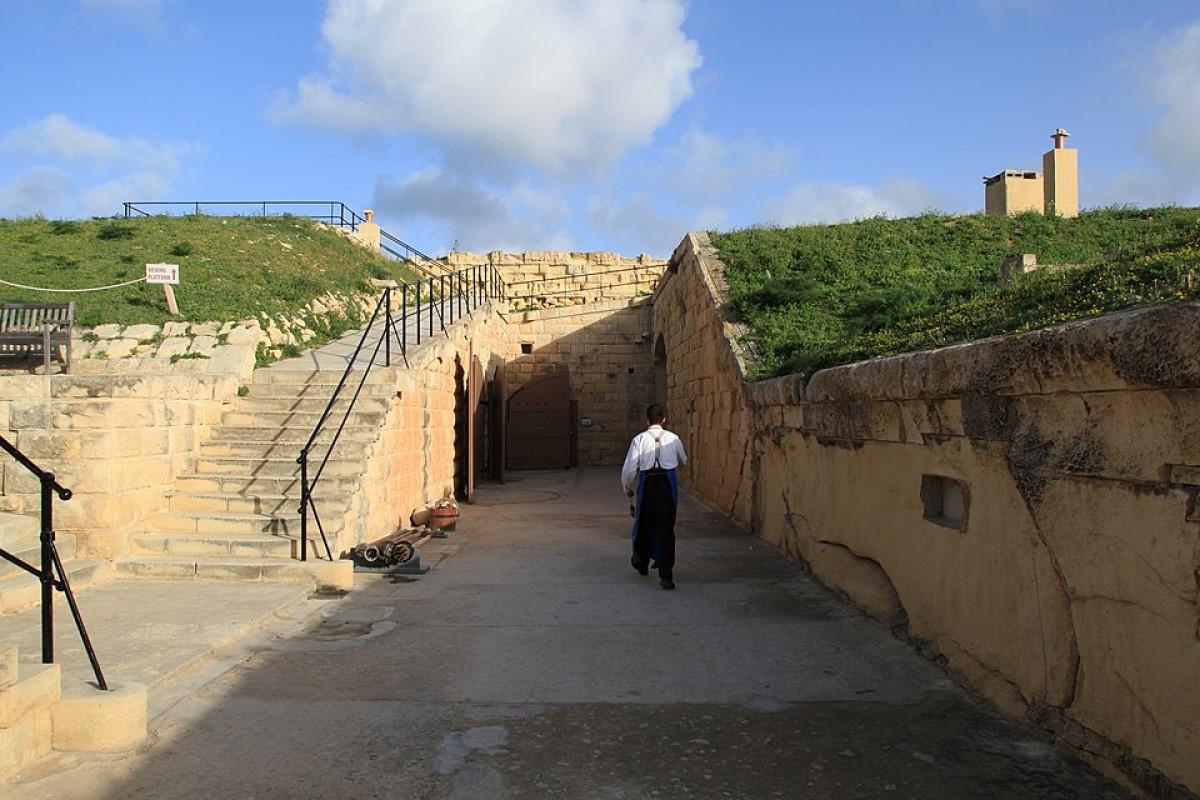
A view of the internal open area with entrances to the battery’s underground stores, and barracks.
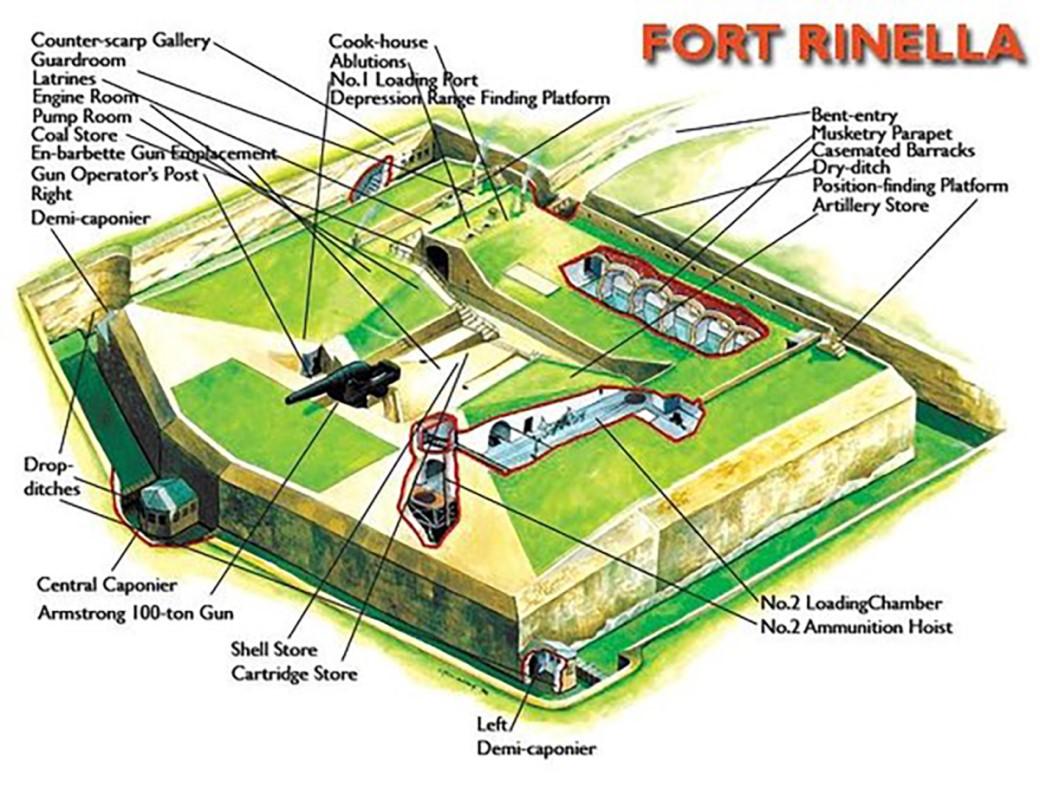
Plan of the Rinella Battery.
The whole battery was constructed low in the ground so as not to afford an easy visible target to a possible enemy.
Accommodation for the 35-strong garrison was in nine underground barrack rooms, together with the stores, ammunition and machinery needed to service the gun.
Transporting the gun from England and, after its arrival in Malta, continuing it on its way to the fort for mounting, was no easy task, and took a lot of time and effort. The War Department transport vessel, SS Stanley, was used to ferry the guns from England, one at a time, in voyages that each lasted 20 days to complete. The Rinella gun left Woolwich on August 22, 1882, and arrived safely in Grand Harbour on September 10.
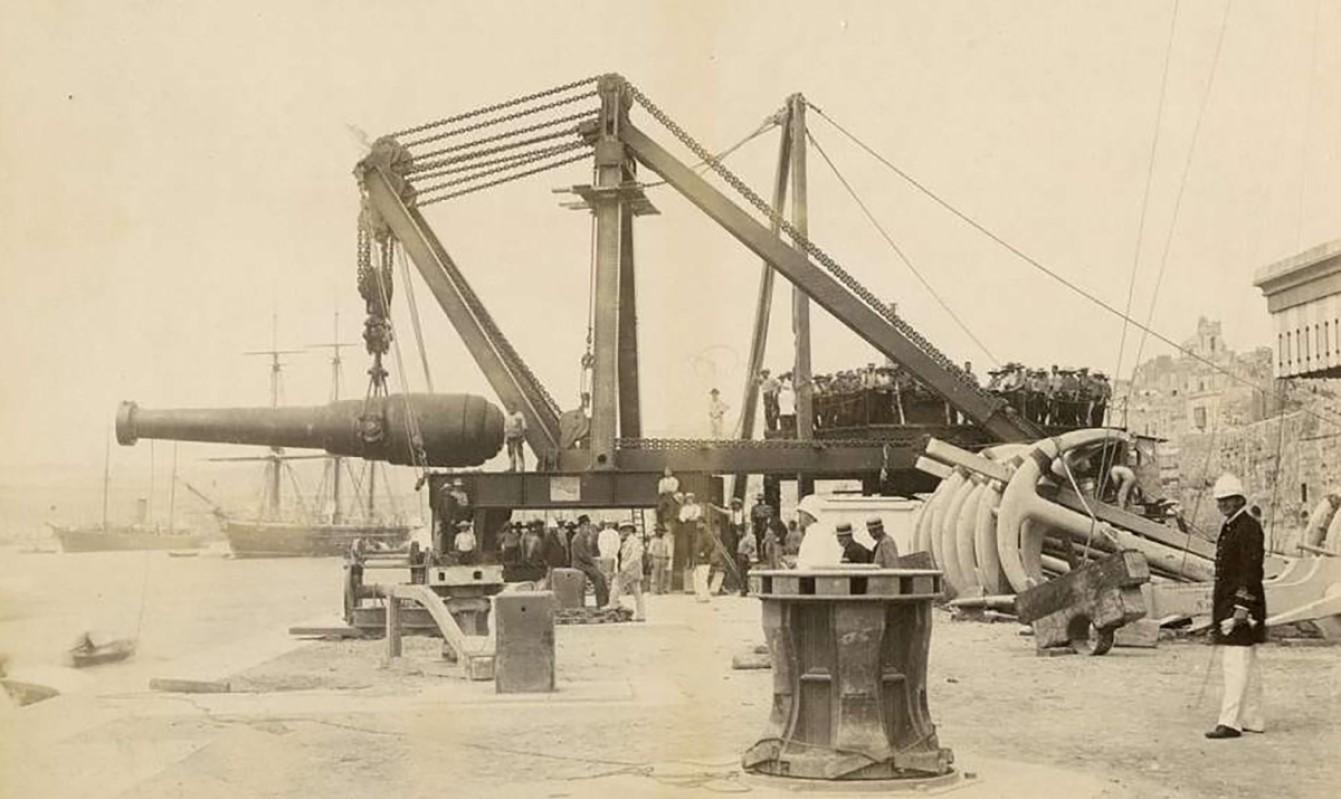 Disembarking the 100-ton gun at the Somerset Dock of HM Dockyard at Malta in 1882.
Meanwhile, preparations were afoot in Malta to unload the gun at the dockyard’s Somerset Dock where a set of gigantic shears were set up for the purpose. At Rinella Bay, a temporary quay was constructed, the bay was deepened and the road leading to the battery was widened. It was only in late 1883, when the front part of the battery was almost completed, that the transportation of the gun from the dockyard to its final destination could start.
After being ferried on a barge to Rinella Bay, the gun was unloaded with the use of heavy wooden shears and placed on a wooden sleigh that ran on metal rollers. A company of a hundred sappers was impressed to haul the gun barrel onto the battery. This arduous task took 87 days to complete, even though capstans, rollers, hydraulic jacks and, naturally, sheer muscle power were employed.
Most of the time was taken up to cover the approximately 300 metres from the bay to the battery where a temporary massive gantry was erected over the gun emplacement, ready to receive the gun barrel to be placed on its traversing carriage.
The whole operation was brought to a successful conclusion on January 12, 1884. The gunners now took over the gun, which was to remain in their charge for the next 22 years, that is, up till 1906.
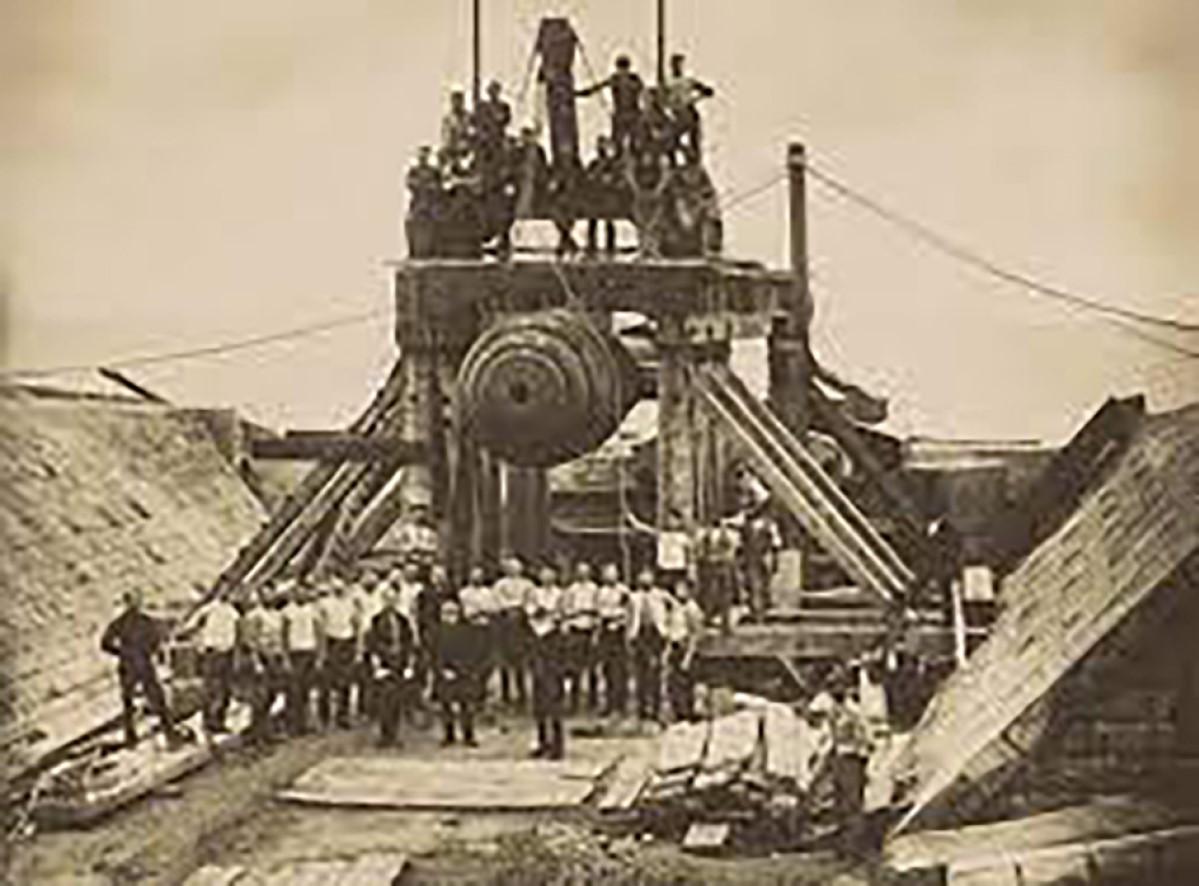 Mounting the 100-ton gun in place at the Rinella Battery on January 12, 1884.
Another two years had to elapse before the battery could be commissioned. Inspections were carried out to ensure the battery was built as planned and that the gun and its ancillary machinery were all working well. The inspections concluded that all was in order and only minor adjustments were required.
Advance notice was given for windows in Kalkara and the neighbouring localities to be kept open to prevent breakages in window panes
Rinella did not have a full complement of 35 soldiers whose duties were chiefly centred on the working and firing of the gun. Instead, a small contingent of seven gunners, under the command of a junior non-commissioned officer, used to be stationed to keep the battery, the gun and the machinery in a state of preparedness. This was because Malta was not attacked or directly involved in any conflict during the period 1886-1906. The full garrison would be deployed if dictated by circumstances, such as the outbreak of war.
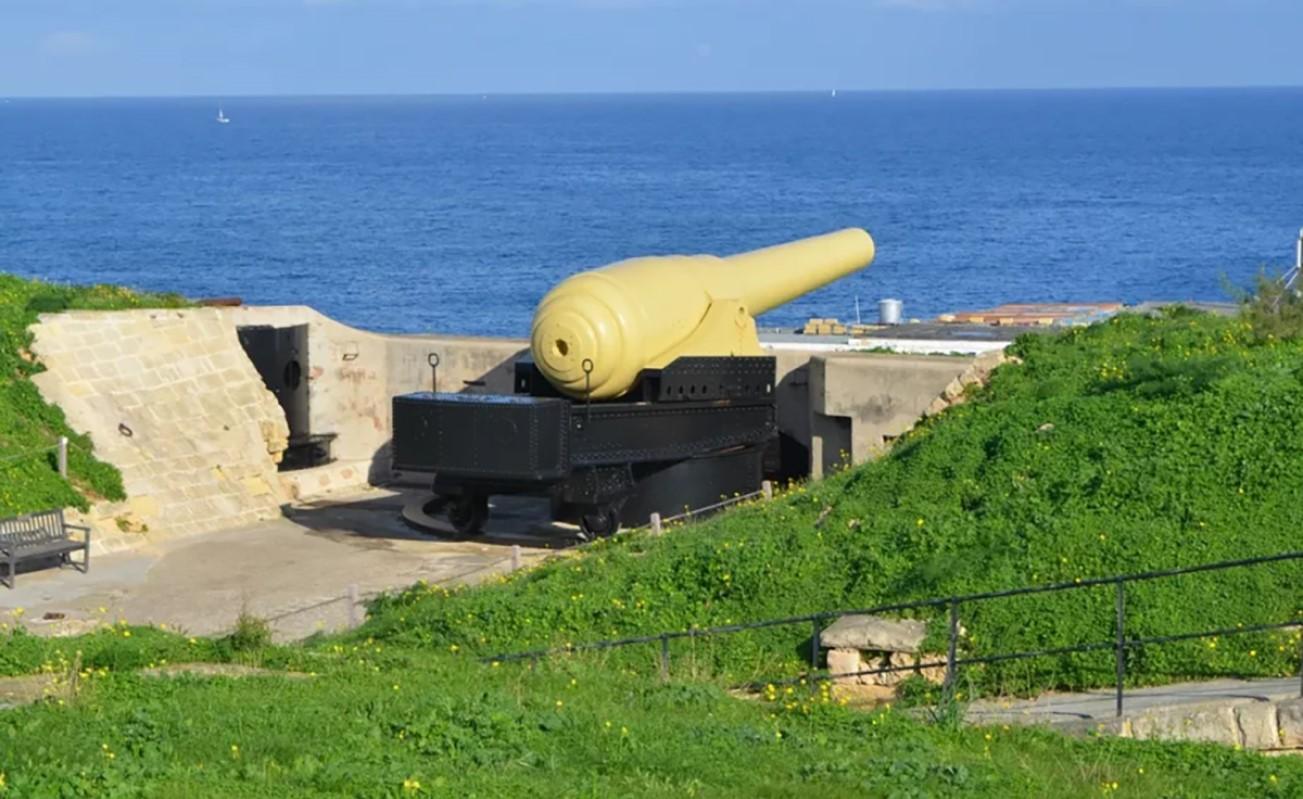
The Rinella 100-ton gun in place, after restoration.
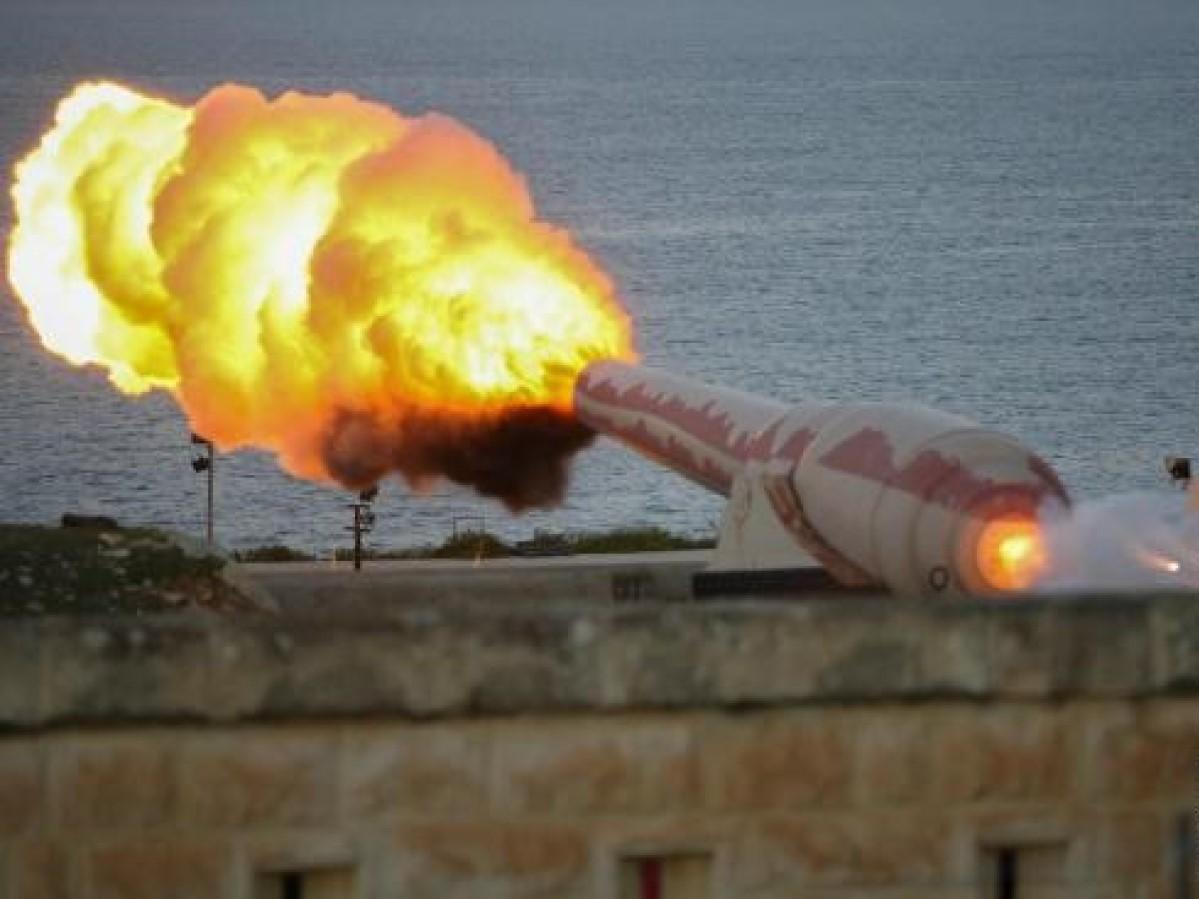
Firing the 100-ton gun.
The Rinella gun was never fired in ‘anger’ but only, occasionally – about four rounds every year – on practice days. The gun was expected to last for about 120 rounds before needing to be recalibrated, apart from the huge expense involved to fire it: £100 per round, the equivalent of the daily salaries of 2,400 soldiers in those days.
The gun weighed 102.5 tons, was just over 7.62 metres long and fired projectiles that each weighed 890 kilos at a speed of 472 metres per second. It took four minutes to fire the gun, which had a maximum range of about 12,800 metres with an effective range of 6,218 metres.
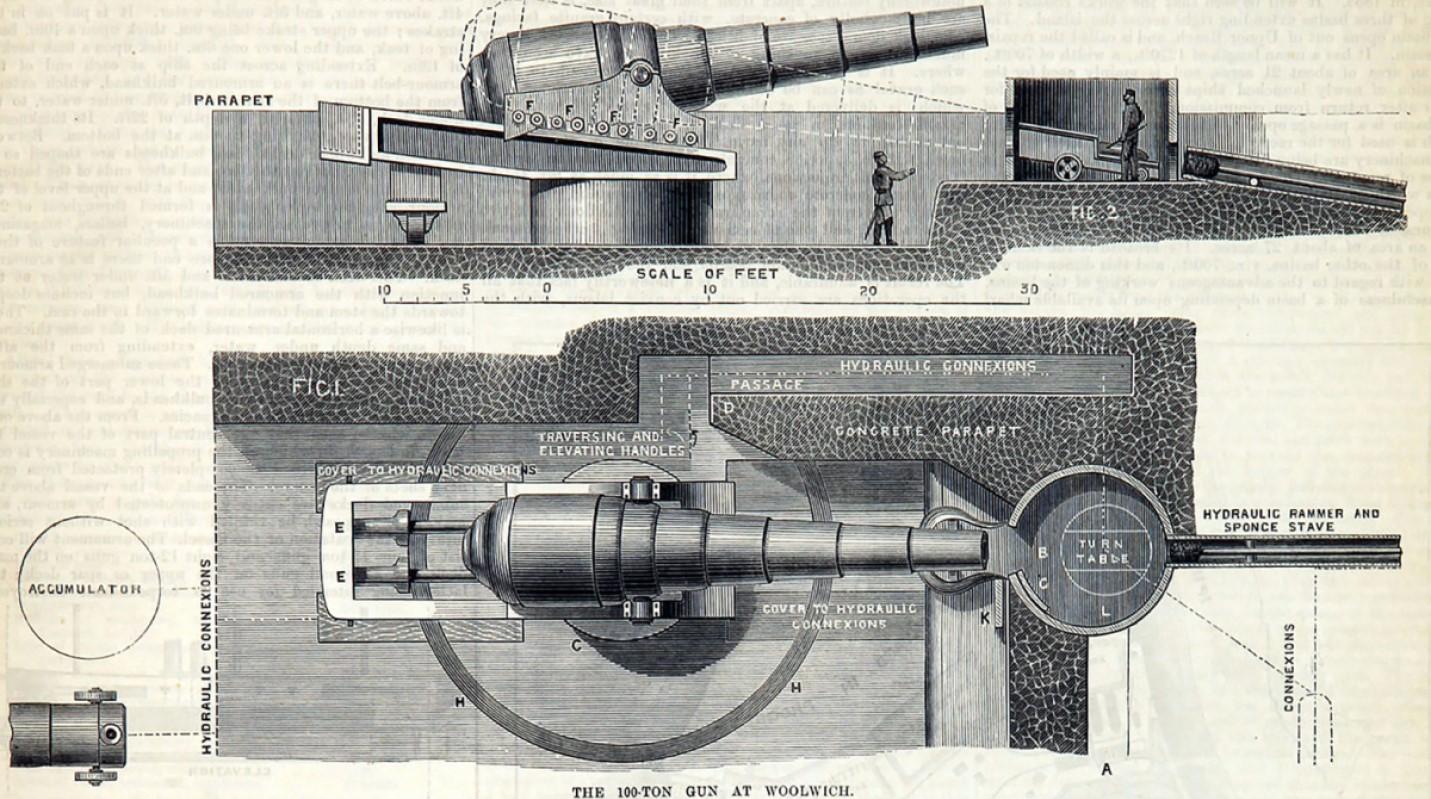 The RML 17.72-inch 100-ton gun’s emplacement diagrams.
Whenever the gun was scheduled to be fired, sufficient advance notice was given for windows in Kalkara and the neighbouring localities to be kept open to prevent breakages in window panes. The gun was last fired on May 5, 1905.
The Rinella 100-ton gun is just one of only two existing worldwide, the other being at Gibraltar.
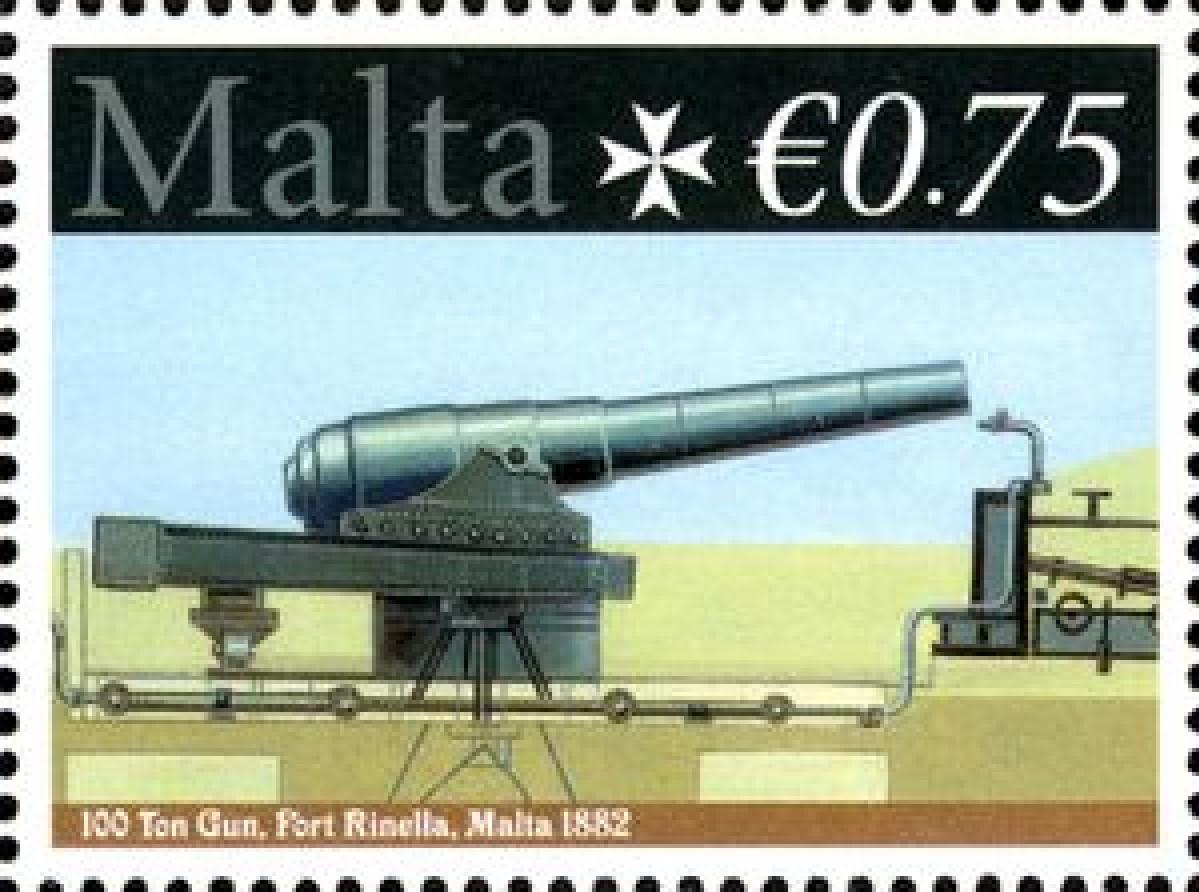 The Rinella 100-ton gun in a commemorative joint stamp issue with Gibraltar in 2010.
One must here commend the members of Fondazzjoni Wirt Artna for their sterling work on the restoration and maintenance work they carried out – and still do – in both the battery and the gun.