Malta’s 1984 Caravaggio theft inspires new action thriller
The heist of the masterpiece happened on December 29, 1984
In December 1984, Maltese art lovers woke up to the shocking news that a Caravaggio masterpiece was stolen from the St John’s Co-Cathedral museum in the heart of Valletta.
What many dubbed as the “robbery of the century” and the “biggest and most important theft in Maltese history” is still riddled with mystery to this very day. It has now inspired and provided the storyline of an upcoming Maltese film which premiered on Sunday afternoon.
The Theft of the Caravaggio is a fictional mystery thriller centred around the art heist and is set in St John’s Co-Cathedral and the capital.
The film’s writer and director, Joshua Cassar Gaspar, was not inspired by old newspaper snippets detailing the Caravaggio theft or by his research. It was his wife’s nonno, Angelo Osnato, who originally planted the seed of inspiration for the film in his mind.
 Joshua Cassar Gaspar behind the scenes in St John’s Co-Cathedral. Photo: Jason Spiteri
“He was an Italian general stationed at the Italian Embassy in Malta at the time of the theft. During all those Christmas dinners we had with him in Rome, he would often recount his memories of Malta and excitedly recall what it was like in the embassy during this huge theft.”
Cassar Gaspar also met many foreigners who had no idea Malta had two Caravaggio paintings hanging in St John’s Co-Cathedral, let alone that one of them was stolen hours before the museum closed.
It took him and his co-writer, Monika Maslowska, over a year to write the script.
While seeking inspiration from the Caravaggio theft, he did not want to create a documentary-style film.
“Film is all about building connections and inspiring others through storytelling. We also thought a film about the theft would inspire others to dig deeper into what truly happened during these thefts.”
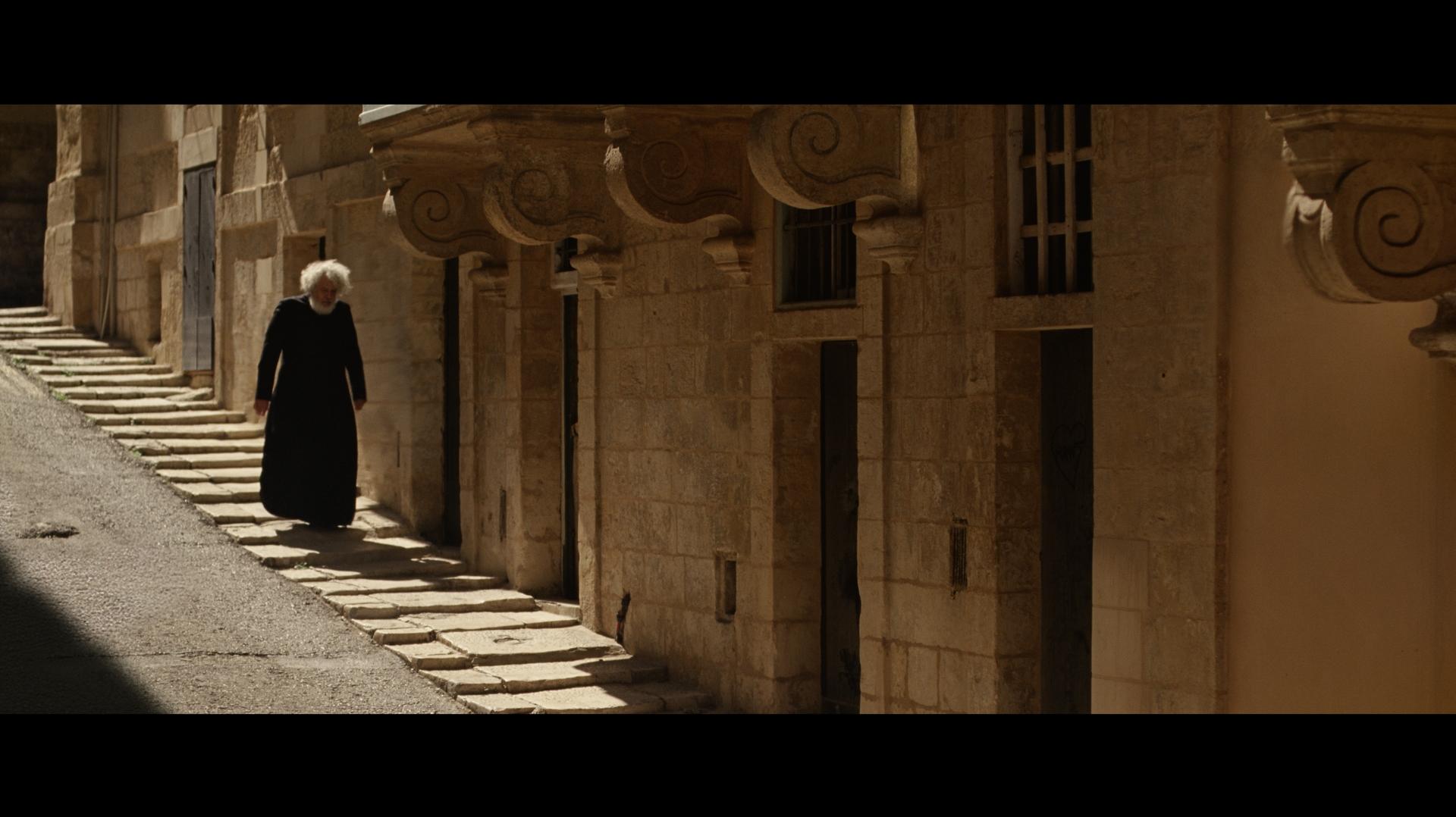 A scene from the upcoming film. Credit: Jericho Dominion Film & Distribution Ltd
One of the biggest reference points for Cassar Gaspar and the writers was Quentin Tarantino’s Inglourious Basterds.
“People love a good film about art heists and crime. Our aim with this film was never to create a documentary-style retelling of the actual events, but rather to use the real theft as a springboard for a fictional story with cinematic and emotional depth.”
What happened on December 29, 1984?
The thieves had set up a chain with a sign reading ‘no entry’ as they went about their business. Caravaggio’s Saint Jerome Writing, painted around 1607, was removed from the wall, and the canvas was removed from the frame before being rolled up and allegedly thrown out of a window in St John’s Square.
A Times of Malta article at the time reported how the theft was nearly foiled on the day when a German tourist wanted to see the painting in the room where it was displayed, yet the thieves, dressed as workmen, calmly asked them to return later, after works were completed.
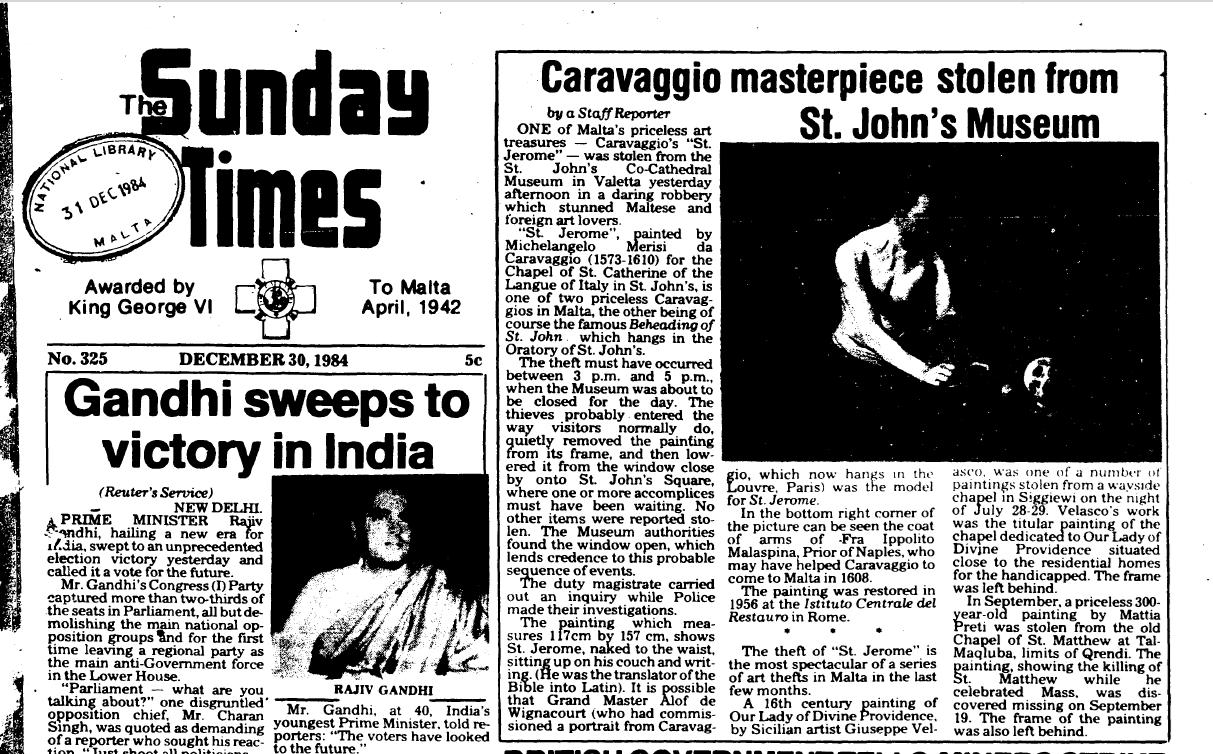 A snippet of The Sunday Times reporting the Caravaggio theft dated December 30, 1984.
At the time, there were several rumours of its whereabouts, involving organised crime, illicit private collections and even potential ransom scenarios.
Details were somewhat murky, but it is believed to have been part of an anti-mafia and art-smuggling investigation.
Fr Marius Zerafa, a Dominican friar, who served as Director of Museums at the time, eventually received phone calls from the people who stole the painting, who demanded a ransom.
After months of negotiating with the thieves, the priceless but damaged Caravaggio was recovered in 1987 during a police operation.
A classic example of life influencing art, the film’s story follows Orpheus, a priest who wakes up to discover the priceless Caravaggio masterpiece has disappeared under his watch.
While, historically, it was the Italian Embassy that was approached by the government to help resolve the theft, in the film, the Maltese police reach out to the US Embassy, who send a special agent to help trace the thief’s steps.
What happens when the burden of truth is too heavy to ignore?
Apart from the action and crime, the film also explores themes of regret and guilt.
“I was drawn to the idea of imagining what might happen when the burden of truth becomes too heavy to ignore,” he said.
Shooting on celluloid film
The Theft of the Caravaggio is the 40-year-old’s debut, and he wanted to make sure it was different.
That is why he decided to shoot using celluloid film, which means using the physical film base strip, originally used for photography.
“In most modern films, you can see the crispness of the shot, you can see all the details on the characters’ faces, but shooting with celluloid, the film has a beautiful texture, a sort of warmth you cannot replicate with digital,” Cassar Gaspar said.
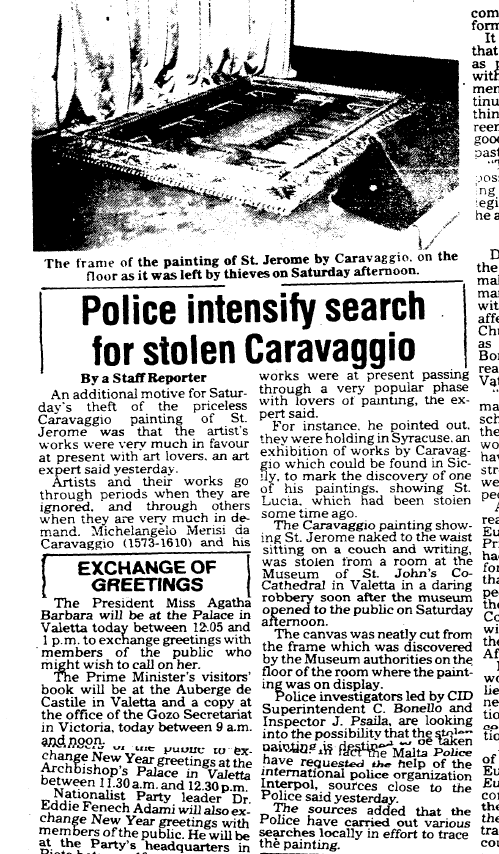 News article dated January 1, 1986, on police searches for the theft of the Caravaggio painting.
While most filmmakers have adapted a more modern and digital form of filmmaking, popular directors such as Christopher Nolan and Wes Anderson still use the unique form of film shooting.
Cassar Gaspar recalled how he connected with his cinematographer, Dan Cawthorne, over their shared love for celluloid film.
“We connected over our love for older movies, which we saw to be more aesthetically beautiful.”
Cawthorne also researched Caravaggio’s artworks to find a way to replicate his use of chiaroscuro and adapt that to the screen.
In digital filmmaking, directors and filmmakers can keep reshooting takes, as many as they need to get the perfect scene.
With celluloid, the sheet has a maximum of four takes.
“Every roll has four minutes, then you need to reload the camera with a new sheet for a new roll. Apart from this being a bit daunting for actors, as they have fewer takes, it can also be pressing if you are on a tight budget,” the director explained.
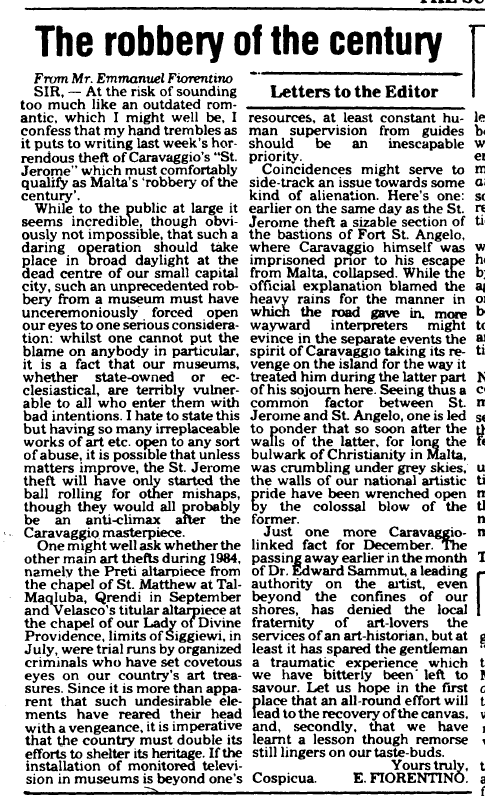 A letter to the editor in The Times calling the art theft the 'robbery of the century'.
Despite the challenges, the cast, crew and technical team were all focused on making the magic happen.
“The actors rehearsed a lot before filming, we would even rehearse pretending the camera is rolling to make it more realistic,” he said.
“Yet many were excited that we were shooting with a 35mm. One actor, Narcy Calamatta, even said it reminded him of the ‘good all days’. Everyone knew what was happening and remained focused.”
Alongside Calamatta, the film stars Paul Kissaun, Elektra Anastasi and Peter Galea. It also features British actor Rob Grose.
Another difficult decision Cassar Gaspar and his team had to make was the choice of language.
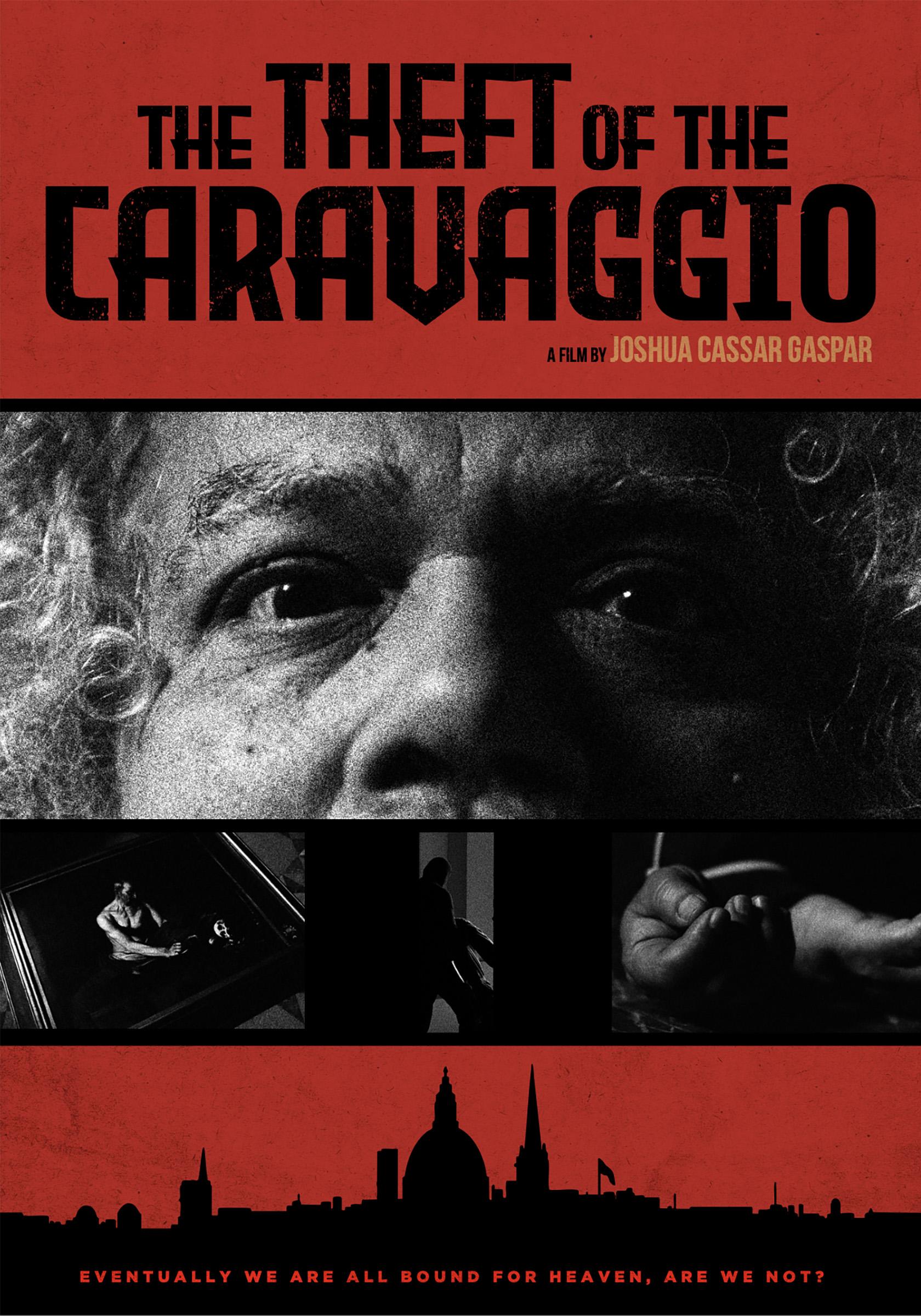 The Theft of Caravaggio film poster
“When we met with international distributors, they suggested that we use our bilingualism to our creative advantage and run the film in English. They told us that if we stick to Maltese, we could run a few film festivals and it stops there,” he said.
Filming in English, on the other hand, means the films could be provided to the mass audience.
Filming took place over 23 days, mostly set in Valletta.
“One time, we were filming outside St John’s Co-Cathedral and had thousands of tourists behind us waiting as we filmed the scene. We were blessed to have Michael Kissaun, film producer, who managed to keep the tourists entertained and silent as they waited for us to wrap up our scenes.”
The film premiered during the Mediterrane Film Festival on Sunday and on June 28.
The Theft of the Caravaggio was supported by Creative Malta.