Malta to build light rail line linking airport to St Paul’s Bay
The €2.8 billion line is at the centre of a 15-year plan to redesign Malta's transport
Updated 9.30pm with timeline
Malta plans to build a 24-kilometre light rail line linking St Paul’s Bay to the airport, Transport Minister Chris Bonett announced on Thursday with initial coring tests starting as early as next week.
The new rail line will be the "backbone" of Malta’s redesigned transport network, dubbed 'Malta in Motion', which promises to integrate several forms of transport, including buses, ferries and cycle routes across a single network.
Plans for the transport network, unveiled on Thursday, span 15 years. Construction on the first phase of the rapid transit system (RTS), or light rail line, is set to kick off five years from now, with initial technical studies to run over the next 18 months
Part of the rail line, spanning between the airport and Valletta will start to operate within the next decade, with the line completed within 15 years.
The plans, described by Bonett as "the largest infrastructural project in Malta's history," are being developed by international consultancy firm ARUP, alongside Maltese design firm Mizzi Studios.
Presenting the plans, ARUP officials Donald Mc Daid and Larissa Miller said parts of the line will run underground, with others at street level or elevated, depending on the area’s topography and built density.
The route, named the La Valette line, will span a total of 24 kilometres, with stops including the airport, Qormi, Valletta, Mater Dei and university, and St Paul’s Bay among others along the way.
Some stations are likely to be underground, with others at street level.
Quoting a Times of Malta editorial from November 2004 which had already highlighted the island's transport woes, Bonett insisted this was "an honest plan" that will be completed "by our children".
"We are not presenting gimmicks. I am convinced it can be implemented," the minister said.
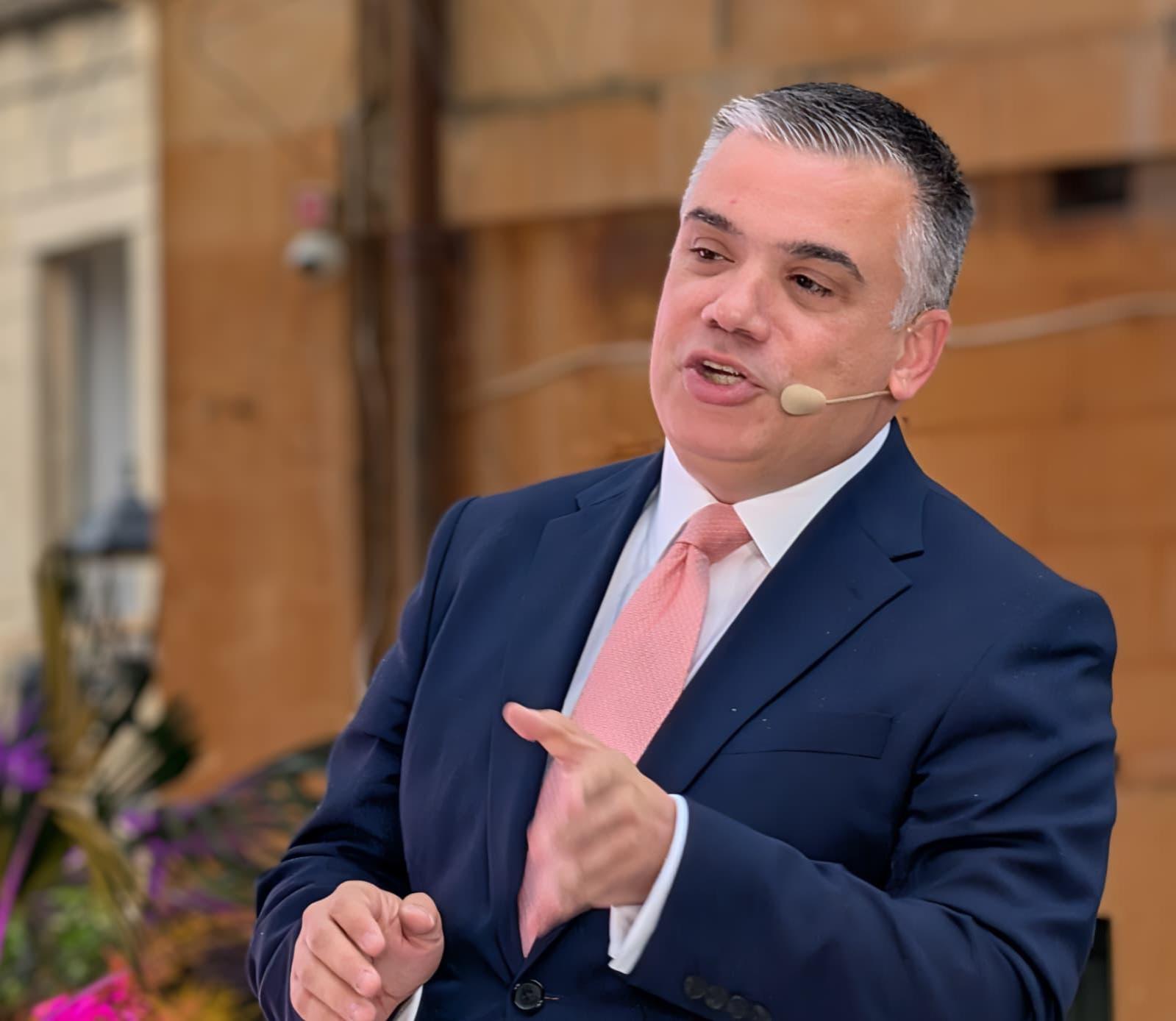 Transport Minister Chris Bonett insisted he was "not presenting gimmicks" as he added he was "convinced the plan can be implemented". Photo: Chris Sant Fournier
‘Turn up and go’ service
Developing the RTS is expected to cost €2.8 billion, with €1.8 billion going towards construction costs and €160 million for design, planning and engineering works.
The final €2.8 billion figure includes a 40% to 45% contingency to factor in potential risk, officials said. This means that the project will cost between €130 million and €150 million for each kilometre of rail line.
Plans for a possible second and third rail line are also in the works, although initial plans focus on a single line at this stage.
ARUP said the rail is expected to operate on a “turn up and go” system, with passengers never having to wait longer than a handful of minutes for their ride to show up, without having to navigate complex rail schedules.
Although details on passenger capacity remain vague at this stage, officials say similar light rail systems, such as that in Copenhagen, carry more than 300,000 passengers each day.
Nevertheless, officials say the system promises “high capacity, high-frequency connections between Malta’s urban centres”.
It is also not yet known whether residents will be able to use the service for free, as they do when catching the bus or ferry.
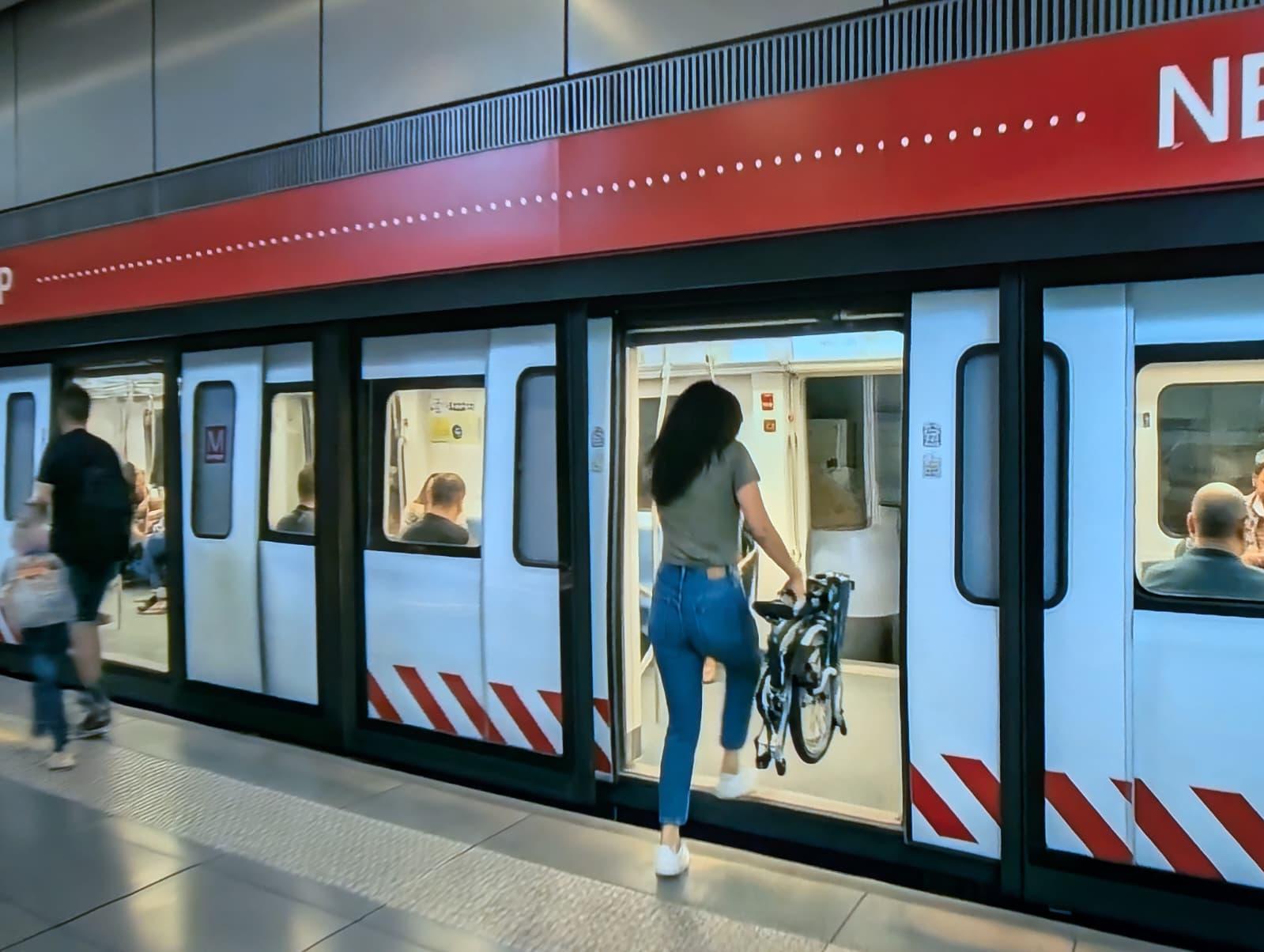 The light railway will be part of an integrated mass transport system that will take into account pedestrians and cyclists. Digital render.
ARUP said the revised plans are an evolution of an underground metro system initially launched, to great fanfare, in 2021.
That launch had placed the metro’s cost at €3.9 billion at the time, with construction costs having soared since then, ARUP said.
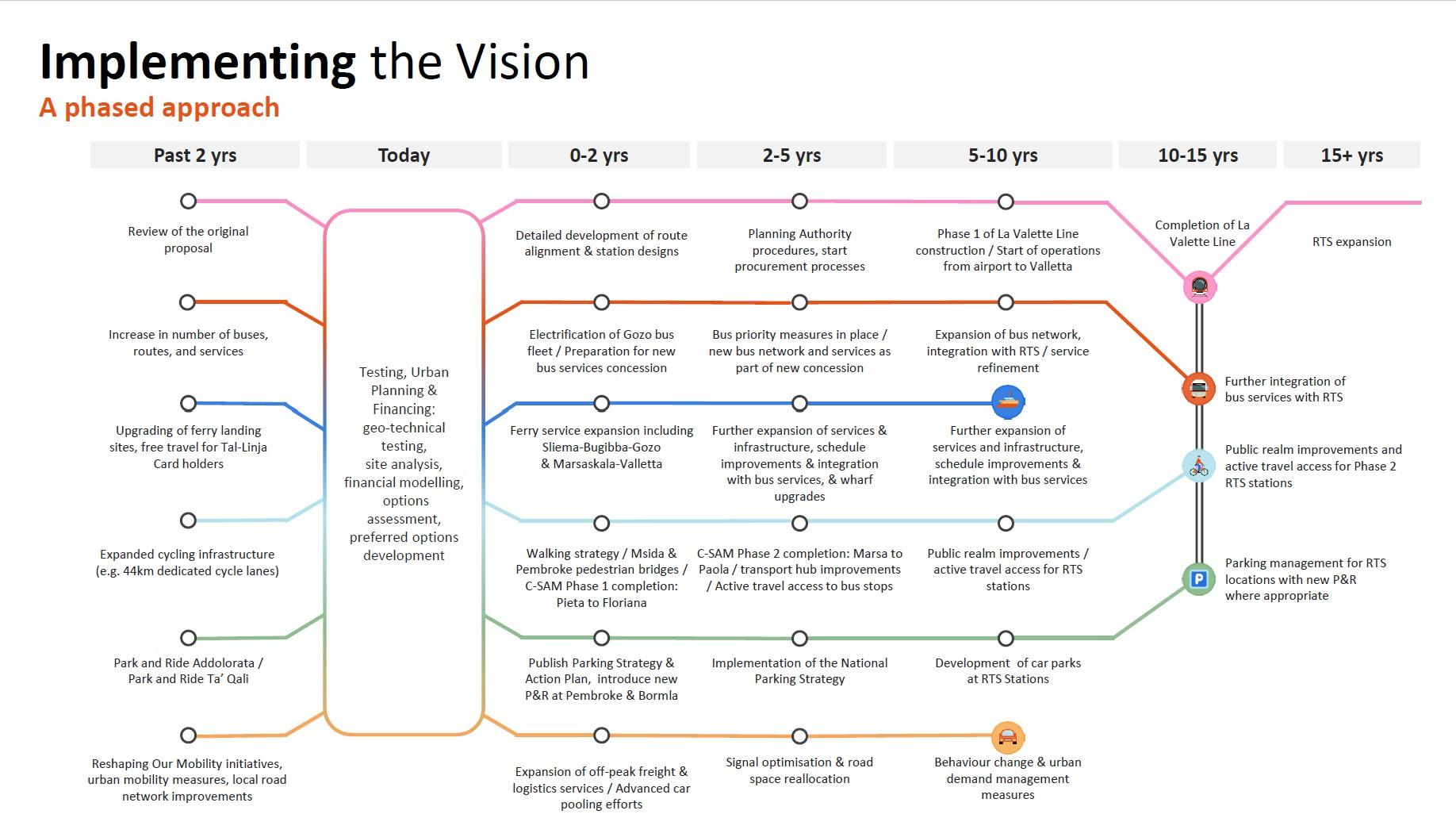 The timeline for the public transport system as presented during the press conference.
It will take "three, maximum four years" to build the first phase of the line linking the airport to Valletta with construction starting five years from now.
However, coring tests will start in Floriana on May 4 as part of the geotechnical studies to test the bedrock.
Similar coring works will be carried out in Qormi the week after.
New bus concession in the works
While the light rail will grab headlines, officials say it is only one part of the integrated transport network they envisage, with plans for Malta’s bus network to be redesigned over the coming years.
With Malta’s current bus concession to operator Malta Public Transport set to expire in 2029, officials said plans for a new bus service concession are underway.
The redesigned bus network will offer primary bus routes along Malta’s busiest routes, alongside smaller feeder buses carrying people to main hubs and the RTS service.
With the current bus network creaking at the seams as it carries over 250,000 people each day, authorities promise a more efficient, higher frequency service, with key road infrastructure redesigned to prioritise buses.
This includes dedicated bus lanes and priority at traffic signals and junctions, officials promise.
More ferry routes, better walking and cycling infrastructure
Meanwhile, plans to expand Malta’s ferry service are underway, with a new ferry running between Sliema, Buġibba and Gozo set to launch in May, with a ferry service from Marsascala to Valletta expected to start operating "at the end of this year or beginning of 2027".
The plan also promises to prioritise active travel, improving walking and cycling infrastructure and reallocating public space to increase efficiency.
A long-promised cycling strategy is also set to be launched shortly as part of the plans, officials said.
Malta’s haphazard approach to parking will also be addressed, officials say, promising a new parking policy and strategy. This includes new residential parking facilities in several towns, including Qormi, Birkirkara and Ħamrun, as well as park-and-ride facilities near transport hubs.
However, the plans rule out the introduction of on-street parking fees.
Three legislatures
As the ambitious plan will be implemented over three legislatures, the Transport Minister met with the Nationalist Party on Thursday, just before the public presentation, to explain the strategy in detail to them.
He publicly called on the PN to “speak to us on how to improve this project”.
In a statement released as the minister’s speech got underway, before the rain temporarily stalled the event, PN leader Alex Borg made no reference to the government's plan but said his party had a “holistic plan to reduce traffic”.
In a message on social media, Borg said traffic was a burden on families and businesses with “precious time” lost on the road. He pointed out that Malta now records the highest traffic congestion in Europe and the second highest in the world.
The Opposition leader highlighted disagreement among Government members about the direction a mass transport system should take.
He once again pledged that within its first 100 days, a PN government would “launch the implementation framework to deliver the mass rapid transport project, and within five years its first line would begin operating.” No further details were given.
He added that the “first measures to ease traffic” would be implemented immediately with incentives to increase remote working, better organised collective transport, and ensuring priority lanes function as intended.