How Malta compares to other EU office markets in 2026
Malta sits in the same price bracket as Lisbon but has English as an official language, full EU membership and a well-worn path for international firms looking for a European base. Here is how the island compares in 2026
There’s a conversation happening more often in boardrooms across London, Amsterdam, and Dublin. It usually starts when a finance director points to a spreadsheet showing what the company pays per square meter for its European offices, and someone finally asks: "Is there a cheaper way to do this?"
The reality is that in 2026, the "flight to quality" has become an expensive journey. According to Savills, prime office occupier costs across EMEA grew by 7.2% year-on-year through Q3 2025. This is driven by a tight supply and fierce competition for well-specified space in core hubs [1].
The numbers tell a story of their own:
London’s West End has set new records two years running.
Paris and Munich saw sharp rent spikes in 2024 and 2025.
Dublin, once the poster child for post-financial-crisis office bargains, now commands headline rents of around €673 per sqm per year for its best city-centre space, according to CBRE [3].
Malta isn't on that list. It’s a Mediterranean hub that probably deserves more attention than it gets. Mostly since its offering high-spec, tech-ready infrastructure without the eye-watering price tags found in the major capitals.
What the numbers show in 2026
To put Malta in proper context, it helps to look at the full European picture. The table below uses data from Savills, CBRE and BNP Paribas Real Estate to compare approximate prime office rents across the markets most relevant to international businesses considering a European base:
|
Market |
Approx. Prime Rent (€/sqm/yr) |
Typical Lease |
Key Source |
|
London West End |
€1,400 – €1,900+ |
5–10 yrs |
Savills, 2025 [1] |
|
Paris CBD |
€800 – €1,000 |
3–9 yrs |
CBRE Europe, 2025 [2] |
|
Dublin City Centre |
€450 – €750 |
5–10 yrs |
CBRE Ireland Q2 2024 [3] |
|
Amsterdam |
€350 – €600 |
3–7 yrs |
BNP Paribas / CBRE [4] |
|
Lisbon |
€250 – €360 |
3–5 yrs |
BNP Paribas RE [4] |
|
Warsaw |
€240 – €300 |
3–5 yrs |
BNP Paribas RE [4] |
|
Malta – Sliema / St Julian's |
€230 – €450 |
2–5 yrs |
OfficeSpace.rent [5] |
|
Malta – Mriehel / Suburban |
€180 – €350 |
2–5 yrs |
OfficeSpace.rent [5] |
A few things stand out immediately. First, the gap between London and everywhere else is enormous. A prime West End office now costs somewhere in the region of five to six times what you'd pay in Malta's Sliema or St Julian's for an equivalent-quality space. Second, Malta sits in the same broad price bracket as Lisbon, but unlike Lisbon, English is an official language. This matters enormously for international businesses hiring across borders.
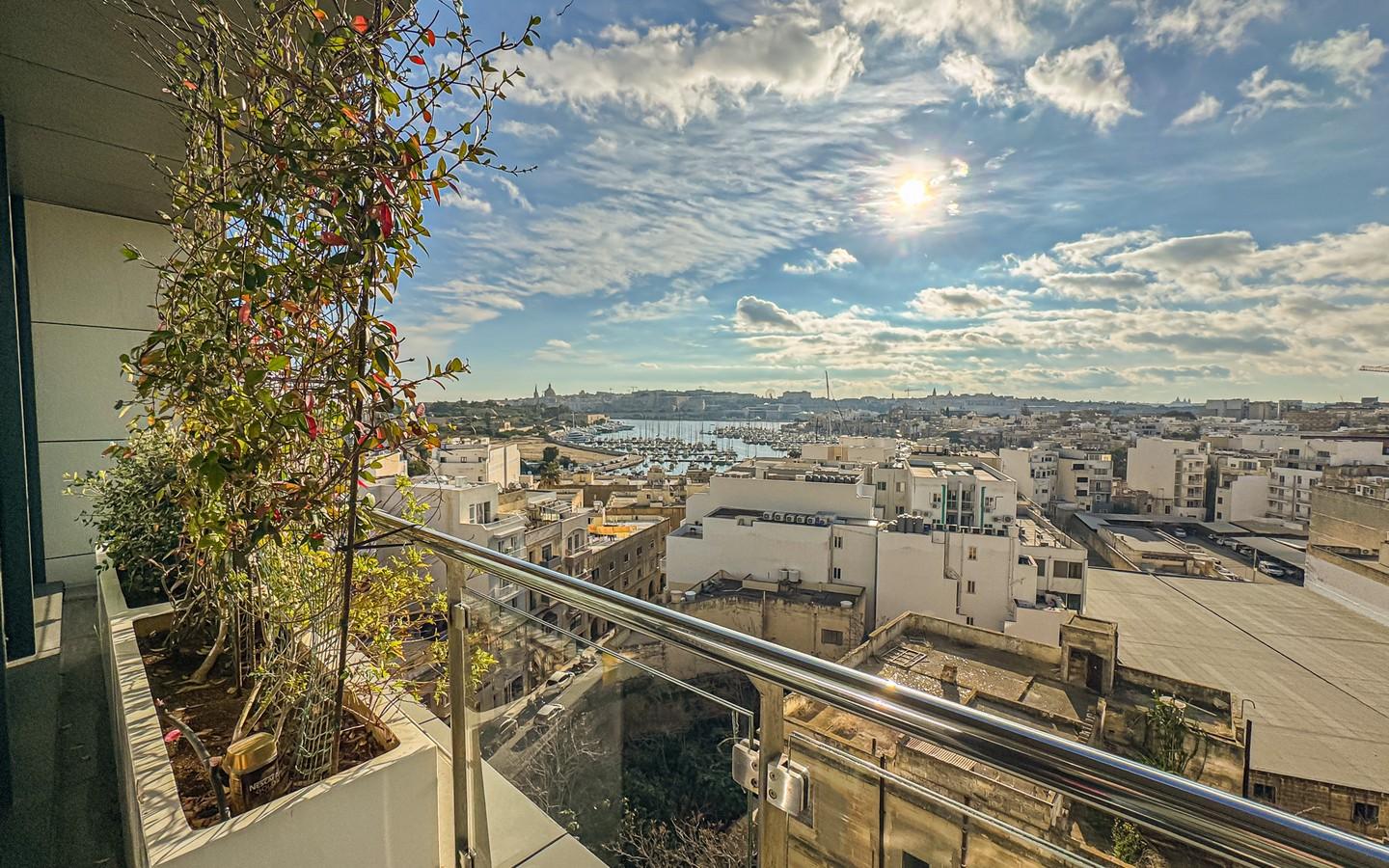 Grade-A space exists in Malta now. However, it just costs considerably less than Grade-A space anywhere in Western Europe.
Third and perhaps most importantly for growing companies: Malta's suburban and business-park options, particularly around the Mrieħel Central Business District start from as little as €180 per sqm annually. For a 300 sqm office, that's a total annual rent of €54,000. The equivalent footprint in Dublin's city centre would cost in the region of €180,000.
It's not just the rent
Rent is only part of the story. The total cost of running a European operation includes tax, payroll, compliance and the time it takes to get established. On all of those measures, Malta makes a reasonable case for itself.
Malta's corporate tax system operates on a refundable credit model that can reduce the effective rate to as low as 5% for qualifying shareholders. This compared to 25% in Ireland, 25.8% in the Netherlands and 19% in Poland [6]. For companies that are genuinely trying to reduce their European cost base, the tax picture matters as much as the lease.
The workforce is another consideration that doesn't get enough attention. Malta has one of the highest rates of English fluency in continental Europe. The language has official status alongside Maltese, which removes a significant barrier for companies relocating from the UK or hiring internationally. The island also has a well-established community of professionals in legal, accounting and compliance services. Largely built around the needs of the iGaming and financial services industries that have been based here for two decades.
iGaming put Malta on the map and financial services kept it there
The iGaming sector was the first wave. Malta spotted the opportunity early, the Malta Gaming Authority (MGA) built a credible regulatory framework, and by the mid-2000s the island had become the default European base for online gaming operators. According to the NSO, the gaming industry and related software sector now together contribute over 15% of Malta's gross value added. A figure that has grown at an average of 16-17% annually since 1995 [7].
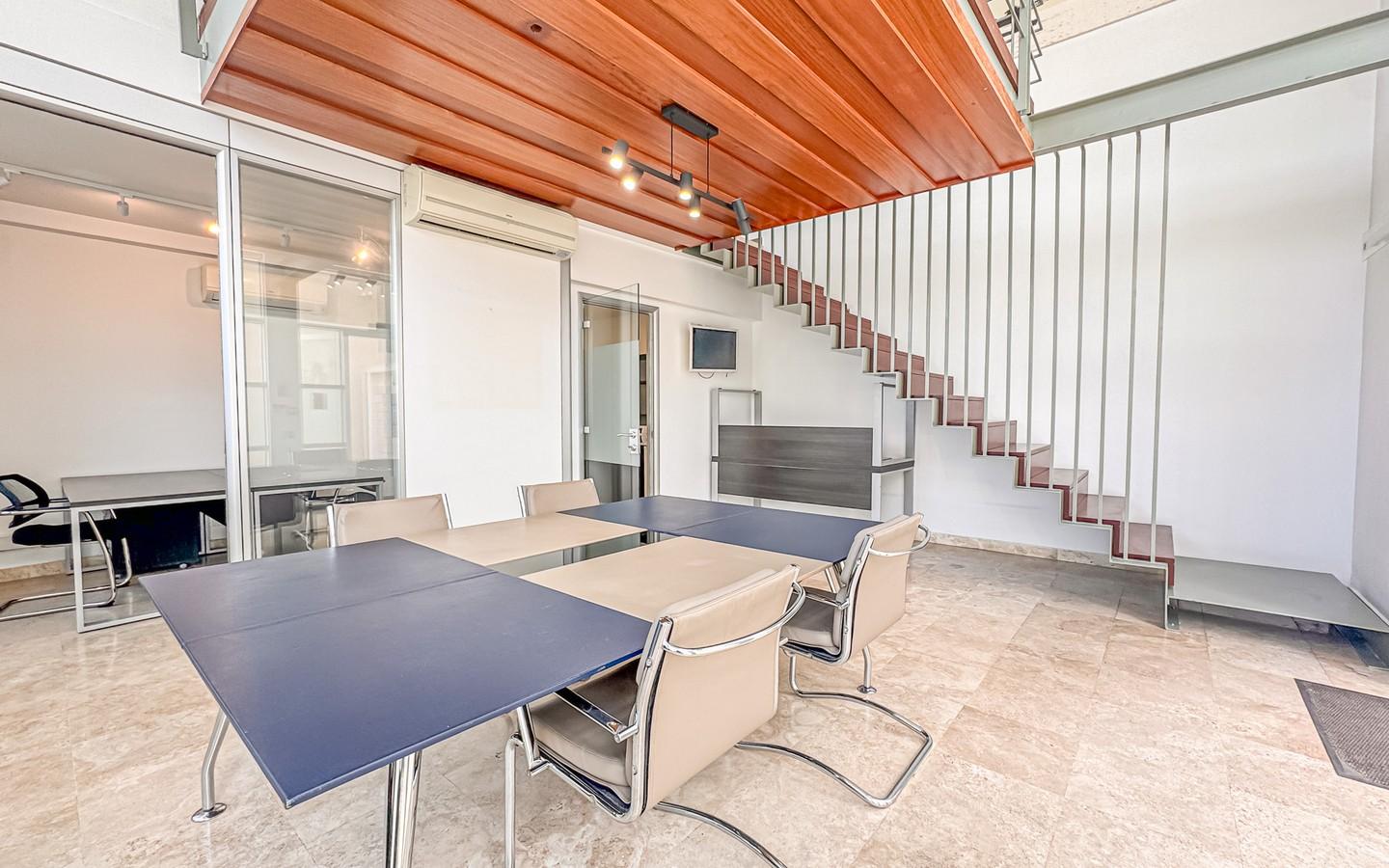 Malta has one of the highest rates of English fluency in continental Europe.
The MGA's most recent annual report puts 315 active licensees on the island as of end-2024, with the average operator having been in Malta for 7.5 years [8]. These are not companies that arrived, tried the jurisdiction, and left. The average tenure for the top 100 operators by turnover which account for 60% of all MGA-licensed activity is 13 years. That's a meaningful signal about whether Malta actually delivers what it promises to international businesses.
Financial services firms followed a similar path. EU passporting rights allow a firm authorised in Malta to operate freely across the single market, and the legal framework. Rooted in British common law but fully transposed into EU directives is familiar ground for companies coming from the UK. The combination of low effective corporate tax, passporting and a functioning English-speaking professional ecosystem has attracted asset managers, fintech firms, payment processors and insurance companies across the past decade.
The office market has evolved
Ten years ago, you could make a reasonable argument that Malta's commercial property stock wasn't good enough to attract serious corporate tenants. That argument is harder to make today.
Mrieħel or, as is now known, Central Business District, has changed the supply picture significantly. Modern, large-floorplate offices with sustainability credentials, high-speed fibre and parking sit alongside a well-maintained stock in Sliema and St Julian's. Grade-A space exists in Malta now. However, it just costs considerably less than Grade-A space anywhere in Western Europe.
Lease flexibility is another structural advantage. In London, active demand at end-2025 included over 5 million sq ft from occupiers who had been in the same premises for 15 years or more. This is largely because moving is so expensive and lease commitments are so long [1]. In Malta, lease terms of two to five years are standard even for larger offices. Companies can establish, grow, and adapt their footprint without committing to a decade-long liability from day one.
The honest limitations
None of this is to suggest Malta is the right answer for every business. The island has real constraints. Large-floorplate availability and anything above 1,500 sqm of contiguous Grade-A space can be limited. Furthermore, competition for the best stock in prime locations is real. Road infrastructure is a genuine operational consideration for businesses with logistics or distribution requirements. And while Malta's talent pool is strong in certain sectors, it's a small island with a working population of roughly 250,000. Hence, very large headcount expansions can require significant international recruitment.
There are also the intangible factors that don't show up in a rent comparison table. Malta is a small market. If you need to be physically close to clients, suppliers or regulators in Frankfurt, Amsterdam or Paris, an office in Valletta doesn't solve that problem. The island works best as a European HQ, back-office or operational base and not as a substitute for a presence in a major financial centre.
The bottom line
European office costs are rising, lease terms in major cities remain punishing and the post-pandemic consensus, that companies want less space, but better space has pushed prime rents higher even as average rents have softened. In that environment, Malta's combination of EU membership, English language, flexible leases and significantly lower costs deserves more serious consideration than it typically gets in conversations about European business locations.
It won't be the right answer for every boardroom. But for companies actively looking to reduce their European operating costs without sacrificing regulatory credibility, it is worth running the numbers. The most complete resource for offices in Malta covers the full range of options across the island. From from serviced desks in St Julian's, Seafront Sliema offices and to large-floorplate space in Mriehel.
Sources and citations
[1] Savills Global Occupier Markets: Prime Office Costs Q3 2025 — savills.com/research_articles/255800/382390-0 | Savills Central London Office Market Watch, January 2026 — savills.us/research_articles/256536/386947-0
[2] CBRE European Real Estate Market Outlook Mid-Year Review 2025 — cbre.com/insights/books/european-real-estate-market-outlook-mid-year-review-2025/offices | CBRE Global Prime Office Rent Tracker — cbre.com/insights/global-office-rent-tracker
[3] CBRE Ireland Dublin Office Market Q2 2024 — Headline prime rent stated as €673/sqm/yr. cbre.ie/-/media/project/cbre/dotcom/ceuk/ireland-emerald/Dublin-Office-Market-Q2-2024-Figures.pdf
[4] BNP Paribas Real Estate European City Rent Data (Amsterdam, Lisbon, Warsaw) via Statista — statista.com/statistics/431672/commercial-property-prime-rents-europe/ | statista.com/statistics/530076/office-real-estate-prime-rent-amsterdam-netherlands-europe/
[5] OfficeSpace.rent Malta market listings data, 2024/25 — officespace.rent/office-rental-prices-malta/ All Malta figures are indicative and reflect current asking prices across active listings.
[6] Corporate tax rates: KPMG Corporate Tax Rate Survey 2024. Malta's effective rate after shareholder refund can be as low as 5% for non-resident shareholders on trading income. Individual tax positions vary.
[7] NSO Malta / SiGMA World interview with Keith Borg, Director of Economic Statistics — nso.gov.mt/impact-of-the-gaming-industry-on-maltas-economy/
[8] Malta Gaming Authority Annual Report 2024 — as reported by iGaming Expert, January 2026 — igamingexpert.com/features/malta-praises-workforces-and-esg-efforts/