Malta's first palliative care strategy launched to support dying patients
Health minister stresses that euthanasia is not part of palliative care
Malta’s first-ever Palliative Care Strategy has been launched, outlining a 10-year plan to strengthen the support provided to individuals facing life-threatening illnesses.
The strategy for 2025-2035, that was launched for consultation in 2023, aims to raise awareness about the importance of palliative care for both patients and their families, increase the number of professionals working in the field, establish best practices for patient management, and expand community-based care services, amongst other things.
It adopts a patient-centered approach, encouraging patient involvement, where possible, in drawing up a flexible and personalised care plan.
As Malta faces an ageing population with one of the longest life expectancies in Europe, palliative care is becoming an increasingly urgent need. Almost 20% of the population is over 65. Currently, most deaths (55%) occur at Mater Dei Hospital, while 14% of people die at home.
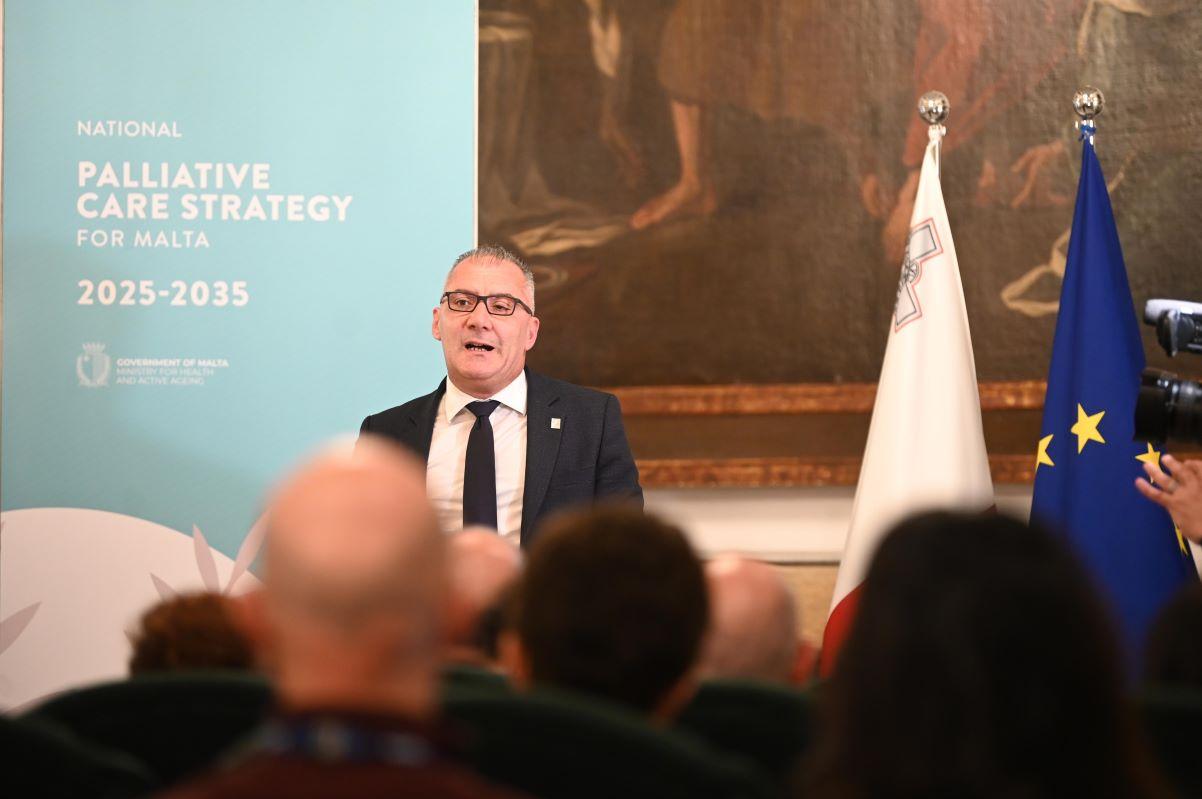 Health Minister Jo Etienne Abela. Photo: Jonathan Borg
Speaking at the launch, Health Minister Jo Etienne Abela noted that approximately 3,500 people die each year. Cardiovascular disease remains the leading cause of death (37%), followed by cancer (28%), diabetes, and dementia (5% each).
It is estimated that around 60% of those who die would benefit from some form of palliative care - an approach focused on improving quality of life through the prevention and relief of suffering.
“This strategy aims to ensure that services linked to palliative care are increasingly made available within the community,” said Abela.
In Malta, palliative care is primarily provided by the public health sector through the state hospital’s Palliative Care Unit for adults, the Rainbow Ward for children, the Sir Anthony Mamo Oncology Centre, and various care homes. NGOs such as Hospice Malta and the ALS Foundation also offer essential palliative services.
Euthanasia is not part of palliative care
Abela emphasised that euthanasia - or medically assisted dying - is not part of palliative care, which is instead centered on supporting patients experiencing natural end-of-life processes.
In 2022, the Labour Party pledged to launch a national discussion on the potential introduction of euthanasia - one of around 1,000 electoral promises made by Prime Minister Robert Abela at the time.
Back in January 2021, Abela had expressed personal anguish over the issue, referencing a close friend’s diagnosis and suggesting openness to legislation. However, euthanasia remains illegal in Malta.
 Patients will be involved in drawing up a care plan that can include triggering the do-not-attempt-resuscitation policy. . Photo: Shutterstock
Key recommendations from the strategy
- Develop a 10-year workforce plan outlining the required number and mix of specialist hospital palliative care teams, community teams, and staff in palliative units and hospices.
- Address the acute shortage of palliative care medical professionals, who play a critical leadership role in multidisciplinary teams and in training other healthcare workers.
- Encourage people to plan ahead and discuss end-of-life care with loved ones and healthcare professionals.
- Review and update undergraduate curricula to enhance education on palliative care.
- Expand respite services for informal caregivers.
- Strengthen bereavement support services.
- Ensure a clear, accessible "Do Not Attempt Resuscitation" (DNAR) policy exists across all healthcare settings, including a pathway for advising patients and their appointed representatives.
You can read the Palliative Care Strategy here:
Attached files