Malta’s fiscal strategy
Stability without new taxes
While addressing the recent launch of FinanceMalta’s Annual Report, Finance Minister Clyde Caruana reaffirmed government’s commitment to fiscal stability without new taxes, despite rising long-term pressures. “Our challenge is to ensure stability that is economically sound and socially equitable – without placing new burdens on citizens. This is not just a fiscal goal; it is a social pledge,” he tells The Corporate Times.
You stated that fiscal stability will be maintained “without the need to introduce any new taxes.” Given rising long-term commitments in pensions, health, and infrastructure — especially under green transition and ageing demographics — how do you reconcile this promise with the need for fiscal sustainability?
Maintaining fiscal stability without introducing new taxes may seem ambitious, especially as long-term commitments in healthcare, pensions, and infrastructure continue to rise. Yet this remains our pledge, supported by an unwavering commitment to fiscal sustainability, a deep understanding of our economy, and strong social values.
Our approach is anchored in two strategic pillars. First, we aim to achieve sustainable productivity gains that expand our tax base faster than our obligations grow. This goes beyond general growth — we are focused on quality growth that delivers higher value-added employment, rising wages, and broader tax contributions. We are not passively relying on historical growth trends, but actively investing in education, digital skills, and innovation to prepare our workforce for the industries of the future.
This strategy is already yielding results. Malta recorded 6.0% GDP growth in 2024 — a full percentage point above the European Commission’s forecast — and is projected to grow by 4.1% in 2025 and 4.0% in 2026, remaining among the EU’s top performers.
Malta’s track record in fiscal consolidation speaks for itself. Our task now is to sustain this path through fiscal discipline, smart investment, and continued social dialogue, ensuring stability that is both economically sound and socially just.
You described the financial services sector as one of Malta’s best-performing industries. However, challenges tied to reputational management, talent shortages and regulatory alignment persist. What, in your view, are the most pressing structural risks the sector is facing, and how in your opinion, is the government supporting the sector’s future growth responsibly?
Malta’s financial services sector continues to serve as a vital pillar of the national economy, contributing 8.2% to real Gross Value Added and providing employment to over 14,700 individuals. Yet, the sector operates within a global environment that is evolving rapidly and where emerging risks and shifting dynamics require proactive and strategic responses.
In close collaboration with the Government, the MFSA is addressing these structural challenges head-on to strengthen long-term sectoral resilience. As regulatory arbitrage continues to erode across jurisdictions, Malta is shifting away from dependence on niche advantages and towards a reputation built on robust compliance, integrity, and sound supervision.
This transformation hinges on delivering agile, forward-looking regulation and ensuring the timely and effective transposition of key EU directives. In parallel, the MFSA is significantly strengthening its supervisory capabilities, investing in analytics, technology, and expertise to anticipate and mitigate risks, including those related to cybersecurity and climate change. This has led to a marked increase in supervisory engagement and enforcement actions, underlining a clear commitment to market integrity.
Attracting and retaining top-tier international talent is also a pressing priority. While Malta’s workforce in financial services continues to grow, we recognise that remaining globally competitive depends on more than remuneration. Enhancing infrastructure, improving urban planning, and enriching social amenities are critical steps to ensuring a high quality of life that appeals to professionals and their families.
Finally, while compliance costs continue to rise globally, Malta remains committed to proportionate regulation. The MFSA is actively engaging with stakeholders to identify efficiencies through digital innovation and co-created solutions, ensuring that legitimate businesses are supported while maintaining high standards.
These ongoing reforms form part of a broader vision to future-proof the financial services sector, ensuring it remains innovative, resilient, and aligned with Malta’s long-term economic aspirations under ‘Vision 2050’.
Despite improved growth and tax revenues, Malta’s government debt has reached €10.6 billion, or 47.4% of GDP, and continues to rise. Do you see this as a structural concern in the medium term, and how do you plan to address it without curbing economic growth?
At 47.4% of GDP, Malta’s debt currently remains below the EU average of 81.0% and the Euro area average of 87.4% for Q4 2024, as reported by Eurostat in April 2025. It is also well within sustainable thresholds and below the EU’s 60% Maastricht criterion. This is a point of relative strength and a testament to our disciplined fiscal approach.
I need to highlight that the key metric isn’t the current absolute level. Those familiar with basic economic terms understand that the sustainability of debt is primarily assessed through an analysis of the debt-to-growth ratio and the sustainability of our primary balance. If nominal economic growth consistently exceeds our borrowing costs and the rate of debt accumulation, debt remains manageable.
Obviously, the changing global environment and its implications on interest rates and our domestic demographic pressures brings challenges. Our plan builds upon past endeavours. We are committed to disciplined expenditure management and targeted spending reviews. The IMF’s January 2025 report acknowledges Malta’s “strong track record of prudent fiscal management” and recommends continued fiscal consolidation in line with the EU’s new fiscal framework not through indiscriminate cuts but a rigorous prioritisation of investments that yield the highest economic and social returns.
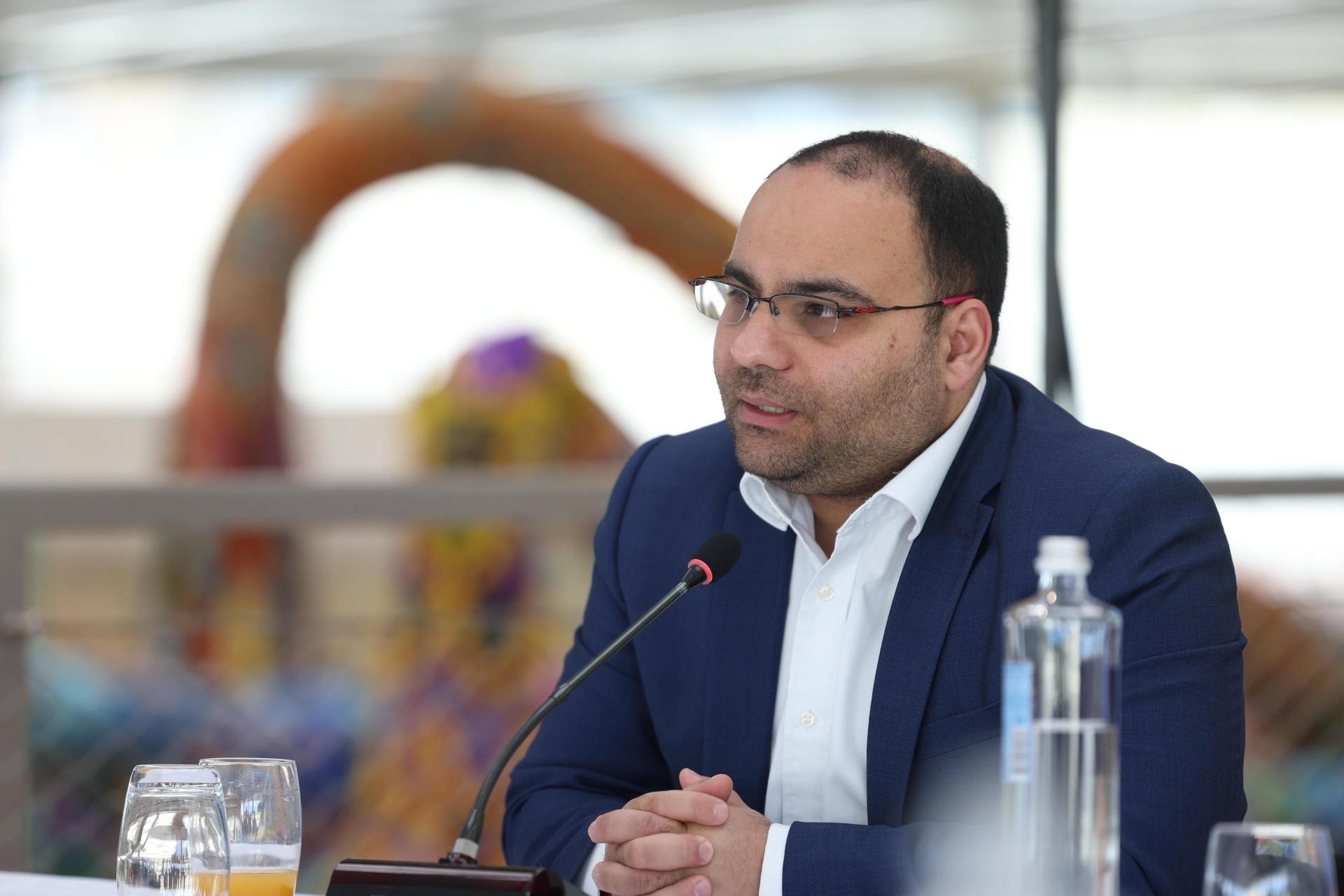 Finance Minister Clyde Caruana
In addition, we will remain focused on fostering strong, sustainable economic growth that naturally expands the tax base. This robust performance generates higher incomes and increased consumption, all of which contribute to higher government revenues without necessitating tax rate increases. This strategy strikes a balance between necessary productive investment and unwavering financial discipline, ensuring that Malta’s debt remains not only sustainable but also a catalyst for enduring prosperity.
In your speech, you also said that “we must revisit certain successes from the past.” What areas were you referring to specifically? Are we talking about tax policy, sectoral incentives, or governance structures?
I was indeed referring to a combination of strategic approaches that have historically underpinned Malta’s economic resilience and social progress, not necessarily by replicating the past but by extracting those principles that made them successful.
Firstly, our history of robust sectoral incentives is evolving. We are shifting from broad-based attractions to targeted catalysts for innovation. ‘Vision 2050’ explicitly names key strategic sectors — tourism, gaming, financial services, high-end manufacturing, aviation, and maritime — projecting their value to more than double from €7 billion to €18 billion by 2035. This means incentives will increasingly focus on attracting R&D, advanced manufacturing (such as semiconductors and marine biotechnology), specialised digital services (including AI and cybersecurity), and green technologies, all of which promise higher wages and greater economic multiplier effects.
Further, education must remain deeply aligned with industry, but with an accelerated focus on future-proof skills. Our educational institutions must continue to develop agile curricula that empower our workforce with AI literacy, data analytics, green skills, and critical thinking.
Finally, our social safety nets, a hallmark of our society, are also evolving. While ensuring a dignified safety net, we are adapting them to support a dynamic workforce, promoting mobility and retraining opportunities, rather than inadvertently disincentivising work or innovation so that as we pursue economic transformation, no one is left behind.
You also emphasised the need to “explore new ways to generate value-added.” What is your vision for value-added economic activity in Malta going forward? Are there any strategic sectors beyond financial services and gaming where you see potential for growth?
My vision for value-added economic activity in Malta going forward is centred on transforming our economic landscape from one driven mainly by scale in existing sectors to one characterised by specialisation, innovation, and knowledge intensity. We must leverage our agility as a small nation to become a ‘pilot site’ or a ‘boutique hub’ for specific, high-value niches.
Beyond the continued evolution of financial services and gaming, which themselves need to move up the value chain, I see significant potential for growth in several strategic sectors.
Regarding specialised manufacturing, we’re deliberately moving away from traditional, low-margin production towards high-precision engineering and advanced manufacturing. This includes medical devices, specialised components for renewable energy systems, and expanding our existing pharmaceutical and life sciences capabilities. The key is focusing on sectors where innovation and expertise matter more than scale, leveraging our skilled workforce and strategic location.
Malta’s maritime heritage offers unique opportunities to lead in sustainable and smart maritime services. Beyond traditional ship management, we are well-placed to excel in marine technology, blue economy innovation—such as aquaculture and marine research—and next-generation port services. Our central Mediterranean location positions us to pioneer green shipping solutions and become a regional hub for maritime innovation.
The challenge to achieve scale in a 500,000-person economy necessitates focus on niche excellence, fostering robust international connectivity, and aggressively attracting high-value foreign direct investment that brings with it intellectual capital and global market access. It also requires nurturing a culture of entrepreneurship and risk-taking, supported by access to finance and mentorship programs.
Maltese businesses continue paying 35% tax compared to the 5% effective rate that foreign businesses pay in Malta. When can Maltese businesses hope for a level playing field?
The question of corporate tax rates for Maltese businesses versus the effective rates paid by foreign companies operating in Malta is a long-standing and legitimate concern, particularly for our local entrepreneurs and small and medium-sized enterprises. It’s a matter of competitive fairness within our economy, and I fully appreciate the sentiment.
The existing system, where Maltese companies are subject to a nominal 35% tax rate while foreign-owned structures can benefit from the full imputation system and associated tax refunds (leading to effective rates as low as 5%), is a direct consequence of our historically designed tax framework aimed at attracting foreign investment and, more recently, adapting to EU and international tax competition rules.
My stance is clear: we must work towards a more level playing field for Maltese businesses. This, however, is not a simple overnight adjustment, as it involves navigating complex international agreements, particularly the OECD’s Pillar Two initiative, while also protecting our broader economic interests.
Malta has already transposed the Pillar Two directive into national law, effective December 31, 2023. However, crucial for our local context, we have exercised the option to defer the application of the Income Inclusion Rule (IIR) and the Undertaxed Profits Rule (UTPR) for up to six years. This deferral — available to only five EU member states, including Malta — provides crucial time to implement mechanisms safeguarding our competitiveness while other jurisdictions face immediate compliance burdens.
Moreover, a lower broad tax rate can only be secured if all the tax dues are paid. Tax timeliness and collection have improved significantly in recent past years but there is more room for improvement.
This interview was first published in The Corporate Times.