Malta moves closer to achieving UN sustainability goals, but challenges persist
Education and GDP objectives achieved while pollution and corruption worsen
Malta has risen in the rankings of progress towards UN sustainability goals despite rising air and sea pollution, according to a recent report.
This year, Malta ranked 24th out of 167 countries in the UN Sustainable Development Report – an improvement of 12 places when compared to last year, when the country ranked 36.
Malta achieved a score of 79.3, a two-percentage points improvement over last year and seven points above the regional average.
The index from the United Nations Sustainable Development Solutions Network (SDSN) tracks progress towards 17 global objectives adopted by UN states in 2015, looking ahead to 2030.
The report covers indicators across a range of policy areas including poverty, education, environment, justice and equality.
While Malta saw its overall score rise, its objectives in ‘quality education’ reached and those covering ‘clean water and sanitation’ improve from "major" to "significant" challenges, problems persisted.
The most recently available UN data revealed “major challenges” in ocean health, with Malta's ‘clean waters score’ falling by eight points to 48.9 out of 100. The score measures contamination of national waters by “chemicals, excessive nutrients, human pathogens, and trash”, according to the SDSN.
The report also pointed to an increase in the number of micrograms of fine particles per cubic metre – a measure of air pollution – when comparing 2023 to 2024, the most recent year for which data was available.
By last year, the annual mean concentration of fine particles measuring just 2.5 millionths of a metre (PM2.5) – including pollutants such as sulfates, black carbon, nitrates and ammonium – had risen from 11.8 to 13, remaining more than double the limit recommended by the World Health Organisation (WHO).
Such microscopic particles, while small, can be hugely damaging to human health due to being easily absorbed into the lungs and bloodstream, leading to asthma, cancer, strokes and lung disease, and have been linked to car usage and construction, among other factors.
Emissions from burning fossil fuels and producing cement slightly increased from last year’s report – comparing 2023 and 2022 data, respectively – with progress slipping from “moderately improving” to “stagnating”.
The report noted that Malta’s score on the international Corruption Perceptions Index fell by five points last year, reaching an all-time low of 46.
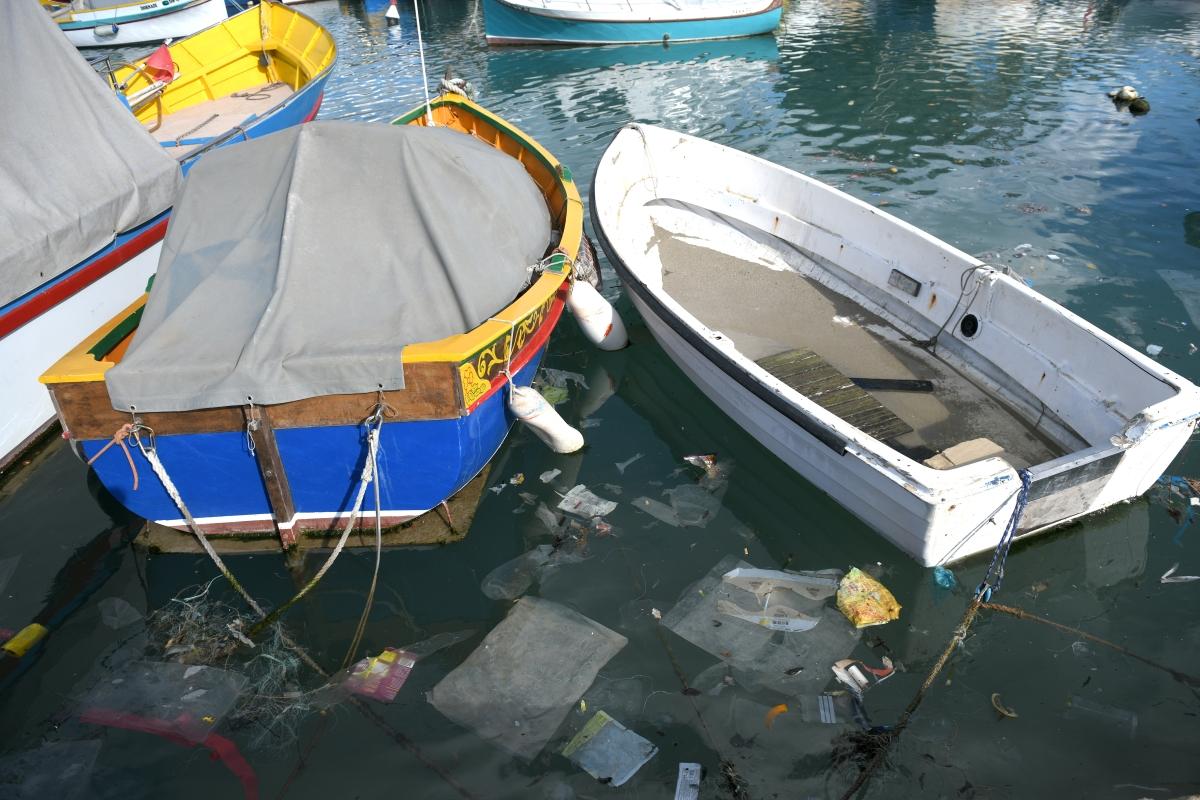 Malta's waters were rated as more polluted than in the previous year's report. File photo: Matthew Mirabelli.
Education and GDP improve
Not all news was bad, however; Malta saw its enrollment rate in primary and pre-primary education rise, fulfilling all of its educational objectives, while municipal and electronic waste reduced, the latter significantly.
Use of freshwater reserves also saw a slight improvement, shifting from being ranked as having “major” to “significant” issues.
Malta achieved its goals on Gross Domestic Product (GDP) growth, which ranked 79.3 out of 100, according to GDP data from 2023.
New to the report this year was the value of profits shifted to the country by multinational corporations, which, according to the most recent data from 2021, reached 3.8 billion US dollars – equivalent to almost €3.3 billion.
Global results 'alarmingly off-track'
Announcing the results, the report’s authors said that 10 years after the adoption of SDGs, “progress [globally] remains alarmingly off-track, with less than 20% of targets projected to be achieved by 2030.
“Yet, global averages mask stark disparities across regions and countries in SDG progress... As in previous years, European, specifically Nordic, countries top the SDG Index.”
Pointing to leading countries Finland, Sweden and Denmark, the SDSN noted that “even these countries face challenges in achieving multiple goals and tend to generate large international spillovers, notably due to unsustainable consumption”.
SDSN president and the report’s lead author Jeffrey D. Sachs said that despite many countries making significant progress, “much more can be accomplished through stepped-up investments in education, green technologies, and digital solutions”.
“Above all, we need peace and global cooperation to achieve the SDGs”, he said, noting the results come amid “rising geopolitical tensions, widening global inequalities, and the escalating climate crisis”.