Population hits 574,250, with almost 30% non-Maltese
Natural population growth plunges by over 55 per cent as resident births drop, deaths increase
Malta’s population reached an estimated 574,250 by the end of 2024, marking a 1.9 per cent increase over the previous year, according to new figures released by the National Statistics Office ahead of World Population Day.
The growth was largely fuelled by net migration, which accounted for 10,614 additional residents. Of these, more than three-quarters (76.6 per cent) were non-EU nationals, highlighting the continued role of third-country migration in shaping Malta’s demographic landscape.
Of the total population, 70.6 per cent are Maltese citizens while 29.4 per cent are foreign citizens.
In contrast, natural population growth, defined as the number of births minus deaths, fell sharply. The natural increase dropped by 55.3 per cent compared to 2023, as resident births declined and deaths rose.
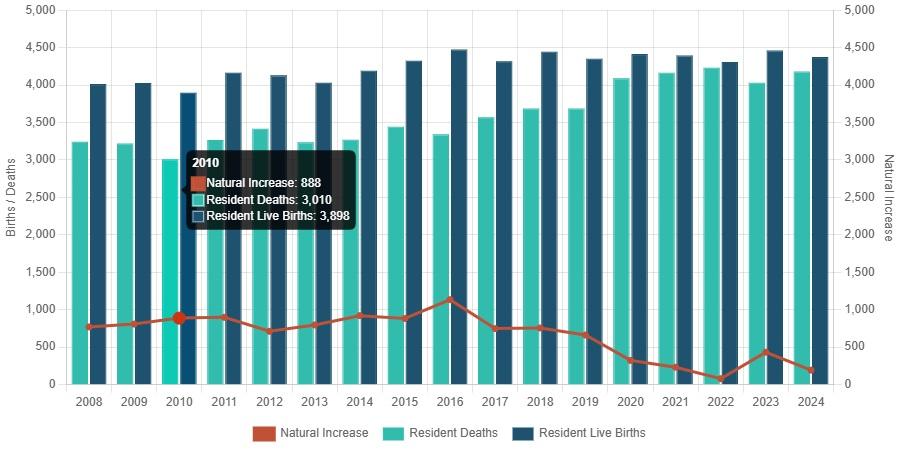 The natural population increase has dropped by 55.3 per cent as resident births declined and deaths increased. Graph: NSO
The Central Bank of Malta recently highlighted the challenges of the country's changing demographics.
In a Policy Note published in May, the bank forecast a persistent decline and ageing of the native Maltese population due to low fertility and mortality rates.
It said its findings implied "a continued reliance on the contribution from foreign workers to sustain the labour supply as the native working age population shrinks and participation rates remain well below that of foreigners".
NSO statistics show that as of the end of 2024, men slightly outnumbered women, with males making up 53.1 per cent of the total resident population.
Children under the age of 18 accounted for 14.5 per cent of the population, while 18.4 per cent were aged 65 and over.
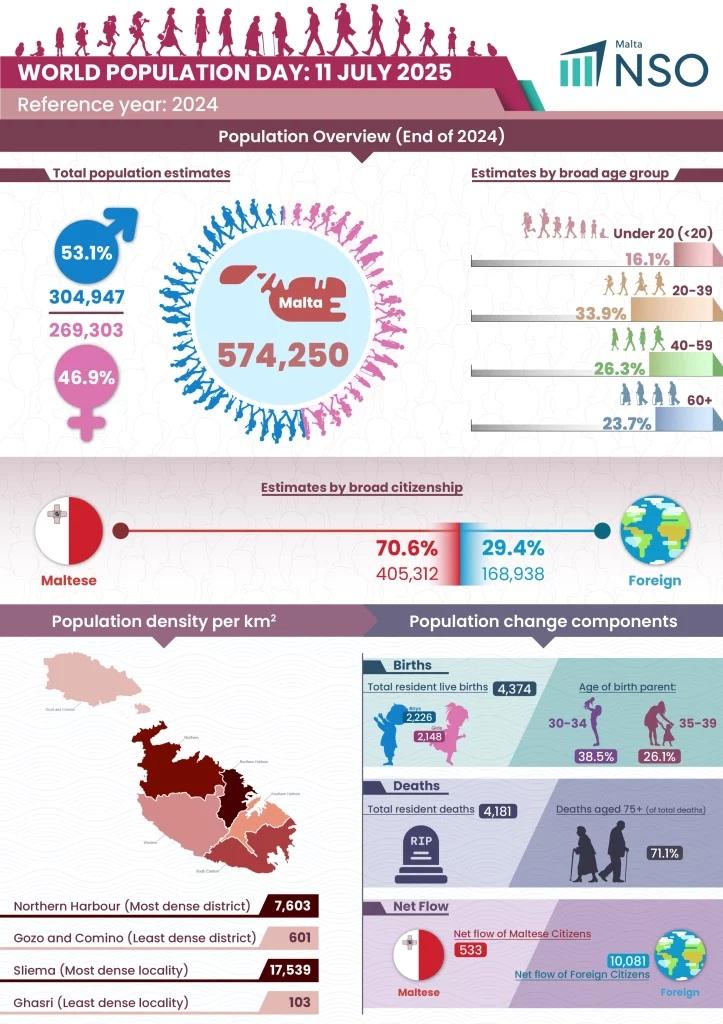 Non-Maltese now account for almost 30 per cent of the island's total population. Graphic: NSO
While Maltese nationals seem to be evenly distributed across the main age groups, the majority of non-Maltese are in the younger working-age cohorts.
Sliema is the most densely populated locality with 17, 539 inhabitants while the Northern Harbour is the most densely populated district. Għasri in Gozo is the least densely populated locality with just 103 residents.