Malta sees sharp rise in investor appeal, highest since 2016: EY survey
Two-thirds of investors say they struggle to find skilled workers locally
Malta’s attractiveness for foreign investors has received a major boost over the past year, according to a major business survey released on Wednesday.
The latest edition of the EY Malta attractiveness survey, an annual study that tracks how appealing Malta is to foreign investors, found that 79% of investors believe Malta is attractive for foreign direct investment.
This marks a significant rise of 25 percentage points over last year’s edition, which found that just 54% of investors viewed Malta as an attractive destination for their investment.
The finding marks Malta’s highest score in almost a decade, since the 2016 edition of the survey, when 87% of investors held a positive view.
Malta’s attractiveness had declined rapidly over the following years, dipping to a low of 37% in 2021.
The survey suggests that Malta’s main pull factor for foreign investors remains its beneficial corporate tax regime, with 78% of respondents pointing to this as the main attraction.
Almost two-thirds of respondents (62%) say that their tax costs in Malta are lower than in other countries where they operate.
Other attractive features include the stable social climate and Malta’s strong communications infrastructure, as well as cheaper energy prices.
The survey found that 58% of investors say that Malta’s energy costs are lower or significantly lower than other locations.
According to the survey, Malta’s future prospects also look promising.
Nine out of every ten investors say they plan to either maintain (57%) or expand (33%) their operations in Malta over the next year.
Meanwhile, 61% say they expect their company will still operate in Malta a decade from now, a drop of nine percentage points compared to last year’s survey.
More broadly, 38% say Malta is as attractive as other European locations when it comes to foreign direct investments, with the remaining respondents evenly split between those who say it is more attractive (26%) and others who argue it is less attractive (25%).
Two-thirds of investors cannot find skilled employees locally
Nevertheless, investors say they still encounter difficulties when investing in Malta, particularly when it comes to engaging skilled workers.
Two-thirds (67%) say they are unable to find employees with specialised skills in their sector, marking no significant improvement over previous years.
Meanwhile, investors single out skills shortages as, by some distance, the main threat to Malta’s future attractiveness.
Other top risks include the looming OECD and EU-driven tax reforms, which are set to overhaul Malta’s favourable corporate tax regime, and cost competitiveness.
Tourism, AI to drive future growth
Over two-thirds (70%) of investors point to tourism when asked which sector will drive Malta’s long-term growth.
However, they point to AI as the single sector with the greatest potential for growth, with 43% saying that the lack of specialised talent in this field as holding Malta back from developing this sector more rapidly.
Abela, Borg speak
The survey was presented during a conference held at the Mediterranean Conference Centre on Wednesday.
Addressing the 1,200 conference delegates, Prime Minister Robert Abela hailed Malta’s economic progress over the past five years, a period he dubbed as “anything but dull for governments around the world”.
Abela said Malta’s economic strength, as reflected in the survey, was the result of the government’s decision to implement progressive economic policies, rather than the short-term austerity measures favoured by many other countries.
Now that Malta’s GDP per capita ranks among the top ten in Europe, Malta must look towards other measures of success, Abela said, pointing to Vision 2050’s pledge to improve Malta’s human development, disposable income and life satisfaction rankings.
 Robert Abela speaking on Wednesday. Photo: Matthew Mirabelli
Opposition leader Alex Borg said the survey’s findings reflect “a clear sign of recovery but not yet stability”.
Malta’s business community is still “asking for direction, clarity and leadership,” Borg said, sounding the warning on several issues raised in the study. “These are signals that our economy has outgrown our infrastructure, our people are stretched and our education system is not keeping up with our ambitions,” Borg said.
Borg called for a greater push on AI to improve productivity, streamline public services and further Malta’s education system.
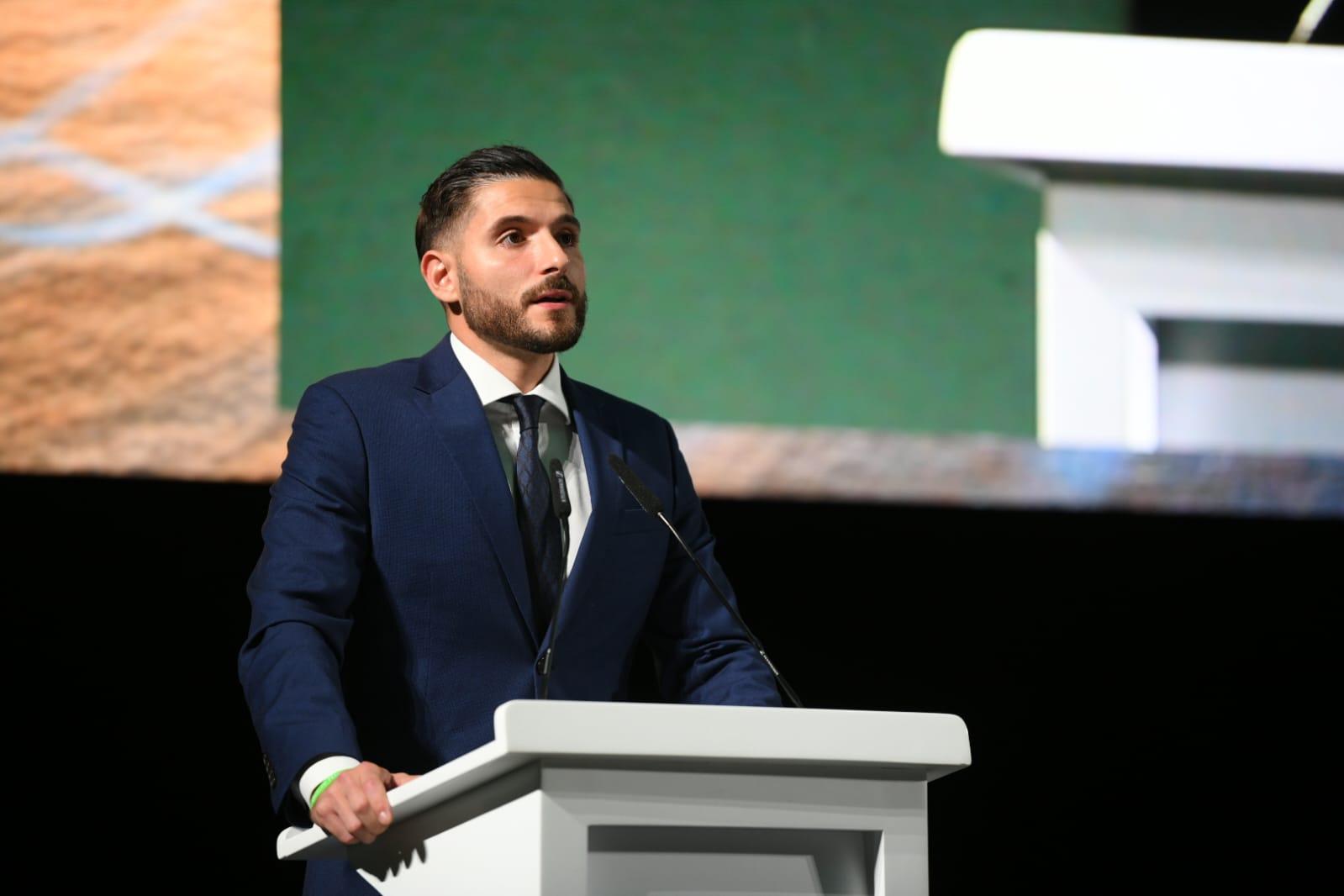 Alex Borg addressing conference delegates. Photo: Matthew Mirabelli
Meanwhile, EY Managing Partner Ronald Attard said the survey reveals “a substantial rebound in investor confidence”. Nevertheless, he warned, Malta “must acknowledge the emerging pressures that could impact our attractiveness” in light of intensifying global competition for investment.