Our national heritage should not have price tags
How many Fort Tignés do we have? And how many Fort Tignés do we afford to lose before we realise we ought to put a stop to all this? asks Mgr Joe Vella Gauci
The whole debacle about Fort Tigné in the last few days raised eyebrows and stirred the pot quite firmly. It’s a story that has been long coming. A story of questionable decisions being followed by yet more questionable ones. A narrative in which those with the authority to amend and correct past wrongdoings instead can seek refuge in the defence of “it wasn’t me” safe harbour.
But really and truly, we are now at the crossroads where whoever is in the driving seat needs to choose a left or right. And the choices are quite fundamentally different, disparate.
So where are we?
We are at a point where Fort Tigné is in the process of being nominated for World Heritage listing alongside Fort Manoel, Fort St Angelo and the Grand Harbour fortifications, the Cottonera lines, Sta Margherita Lines, Mdina and the Gozo Ċittadella, as an extension of the World Heritage Property “City of Valletta”.
We are at this point because we believe that all these fortifications, together with Valletta, possess a value that is larger than local, national or European. It is a universal value, and one that is outstanding.
That’s the case Malta will be making for Fort Tigné and the network of fortifications of the Order of St John in Malta because they truly represent a unique hybrid system of fortifications that enabled the evolution from Renaissance fortress island to a modern nation-state.
Therefore, it is an outstanding universal value that needs a protection mechanism that is equally outstanding. And if people are generally sceptic on how much heritage is protected, the reactions of the public, civil society, as well as the national authorities, these past few days, can attest to the strength and the force with which this national treasure is bound to be maintained dear.
The context is quite simple. Fort Tigné has been part of a private concession, bound by contractual obligations between the government and private investors (cfr. Deed of Emphyteusis: Manoel Island and Tigné Point Project, 15/6/2000, pp.38).
As reported in the press, these private investors have announced their intention to sell to other private third parties. I shall not try to enter into the legal merits of the case, because I believe that several legal teams have done that, and most likely are still on it. But once the pot is stirred, the scent follows, and the reactions can be quite surprising.
Fort Tigné, as part of the country’s system of fortifications, is larger than all of us. It was there before us, and it should stand there after us
In this regard I think that Maltese heritage is indeed lucky that the Maltese government has stepped away and reversed the previous decision.
Strategies may vary but when it comes to preserving a national monument and saving it (and its context) from irreversible over-development, the state is duty-bound to be creative, steadfast and relentless.
I will not even enter into the merits of whether our country needs more hotels. But I will pose one or two simple questions: how many Fort Tignés do we have? And how many Fort Tignés do we afford to lose before we realise we ought to put a stop to all this?
The answer to this is quite simple. Fort Tigné, as part of the country’s system of fortifications, is larger than all of us. It was there before us, and it should stand there after us, not as a testament of our greed or irreverence, but as proof of a nation with a conscience that upholds heritage as a basic tenet of quality and responsible living.
In my view, Fort Tigné should be governed by a purpose-built public heritage trust, with strict conservation rules, guaranteed public access, limited commercial activity and full transparency. Definitely not as a real estate or redevelopment site. It should follow a harbour-wide heritage strategy in strict adherence to the Valletta Management Plan, which is a key document in the management of Valletta as a UNESCO-recognised World Heritage Property.
For enhanced valorisation of the site, Fort Tigné has the potential to become the site of an international centre, such as a UNESCO Category 2 Centre or an ICCROM Centre, or potentially both. It certainly fits the bill.
We have to stop equating our national heritage to real estate portions and prices. Our national heritage should instil not price tags but values of historical integrity and collective memory. That is why I say we stand at the crossroads: turning left or right now leads us to completely opposite destinations.
The prime minister was quite vociferous and unequivocal on this, which bodes well. The leader of the opposition echoed these views afterward.
It might be safe to say that we can finally know where the vehicle is heading, and heave a collective sigh of relief.
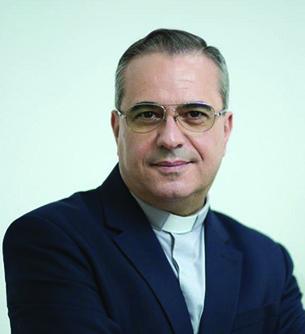
Mgr Joe Vella Gauci is Ambassador and Permanent Delegate of Malta to UNESCO.