How will Malta be impacted by the Strait of Hormuz closure?
Shipping lines have been adopting a different route for several years, but costs may still rise
Updated 11am with Malta Freeport comments
Malta’s supply routes have not been affected by the closure of the Strait of Hormuz, government sources said, though it remains unclear whether the ongoing conflict will lead to higher costs.
Iran closed the strategic waterway on Saturday following the start of US and Israeli attacks. The strait is a key route for global oil and gas shipments, raising concerns internationally about supply disruptions and price volatility.
However, government insiders told Times of Malta there should be “zero effect in terms of supply chain” locally. “This should not have any imminent impact; however, let’s keep in mind the situation remains volatile,” one insider said.
In recent years, Malta has not relied on the Strait of Hormuz for its imports, instead using the route around the Cape of Good Hope in South Africa.
Previously, container ships travelling to Malta Freeport from the Far East would typically travel via the Red Sea and the Suez Canal, unloading their cargoes in Malta for onward shipment on smaller vessels to several European harbours.
Freight prices on sea routes have already increased
However, the Suez Canal was closed in January 2024, following several attacks on cargo ships by Huthi rebels off the coast of Yemen. At the time, the Malta Freeport decided to reroute via the Cape of Good Hope.
The Suez Canal remains suspended until further notice.
Another government insider said there would be “no major shock” to the Maltese economy as a result of the current international turmoil, despite the prospect of some costs increasing.
'Regional ports within network operational': Malta Freeport
Malta Freeport told Times of Malta it was closely monitoring the evolving situation and confirmed that the regional ports within its network remained operational at this time.
While vessel calls and cargo operations continue, some disruptions and temporary stoppages have been reported in certain locations as a result of the ongoing conflict.
"Malta Freeport maintains established connections with several ports located in areas affected by the current tension, including Abu Dhabi, Jebel Ali, Jeddah, King Abdullah, Aqaba, Beirut, and Tripoli (Lebanon).
"These connections are served by four weekly services calling at the Freeport. We are also aware that, due to the current security situation, vessels are not permitted to transit through the Strait of Hormuz."
Malta Freeport said it continues to liaise closely with shipping lines, port authorities, and stakeholders to assess developments. Should there be any changes to vessel routing or service configurations, updates will be communicated directly by the respective shipping lines, it said.
"The freeport remains committed to ensuring operational continuity while adapting to the requirements of its customers in these challenging geopolitical situations."
Fuel prices
Petrol prices are believed to be hedged until the end of the year, with oil prices fixed until the summer. Hedging agreements allow the government to lock in prices in advance, shielding consumers from short-term fluctuations in international markets.
Diesel imports, however, are not subject to hedging agreements and are, therefore, more likely to fluctuate in line with global prices. Nevertheless, one source said any rise in diesel import costs would likely “not be enormous”.
Oil prices have risen sharply since the US and Israel launched attacks on Iran on Saturday, reflecting fears of wider instability in the region.
Energy Minister Miriam Dalli said yesterday global turmoil would not affect consumer prices for electricity and fuel, adding that the government was well placed to cushion the impact of any price increases.
Sources cautioned against predictions of severe economic fallout at this stage
Malta continues to subsidise energy prices despite repeated warnings from several international bodies about the fiscal burden of such measures. Subsidies were expected to cost €172 million this year but sources said the government may have to allocate additional funds in light of recent developments. Even so, while subsidies could rise, the increase “will not be drastic, as things stand”, one insider said.
The broader economic impact of the conflict may be felt more acutely in sectors such as shipping and international trade. However, sources cautioned against predictions of severe economic fallout at this stage.
David Fleri Soler, chief commercial officer specialising in logistics and transport at Express Trailers Limited, agreed that Malta’s shipping routes would remain unchanged. “The routes will remain the same but the cost will change,” he said, stressing that the situation remains highly volatile.
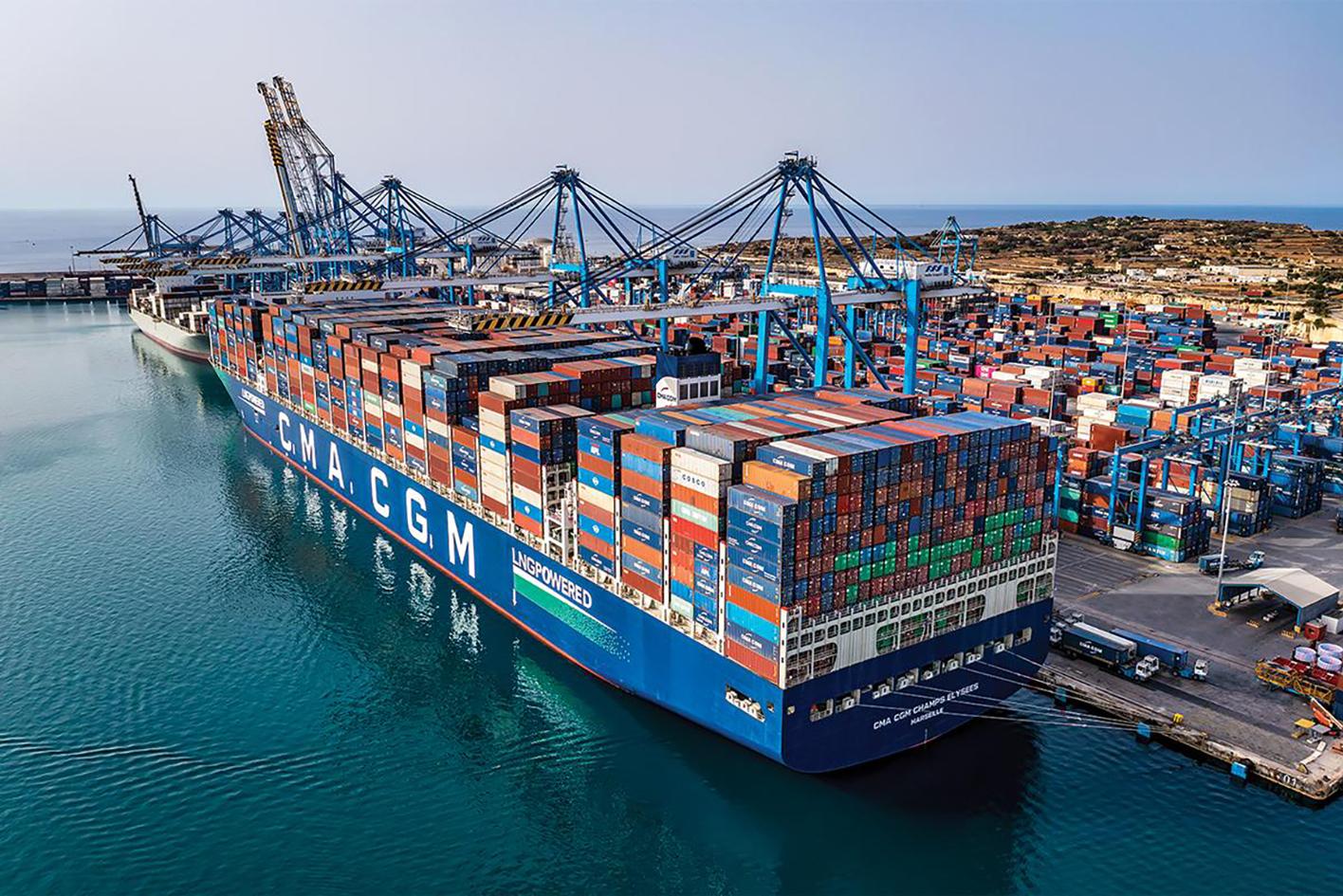 The world’s largest shipping lines have ordered their vessels to seek shelter and stay safe. File photo
He added that freight prices on sea routes have already increased. “The supply chain from China will remain the same but we can expect the costs to probably change.” Air freight prices have also risen, he said. “We don’t have figures yet but the airlines have noted that contract rates are no longer applicable.”
Road freight, which he described as Malta’s “lifeline”, remains unaffected by the conflict. CMA CGM, one of the world’s largest shipping lines and a key Malta Freeport partner, said that, due to restrictions on maritime traffic through the Strait of Hormuz, all vessels currently inside the Gulf or bound for it had been instructed with immediate effect to proceed to shelter.