Malta, the Toxic Island – this is not conjecture
The planned waste treatment plants in Magħtab should be scrapped, says Denis Zammit Cutajar
I recently watched a four-part TV series on Netflix called Toxic Town. It is a true story of a group of residents in Corby, in the North of England. It is the horrific story of many mothers who gave birth to children with physical deformities because of the pollution caused by demolition works being carried out at a derelict steelworks factory.
It shows how toxic dust was released into the air during the works with catastrophic consequences. It shows the shock of young couples discovering that their newborn baby has a physical deformity. It shows the hardships endured by the children who had to carry the burden of being teased and bullied because they were different. It shows the trauma of multiple surgeries on young children in a desperate attempt to fix their disabilities. It shows how this caused untold suffering on the parents which destroyed lives and wrecked marriages.
All this because the Corby Borough Council chose money over public health, showing incompetence, mismanagement and corruption. The mothers instituted a class action against the council because they wanted to know why. Why did this happen to us? How do we stop it happening to anyone else?
In a landmark legal case in 2009, a high court ruling found Corby Borough Council liable for negligence in handling the demolition and waste disposal process.
The TV series was confirmed to be a true account of what happened during those fateful years after due research by Time Magazine and other organisations, so we are talking about real facts here. I urge everyone to watch it after reading this article.
This TV series has had a profound effect on me because I am seeing a similar scenario happening right before my eyes. Our government has embarked on a huge industrial project at Magħtab to build several waste treatment plants, including two incinerators in one location close to a residential area. The planning applications are being submitted in piecemeal fashion to circumvent the EIA process and thereby obtaining planning permission by stealth.
I am not remotely convinced of the project’s benefits, its environmental impact and whether the interests of nearby residents were safeguarded during the public call process. It is currently being investigated by the National Audit Office.
We have a perverse situation where the environmental studies are carried out by companies that are commissioned by the promoters of the project. How can that situation result in a truly independent evaluation? Residents should be given the facility to commission a scientific evaluation by a company of their choice funded by the state. That is true democracy.
Why am I terrified of what is about to happen? Well, as we saw in Corby, we have the authorities who are hell-bent on pushing the project through at all costs.
This means that the necessary evaluation process is compromised at best. I have not seen any reports highlighting a thorough investigation into alternative technologies. I have not seen a comprehensive study to justify the location of the incinerators. I have not seen an independent scientific report on the particles that will be emitted from the chimney.
The residents’ objections to the project back in 2020 were totally ignored without explanation or justification.
What terrifies me most is the fact that, apart from the emissions coming out of the chimney, these monsters are going to be producing a whopping 27,000 tons of toxic ash every year. Ash that will contain poisonous chemicals. This ash needs to be cooled after incineration. Is this going to be done outdoors? What happens when the wind blows? Where is it going to be stored after cooling?
Are they going to dump it in the landfill? If so, what happens when the wind blows? Who is going to handle this toxic material? Are the workers going to be protected against contamination? Has this been cleared by the occupational health authorities? What will be the effects on the workers’ families when they go home after work? Who is going to wash their clothes and hang them out to dry?
These monsters are going to be producing 27,000 tons of toxic ash every year- Denis Zammit Cutajar
We were told 5,000 tons of the most toxic ash will have to be exported. Where is it going? Is it going to some third-world country that does not know any better so children there can be born with deformities? To export the ash, it needs to be transported from Magħtab in the north to the Freeport in the south. Are we going to have tons of toxic ash on our roads every year? That is equivalent to 500 trucks making two trips across Malta every year.
It will undoubtedly be treated like the construction waste with dust billowing into the air with the crucial difference that here we are talking about toxic waste. Toxic dust that will be released into the air and inhaled by everyone including pregnant women. This is not an option. No assurances from the promoters of this project will convince me that the ash will be transported properly.
It will not happen. Will the trucks be properly sealed? Will the trucks be washed before leaving the facility? Will the tyres be washed before leaving the facility? We simply do not have the self-discipline needed to do this in a way that will guarantee long-term public safety.
Look what happened to the mothers in Corby. Does our government want to risk the same thing happening in Malta? I seriously do not know how the people responsible can sleep at night.
Do you want this to be your legacy? Do you want to be remembered as the ones who caused such a catastrophe? We are talking about the health of our unborn children and grandchildren. This will impact the health of future generations with devastating consequences on their physical and mental well-being.
The EU has ceased providing financial support for incinerators due to these health concerns. That means that this project must be financed totally from taxpayers’ money. It is ironic that €600 million of our money is going to be used to destroy our environment, our health, our children’s future, our economy and our way of life.
We need to find alternative solutions to our waste management. Solutions that will not compromise the health of our citizens. Solutions that respect our environment and the quality of the air that we breathe. Incineration is not one of those solutions.
If nothing is done about all this, Malta will become a Toxic Island – this is not conjecture – ask the mothers in Corby.
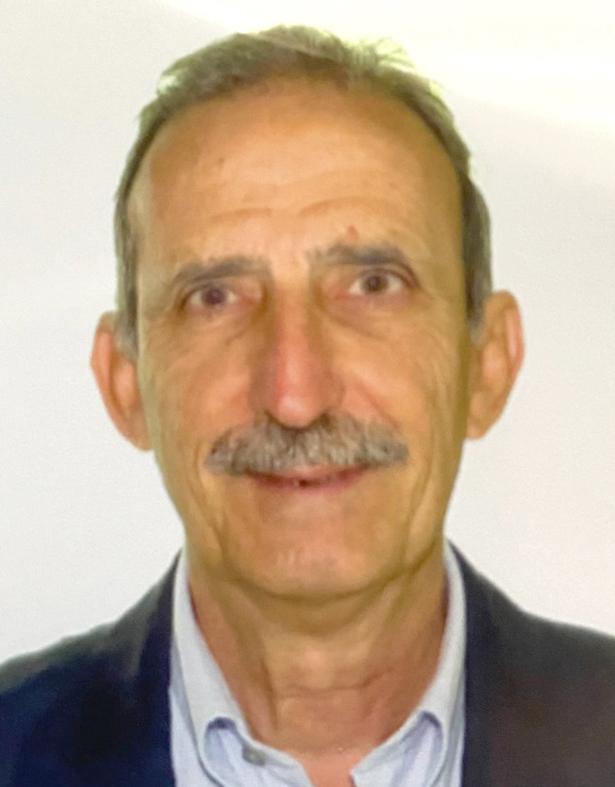
Denis Zammit Cutajar is a former company CEO and chairperson of Inspire.