There was a time when the Maltese goat was everywhere... it's now disappearing
Yet little is being done...
The Maltese goat is disappearing.
Not suddenly, not dramatically, but steadily, quietly and almost unnoticed. What was once a common presence in the Maltese landscape is now reduced to a fraction of its former population, with fewer than a thousand animals remaining.
And yet, little is being done.
There was a time, not too distant, though it may now feel almost mythical, when the Maltese goat was everywhere. It moved through fields, along country lanes and even across the edges of villages – it was as much a part of the landscape as stone walls and prickly pears. It was not a curiosity. It was not heritage. It was simply life.
The Maltese goat did not belong to a breed, at least not in the rigid, modern sense of the word. It belonged to the land. No two were quite the same. One bore long ears, another short; one carried dark markings, another lighter hues. Each animal, in its own way, told a quiet story of adaptation, survival, selection and coexistence.
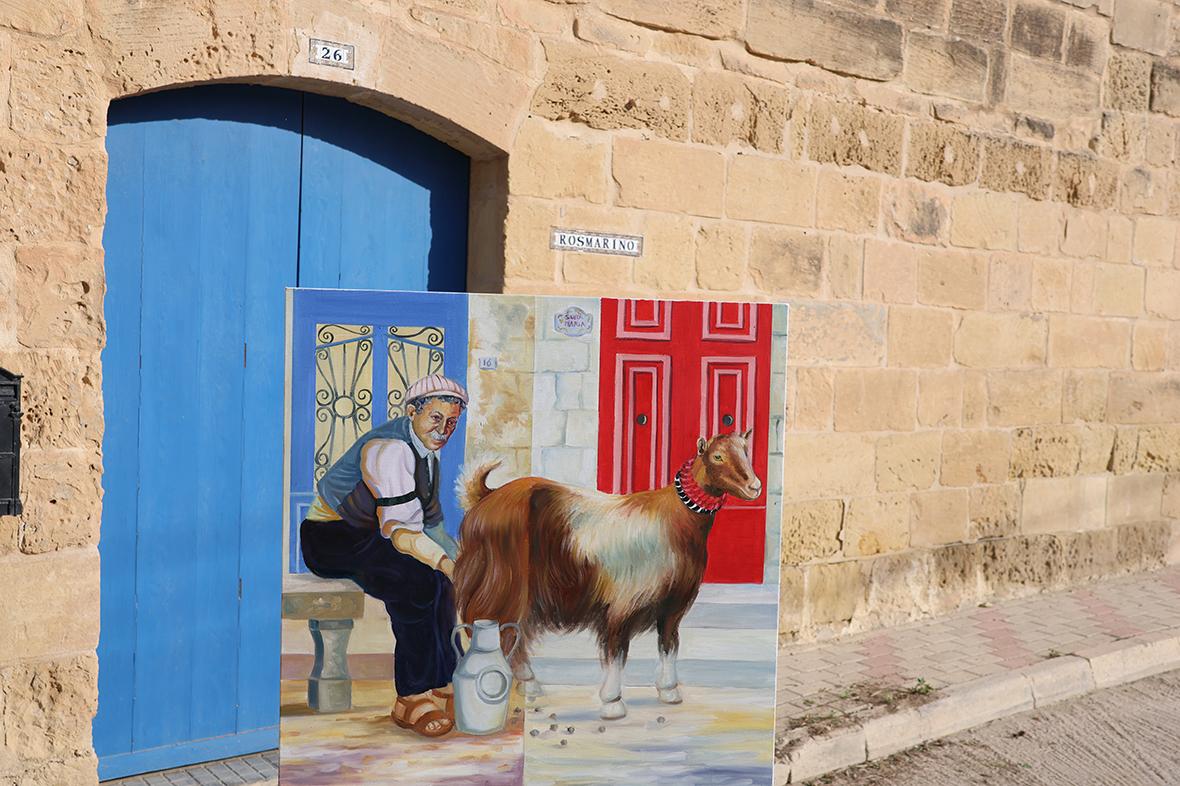
'Il-Garruwa', another Twanny Darmanin painting
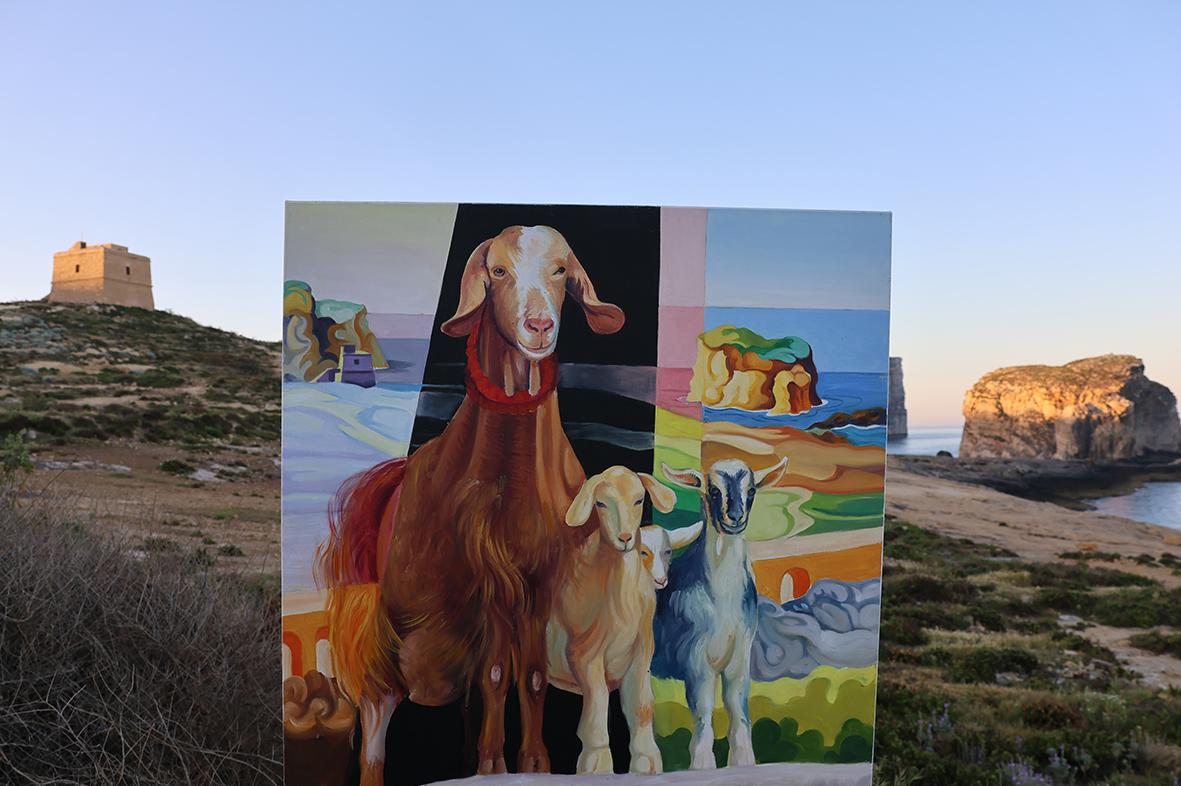
Merek
This absence of uniformity was never perceived as a flaw. On the contrary, it was the very essence of the animal. What today might be dismissed as inconsistency was, for generations, understood as richness.
What disappears is not only an animal, but a way of seeing
Alongside the Maltese goat grew a language.
Not the formal language of books or institutions, but the living vocabulary of the raħħal, the herdsman, who observed, named and remembered. Words emerged to describe the smallest variations: the shape of an ear, the shade around the eyes, the texture of the coat. Each term carried with it not only description, but experience, judgement and familiarity.
It was a language that needed no translation, because it was rooted in daily life. And yet, like many things that once seemed permanent, it began to fade.
The decline of the Maltese goat has not only been a matter of numbers, though those alone are sobering. It has also been a quiet erosion of knowledge. As the population diminished, so too did the words that gave it meaning. Terms once spoken with ease have fallen into disuse; distinctions once instinctively recognised now risk being forgotten.
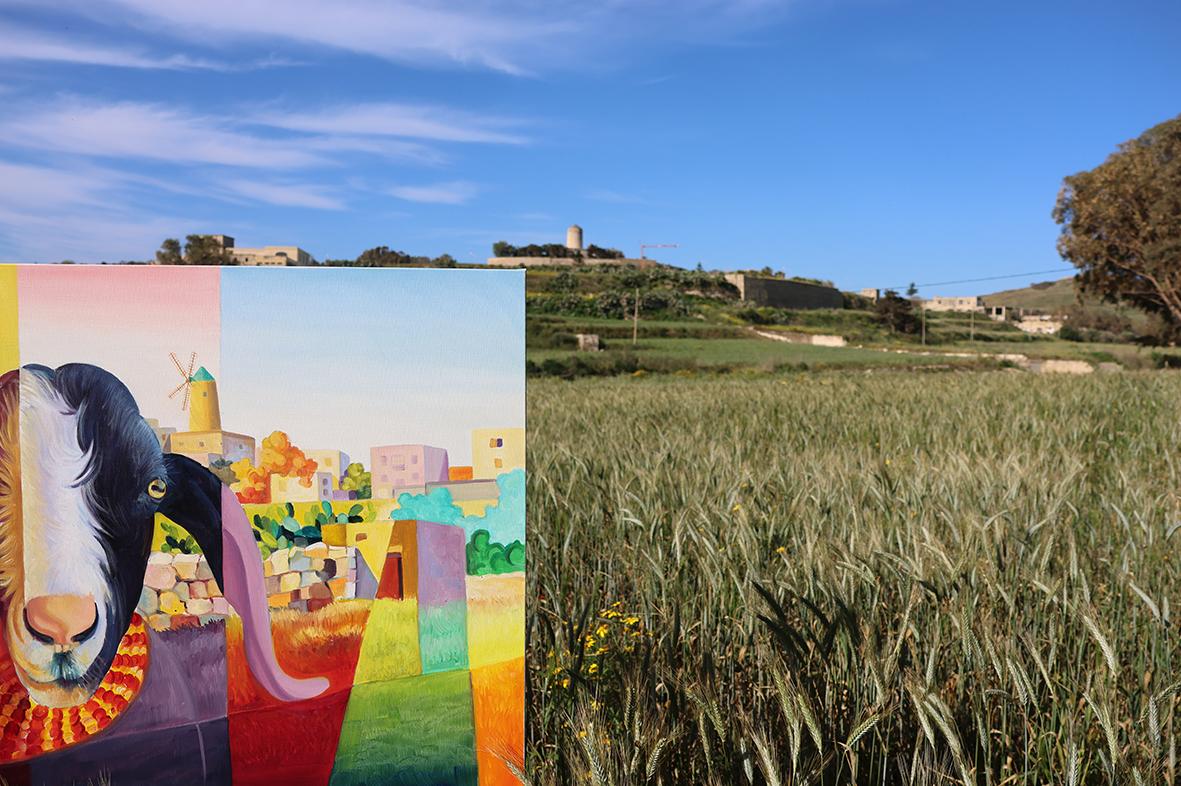 'It-Torka'
What disappears is not only an animal, but a way of seeing.
It is against this backdrop that a recent exhibition, presented by the Breeds of Origin Conservancy during the Malta AgriFair 2026, sought to reverse that process, if only momentarily.
Through the work of artist Twanny Darmanin, the Maltese goat returned to view, not as a standardised form, but as a living mosaic of variation. The paintings did not impose uniformity; they revealed difference. They did not simplify; they remembered.
Yet the exhibition did not stop at representation. It extended into experience.
During the Malta AgriFair, a collaboration between Breeds of Origin Conservancy and Coffee and Strangers reintroduced the public to Maltese goat milk, once a staple of everyday life, now seldom encountered. This initiative was made possible through the work of Renay Mifsud, known as Ta’ Bajda, a fifth-generation Maltese goat breeder.
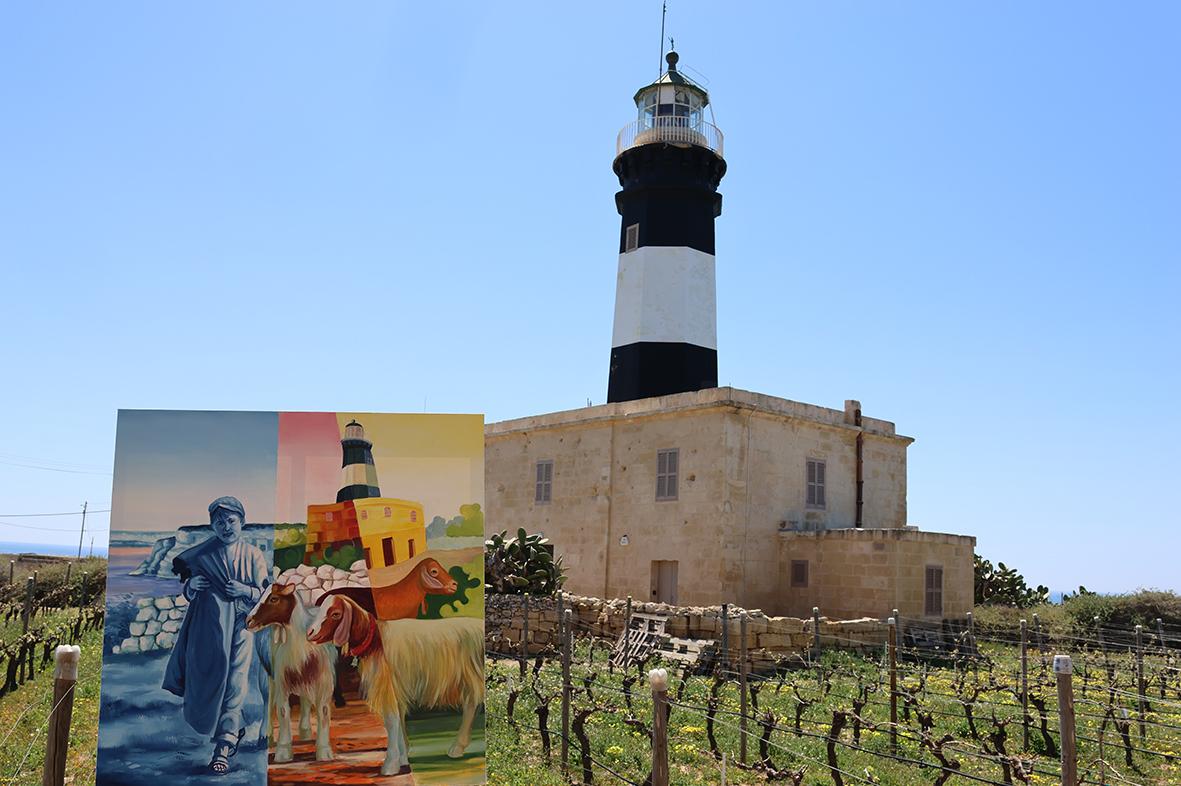 'Fartasa u Midliela'
In this context, the Maltese goat was not only seen, but it was also experienced.
There was, perhaps, a quiet symbolism in the presence of children drawing the Maltese goat alongside the exhibition, an initiative carried out with Art Club 2000, not because they replicated what was shown to them, but because they participated in a process older than any exhibition: observing, interpreting and reimagining.
This is how traditions survive, not by preservation alone, but by transmission.
The Maltese goat does not need reinvention. It needs recognition as a national heritage.Not as a relic, nor as an agricultural footnote, but as what it has always been: a living expression of the relationship between people, land and time.
And if it is to endure, it will not be through standardisation, but through action, before what remains is lost altogether.
Darryl Grech is the founder of Breeds of Origin Conservancy.
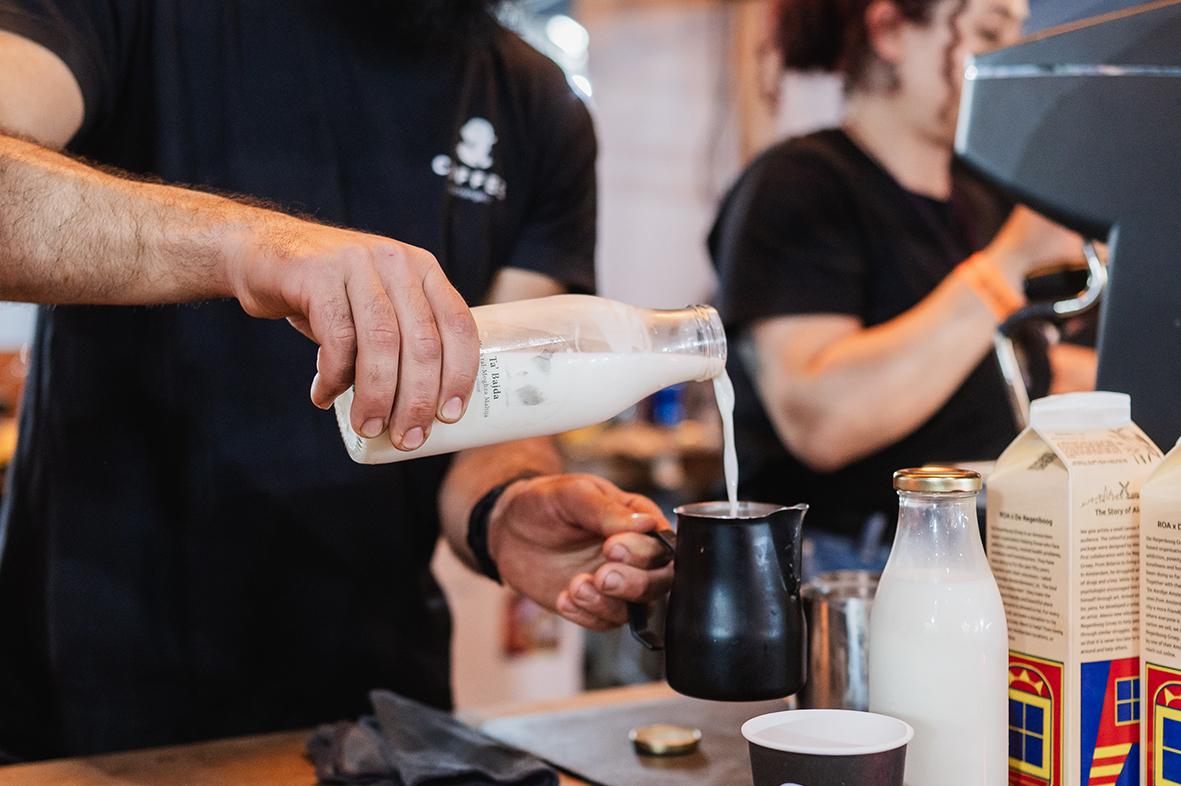 During the Malta AgriFair 2026, a collaboration between Breeds of Origin Conservancy and Coffee and Strangers reintroduced the public to Maltese goat milk, once a staple of everyday life, now seldom encountered.