‘Indescribable feeling’: Maltese man makes history rowing across Atlantic solo
Steve Chetcuti completed 3,000 mile journey after 54 days, seven hours and 56 minutes
Updated 4pm with additional comments
With a loud scream at the top of his lungs, Steve Chetcuti rowed into the history books on Saturday morning as he became the first Maltese man to complete the gruelling 3,000-mile [4828km] solo crossing of the Atlantic in a 25ft long rowing boat named after his three daughters.
Exhausted but clearly elated, Chetcuti rowed into English Harbour in Antigua at just after 1.15am Malta time, after 54 days, seven hours and 56 minutes at sea watched by family and friends from the shore.
On his final day, he rowed for 16 hours continuously to reach his final destination having left La Gomera in Spain on December 14.
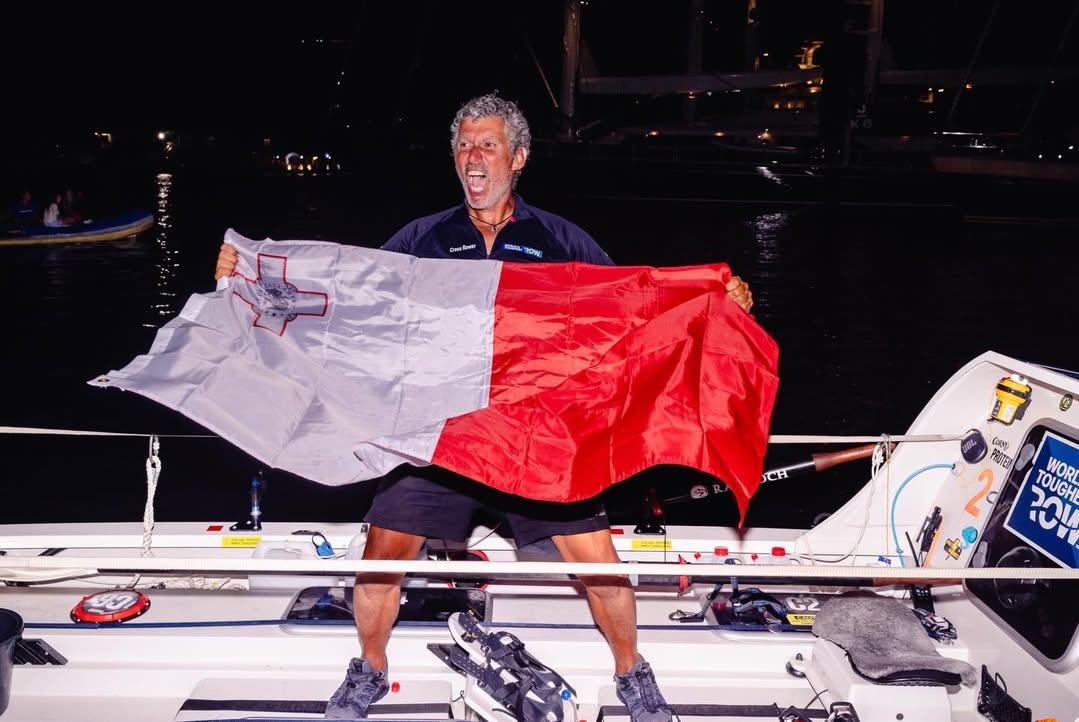 Chetcuti celebrates with the Maltese flag upon his arrival. Photo:Instagram/@worlds.toughest.row
As he gingerly set foot on dry land for the first time in almost eight weeks he was immediately hugged by his Swiss wife Desiree, his mother and his sister.
Speaking to Times of Malta a few hours after his arrival in Antigua, Chetcuti could not hide his excitement at finally being back on land, and the "sensory overload" of suddenly being surrounded by so many people after eight weeks alone.
"It's an indescribable feeling," he said, after his first night of sleep in a proper bed and a much needed shower.
This was Chetcuti’s second time rowing across the Atlantic but his first time doing it solo. In 2021 he had joined a five-person crew rowing from Portimão in Portugal to Kourou in French Guiana in 51 days, 18 hours and 1 second.
This time, Chetcuti was rowing solo and completely unsupported as part of the World’s Toughest Row event.
He ended eighth in the solo category, 27th in the men’s class and 39th overall out of a total of 43 teams.
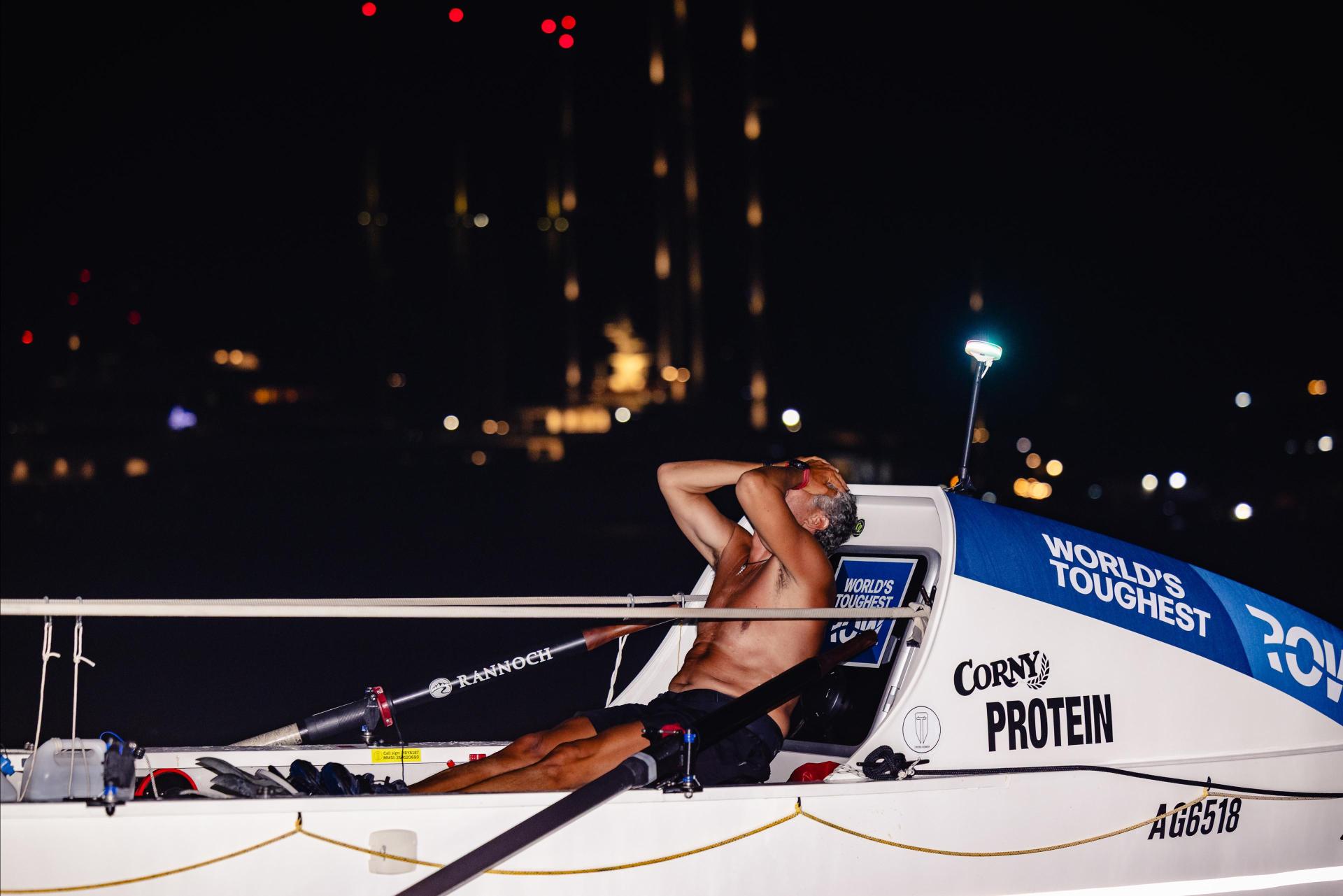 Elation and exhaustion after 54 days rowing across the Atlantic solo and unsupported in a 25ft boat named after his three daughters. Photo: World's Toughest Row
A 'mental breakdown'
During his journey, Chetcuti battled severe seasickness which prevented him from eating the calories he needed to fuel him on. In fact, he ended up losing 19kg of weight. Loneliness, a cause close to his heart, also affected his mental health during the crossing and sleep deprivation took its toll too.
The final days of the row were particularly tough on him and Day 51 almost broke him.
In a video update he confessed he had a “full mental breakdown”.
“My mind said I’m stopping. I’m taking a break. I can’t do this anymore. I was in a torrent of tears. I couldn’t contain myself. I couldn’t row, I couldn’t do anything,” he said.
His wife, mother and sister spoke to him and managed to pull him back from the doldrums he had fallen into and the Atlantic Campaigns team manager helped to reassure him.
“The name of this event is very well chosen because it is indeed very tough,” he added.
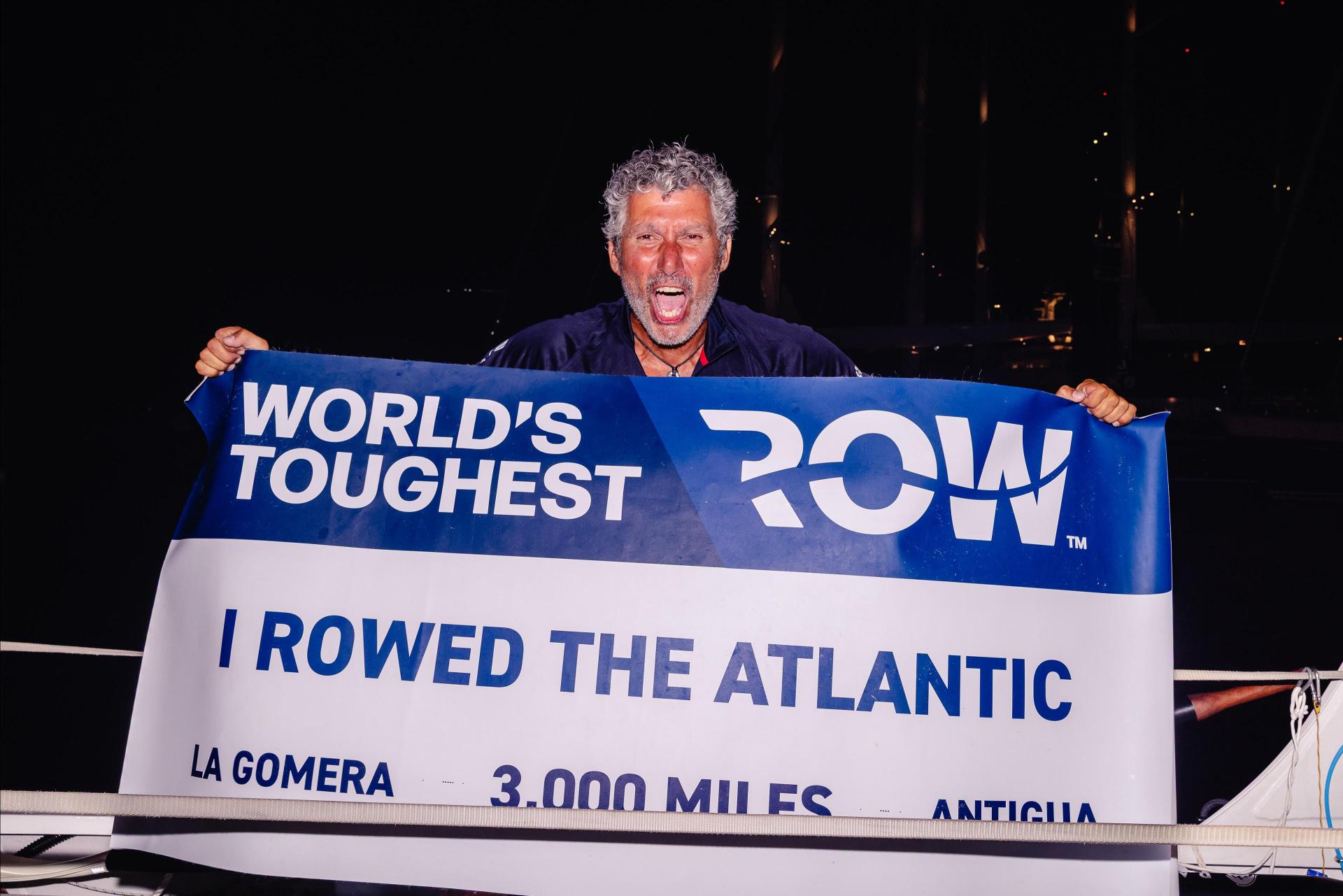 He rowed the Atlantic: Steve Chetcuti celebrates the end of his gruelling endeavour. Photo: World's Toughest Row
In his first comments after landing in Antigua, Chetcuti paid tribute to his late brother Mike in whose memory he had done both rows, his “super patient” wife, and his three daughters Kim, Mia and Lea.
“It was tough. You row 12 hours a day, you wake up and it's wet and dark. I couldn’t eat for weeks, I had no energy, the water tries to harass you all the time,” Chetcuti said.
He missed Christmas with his family and two of his daughters’ birthdays. But there were highlights too including seeing the spout of a whale and watching the International Space Station zoom above his head.
While he was lucky not to have any serious problems during the journey, he did get stung by a Portuguese man o' war which has left a "nice little tattoo" on his arm and made him fearful of re-entering the water for the rest of the crossing.
A sole encounter in 54 days
During the entire journey he only ever met one other person, a fellow solo participant who rowed alongside him for a day.
Asked about the difference between rowing solo and in a team, he said that as an unsupported solo, everything was on him.
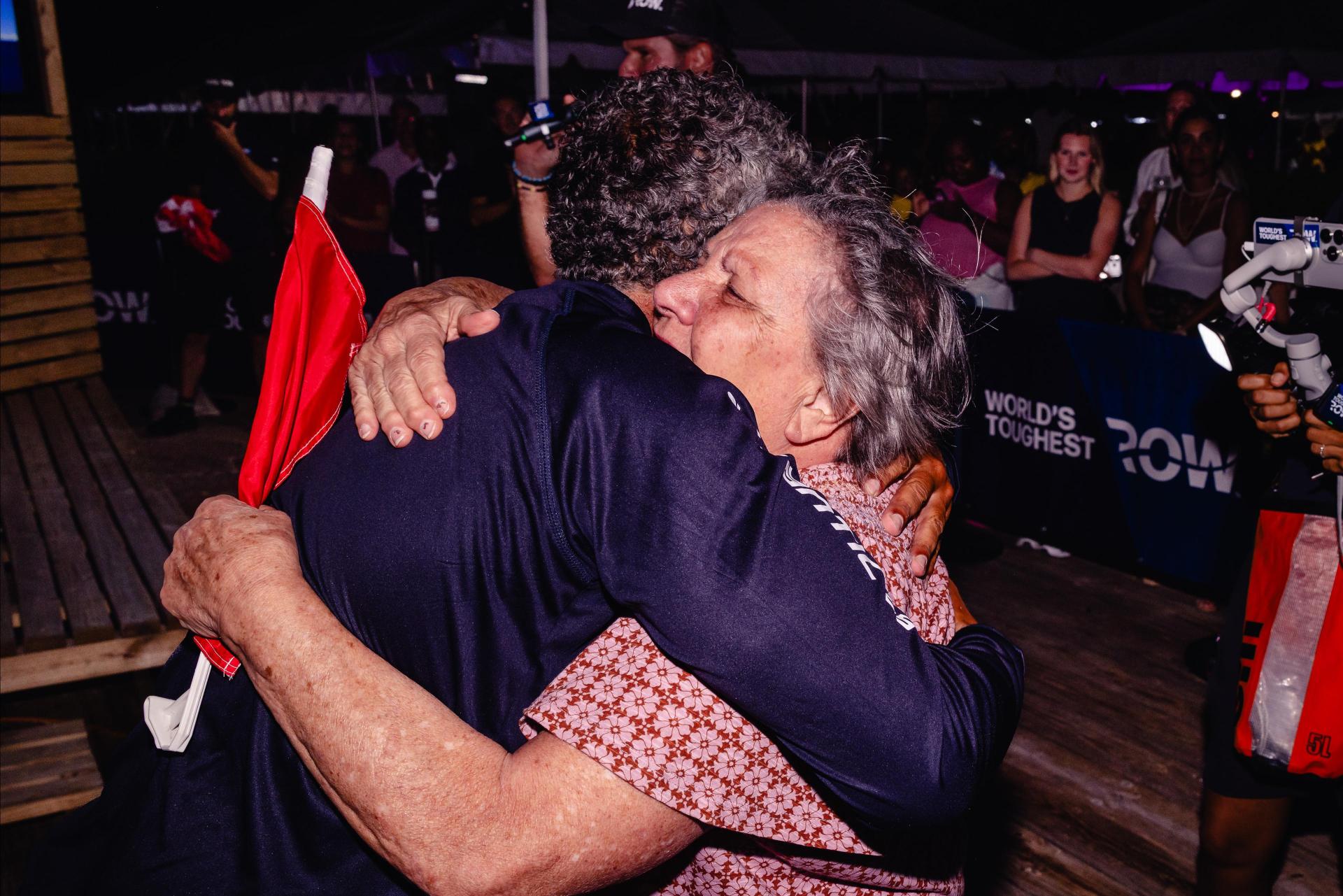 Steve Chetcuti hugging his mother upon his arrival in Antigua. Photo: World's Toughest Row
“You have to do everything: navigation, cooking, cleaning. But every success and failure is all yours.”
Now, back on dry land, he is feeling somewhat overwhelmed by the sensory overload of having people around him again.
"I did enjoy doing the row but I am also very happy to be on solid ground and to meet and speak to people again," he said, adding he would not let his wife, mother and sister go to sleep last night as he just wanted to keep on talking to them.
 Steve Chetcuti screams with elation as he enters English Harbour in Antigua after 54 days rowing solo across the Atlantic. Photo: Worlds Toughest Row
Being alone, he only had the "little voice" in his head to contend with, for good or bad, but he learnt how to overcome challenges without relying on anyone else. "The little voice in your head speaks all the time. It can be good but it can also be very dangerous. At one point I was shouting at myself in my head to shut up. You come up with ways to deal with yourself".
"Being away from the family was very tough and I do not want to repeat that experience again," he added.
On his final full day on the boat, he started rowing at 5am and realised it would be the last time he was seeing the sunrise on the sea.
He confessed he had dreamt of eating fried eggs throughout the journey and he was delighted when his wife served them to him as his first breakfast back on land.
Chetcuti will be spending a few days of rest to readjust to dry land in Antigua before heading home. And he was looking forward to sleeping in a bed that didn’t rock.
“I look forward to not moving around, not getting wet and not having things banging around the cabin.”
He now returns with a renewed motivation for even the most mundane chores and is even looking forward to going back to work in a week's time.
"I'm glad I did it. There were many times when I questioned why I was doing this and at many points in the journey I had to dig very deep to find the will to keep on going. My arms would simply stop moving. I would take a deep breath and tell myself to row another five minutes ... and then another five minutes."