How Maltese prisoners-of-war were captured by Napoleon at Capri
A sequel that has probably never been published...
I do not believe the sequel to this disturbing story has ever made it to Maltese history chronicles.
The sequence of events easily divides into two: first, how a Maltese regiment under British command unsuccessfully defended Capri against French troops in 1808, and secondly, the fate of the hundreds of Maltese soldiers captured by the French after their rout.
The catastrophic encounters in Capri by the Royal Malta Regiment have been carefully, if benevolently, documented in 1897 by Alexander George Chesney in The Maltese Corps of the British Army, Malta (1897), and a few others after him. But never a mention of the many prisoners-of-war from Malta after their capture. They seem to have dematerialised.
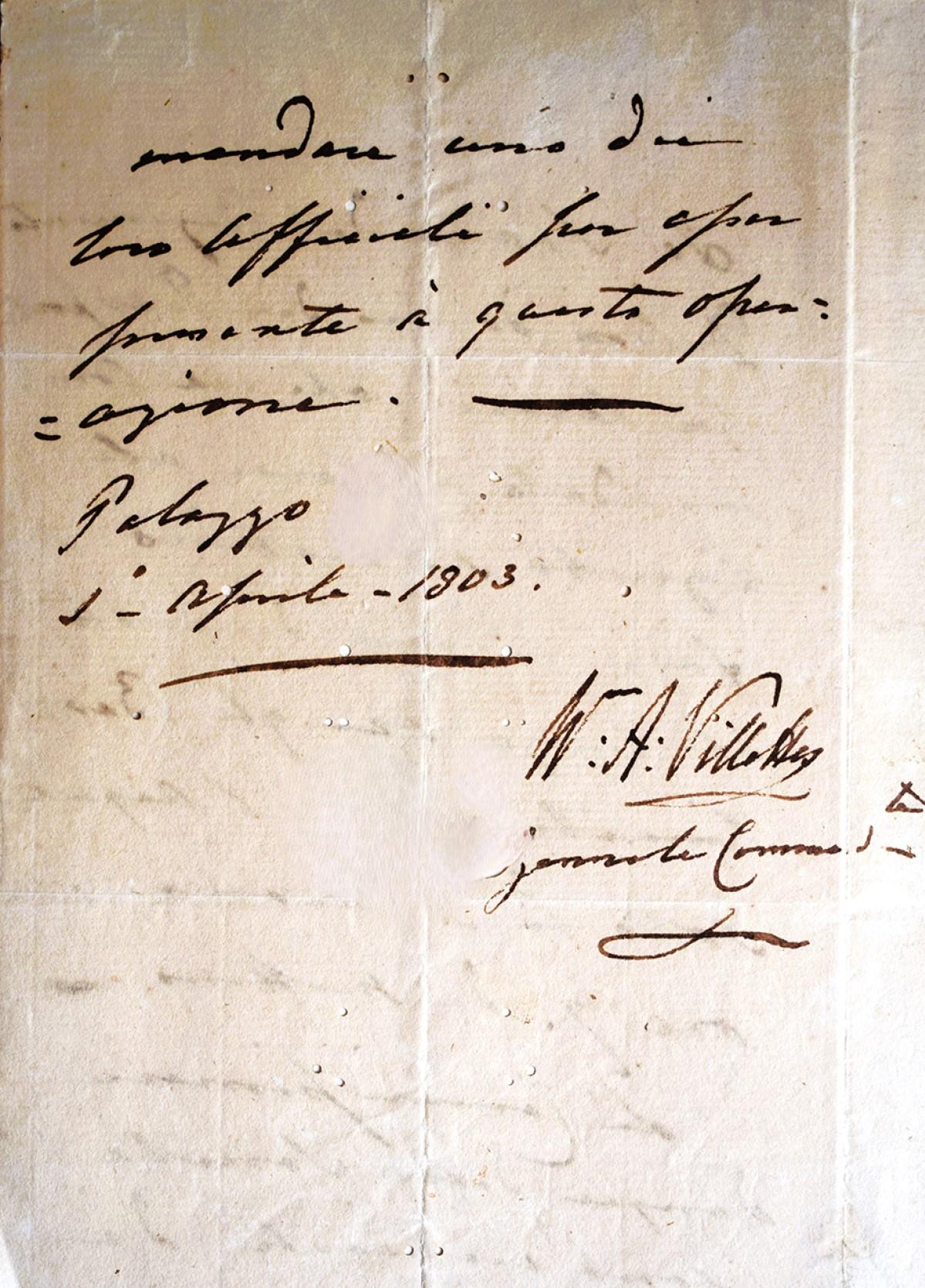 Autograph letter by General William A. Villettes, later commander-in-chief of the Royal Malta Regiment. Author’s collection
They did not.
The Royal Malta Regiment was raised in 1805 as part of the British army, with almost all its officers non-Maltese, starting from Major General William Anne Villettes. The only Maltese officers I could identify included captains E. and F. Testaferrata, lieutenants G. Arena, S. Mitrovich, L. Cauchi and S. Vella, ensign C. Bonello, and military surgeons F. Camilleri, J. Camilleri and G. Schembri. In line with British military practice, serving in the armed forces and having a forename became incompatible.
Custom only tolerated the luxury of retaining a surname.
Recruitment regulations for lower ranks established a minimum height of five feet, three inches (one metre and 60 centimetres), age between 18 and 35 years. Pay was £2. 18s. 4d., plus £1. 13s. 4d. in kind if the men enlisted for 10 years, plus an extra £2. 1s. 8d. if they enlisted indefinitely.
Villettes underlined that no Maltese would join if service extended beyond the Mediterranean. If the required quota of Maltese could not be reached, a maximum of 100 Sicilians or Spaniards were allowed.
In July 1807, the regiment consisted of 880 men, plus officers. By November, the men embarked for Sicily; the high command authorised each of the 10 companies, as an extraordinary concession, to be accompanied by 10 women and their children.
In November 1808, the Malta regiment deployed to Capri.
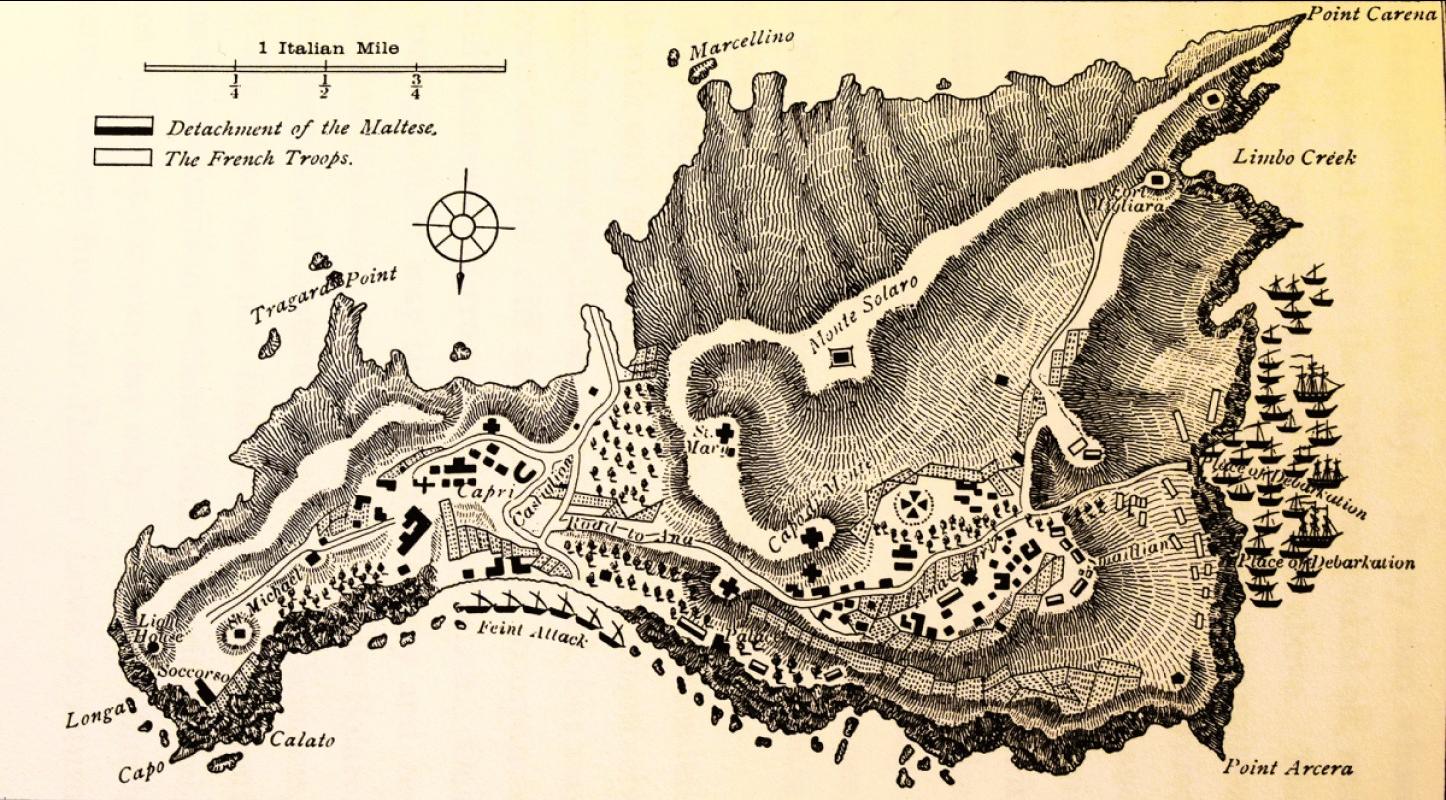 Map of Capri, showing the deployment of the Royal Malta Regiment in 1808.
I will not detail the capitulation of the Maltese regiment at Capri and how the French force outnumbered, outmanoeuvred, neutralised the defenders and captured the island.
Nor the blame games that followed. Chesney and others have done it competently, and I need not repeat. I will only hint at some curious happenings.
There is no greater dishonour for a fighting force than to let its banners fall into enemy hands. Two narratives explain how the men prevented the French from capturing the Malta colours.
One states that after the surrender, a British ensign and two Maltese sergeants volunteered to return to base.
There, they set the poles on fire, concealed the banners around their bodies and then burnt them when detained in Castel Nuovo, Naples. The other version has two Maltese ladies, the wife of Lieutenant Saverio Mitrovich and Clara Vella, who wrapped the colours under their petticoats and later burned them.
In the Capri encounters, the Malta regiment suffered 75 non-commissioned officers and men killed, and 120 wounded. Some eventually returned to Malta, while many surrendered and ended up prisoners-of-war in Naples.
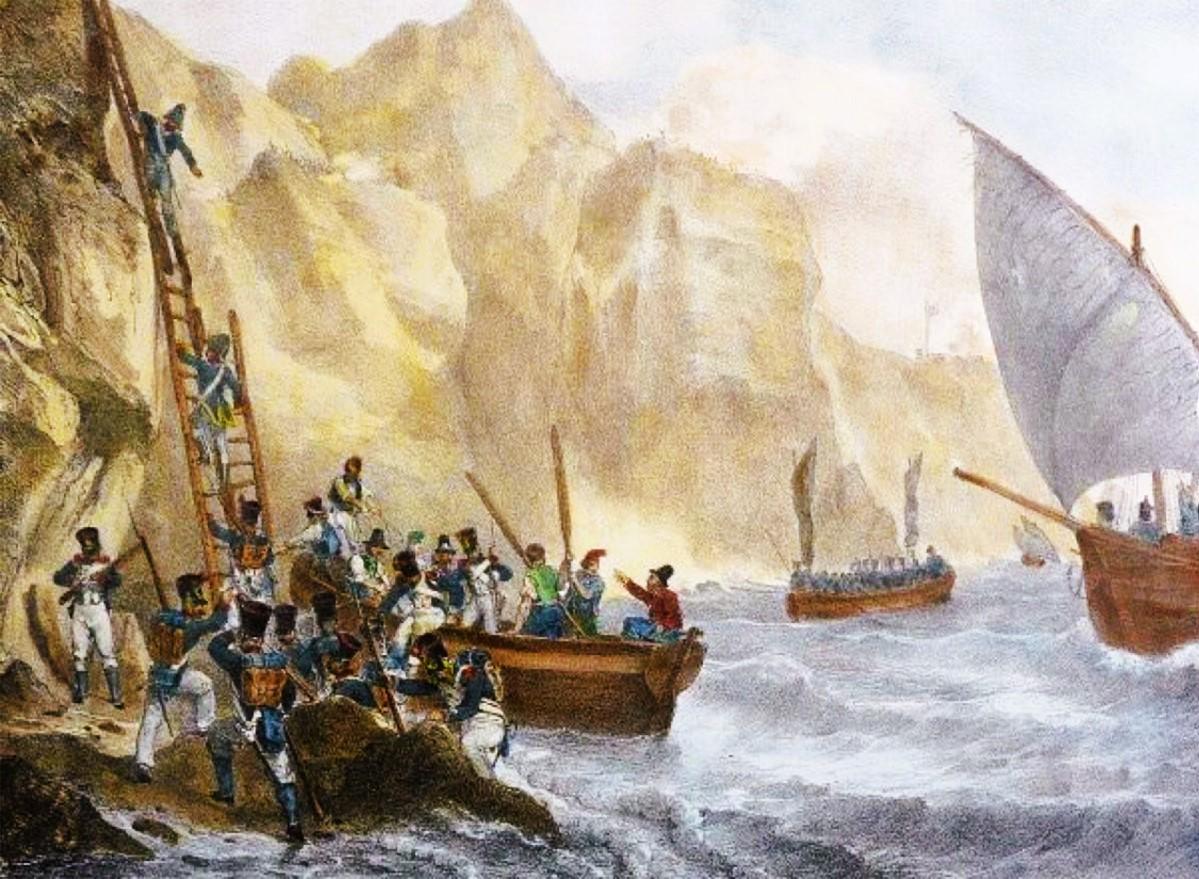 French forces scaling Capri in the 1808 invasion.
In The Maltese Corps and the Troops, Malta, (2014) James Baldacchino says estimates of the numbers of those taken prisoner vary between 250 and 680.
The prisoners then fade entirely off the radar, and nothing else seemed to remain on record. Until, that is, the French military historian André Golaz researched the prisoner-of-war camp in Mont-Dauphin, where those from the Malta Regiment captured in Capri eventually spent years detained.
The large, fortified village of Mont-Dauphin in southeastern France, built more than a century earlier by the revolutionary military engineer Sébastien Le Prestre, Marquis of Vauban, served as a prisoner-of-war camp during the Napoleonic wars, particularly for men from British armed forces.
Much of what follows is from Golaz’s paper ‘Un camp de prisonniers de guerre sous Napoléon 1er’ in Actes du quattre-vingtiéme congrés des Sociétés Savantes, Paris, (1955).
The poor behaviour of the Maltese included borrowing money without having the possibility of repaying it
The detailed accounts the historian published derive from official bureaucratic sources and from the voluminous correspondence of Lieutenant Buisson, ‘commandant’ of the fortress village. Prisoners-of-war subject to his discipline included Sicilians, Neapolitans, British, Spaniards, Sardinians, some from the Balearics and Candia, Dalmatians, Greeks, and Americans.
And many Maltese. In February 1810, Mont-Dauphin guarded 1,536 prisoners-of-war.
The sad news is that these official confidential sources show the soldiers of the Malta Regiment in the worst light possible. “Prisoners belonging to military bodies are calm and disciplined” – but with one exception, “the greater part of the Royal Malta Regiment and sailors have on their bodies the scars of piracy, many have committed thefts, all show a clear tendency to vice and only constraints can stop them from causing harm”.
In the summer of 1811, Buisson ordered the Maltese prisoners to be segregated from the others and locked up in fortresses, “to eliminate all occasions to succumb to their penchant for thieving”.
The English agent in charge of distributing funds to prisoners (the demi-solde, half-allowance) in May 1812 placed on record: “I doubt this allowance should be given to the Maltese. I find it painful to deal with people like these who surely do not deserve the attention we are disposed to give them”.
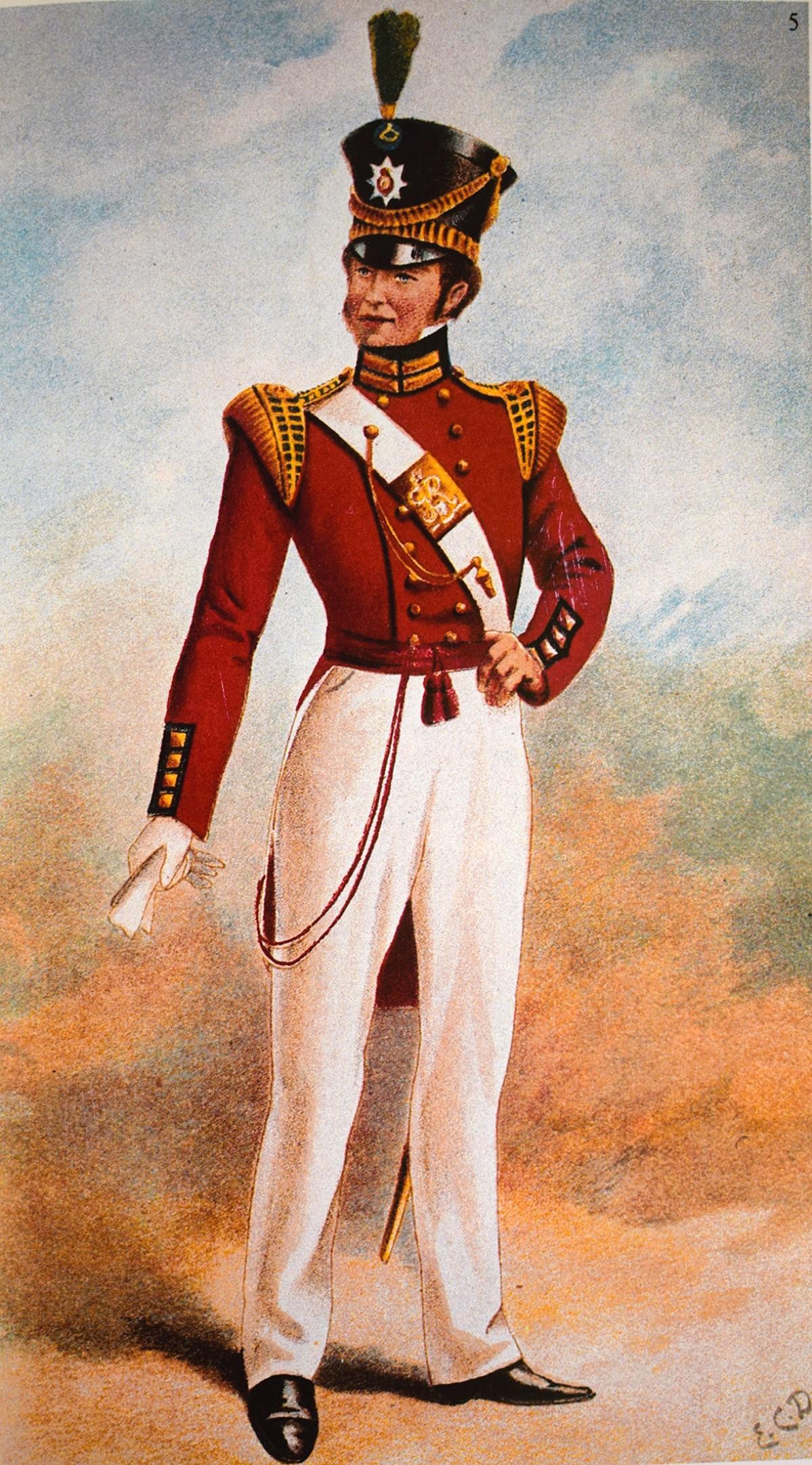 Edward Caruana Dingli painting of the uniform of officers of the Royal Malta Regiment.
Two months later, the agent (Sir Andrew Blayney, a high ranking prisoner-of-war?) returned to the subject “I am very unhappy with the behaviour of the Royal Malta Regiment, which seems to me to be composed of very bad elements, and have caused more embarrassment that all the other prisoners put together, and I have decided to report them to my government”.
The English agent gives examples of the poor behaviour of the Maltese, which included borrowing money without having the possibility of repaying it. By his estimate, they owed at least 10,000 francs.
“I was scandalised by the enormity of their debt. It is almost incredible that persons of their class show such impudence and contract debts they could not possibly repay.”
On his part, Buisson commented ironically: “The Royal Malta regiment is so well composed that even the British government, which esteems its men very highly, has rejected them.”
Buisson upped the dose of his anti-Malta Regiment aversions: “This class of men is even more dangerous and need to be more carefully supervised, as it is addicted to robbery and to actions the most wicked.” The records do not include complaints against officers, only the rank and file.
On other occasions, Buisson recorded observations on the Malta Regiment prisoners-of-war: few of the prisoners worked, they were filthy and transmitted diseases …this bunch from the island of Malta, Sicily and the south “are hypocrites, vindictive and sanguinary …the prisoners practise theft on a large scale.
During the day, they roam the streets and walk into houses to steal everything they can resell. Hooked on gambling and boozing, they target anything they can turn into cash.”
Another official report on the men of the Malta Regiment laments that punishment of the culprits has no effect: “It has not, so far, reduced thefts and bloody fights.
I am convinced that the majority are insensitive to punishment …men who have been released from prison to join a regiment, vagrants and vagabonds, do not feel they are being punished by being kept in a well-aired large room.”
This class of men is even more dangerous and… is addicted to robbery and to actions most wicked
Thankfully, not all was gloom and doom. The documents also record some happier occasions, like the October 1810 marriage of the 28-year-old Lieutenant P.A. Prochaska of the Malta Regiment to the 23-year-old Jeanne-Marie Queyras, daughter of the local contractor to the military hospital.
Or the wedding of Melchior Muscat, a 22-year-old soldier, to Anne-Françoise Bonnet, born in Fort-Dauphin to a bourgeois family.
And of a Malta Regiment soldier who married a Neapolitan girl after getting her pregnant. Or Rizzo, a ranker aged 25 who married 15-year-old Jeanne-Marie Casse, daughter of a local tailor, followed two months later by the wedding of two Maltese, aged 28 and 17 respectively.
With the cessation of hostilities in 1814, the Malta prisoners-of-war still in France became eligible for repatriation. Golaz’s research has much more about them in Mont-Dauphin.

Acknowledgements
All my gratitude to Piero Crociani, Enrico Scicluna and Theresa Vella.