A Maltese scientist could be changing our views on the origin of life
It has long been assumed that water is essential for life’s basic ingredients to develop into more complex structures. But no longer
A Maltese NASA scientist is among a three-person team whose recent discovery could change our understanding of how life began on Earth – and how common it might be elsewhere in the universe.
Researchers Duncan Mifsud, Alfred Thomas Hopkinson and Sergio Ioppolo proved that the building blocks of life can not only survive the harsh conditions of space but thrive there.
In a complex experiment recreating the conditions found in space, the three scientists demonstrated how the basic building blocks of life, found in gases and dust in deep space, can form more complex chemical structures without needing liquid water.
Their work, published in the prestigious science journal Nature, suggests that the possibility of finding life elsewhere in the universe could be more likely than first thought, and has been picked up by popular science outlets and a bestselling Harvard professor.
“Scientists have known for a couple of decades that the building blocks of life – amino acids, sugars and nucleotides – are out there in space,” said Mifsud, a researcher at NASA’s Ames Research Centre in California.
“If you analyse meteorites that land on Earth, you find these molecules in huge abundance. But going from those to life is a big jump.”
Because while forming the basic ingredients of life, the processes needed to combine these molecules into more complex structures were long assumed to require taking place in water.
But no longer.
Mifsud and his colleagues proved that when blasted with radiation in the harsh, unforgiving environment of space, rather than being destroyed as previously assumed, amino acids can form the chains, or peptides, needed to build proteins found in all known forms of life.
And crucially, without the presence of water.
Hopkinson, a British postdoctoral researcher at Denmark’s Centre for Interstellar Catalysis at Aarhus University, explained how the discovery “gives us a whole new outlook for how the chemistry leading to life could have happened”.
“It challenges how most people have thought of the chemistry leading to the origins of life,” he said, pointing to long-held beliefs that Earth’s ‘primordial soup’ – hot, nutrient-rich oceans filled with organic compounds – was needed to support the beginning processes leading to life.
“This has opened a new door and shown us that the chemistry that could lead to life, or at least those very first steps, is not so restrictive.”
They’re out there in space waiting to seed planets- NASA scientist Duncan Mifsud
Inspiration
The story dates back to 2020, when Ioppolo, an Italian associate professor at Denmark’s Aarhus University, published groundbreaking research showing how glycine, the simplest amino acid, could form in space through ‘dark chemistry’ – without energy from cosmic radiation.
Describing that work as “the paper of my life”, he joked that he was “ready to retire” after the results.
But not long after, he was assigned as a co-supervisor to Hopkinson, a then PhD student inspired by Ioppolo’s work who had long been fixated on the origins of life, and his investigations entered a new chapter.
“It started with Sergio’s work on the glycine formation,” said Hopkinson.
“And I wanted to ask: if it exists in space with these energetic processes [radiation], what happens?”
Frustrated that the university lab was unable to mimic the high-energy radiation needed to explore his curiosity, however, Hopkinson pitched the idea of blasting glycine with proton beams used to recreate the effects of stellar radiation.
And luckily, Mifsud was able to provide the facilities needed.
Because for several years, the NASA scientist had been involved with the Atomki nuclear research facility in Hungary, one of many facilities across Europe that Ioppolo had helped build equipment for.
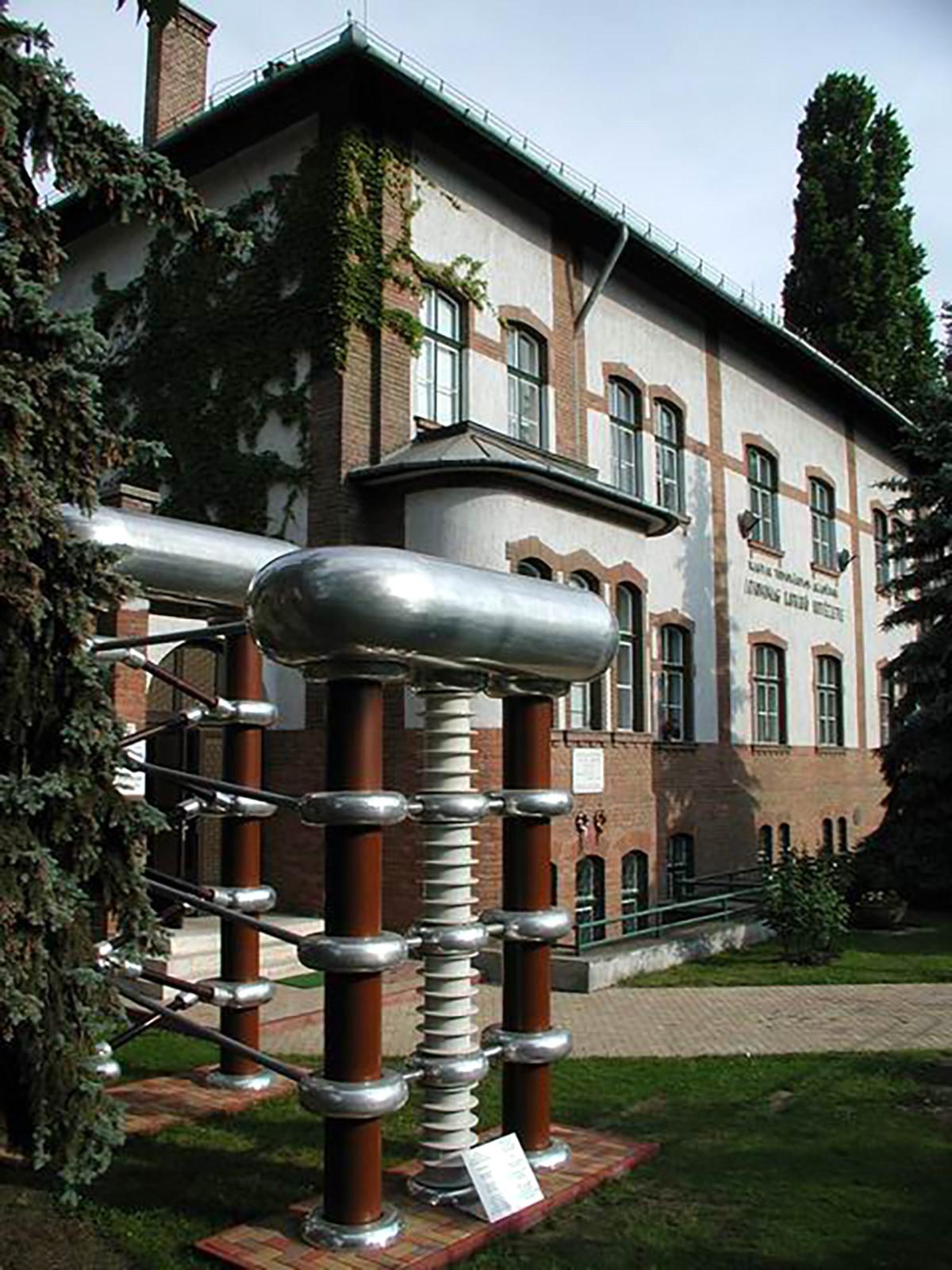 The team carried out groundbreaking experiments at Hungary’s Atomki nuclear research facility. Photo: Irajta/Wikimedia Commons
The experiment
Ioppolo connected Hopkinson with Mifsud – who recalled thinking the idea was “really cool” when it was pitched to him – and the three got to work.
To recreate the harsh conditions found in space, they placed samples of glycine on a surface, or substrate, cooled to around minus 253 degrees Celsius using “funky” cryogenic technology.
Next, the team pumped all the air out of the chamber, reducing the pressure to around one trillionth of that found naturally on Earth, before blasting the samples with proton beams using a multi-million-euro particle accelerator.
The results took them by surprise.
“We expected that it would destroy the glycine,” said Mifsud.
“But, in fact, it actually made two glycine molecules lock onto each other like Lego pieces and build up this peptide – the first building block towards a protein”.
While tests using infrared lights suggested to the team that their experiment had been successful, they decided to take the sample to the chemistry department at Aarhus University for further analysis, which “unequivocally” confirmed the results, Mifsud said.
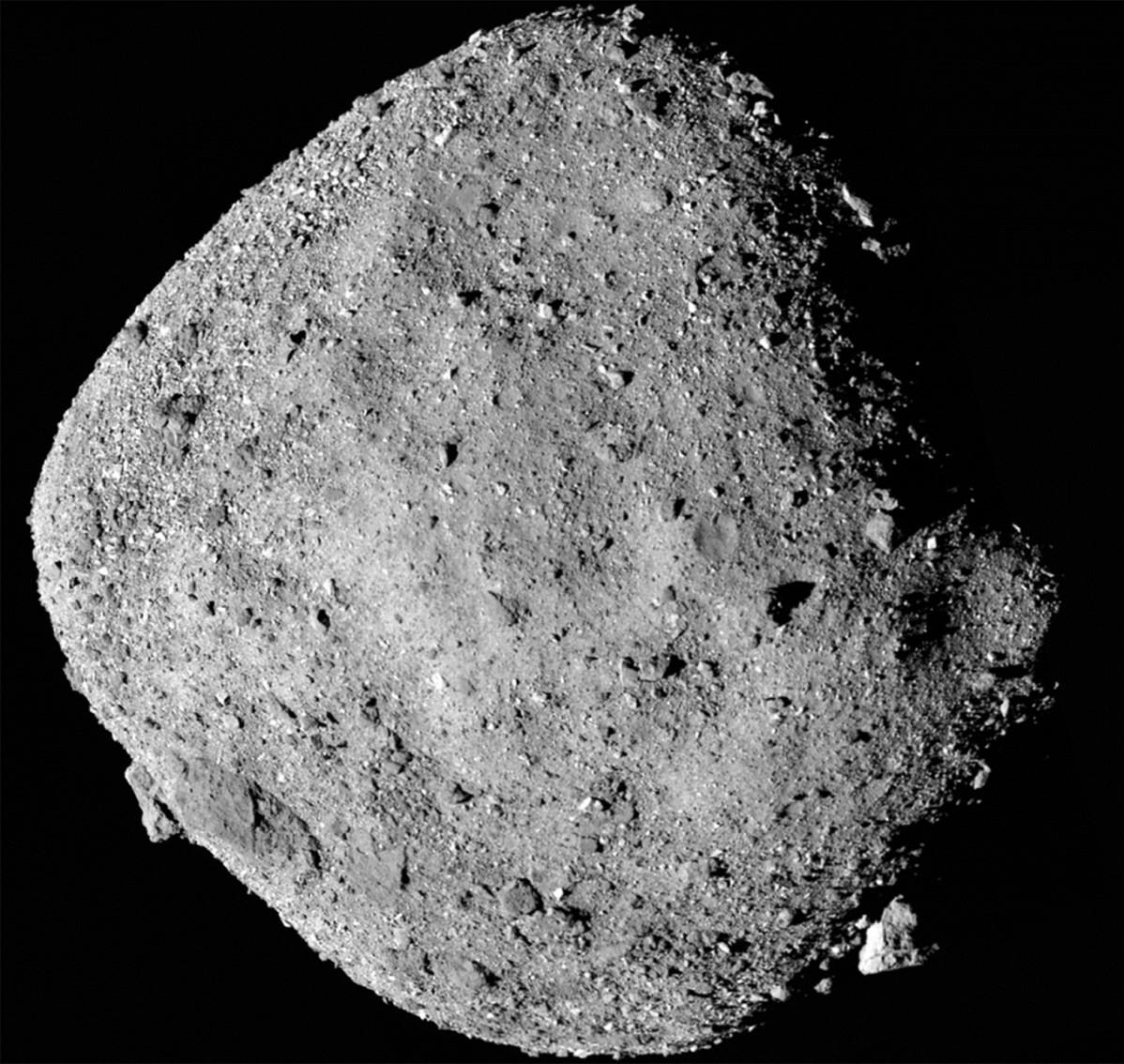 The team now has its sights set on samples collected from the Bennu asteroid by NASA’s 2023 OSIRIS REx mission. Photo: Nasa/Goddard/University of Arizona
‘Amazing results’
Recounting his reaction to the “amazing” results, Hopkinson said, it was difficult to process, and exciting more than anything else, adding he had even double-checked the results to check they were correct.
“It was kind of disbelief, followed by a flurry of ideas... and it opens the possibility for routes towards this chemistry that we haven’t considered yet.”
Now that the team has proven that peptides can form in space, their next step is to look for evidence of those chains on samples brought back from space – and pieces of the Bennu asteroid, retrieved by NASA’s OSIRIS REx mission in 2023, are in their sights.
As Mifsud explained: “If we can look at real space materials and find these more complex structures, then that strengthens the entire story that we’re trying to tell; that the chemistry of life predates the birth of our solar system and our planet.”
“It’s slightly poetic, really, that the chemical ingredients that make us up were probably made billions of years before our sun formed, our planet formed.
“So, they’re out there in space waiting to seed planets.”