Chilling last selfie of man feared to have died in attempt to reach EU
'I now believe my brother is dead... what we want now is to have his body'
A Bangladeshi man fears that a family member who was on a boat crossing the Mediterranean Sea is dead after he lost all communication with him on the day Malta rescued 61 migrants.
Saidul Islam said he had been communicating with his cousin, Ayan Molla, on a mid-December morning but has not been in touch since.
“My brother was on the boat and told me they were waiting to be rescued and that is the last I heard of him. Soon after, I read in the news about Malta rescuing migrants,” Islam said.
“I now believe my brother is dead, I accept it. What we want now is to have his body so we can bury him properly. We want to see him with our own eyes and it is horrible to think he lost his life at sea.”
Islam described Molla as his “brother”, saying that even though they are technically cousins, he and Molla grew up in the same household.
“My younger brother was of good character. He did not do drugs or something like this. He was always there for others and very polite with everyone.”
One death
In the afternoon of December 12, the Armed Forces of Malta rescued 61 migrants who were in territorial waters. A man who was in critical condition eventually succumbed to his injuries. However, government sources said the deceased person is not Molla.
At about 7am on the day of the rescue, Islam received two photos and a voice message from Molla. One photo is a selfie of Molla with his back to the side of a fibreglass boat, with the sea behind him. The other shows the sunrise.
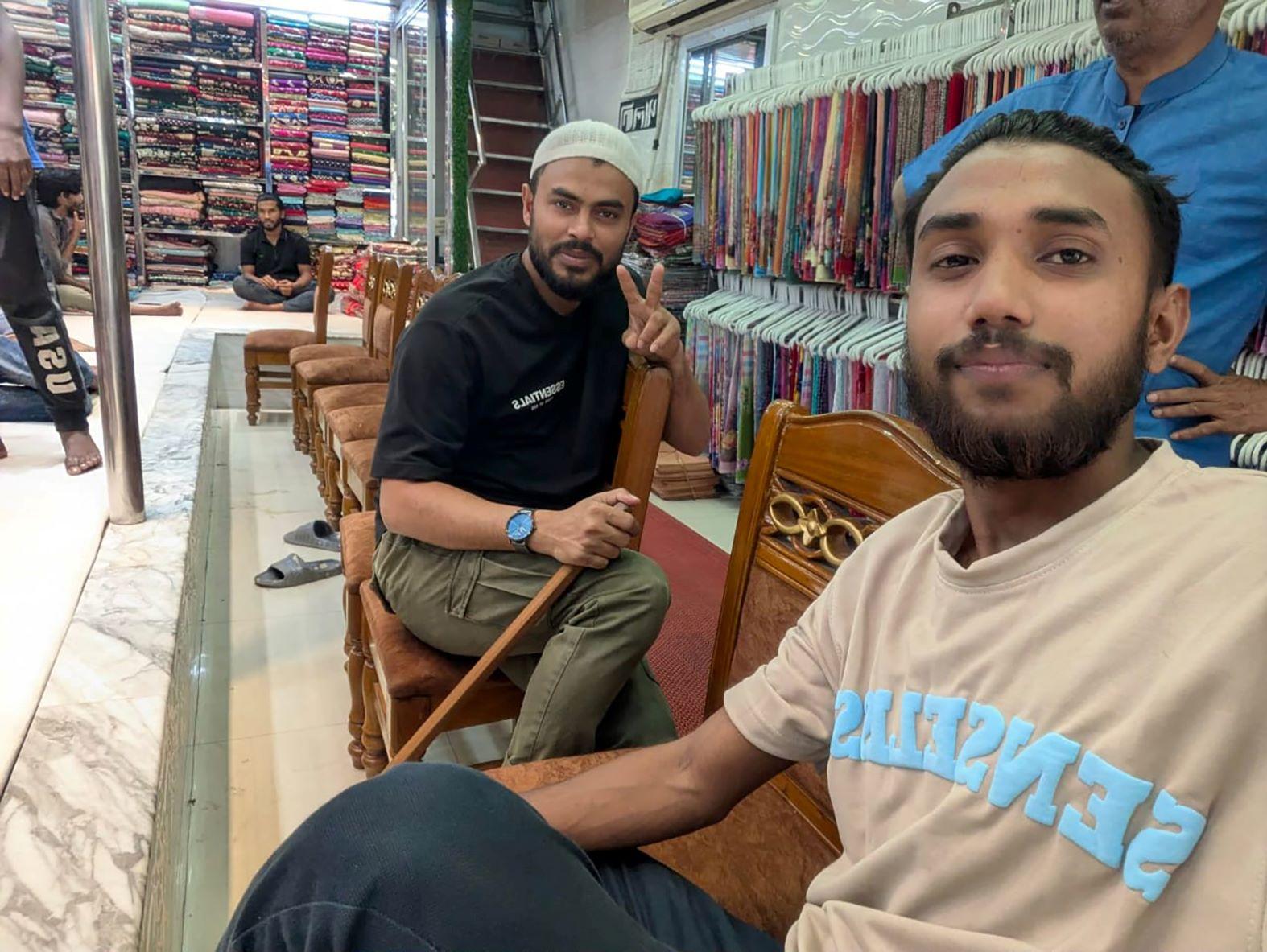 Ayan Molla (left) and Saidul Islam.
In the voice messages, Molla, speaking in Bengali, tells Islam that he, along with the other people on the boat, was waiting to be rescued. Voices and what seems to be the sound of an engine can be heard in the background.
Times of Malta was able to translate the short messages with the help of a Malta resident who speaks Bengali.
Replying to questions on specific details on Molla, a spokesperson said:
“The Detention Services Agency has actively assisted all those who were under its responsibility to contact their families and legal representatives after their disembarkation and in the days following the incident and prior to their return.
“The competent authorities cannot confirm claims of additional deceased persons, as no other bodies were found at sea.
“Unfortunately, due to the illegal nature of the journey, there was no passenger manifest,” they said.
Search
Government sources added that Malta sent a scuba team to search for bodies around the rescue site but did not find anyone.
We want to see him with our own eyes
Times of Malta spoke to one man who was on the boat that was rescued by Maltese authorities. He says Molla was on the boat but died towards the end of the journey. Times of Malta could not independently verify such claims.
Islam said that Molla initially moved to Saudi Arabia and then to Libya legally for work, as his economic situation in Bangladesh was very poor.
“In Bangladesh, the situation is not good, it is not safe and the economic situation means many of us leave,” Islam, who lives in Singapore, said.
Islam said that Molla moved to Libya last February. “He was working as a labourer but he would often complain about the working conditions and general safety there. However, he never told us he wanted to go to Europe until slightly before he got on the boat,” Islam said. “He did not tell us how much he paid for the journey.”
A 2024 report by the International Organisation for Migration (IOM) says that some 20,000 Bangladeshis work in Libya. The majority of Bangladeshis were employed and working mainly as construction labourers, cleaners or waiters, the report says.
The report, part of the IOM’s Displacement Tracking Matrix, says that 11 per cent of Bangladeshis expressed their intention to move to another country other than Libya.
Bangladeshis are among the nationalities that most often make the dangerous crossing across the Mediterranean from Libya to EU countries like Malta and Italy. But since Bangladesh is considered a safe country, those arriving in Malta are not treated as refugees and are usually repatriated. In fact, 44 migrants from the group of 61 rescued and brought to Malta on December 12 have already been sent back home.
Following that, Home Affairs Minister Byron Camilleri said Malta would continue to implement a policy of “fair migration”, granting assistance to those who truly deserved protection while repatriating those who abused the system and had no right to stay in Malta.
Camilleri said the quick repatriation of the 44 people sent a strong message to human traffickers that their criminal model was being attacked.