Mercosur: a big win for EU citizens
The EU Mercosur deal is a huge opportunity for Europe to grow as a global economic and trade player, says Edward Zammit Lewis
After a quarter of a century of laborious negotiations, the European Union and four South American countries forming part of the trade bloc ‘Mercosur’, namely Argentina, Brazil, Paraguay and Uruguay, signed a Free Trade Agreement in Paraguay.
As a result, 31 countries from two different continents, representing approximately 770 million citizens and a combined GDP of around $22 trillion, decided to open up by removing trade barriers and establishing common regulatory standards, investment frameworks, exports and value chains. The agreement still requires the approval of the European Parliament and the Mercosur legislative bodies.
The European Parliament has now voted to refer the Mercosur deal to the European Court of Justice for a legal opinion on whether it complies with EU treaties. As a result, the parliament cannot give its final consent until it has the court’s view.
There is no doubt that this agreement has not been free from controversy up to this very day. On the contrary, the controversy has increased now that certain sectors in Europe have realised that this agreement became a reality. There are essentially four main lines of criticism being raised against this agreement.
Some argue that it will have a social impact on citizens due to a deterioration in working conditions, increased land speculation and the displacement of indigenous communities.
Secondly, the opposition to this agreement is due to the fact that there are serious risks to public health stemming from the use of certain pesticides still used in Latin America, which are banned in Europe, and, thus, a difference in the level of standards between the parties to this agreement.
There is also the issue of climate change. Some argue that this agreement may increase greenhouse gas emissions due to increased transportation, land-use changes and more intensive agricultural production.
Finally, there is the question of the competitiveness of the agricultural and farming sectors within the Union, when these will have to compete with the same sectors in the Mercosur countries.
These issues have prompted major protests in various parts of the Union, especially in Paris, Madrid, Brussels, Poland, Ireland and Greece. The European agricultural and farming sectors argue they cannot compete with their counterparts, particularly due to the lack of a level playing field between them.
Nevertheless, I believe overall there are enormous advantages for the Union and its citizens in accessing new markets. These advantages depend on the political will on the part of EU leaders for the Union to become an economically and commercially competitive force on a global level that is constantly changing.
The issue of the Union’s competitiveness has been on the agenda of several EU Council presidencies, yet, frankly, I see very little real progress. At present, the Cypriot presidency is pushing this issue forward, also with a Mediterranean dimension, which is of utmost importance for Malta as well.
Europe cannot continue to think, with a certain sense of superiority, that the vecchio continente has some form of entitlement. New economic forces have long since overtaken us. Therefore, we must react without further delay and concretely if we truly want to create jobs for our citizens. Frankly, we cannot continue as a Union in our comfort zone because, in my opinion, we are already somewhat late.
The Mercosur agreement means that the EU will remove tariffs on 91% of Mercosur exports while Mercosur will reduce tariffs on 92% of EU exports over a period of 15 years, including agricultural goods from Mercosur such as beef, poultry, sugar and ethanol. Currently, some economic superpowers are imposing tariffs with the intention of protecting their domestic economic sectors. This amounts to a short-term vision that is not viable in the longer term.
This agreement has enormous potential for SMEs and micro-enterprises within the EU- Edward Zammit Lewis
What is viable is opening markets and not fearing competition, as this is the only way the Union can guarantee medium to long-term growth and quality jobs for its citizens.
EU businesses will gain improved access for industrial goods such as cars, machinery and pharmaceuticals, sectors that have changed drastically and are facing fierce competition, particularly from Asia. The same principle applies to the Union’s access to raw materials that are much needed to support its green and digital transitions.
Moreover, this agreement has enormous potential for SMEs and micro-enterprises within the Union. These are the backbone of both small businesses and larger enterprises in the EU. For this reason, even smaller operators stand to gain significant advantages from the Mercosur agreement.
It is true that the Common Agricultural Policy (CAP), established as an exclusive competence of the Union in 1962, has provided substantial support to rural communities, promoting sustainable farming practices and enhancing agricultural productivity. However, we cannot continue to rely indefinitely on this model. Therefore, I appeal to farmers and rural workers to step out of their comfort zone and boldly seek the opportunities to new and larger markets. Consequently, this EU CAP policy must also be updated in light of this highly beneficial agreement.
Another advantageous aspect of the agreement is that it reduces the Union’s dependence on traditional markets with which it conducts trade. This must change and there must be a redimensioning on the part of the EU in this regard, not only from a commercial perspective but also from a political one. This leads to greater economic resilience for the Union, which is so desperately needed in the present circumstances.
The final aspect, which is also of great importance, is that this agreement benefits EU citizens because history has taught us a much more open, larger and well-functioning market leads to greater choice and better prices for its citizens.
I appeal to MEPs to approve this agreement. This is the way forward and, as representatives of the Union’s citizens, we must not fear change.
For Malta, it is important that, despite our small size, we still take full advantage of what this agreement offers by granting us access to enormous markets we may have never dreamed of dealing with. We must be prepared and I expect coordinated action from the government in this regard, including through the very good decision taken in 2022 to establish a Maltese embassy in Brazil. This embassy should be focused on coordinating our businesses and enterprises so that they can extract the maximum benefit from this agreement.
The EU has always grown stronger when it embraces new challenges, including during the unprecedented enlargement of the Union in 2004. The result was extremely positive as we can clearly all attest today.
This is another opportunity that we cannot afford to miss if we want an EU that continues to grow as a global economic and trade player, which generates jobs for our young European citizens.
 E
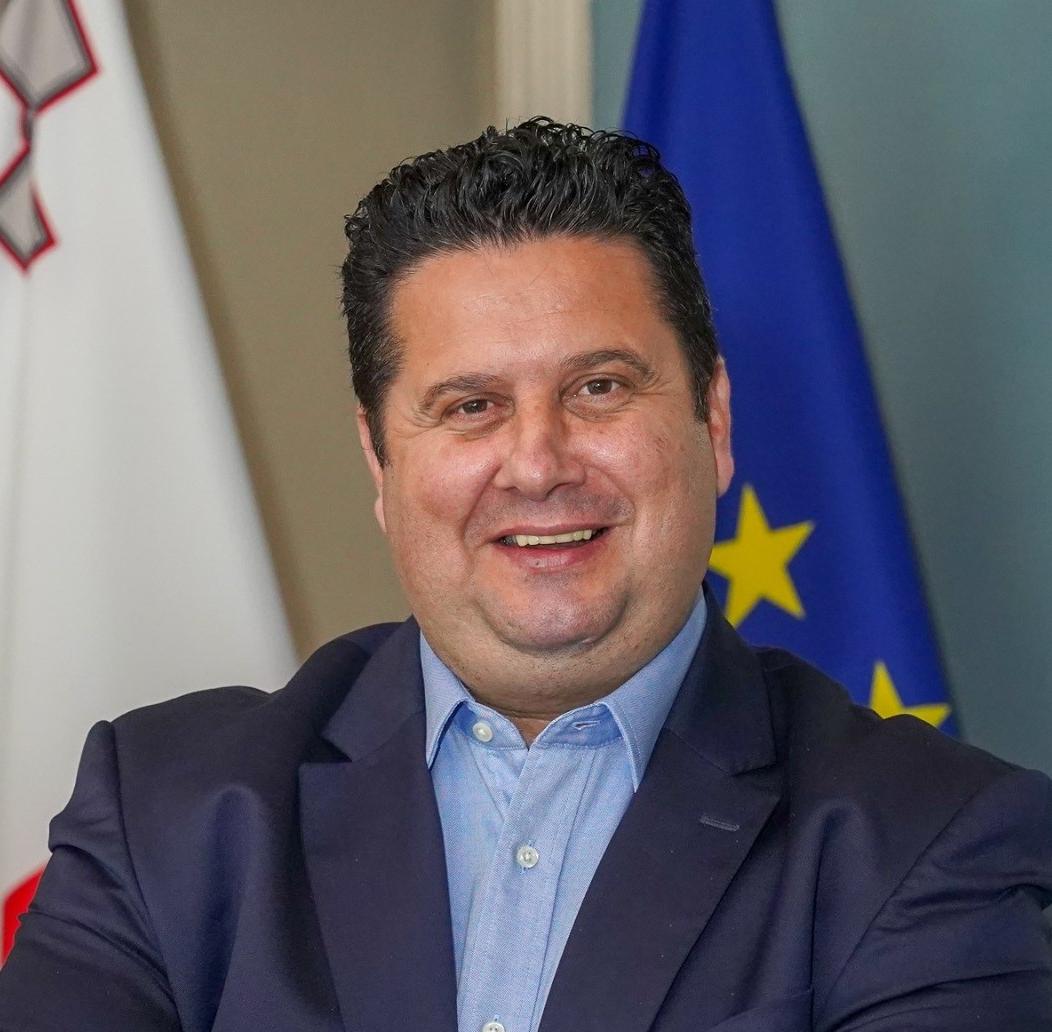
EEdward Zammit Lewis is a Labour MP and a former justice and tourism minister.