Mgr Ignazio Panzavecchia − a devout clergyman and uncompromising patriot
The Senglea-born prelate played a major part in Malta's 19th-century politics
A prelate whose name was among the most renowned in Malta at the beginning of the 20th century is Mgr Ignazio Panzavecchia, born in Senglea on November 21, 1855, to Liborio and Katerina née Cuschieri. On July 19, 1872, he became canon of the Senglea collegiate while still a young cleric.
After receiving Holy Orders on December 20, 1879, apart from implementing his priestly duties, he was secretary and treasurer of the Collegiate Chapter. He was also director of St Anne Hospice for elderly or disabled women, founded in Senglea in 1817.
In 1902, he was appointed monsignor of Malta’s Cathedral Chapter, and in 1913, conventual chaplain of the Order of St John.
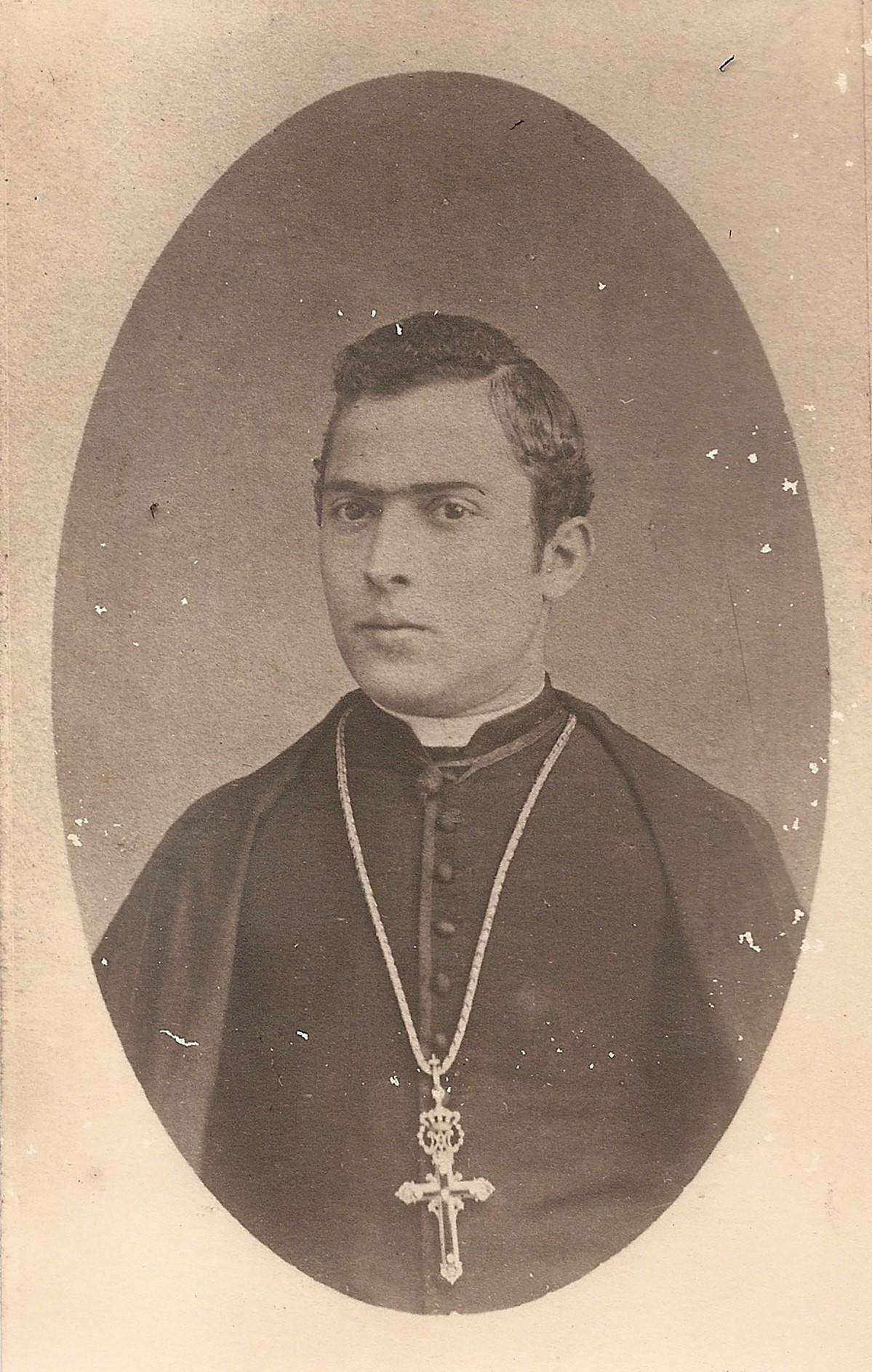 Don Ignazio Panzavecchia as a young priest and canon of the Senglea Collegiate.
In order to faithfully fulfill his duties as a priest, he felt obliged to defend the rights of the Church. He also struggled for Malta to take from the foreigner what it was due. Accordingly, in the early 1880s, driven by a patriotic-religious zeal at a time when members of the clergy could contest political elections, Mgr Panzavecchia emerged with prominence in the political scene as a representative of the clergy.
In 1891, he was elected for the first time and took his post in the Council of Government on March 18, 1891.
A primary dispute that Panzavecchia contested in this council was the issue of civil marriage. He claimed that the British government was committed to ratify the agreement made in 1890 between Sir John Lintorn Simmons, on behalf of the British government, and Cardinal Mariano Rampolla, on behalf of the Holy See, which ratification never took place, perhaps because the British government was under pressure from the Anglican Church.
The agreement had established that all Catholic marriages – both those of Catholics among themselves, as well as those with non-Catholics – would continue to be celebrated before a Catholic minister. There was a fear that the British government would change the laws that governed Maltese marriage, celebrated according to Canon Law, by legalising marriages performed before a non-Catholic minister or by introducing civil marriage.
Regarding this matter, Panzavecchia spoke convincingly: “Marriage is the foundation of our religion. Without marriage, no other Sacrament can be exercised. The human family depends on marriage. What is the priesthood without the human family? You are the family of the Church.”
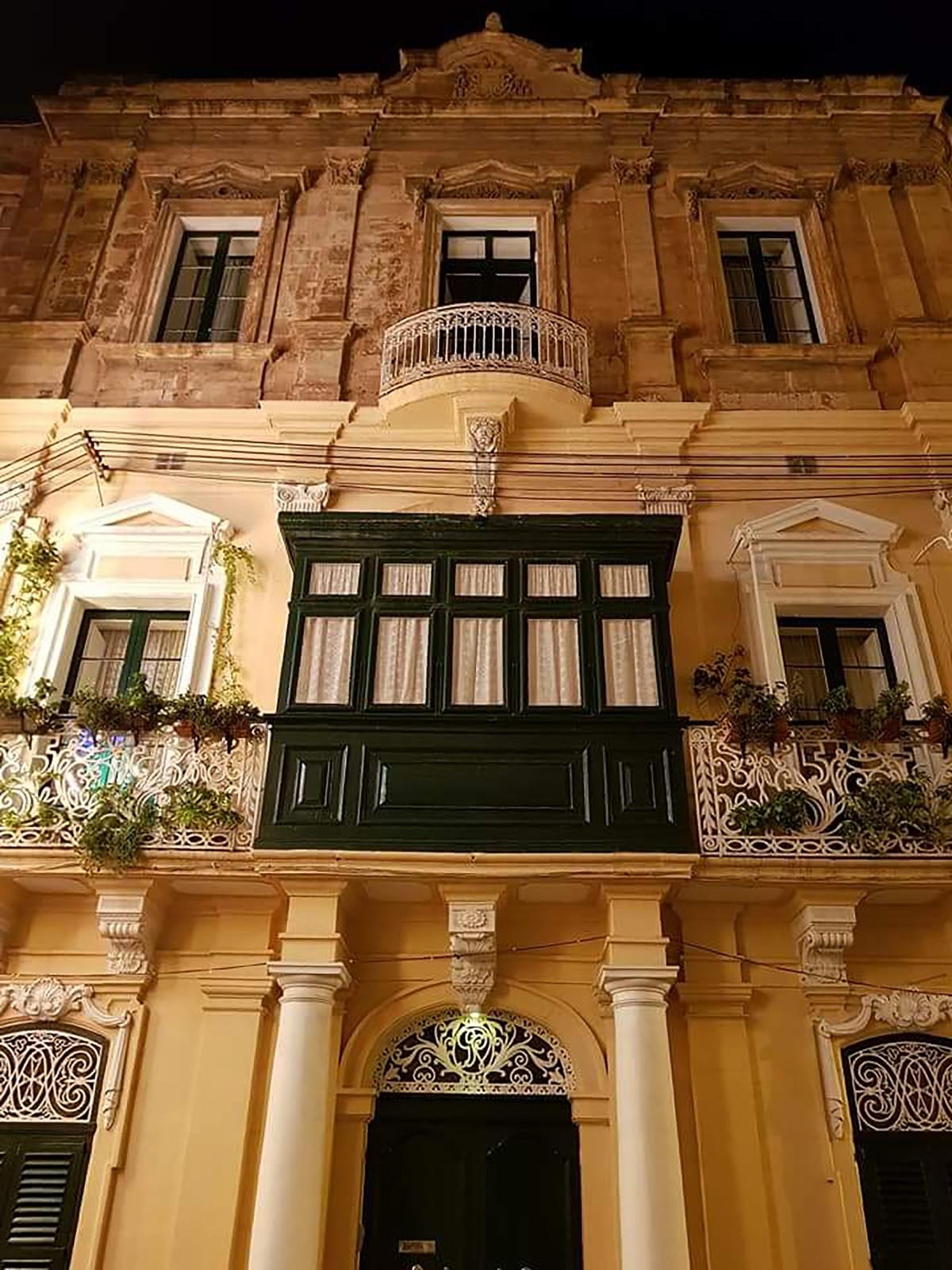 The façade of the Panzavecchia family residence in Victory Street, Senglea.
With his involvement in the political field, Panzavecchia continued to testify that integrity and politics go hand in hand. His last presence in the Government Council was at a meeting held on June 15, 1892.
Panzavecchia, always inspired by the Catholic religion, cherished Italian culture, which he saw as a witness to Malta’s Latin and European civilisation
In 1905, the Associazione Politica Maltese was founded, from which the Consilio Popolare, made up of representatives of Malta’s towns and villages, later emerged. Mgr Panzavecchia was one of the most vociferous members of the Consilio Popolare.
In the faction of the nationalist movement, there were those who wanted to follow the policy of abstention from the Government Council and others opposed this opinion. Against this background, in November 1910, the Comitato Patriottico was founded, without distinction of class or party, under the presidency of Panzavecchia, who thus became the national leader of the movement for constitutional reform.
In one of the sittings of the Comitato Patriottico, Panzavecchia put forward the proposal for a unified front urging the British government to recognise the constitutional rights of the Maltese.
Panzavecchia, always inspired by the Catholic religion, cherished Italian culture, which he saw as a witness to Malta’s Latin and European civilisation.
On February 25, 1919, the Maltese political leaders called the Assemblea Nazionale, under the leadership of Dr Filippo Sciberras. It was attended by around 300 people, representatives of Maltese and Gozitan institutions.
Panzavecchia not only took an active part but also helped in the formulation of the liberal constitution that the Maltese were asking from the British. He was a member of the commission of the National Assembly, founded on the historic day of June 7, 1919, in which commission he was the delegate of the Comitato Patriottico.
Confronted by the Sette Giugno riots in 1919, the British had no choice but to give Malta a new constitution. The Milner-Amery Constitution, promulgated through the Letters patent on April 30, 1921, gave the Maltese the right to manage internal affairs, while matters of security and foreign policy were taken care of by the British Crown. This constitution was to set up two parliamentary chambers: the Senate and the Legislative Assembly.
Aware that being a priest and prime minister concurrently could create problems, Panzavecchia declined and suggested instead Senator Joseph Haward
Shortly after the new constitution’s proclamation, Panzavecchia set up his own party, the Unione Politica Maltese, which was envisaged to be a big force on the island that could contest the elections of 1921 under the new Self-Government Constitution. The party attracted a number of priests, including Mgr Enrico Dandria and Mgr Francesco Ferris, who later became ministers.
When Panzavecchia set up his political movement, he acted independently but in parallel with similar actions being taken by another priest in Italy, Don Luigi Sturzo, who set up his political movement in 1920, calling it the Partito Popolare Italiano.
After the enthusiasm and the unanimous resolutions, the political struggle between the parties began. The first election for the Legislative Assembly, under the 1921 Constitution, was contested by four parties.
The principal party was the Unione Politica Maltese of Mgr Panzavecchia, attracting the most respectable people of the country. The Panzavecchiani, as the centre party in Maltese politics, were loyal to the British and happy with them in Malta, but were also in favour of the Maltese continuing to cherish the Italian culture being Malta’s culture for 600 years. They were conservative and 100 per cent faithful to the Church.
The election for the Senate was held on October 5 and 6, 1921, and that for the Legislative Assembly was held on October 18 and 19, 1921. The latter gave victory to Unione Politica Maltese, which won 14 out of 32 seats. Gerald Strickland’s Constitutional Party, and William Savona’s Labour Party won seven seats each, while four went to Enrico Mizzi’s Partito Democratico Nazionalista, which contested only Gozo.
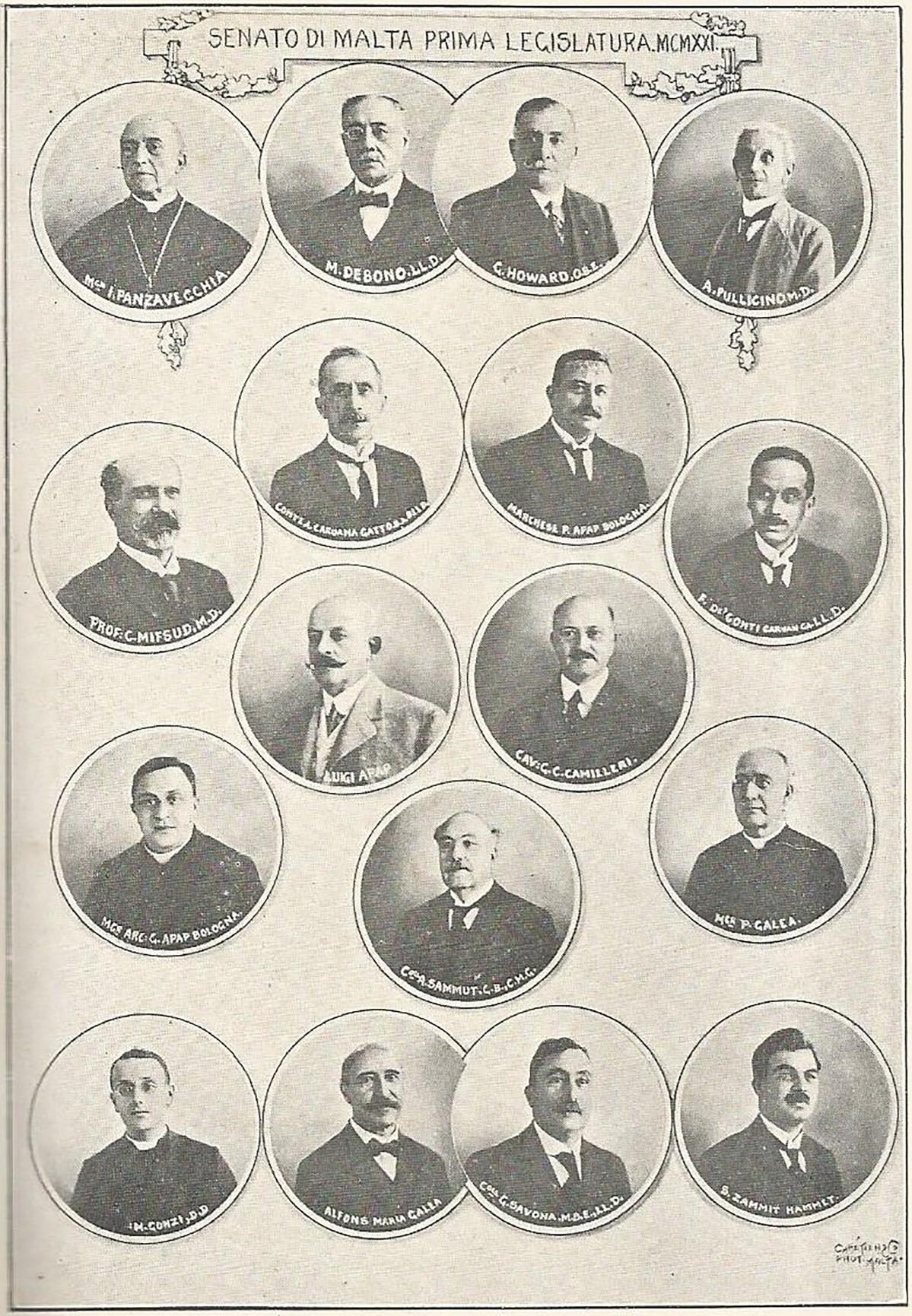
The 17 members of the Senate in 1921. Mgr Panzavecchia is first from the left in the top row.
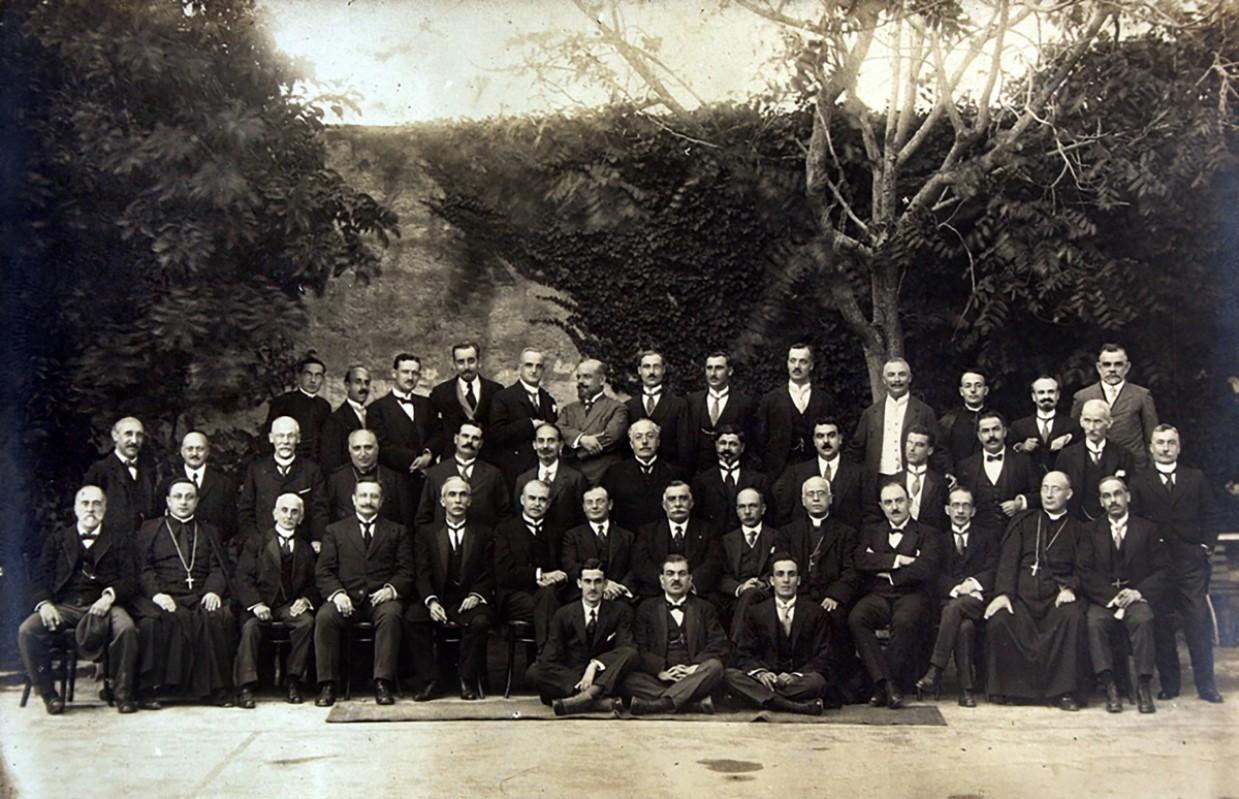
A photo taken at the Palace, Valletta, showing all the members of the Legistative Assembly and of the Senate elected after the 1921 elections. Mgr Panzavecchia is seen seated, front row, second from the right.
Thus, the Unione Politica Maltese, a party of moderate Nationalists, won a relative majority, and Governor Lord Plumer invited Panzavecchia to form a government. Aware that being a priest and prime minister concurrently could create problems, Panzavecchia declined and suggested the post be given instead to Senator Joseph Howard, who formed a minority government, relying on the Labour Party for support. The latter agreed to vote in favour of the government on the laws matching its programme. Howard succeeded due to his sense of tolerance and the experience he gained in administration between 1921 and 1923.
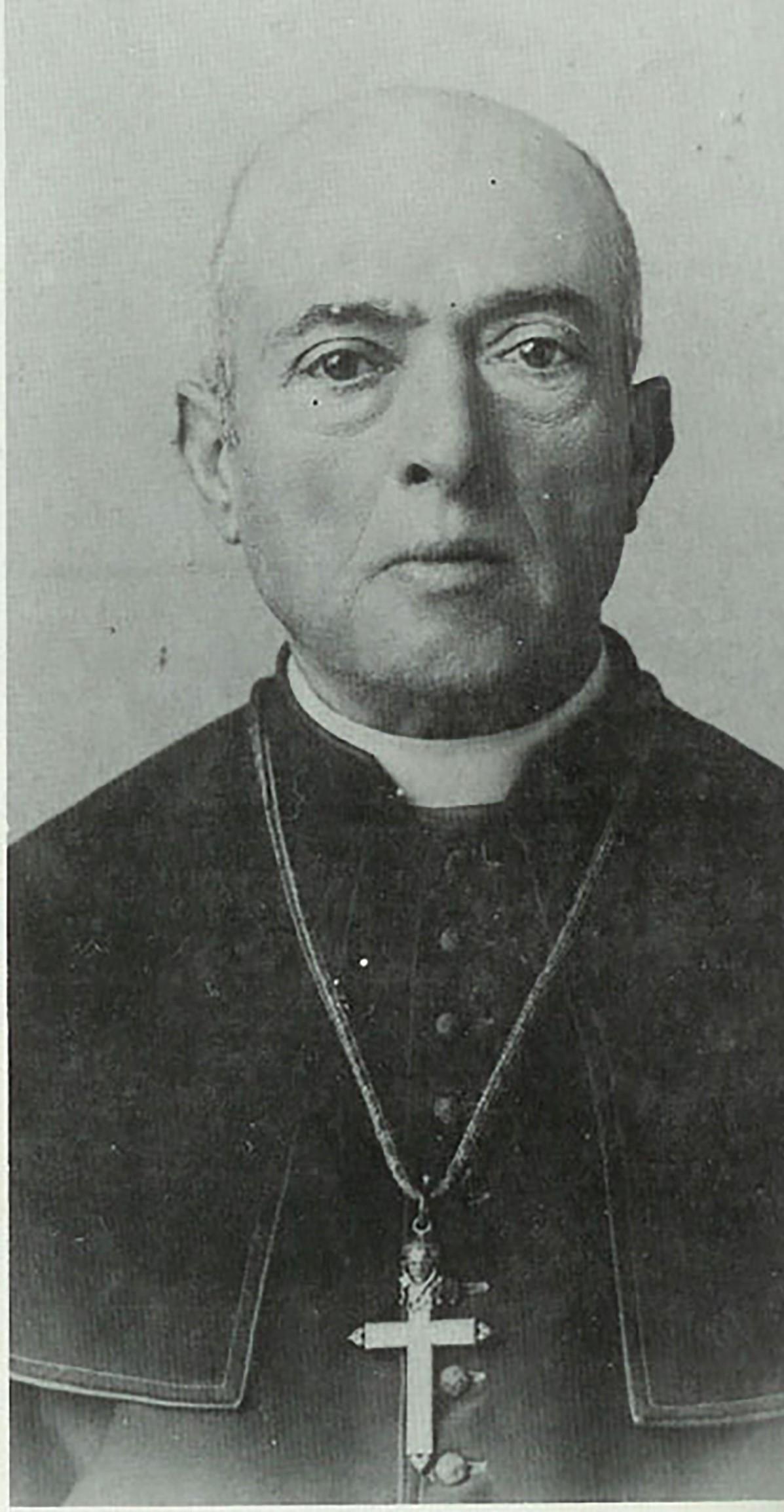 Mgr Ignazio Panzavecchia as a senator in 1921.
Panzavecchia continued serving as both a senator as well as chaplain of the Senate, until his death. From these roles, he worked wholeheartedly for the moral, civic and political good of the Maltese people. It was he who proposed that children aged over 12 who could not attend school during the day, should be obliged to attend evening school.
Furthermore, he supported laws in favour of free compulsory education financed by the state, while leaving it in parents’ hands to choose whether to send their children to a state school or a private school.
Among the issues that Panzavecchia spoke about were those of civil marriage and the confrontation between the state and Church regarding education.
When his health began failing, Panzavecchia submitted his resignation as senator, which was announced by Senate President Massimiliano Debono during the sitting of May 22, 1925. Panzavecchia died just a few months after at the age of 69 at his home in St Paul Street, Mdina, on August 20, 1925 – 100 years ago.
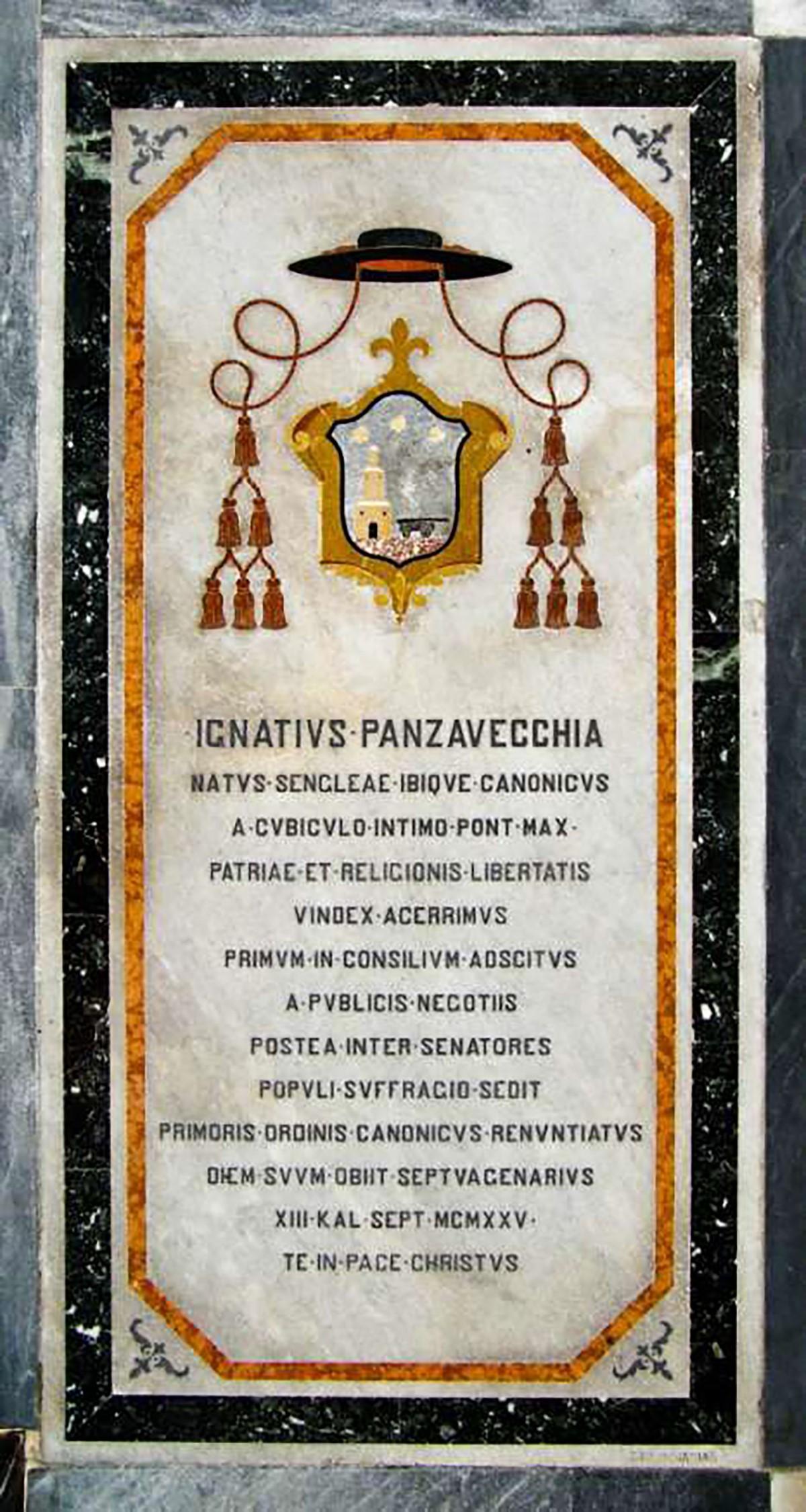 The tomb slab and epitaph that covers Mgr Panzavecchia’s grave at the Mdina cathedral.
The local press unanimously recognised the merits of this patriotic prelate. Among others, The Daily Malta Chronicle of August 21, 1925, wrote that being “a perfect gentleman, a good priest, a staunch friend, kindhearted and generous, Mons. Panzavecchia leaves a host of friends to deeply mourn his loss”.
The funeral took place the day after Panzavecchia’s death. His body was transported from his residence to the Mdina cathedral, where a requiem mass praesente cadavere was held. Mgr Panzavecchia’s tomb in the Mdina cathedral is found the first from left, in the fifth row of the main aisle.
When the Senate met for the first time after Panzavecchia’s death on October 28, 1925, several senators delivered memorial speeches in his honour.
The 1920s were characterised by coalitions between the Maltese political parties, and on January 23, 1926, five months after the death of Panzavecchia, the Unione Politica Maltese joined the Partito Democratico Nazionalista, and thus the Nationalist Party was officially founded under the joint leadership of Sir Ugo Mifsud and Nerik Mizzi.