Most mid-priced rentals 'unaffordable' for those on €40k, study finds
Prices outpacing wage increases, tenants' union says
Updated 6.51pm
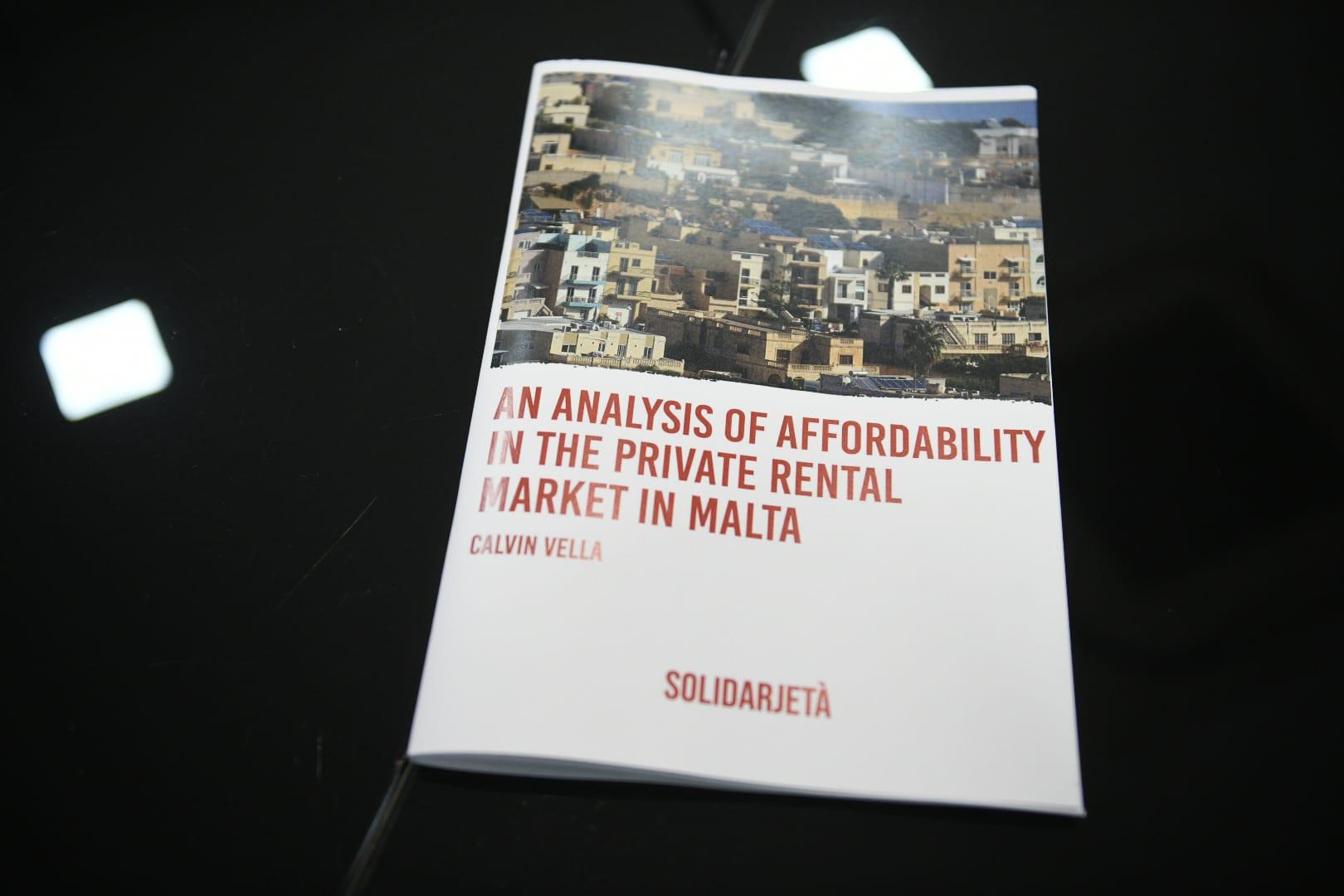
Mid-priced rental properties, even in the cheapest localities, are often "unaffordable" for households on salaries of €40,000, according to a recent study on rent affordability.
The report published by tenants’ union Solidarjetà compared wages, rental prices and assistance eligibility against the aims of a Housing Authority rental subsidy scheme, which says that renters should spend no more than 25% of their income on rent.
Pointing to a “profound lack of affordability within Malta's rental market”, the study found that “alarmingly, even individuals earning €35,000 or €40,000 frequently cannot afford the medium rent, even in the cheapest localities”.
Malta’s rental market is “characterised by widespread unaffordability and an over-reliance on a limited subsidy scheme", An Analysis of Affordability in the Private Rental Market in Malta found.
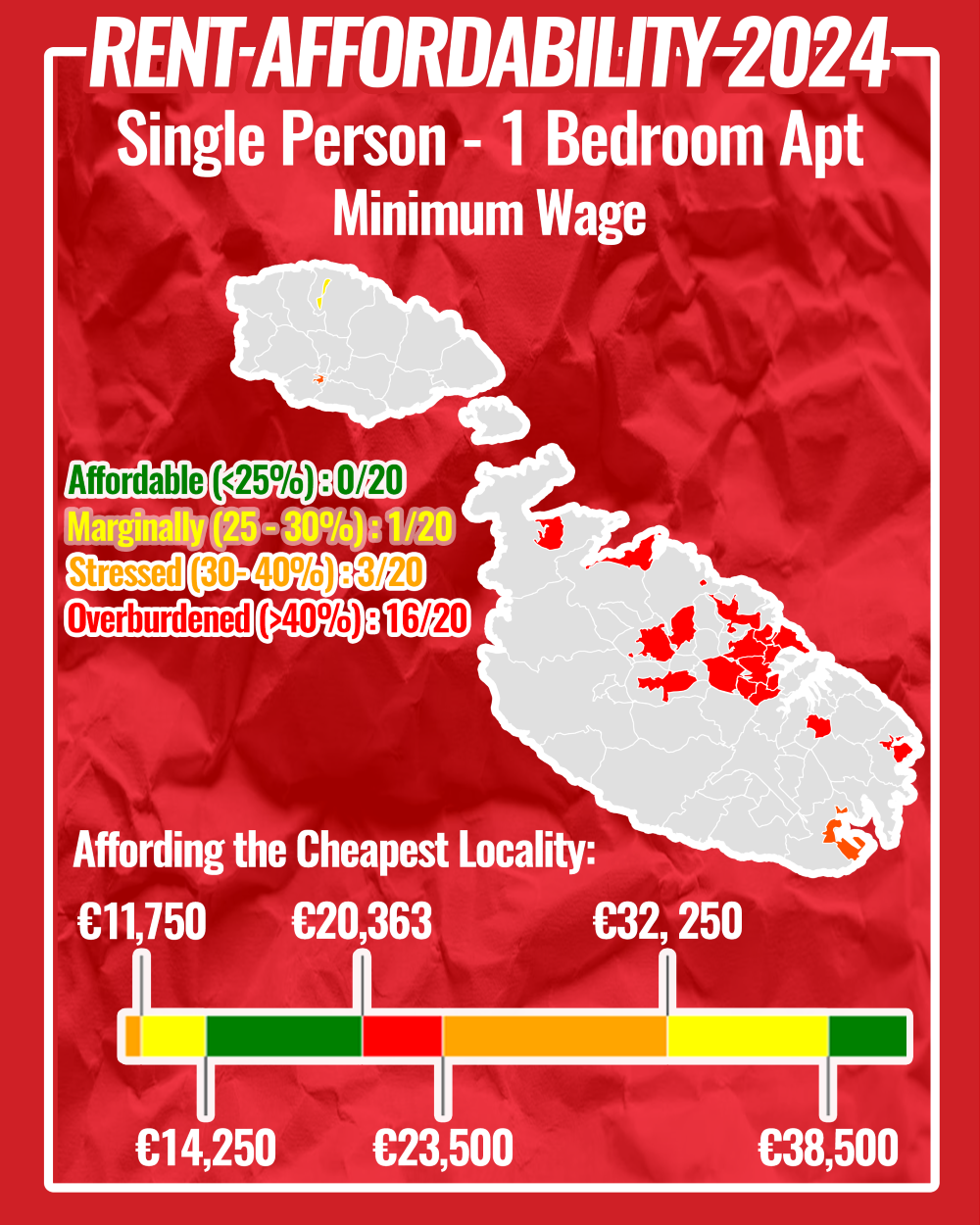
Percentages indicate proportion of income spent on rent. Infographic: Solidarjetà.
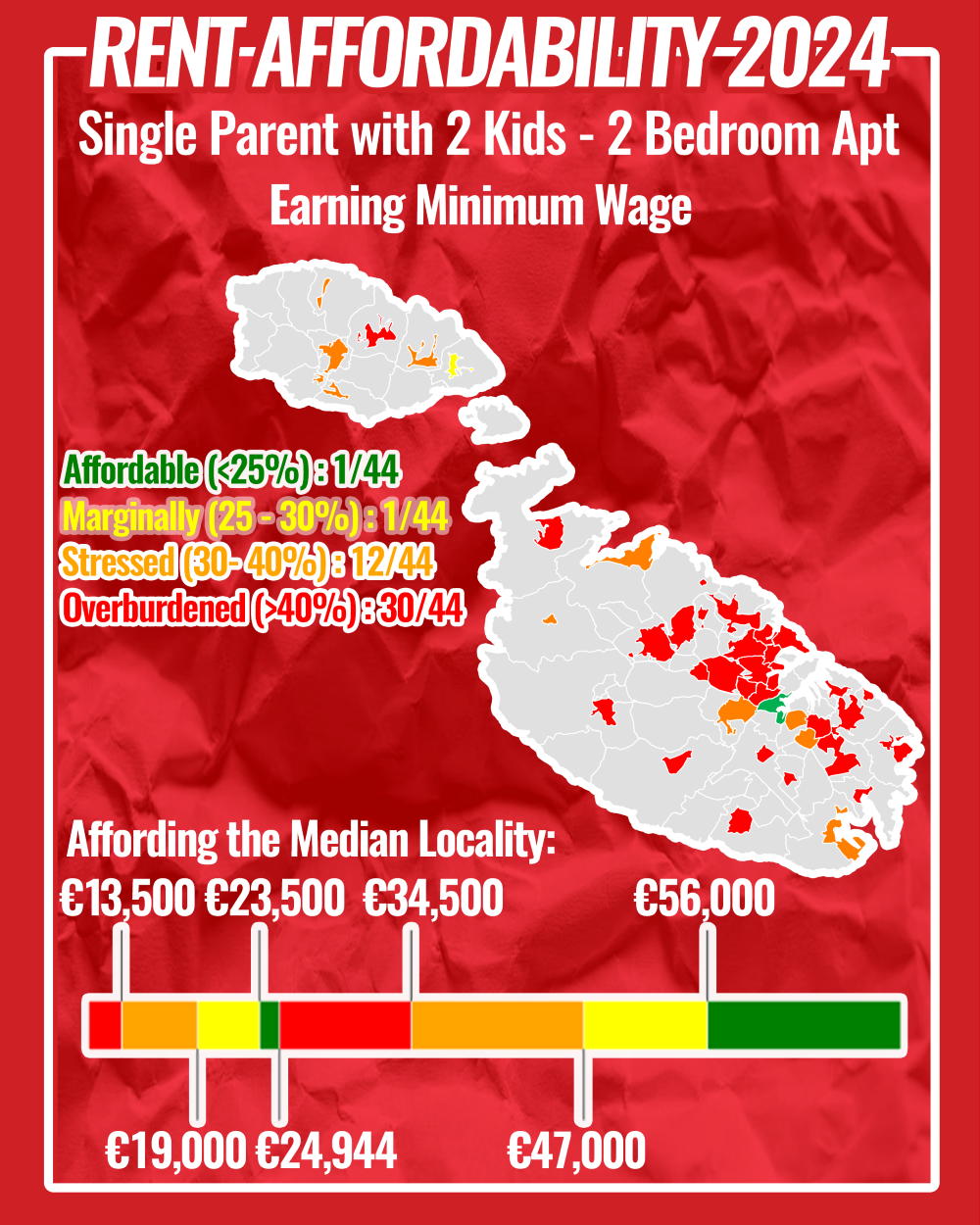
Percentages indicate proportion of income spent on rent. Infographic: Solidarjetà.
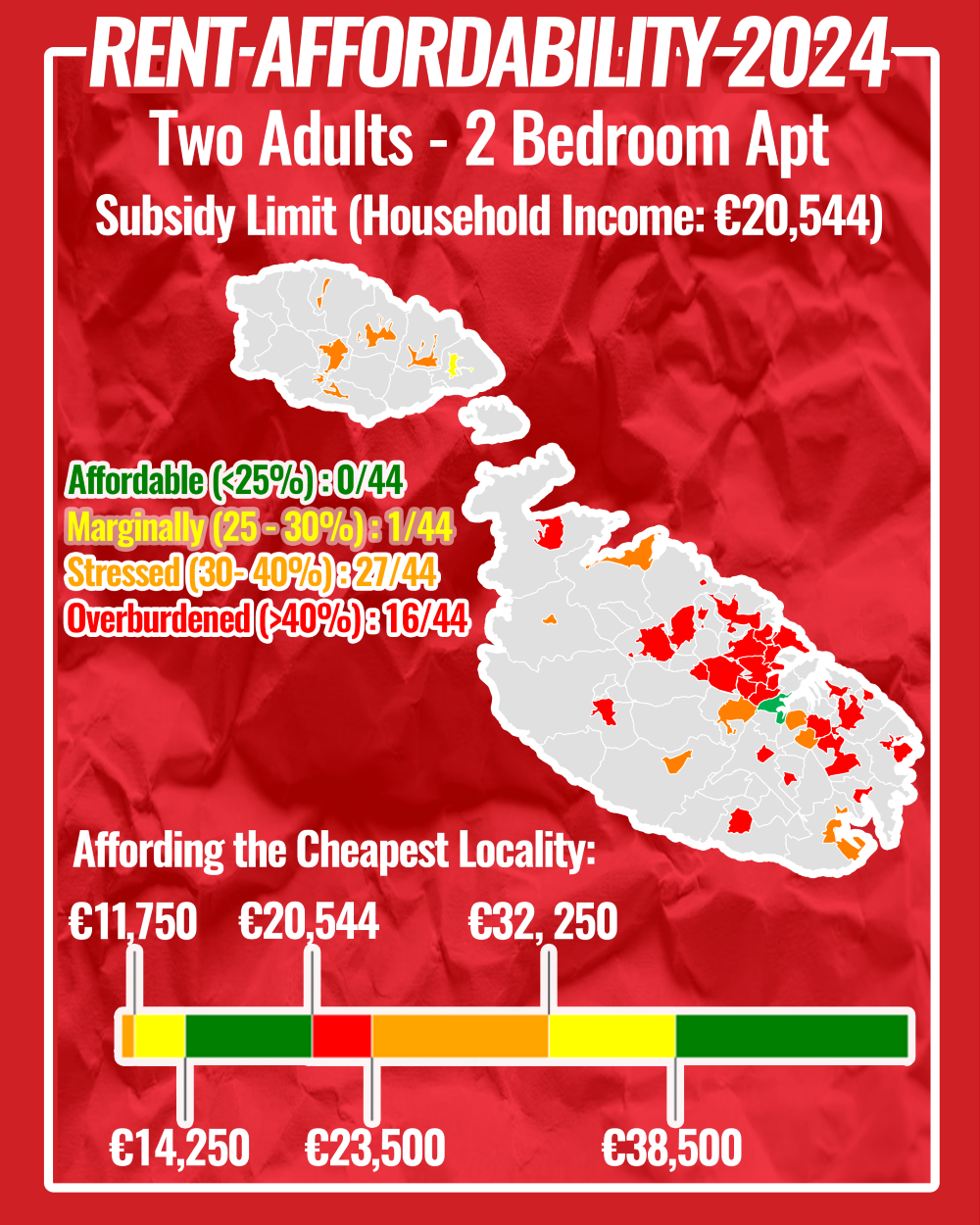
Percentages indicate proportion of income spent on rent. Infographic: Solidarjetà.
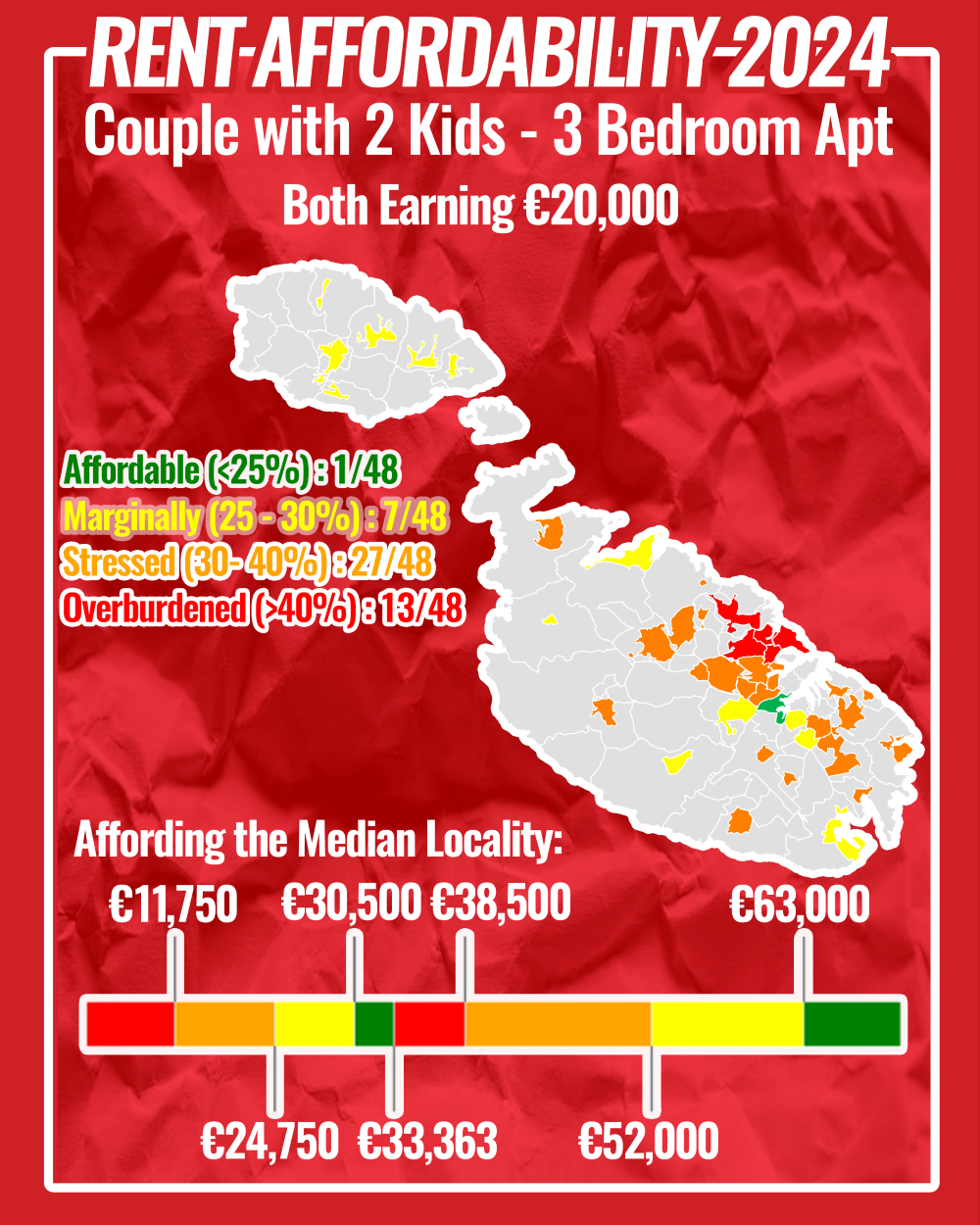
Percentages indicate proportion of income spent on rent. Infographic: Solidarjetà.
The authors of the study say that less than one in 10 types of tenant households are comfortably able to afford the national median rent while spending no more than a quarter of their income.
The report analysed 38 different “scenarios” for renters, covering sole tenants, single parents and couples with and without children, across different incomes and property sizes. It found that only three scenarios allowed tenants to afford the median property.
Attached files
Subsidy shortfalls
The analysis paints a bleak picture, with most types of tenants having to fork out more than a quarter of their income on rent while having to make up subsidy shortfalls or being unable to qualify for state assistance in the first place.
Because while the authority’s Private Rent Housing Benefit Scheme (HBS) “ensures that nobody would have to pay more than 25% of their income in rent”, the criterion for eligibility seems out of touch with the reality on the ground.
HBS subsidies, even when added to income, fail to meet the rent prices charged in many localities, according to the report.
 The report was launched Thursday. Photo: Matthew Mirabelli.
And with assistance limited to certain wage thresholds – single renters cannot earn more than just under €19,700, for example – many types of tenants find themselves left out of the scheme.
Example scenarios in the report include single people on minimum wage being unable to afford a one-bedroom apartment in any locality, and couples collectively earning €35,000 in the same situation.
Only one locality had affordable properties for parents jointly earning €40,000, the study showed.
‘Tenants pushed into sharing’
The study’s author, economist Calvin Vella, wrote that the report “unequivocally demonstrates a profound lack of affordability within Malta's rental market, where it is only the exception that tenants are able to afford the properties they inhabit”.
“This could explain why more tenants are being pushed into sharing properties and rooms rather than renting out an apartment”, he said, explaining that all three affordable scenarios were ones in which tenants were receiving the maximum rent subsidy.
“Crucially, no scenario provided tenants with the flexibility to afford properties in any desired locality.”
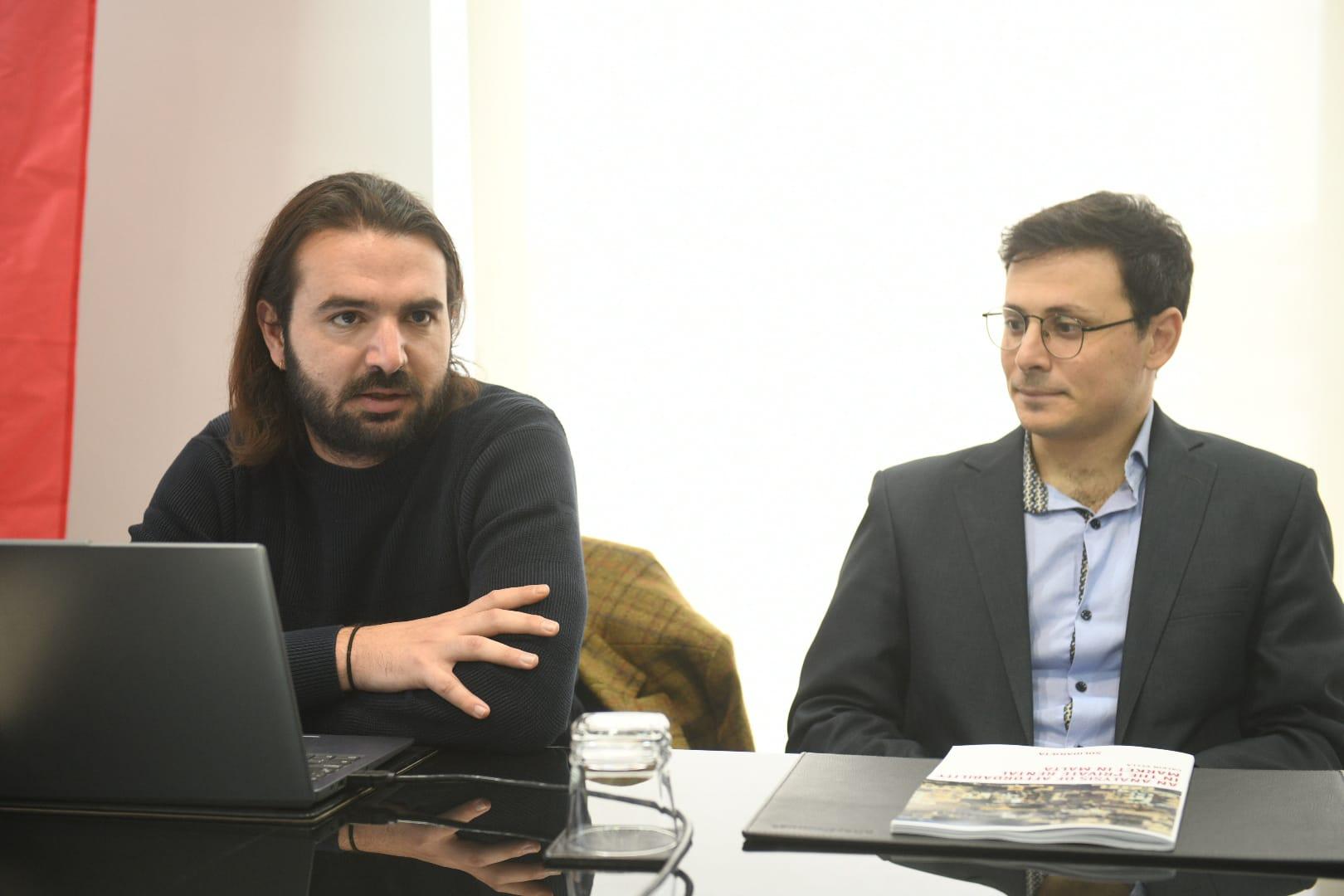 The report's author, economist Calvin Vella (L) and Solidarjeta president Matthew Attard. Photo: Matthew Mirabelli.
While acknowledging the “critical, yet often precarious” impact of HBS, the report noted that while aiding some, the scheme does so “within very narrow income thresholds, creating significant challenges for tenants earning just above these limits”.
It noted that while the 25% figure provided by the Housing Authority was in line with EU recommendations for housing partnerships, a 2018 US study proposed spending of up to 30% as being affordable, while Eurostat defines households as “overburdened” when spending more than 40%.
The report recommended the introduction of rent controls “to tackle escalating housing costs”, such as temporary rent freezes and limits on the frequency of rent increases.
Other recommendations include incentivising long-term contracts – the report noted that less than seven per cent of contracts were renewed past a year – and broadening eligibility for the housing scheme.
‘Untenable’
Announcing the report at a press conference Thursday, Solidarjetà representative Johanna Axisa MacRae said the union had witnessed a “steady decline in housing affordability, and the situation is now untenable”.
The report “clearly shows the scale of the problem; rent prices have risen at such a rapid pace that ordinary working people cannot keep up despite significant economic growth”.
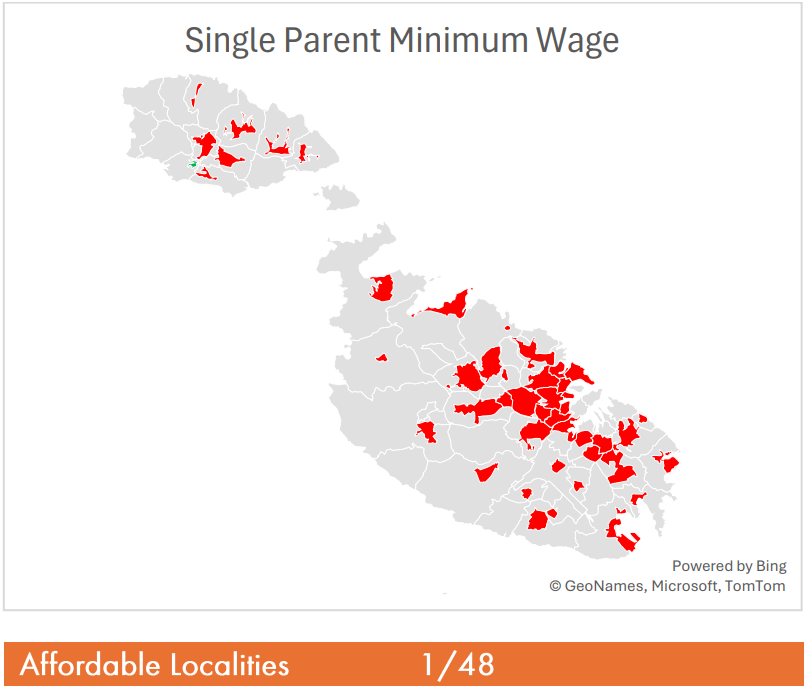 Only one locality in Gozo and not a single locality on Malta was affordable for single parents on a minimum wage, the report found. Graphic: Solidarjetà.
While the Private Residential Leases Act had been a “milestone” in the rental market, a “loophole” allowing landlords to evict tenants after a year and issue a new contract to avoid a five per cent rent increase cap on renewals remained, she warned.
"This imposes massive rent increases between one contract and another, completely going against the spirit of the law and rendering any control useless,” she said.
Axisa MacRae warned that unaffordable rents were also preventing tenants from building up deposits to buy their own properties, impairing their ability to build family wealth.
Warning against applying normal free market rules to the rental market, she stressed that “a roof over your head is an essential, not a luxury”.
'Let's talk'
The Nationalist Party called for a meeting with the government together with all industry stakeholders to "seriously examine solutions so that everyone can once again live with dignity".
"If the Government truly believes in the slogan it used in one of its last budgets – A Country of Quality – it must ensure that every person enjoys a quality life, first and foremost by having a home they can afford to live in without making sacrifices beyond their means," shadow minister for affordable housing Ivan Bartolo said.