Multilateralism v. power politics
Multilateralism promotes cooperation, stability and mutual understanding among nations, writes Edward Zammit Lewis
United Nations Secretary General Antonio Guterres recently issued a clear warning that, unless UN member states pay their membership fees in full and without delay, the United Nations will effectively be bankrupt by July. This is undoubtedly very worrying news for the world, especially for small sovereign states such as Malta.
The origins of the UN personify the importance of multilateralism for global peace and prosperity. Multilateralism allows countries within the international community to tackle global challenges together – such as climate change or global pandemics – by sharing resources and expertise. It promotes cooperation, stability and mutual understanding among nations.
Through institutions such as the UN, the World Trade Organisation (WTO) and others, countries can address issues that transcend borders, ensuring more effective and inclusive solutions. For decades, multilateralism has helped prevent regional and international conflicts and promote peace by fostering dialogue and diplomacy.
In the field of foreign policy, multilateralism contrasts with the concept of unilateralism, which refers to the actions of a sovereign state acting alone and independently of others. This has occurred in the past and may still be present today, particularly when a sovereign state harbours imperialistic ambitions. A recent practical example of this is the Russian aggression against Ukraine.
This also differs from the concept of bilateralism, which refers to formal relations between two sovereign states, for example, in the economic field through free-trade agreements.
Bilateralism has three main disadvantages, as we are currently witnessing in global affairs.
First, it leads to a power imbalance within the international community. Stronger sovereign states dictate terms to weaker ones and, usually, outcomes favour the stronger party.
Secondly, bilateral treaties or agreements are often limited in scope, focusing on specific issues at the expense of broader and more comprehensive cooperation among sovereign states.
Finally, such regional and international agreements between two nations lead to unfair competition among states, to the detriment of their citizens.
All this is being said within the context of the Board of Peace set up by US President Donald Trump, as well as several recent regional and international developments that have created controversy and instability across the world. This initiative by President Trump must be evaluated on its merits. At this stage, greater clarity is required regarding the mandate and role of this Board of Peace before determining whether it could be beneficial for Malta. Therefore, caution is imperative.
The declared aim of this board is to promote peace, which is, undoubtedly, a noble objective. However, new initiatives should complement – not weaken – established institutions, such as the UN and others that play a central role in the international order as we know it, an order that has shielded us from conflicts between states at regional and even global levels.
Malta’s message must always be one in favour of peace, diplomacy, respect for human rights and international law- Edward Zammit Lewis
It is, therefore, essential to assess how such a board could operate, if at all, alongside well-established and existing institutions. I have no doubt that Prime Minister Robert Abela, as he has consistently done over the past six years, will act in the national interest and reach a wise decision, while maintaining the strong relationship he and Deputy Prime Minister Ian Borg have successfully built with the US.
Nevertheless, this situation demonstrates that multilateralism has become more important than ever, in a world where nothing remains as it once was and unpredictability prevails. This was recently and rightly emphasised by President Miriam Spiteri Debono in her address to the diplomatic corps.
Malta’s message must always be one in favour of peace, diplomacy, respect for human rights and respect for international law by all states, especially those with the greatest military and economic power. We must believe in, and promote, multilateralism not only because it is inherently good but because it is in our interest as one of the world’s smallest sovereign states to enjoy equal respect and an equal voice at the decision-making table.
Another advantage of multilateralism is that global problems can only be solved through multilateral approaches and nothing else. This contributes to reducing the risk of conflict, as has been the case over the past 70 years. There is no doubt that humanity must learn from the conflicts of the 20th century; otherwise, we will truly have learned nothing. Multilateralism promotes stability and encourages a predictable, rules-based international order.
Malta’s constitutional neutrality is a fundamental principle of our foreign policy and must be strongly embraced by all. This does not mean that we remain passive in the face of events around us. Malta has, in fact, taken a clear position on Ukraine and also in favour of the Iranian people’s right to self-determination. This distinguishes us from many other nations and, undoubtedly, promotes us as agents of multilateralism on the global stage.
All of this must be viewed within the context of Malta as European Union member state. This fact gives us significant relevance. It is important that Malta continues to work in synergy with other EU countries and supports a coordinated approach to foreign policy. I have always stressed, both in Malta and abroad, that the European Union must adopt swift responses in foreign policy, when necessary, and speak with one strong and unified voice.
It is only in this manner that we, as Maltese, can continue to strengthen the principles of state sovereignty and equality, two principles that protect Malta as a small state while ensuring that we have an equal voice at the table. In this manner, Malta can demonstrate that it firmly rejects power politics and fully embraces multilateralism.
 E
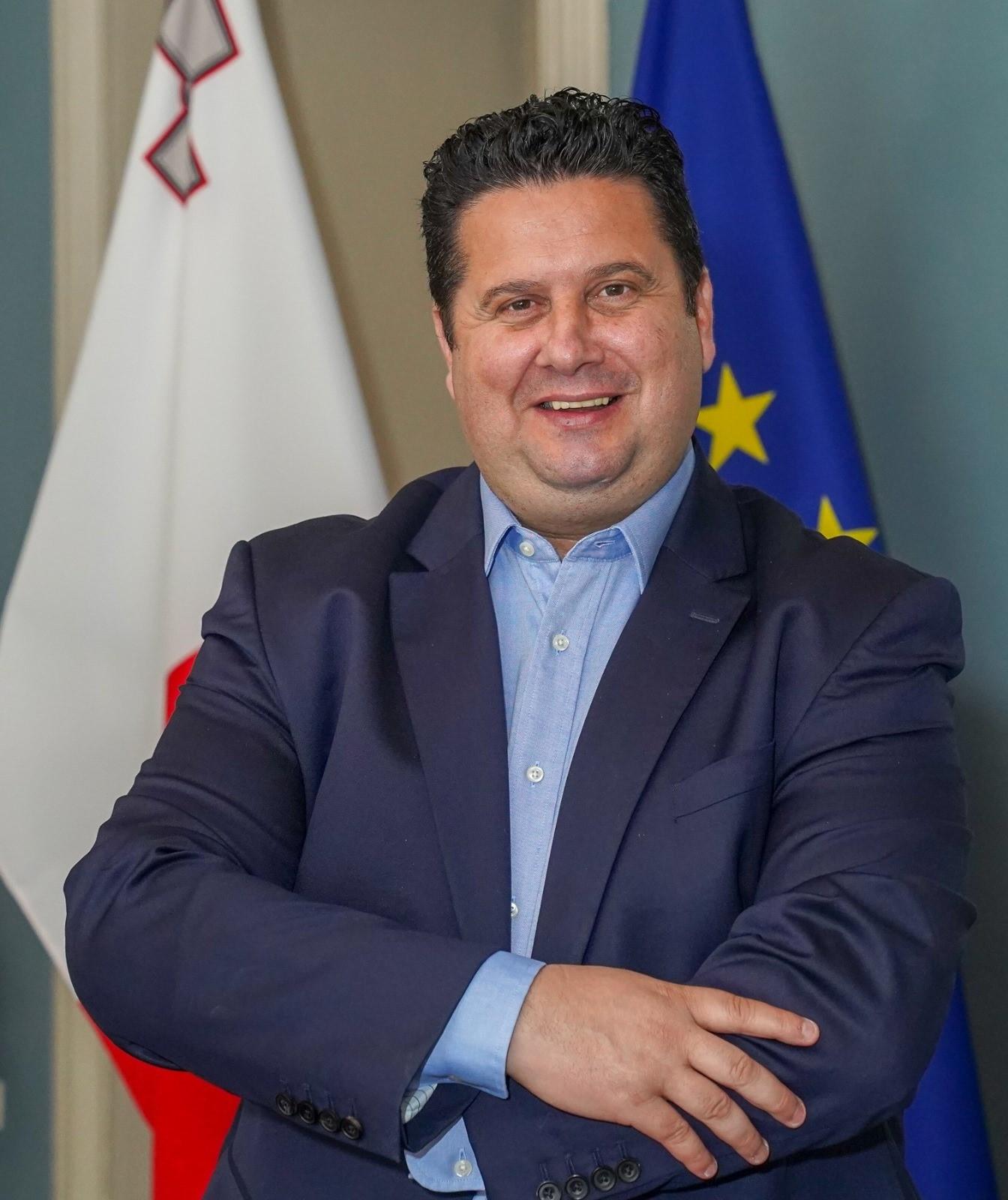
EEdward Zammit Lewis is a Labour MP, chairperson of the Foreign and European Affairs Parliamentary Committee and a former cabinet minister.