He'd served the country for 45 years. Then a historic probe landed on his desk
Charles Deguara opens up on the strain of leading the National Audit Office as he prepares to retire
As he prepares for retirement, outgoing auditor general CHARLES DEGUARA tells Mark Laurence Zammit about the sleepless nights spent over the biggest probes and the personal toll of having to investigate former colleagues. Despite the discomfort, he insists his duty was clear: an oath to serve without fear or favour.
Charles Deguara sat down for this interview ahead of his retirement and before a constitutional amendment that will allow him to stay on in his post until a replacement is found.
After a decade at the helm, Deguara warned that a culture of on-the-phone deals and a chronic lack of documentation remain among the biggest threats to how taxpayers’ money is spent.
Nonetheless, he is hopeful, saying that, despite it all, public entities have been largely cooperative during his tenure and have taken on board about 85 per cent of his office’s recommendations.
Deguara, who joined the public service in 1977 as an employee at the Water Works Department, described the weight of responsibility that comes with auditing high-stakes government contracts. He specifically pointed to the massive probe into the hospitals deal, which was eventually annulled by the courts.
“I lost sleep over that, especially when I saw both court judgments that rescinded the deal heavily cited the NAO’s reports,” he said, suggesting that any oversight could have landed him and his office in legal hot water.
“When we would publish reports like that one, I would feel the responsibility weigh on me heavily. They carry great implications because you could smear someone or let someone off the hook mistakenly.”
The NAO’s investigation into the hospitals concession was one of the most scathing in history. It found evidence of collusion between government officials and Vitals Global Healthcare (VGH) before the tender was even issued and during the concession period.
Most significantly, in its last of three reports, the NAO had found that then minister Konrad Mizzi had misled cabinet over a deal with Steward Health Care that obliged the government to pay it €100 million if the hospitals contract was annulled.
Threat
While the hospitals deal caused Deguara a lot of stress, it was a different, separate case during which he received a written threat. He recalled receiving a letter from a private contractor involved in another audit who warned of a massive lawsuit if the NAO’s findings cost him future work. The matter was only resolved after the parliamentary speaker intervened.
“I immediately went with the letter to [speaker] Anġlu Farrugia who, as always, took immediate action and summoned the contractor to appear before a parliamentary committee to answer for his actions,” he said.
“The contractor eventually had the good sense to withdraw his threat and apologise, and I dropped the case. I’m very thankful to Farrugia for his support in this case and in many others.”
High-profile scandals aside, Deguara identified a more systemic issue rooted in Malta’s small-island psychology: the tendency to do business over the phone rather than on paper.
“One of the biggest issues we faced in auditing was the lack of documentation,” he said.
“Many decisions are made without anybody formally documenting them. In a small country, people feel they can trust each other, so deals and procurement are, sometimes, secured over the phone because it’s quicker and easier. But when an auditor looks into how a decision was made, they find nothing. We found insufficient documentation in the vast majority of cases we audited.”
He noted that, though this is often a genuine oversight, it can also be used to “deliberately hide wrongdoing. An auditor must live with evidence and die with evidence. If nobody wrote anything down, where is the transparency and the accountability?”
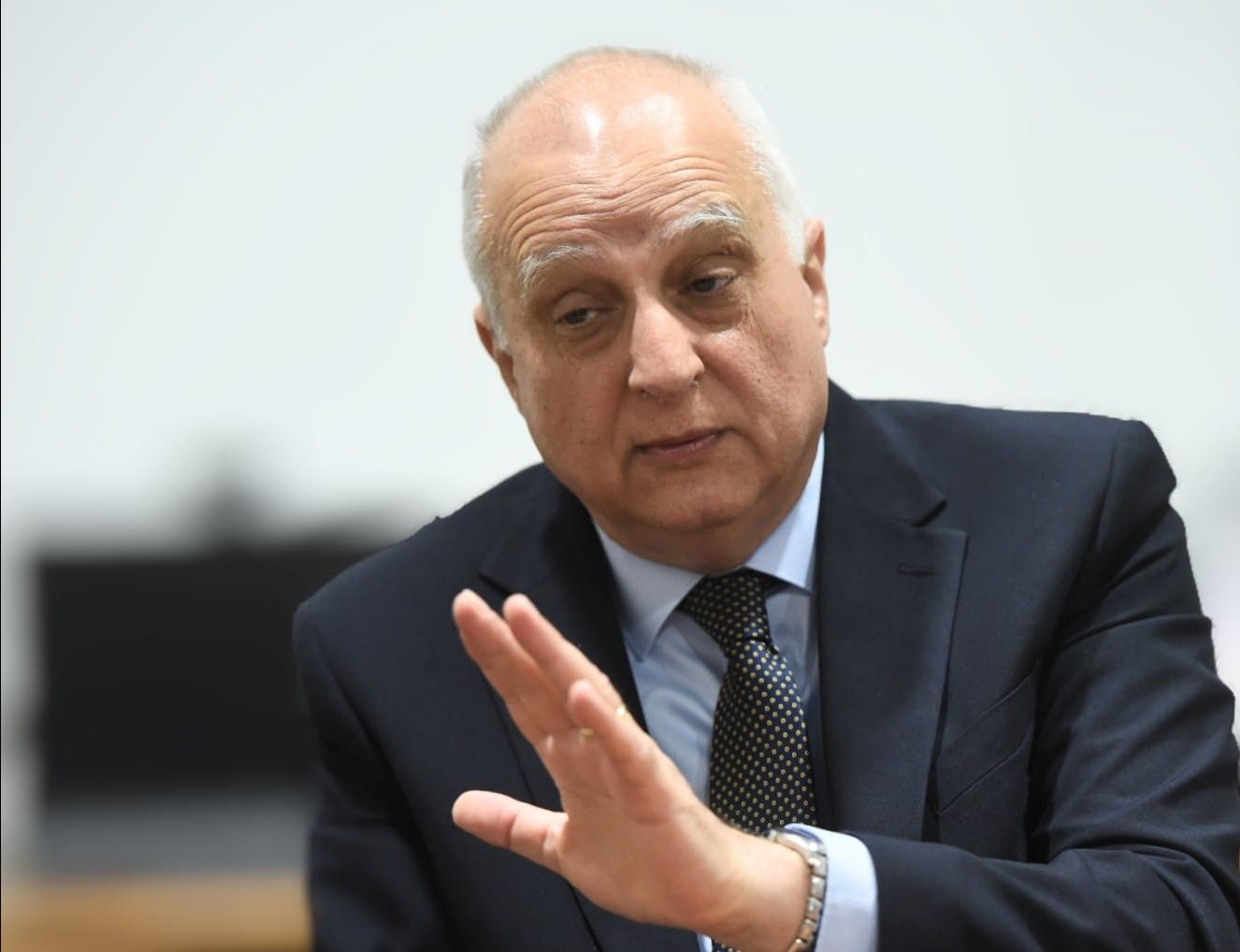 Deguara said lack of documentation in audits was a major issue.
Awkward
Deguara’s 18-year tenure at the NAO began with eight years as deputy auditor general, followed by a decade at the helm as auditor general.
Having worked for decades in the public service, he admits that, throughout his tenure, some of the most difficult moments were when he had to investigate people he knew, some of them former colleagues. He admits he would feel “awkward”, quickly adding that an oath is an oath.
“When I took this office I made a promise to the people: to serve without fear or favour. And that promise won over everything. Our work must be objective, fair and professional, and it can only be so if we do it without fear or favour,” he said.
What gave him peace of mind was that any report he published was based on documented evidence, he said. And, during his tenure, his office published quite a few big reports.
Apart from the hospitals deal, he also spearheaded investigations into the Electrogas deal, the ITS land deal, Labour MP Rosianne Cutajar’s ITS consultancy and, most recently, the Fortina deal, among others.
His office found “multiple instances of non-compliance” in the Electrogas deal, slammed the ITS land deal as an “unorthodox disposal” of land through a “gross shortcoming in governance” in 2020, and, three years later, in a separate investigation, found Cutajar’s ITS job was “fraudulent” and “irregular”.
“Our job is to make sure the people’s money is being spent in the right way and, in doing that, to strengthen good governance and improve the public service,” he pointed out.
“But we’re not the police. We don’t have executive powers and we shouldn’t have. Our job is not to catch entities in the act to report them. Rather, we’ve become more like a doctor over the past decade. We identify shortcomings and offer recommendations for improvement.”
Prime ministers
He said that, for as long as he has held office, no government or prime minister ever attempted to influence his office’s decisions.
“Absolutely never. I’ve worked under Lawrence Gonzi, Joseph Muscat and Robert Abela, and nobody ever tried to influence us,” he said. “Not only that: we were always granted extra funding when we asked for it. To me, this is a sign of political maturity from both sides.”
Since 1997, the NAO has also been run completely independently, he said – another feat of bipartisan agreement. This means no minister can give jobs for votes at the NAO.
“We issue calls for applications and choose our own employees, according to our own requirements,” he noted. “We have very highly skilled people here, all with tertiary degrees, and I’m very proud of them and thankful for their work. Their job is not easy, but they do it well.”
The NAO employs 55 auditors, 65 per cent of whom are women. It also employs another dozen in support services.
Although his term ends this month, Deguara’s departure comes at a sensitive time. His successor must be agreed upon by a two-thirds majority in parliament, a feat that has proven difficult in the current political climate, especially as Abela and Alex Borg continue to struggle to agree on the next chief justice.
Deguara confirmed he is willing to stay on “for a little longer” if a deadlock prevents a new appointment by his last day.
Reflecting on his 49-year career, he remained defiant about the value of public service. “If I had to start over, I’d do it all over again. Without a doubt. I have no regrets.”