Airbrushed from history: The real heroes of the 1942 Gozo wheat saga
How the National Farmers Union helped save wartime Malta from starvation
In his novel The Gilded Age, Mark Twain offered a telling observation about the connection between past and present: “History never repeats itself, but the… present often seems to be constructed out of the broken fragments of antique legends.” Among the “antique legends” now firmly part of our collective memory is the oft-repeated saga of bishop Michael Gonzi’s role in the Gozitan wheat harvest of summer 1942.
Sometime in the first week of July, Gonzi was summoned to an urgent top-secret meeting with the governor and two British officials from the ministry of food.
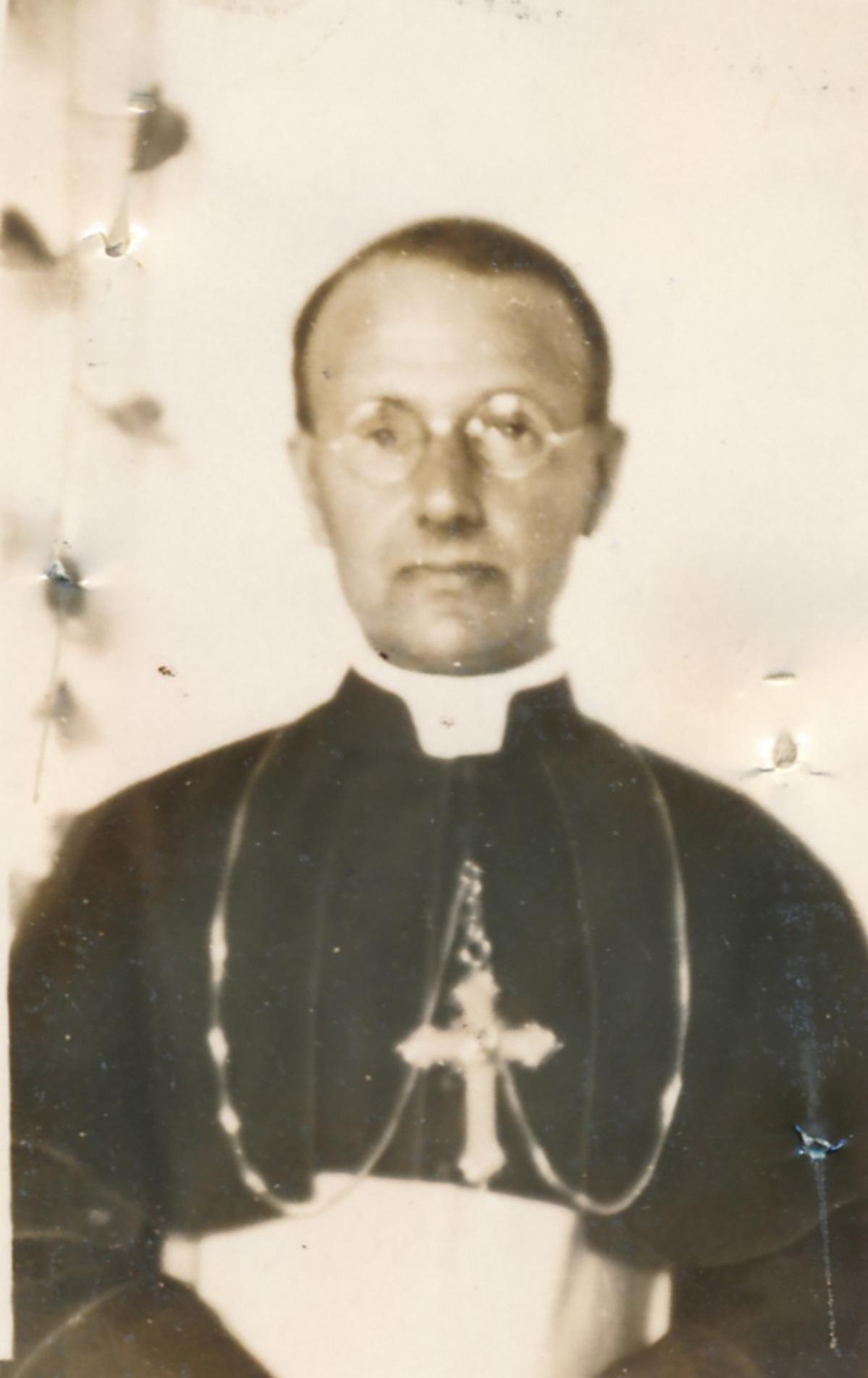 Bishop of Gozo Michael Gonzi in 1933. Photo: National Archives of Malta
Lord Gort, who had been in the position for only eight weeks, confided in the bishop that the Maltese islands’ wheat provision was set to run out in less than a month unless more could be sourced from the countryside.
Gonzi was well aware that a bishop’s influence would generate much more esteem among the religiously conservative farmers. He was provided with extra rations of fuel which, over the following days, he used to tour the smaller island, persuading or chastising the Gozitans to sell all their harvest to the colonial government instead of hoarding it for their families.
Some sources report the bishop as having “helpfully pronounced that hoarding was a mortal sin”. In two interviews he gave in the 1970s, Gonzi recalled how he had phoned the governor and told him to “send two trucks tomorrow morning and you will have all the wheat of Gozo. He was ecstatic! They were dispatched. That was what saved the day.”
The Gozitan peasant farming communities – who have been unfairly memorialised as having hidden their wheat harvests in the darkest days of the siege – were either convinced, cajoled or forced to part with their precious yields, leading to the release of surplus stocks. This in turn pushed the islands’ potential surrender date back by a few weeks until mid-August 1942.
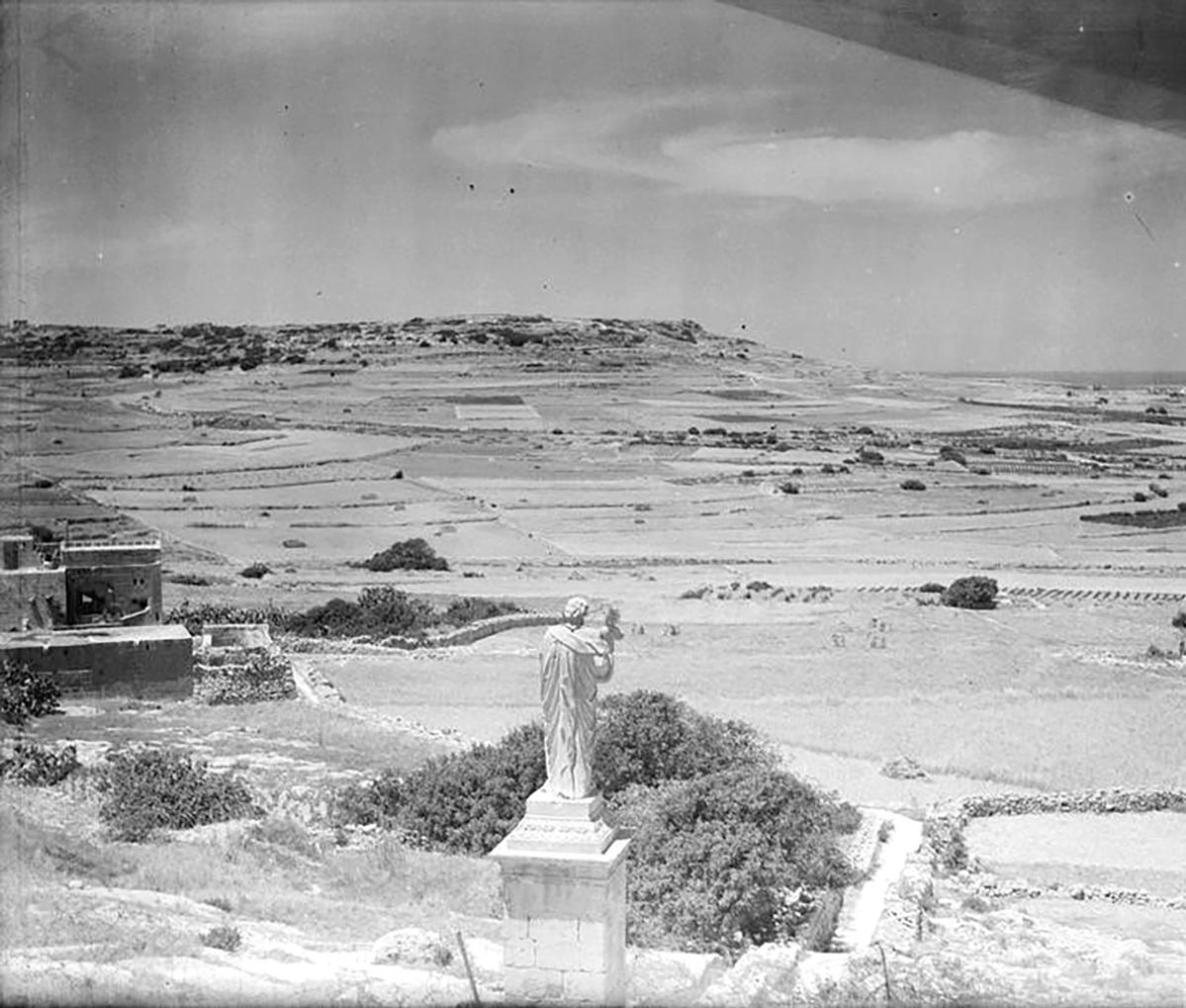
The cereals crop was scattered throughout the islands on some 8,000 holdings. It would have been easy for farmers to hide their grain. Photo: Imperial War Museums
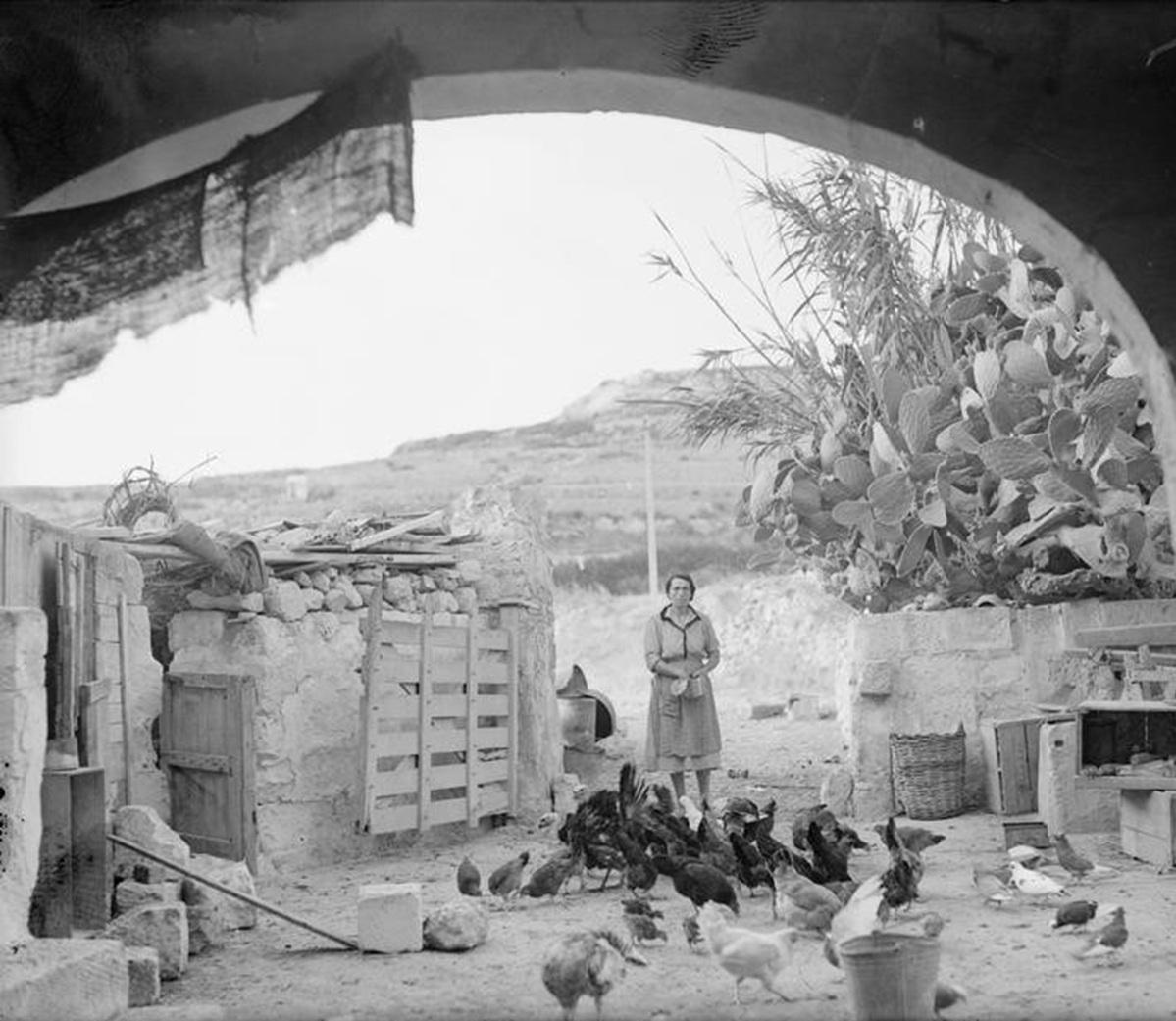
The farmers’ geographic isolation would prove a challenge. Photo: Imperial War Museums
However, while the bishop’s clout could have played a part, this story and its regurgitation has over the decades cast a long shadow over another simultaneous episode which arguably had more influence on the Gozitan farmers.
The propaganda campaign undertaken by the National Farmers Union of Malta and Gozo (NFU) during the summer of 1942 has unjustifiably been airbrushed out of the islands’ wartime history.
 The National Farmers’ Union logo. Photo: National Archives of Malta
The NFU was set up in the immediate aftermath of World War I and it aimed to improve the conditions of Maltese farmers. It had attempted to break up the import-export cabal, which by then had cornered the market. However, by the late-1930s, the union had shrivelled to a shadow of its former self.
With the newspaper baron Lord Gerald Strickland as its president – and well within the grasp of the Constitutional Party – the union’s membership had dwindled to an abysmal amount, having no influence whatsoever. However, fascist Italy’s declaration of war in June 1940 served to catapult the NFU up the list of colonial priorities, with the powers-that-be eyeing cooperation in the name of national security.
In 1939, Gozo was described as “the island of the forgotten” (“il-gżira tal-minsija”). Fountains had been shut off due to water shortages, and water-controlled areas were introduced, which acutely suffocated irrigation. By early 1942, Gozo’s flour requirements were stranded in Malta, due to the temporary suspension of trading between the islands, while Rediffusion was still limited to Victoria and Mġarr, thus cutting the Gozitans off from vital information about the outside world.
From spring 1942 onwards, the smaller island became progressively more important to Malta as a source of local food supplies. The subsequent period was marked by a series of energetic measures designed to make as much use as possible of Gozo’s produce during the period of acute food shortage.
The NFU had branches all over Malta but only one operated on Gozo. Exploiting these village networks would have significantly lessened the problem of communication. There was no criss-cross network of farmers’ groups indigenous to every village, so the value of propaganda disseminated in Gozo was of a more considerable nature.
In June and July 1942, the union initiated an intense information campaign in Gozo aimed at making public the dire food situation, hoping to pre-empt the coming wheat harvest. In a series of public meetings held in nearly all the main squares, Roger Strickland, honorary president of the union and nephew of Gerald, and Carmelo Zammit-Marmarà, secretary-general of the union and liaison chief with the Department of Agriculture, divulged that wheat stocks were dangerously low, while simultaneously making every effort to convince Gozitan farmers of the essential need of handing over their cereals to the government.
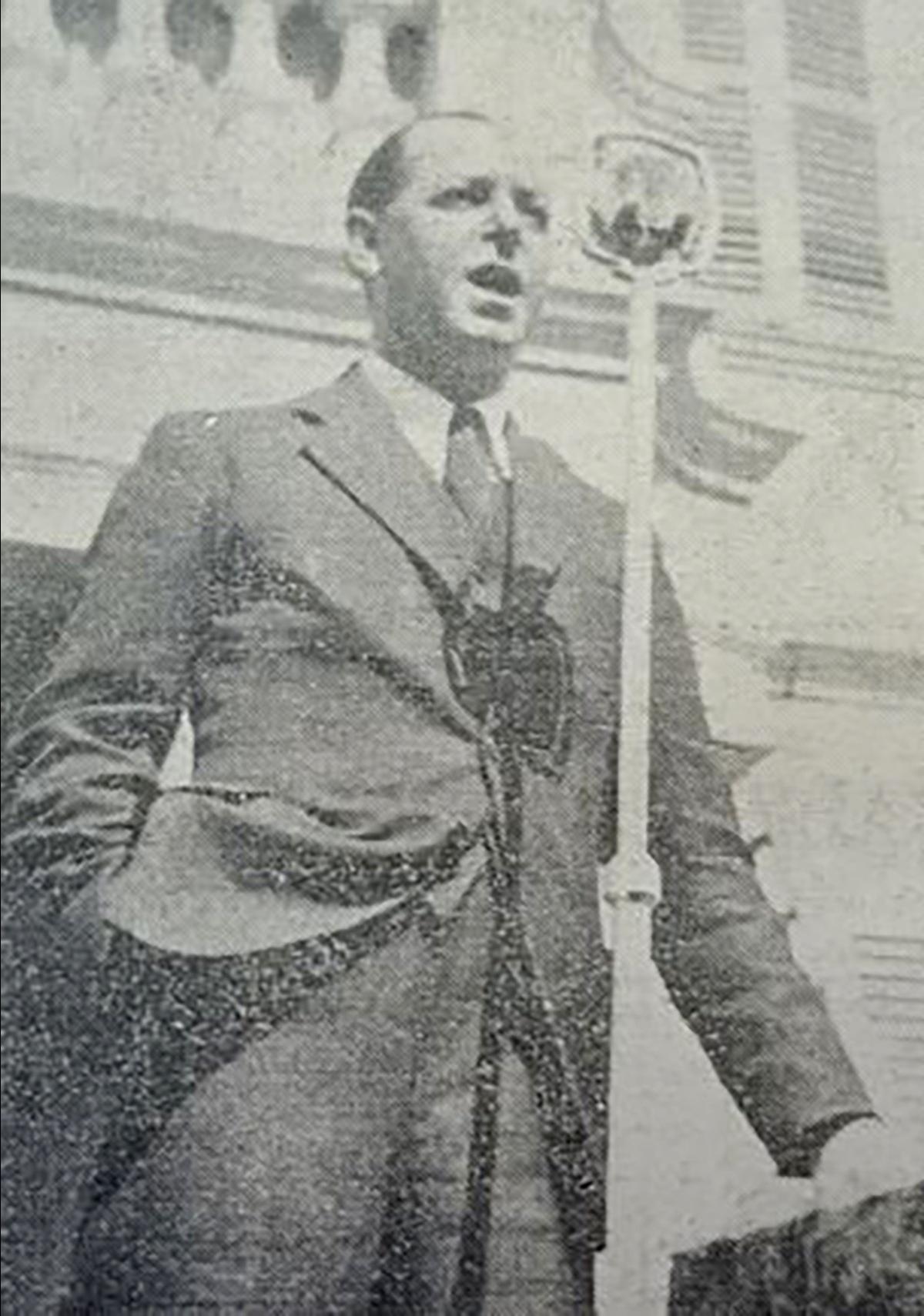
Wartime NFU president and leader of the Constitutional Party, Roger Strickland. Photo: Il-Berqa
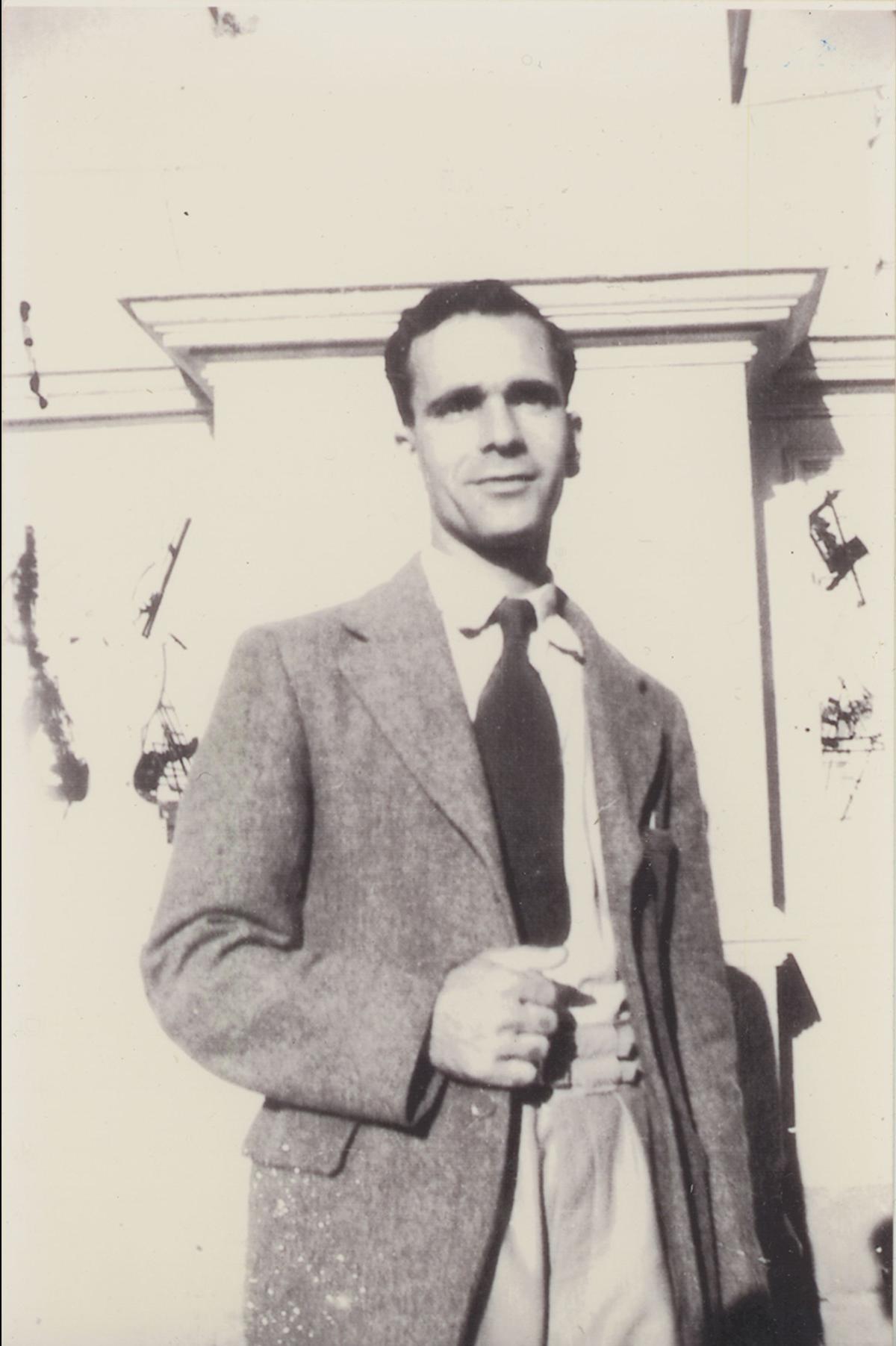
Kelinu Vella Haber. Photo: Frances Arpa/Joyce Darmanin
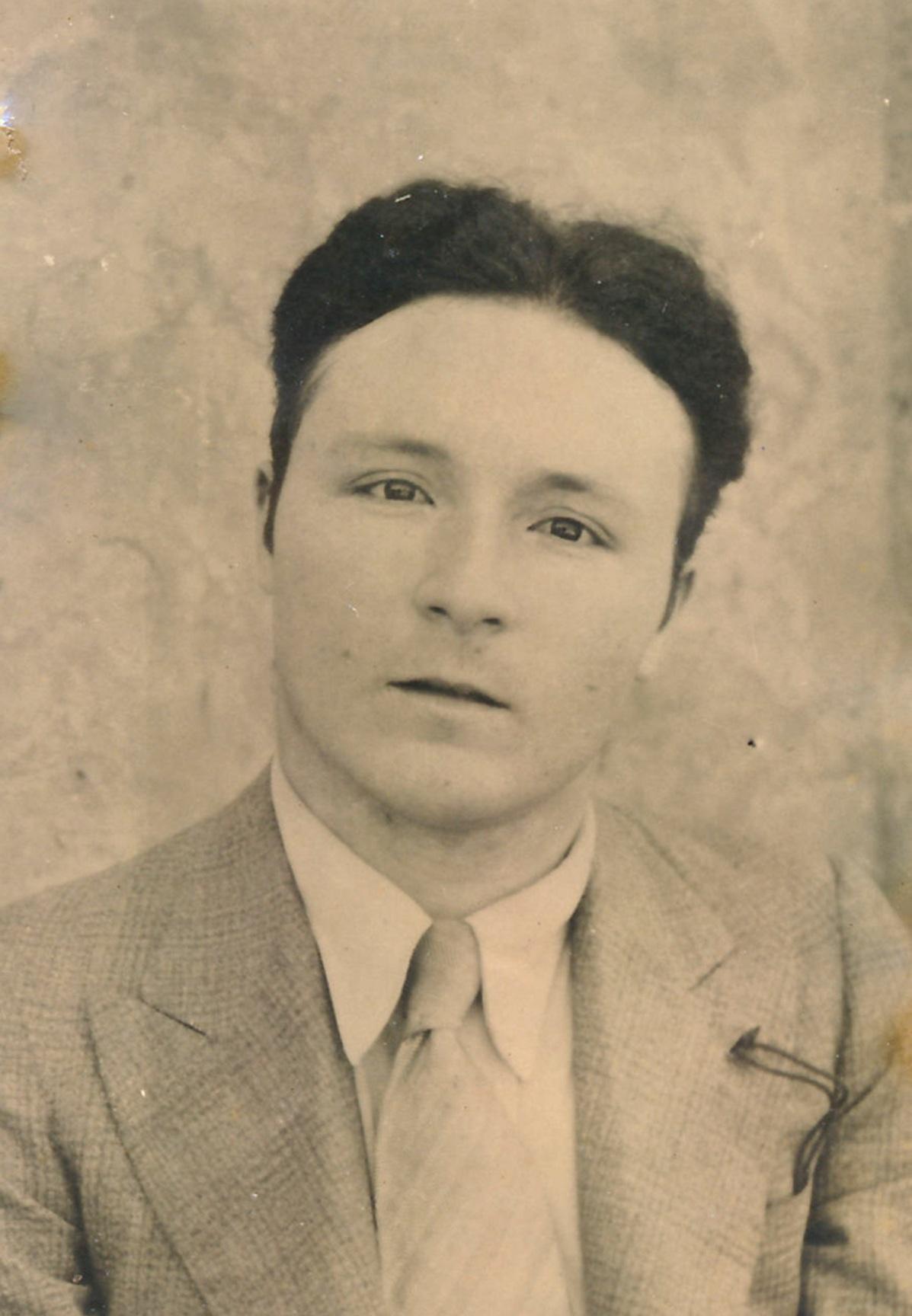
Ġorġ Pisani. Photo: National Archives of Malta
If the islands were to capitulate, it was highly unlikely that the Germans would not have allowed farmers to keep their wheat, or that the bread ration would be maintained at its then existing level.
On June 7, the two union officials held public meetings in Victoria, Nadur and Xagħra. On June 21, meetings were held in Xewkija and Żebbuġ, followed by others in Għarb and Kerċem. A week later, another meeting was held in Victoria, followed by another one in Nadur.
The point reiterated was that farmers were on the ‘home front’ and their contribution to the war effort could not be overestimated. Reflecting the urgency of the situation, the president and secretary-general held more than one meeting on the same day on more than one occasion.
The Department of Agriculture found farmers were fairly reluctant to sell off their cereal crops. A low standard of living coupled with state inaction in the agricultural sector had directly led to the hoarding of wheat stocks and the spread of a black-market economy. Therefore, an appeal to their patriotism unsupported by any other incentive was unlikely to succeed.
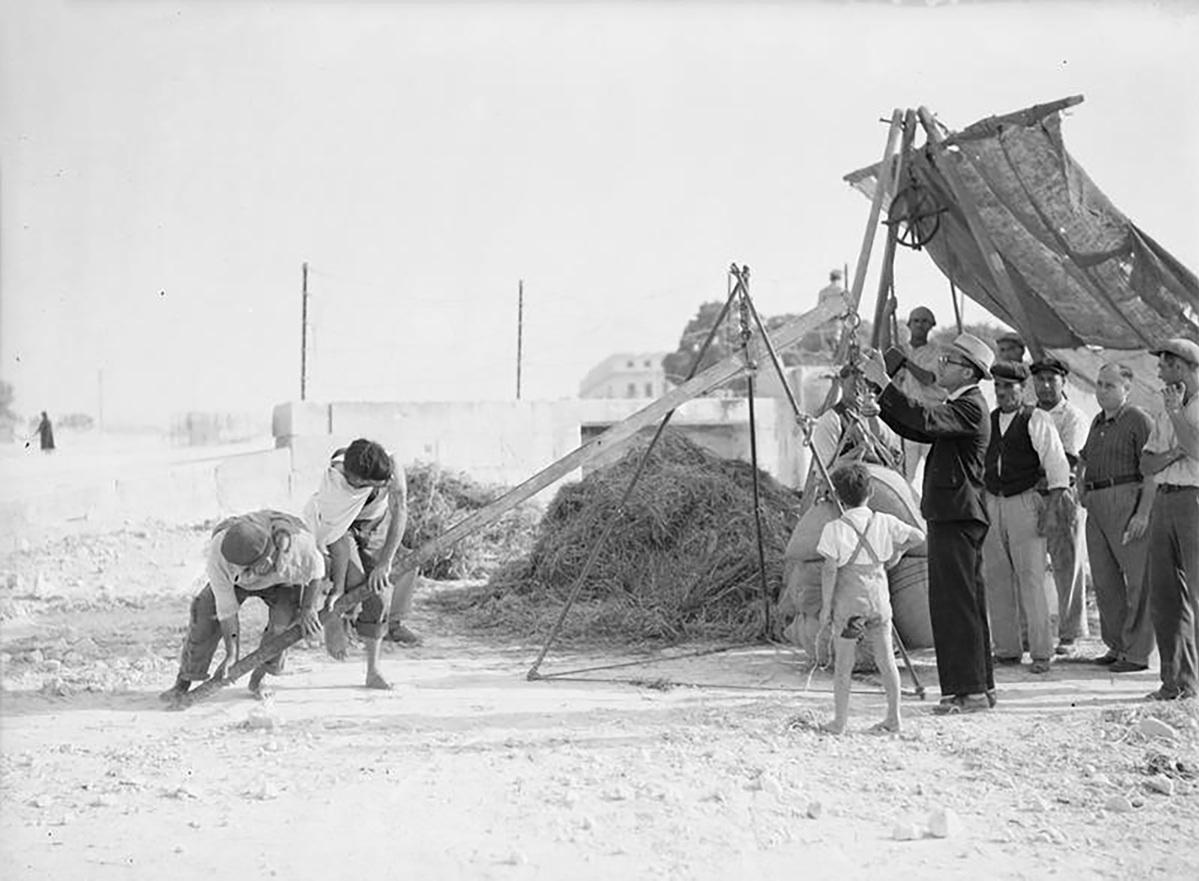 Bags of grain being weighed on August 17, 1942. Photo: Imperial War Museums
The patriotic angle along with the financial incentives on offer were rammed home by the two union officials with the help of specific individuals in certain localities. In Xagħra, Tony Scott, honorary president of the NFU Gozo branch helped Strickland and Zammit-Marmarà in their campaign.
Another two who played a significant part in that summer’s propaganda blitz were Ġorġ Pisani and Kelinu Vella Haber. Pisani, who was gazetted as assistant information officer for Gozo on June 2, 1942, played a role in addressing farmers, and did so on July 12 in Nadur.
After weeks of having persistently lectured about the situation then unfolding across the channel, inroads were finally made as the speakers succeeded in getting the farmers to hand over 14 tonnes of wheat by July 13.
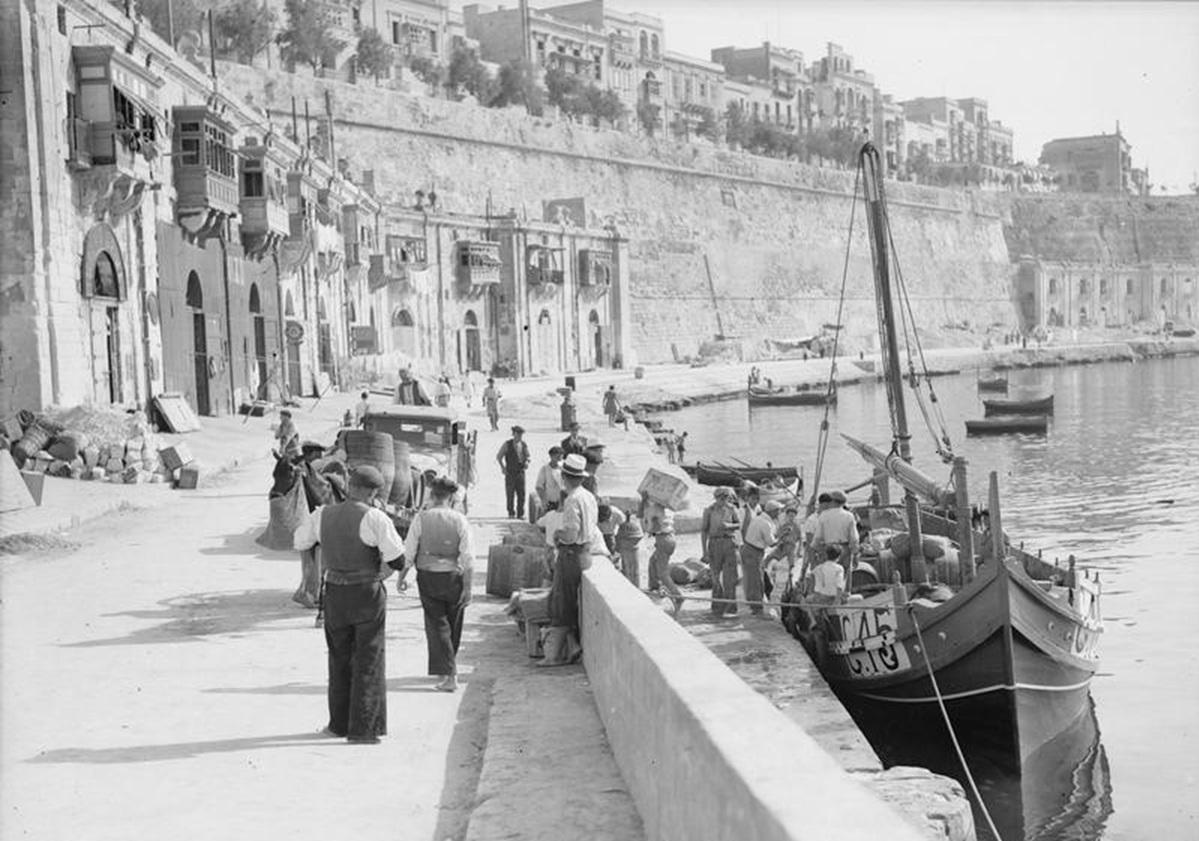 Unloading supplies off Gozo boats at the Valletta waterfront. Photo: Imperial War Museums
On the initiative of the indefatigable Vella Haber, an NFU branch was set up to represent the farmers in Nadur and nearby Qala and Għajnsielem. Vella Haber wrote to Gort that “the farmers of Nadur wished to emphasise their readiness to endure by God’s help any sacrifice whatsoever, included that of offering the greatest possible amount of grains for the national and final victory”. It is estimated that 28 tonnes of wheat were harvested from the fields of Nadur on July 13 and 15, 1942.
On July 19, the NFU and the Information Office had planned to hold a public meeting in Żebbuġ. Along with Pisani, acting commissioner for Gozo George Ransley was to be present. The audience of farmers was mutinous and openly hostile to the officials.
Upon investigation by Pisani, the farmers present disclosed that they were short of kerosene, that rationing supplies were not reaching the village and that most essential commodities were lacking. According to what Pisani told author Charles Bezzina decades later, the local farmers were pacified after the promised supplies were delivered.
Pisani and Ransley later held a meeting in Żebbuġ and somehow got their wheat, which was eventually collected during the following weeks.
Had it not been for the Gozitan wheat, starvation could have possibly consumed the garrison and the besieged population. The islands may very well have crossed the tipping point
By August 8, 2,000 tonnes were harvested. Even though this wasn’t enough, it proved sufficient in keeping the colony afloat until the remnants of Operation Pedestal reached the islands barely a week later.
Had it not been for the Gozitan wheat, starvation could have possibly consumed the garrison and the besieged population. The islands may very well have crossed the tipping point.
By the time Gort had requested Gonzi’s help, the massive propaganda drive instituted by the NFU and the Information Office in Gozo was already in full swing. To single out Gonzi’s actions as being pivotal to the final outcome is to miss the mark and completely omit the role undertaken by individuals on the ground during that critical period.
In June 1943, Gort spoke highly of Gonzi to King George VI when the latter visited Malta. Gonzi was made bishop of Malta in December, and the Gozo branch of the NFU congratulated him on his appointment. He was promoted to archbishop of Malta when the colony was elevated to an Archdiocese in 1944. He was awarded a KBE in the 1946 New Years Honours, allowing him to be called Sir Michael Gonzi. In stark contrast, the NFU was disestablished that same year. In this way the union died with a whimper and its story seemingly fell through the cracks of popular memory.
Acknowledgements
The author thanks Frances Arpa and Joyce Darmanin for graciously providing a photo of their father, Kelinu Vella Haber.