From National Library history to 3D-printed porcelain sculptures
Francesca Balzan's 'Incunabula 1474–2025' exhibition bridges the historical and the contemporary
Currently showing at the National Library of Malta, Valletta, Francesca Balzan’s solo exhibition Incunabula 1474–2025, curated by Justine Balzan Demajo, presents a new collection of sculptures.
The exhibition bridges the historical and the contemporary through an innovative sculpture installation, inspired by the National Library’s collection of early printed books: the 15th-century incunabula.
The base of these sculptures is 3D-printed in porcelain, and from there, the artist’s hand takes over, completely manipulating and reshaping the form to give each sculpture an individual character.
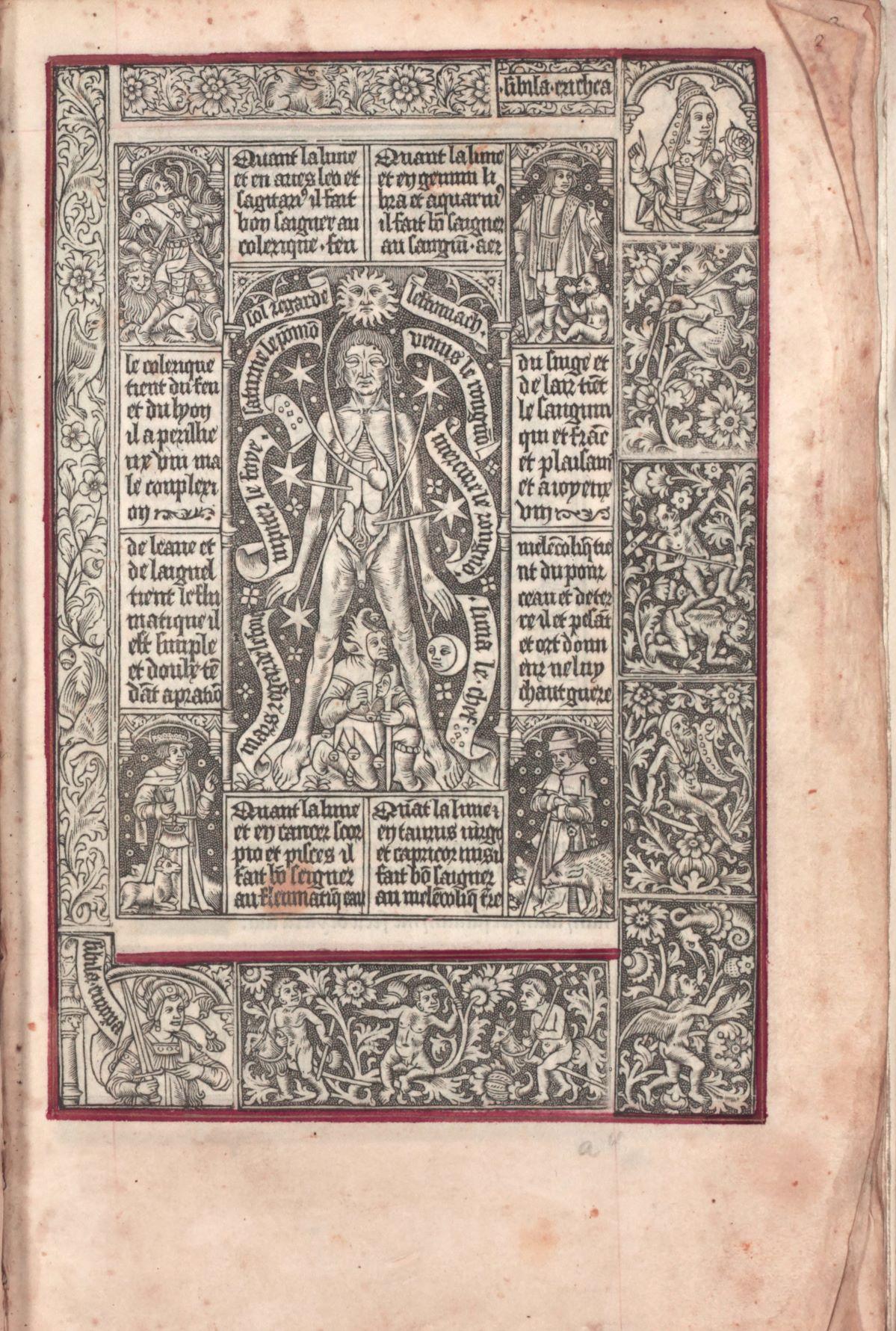 A page from Incunabula 24, a Book of Hours printed in 1497. Image courtesy of the National Library of Malta
The contrast between the precise lines created by the printer and the distinct, sometimes rough yet detailed features moulded by Balzan creates an engaging dialogue.
One that highlights the coexistence between the digital and the handmade, reminding us that, even in an age of rapid technological progress, the human hand and mind remain profoundly relevant, and can, in many ways, still overpower the machine.
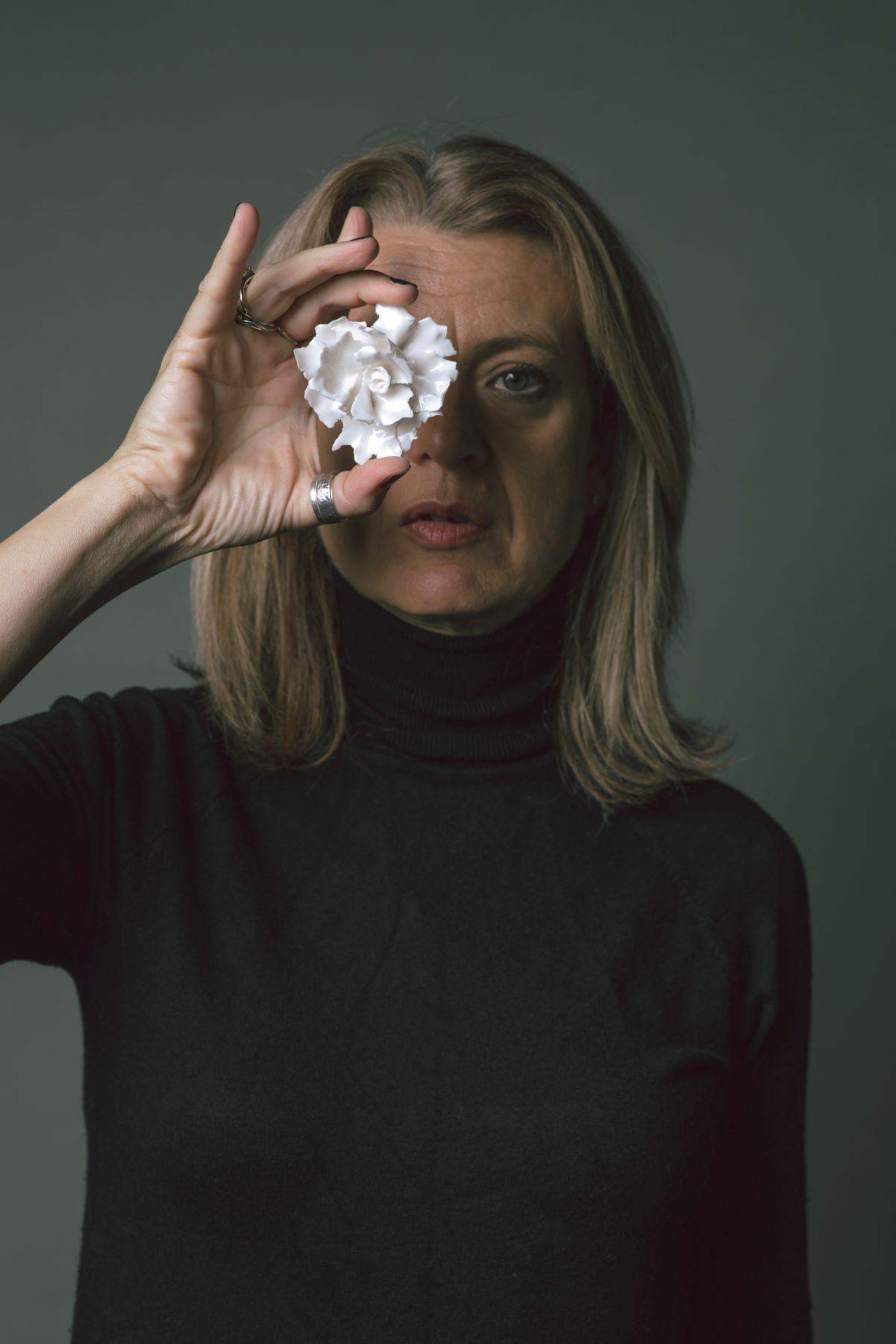 Francesca Balzan. Photo: Therese Debono
Times of Malta catches up with the artist to find out more about her current exhibition.
TM: Your exhibition draws a parallel between the birth of printing in the 15th century and the early stages of 3D printing today. What did you discover while treating these early 3D prints as “incunabula” in their own right?
FB: It felt like I was covering ground that had not been covered before and in a way it is – I am not aware of any other artist working in this manner. This gave me the freedom to improvise and to manipulate the print as I wished. I did however discover, to my detriment, that the printer was temperamental and that the porcelain clay while being printed did not always obey and had a tendency to flop making it impossible to print the entire head in one go.
Together with the technologist, Perit Matthew Catania of Ambitious Studios, we had to devise methods to circumvent these problems, splicing the head into five different segments to prevent cantilevers etc. There was no established practice I could read up about or refer to; I just had to invent my own!
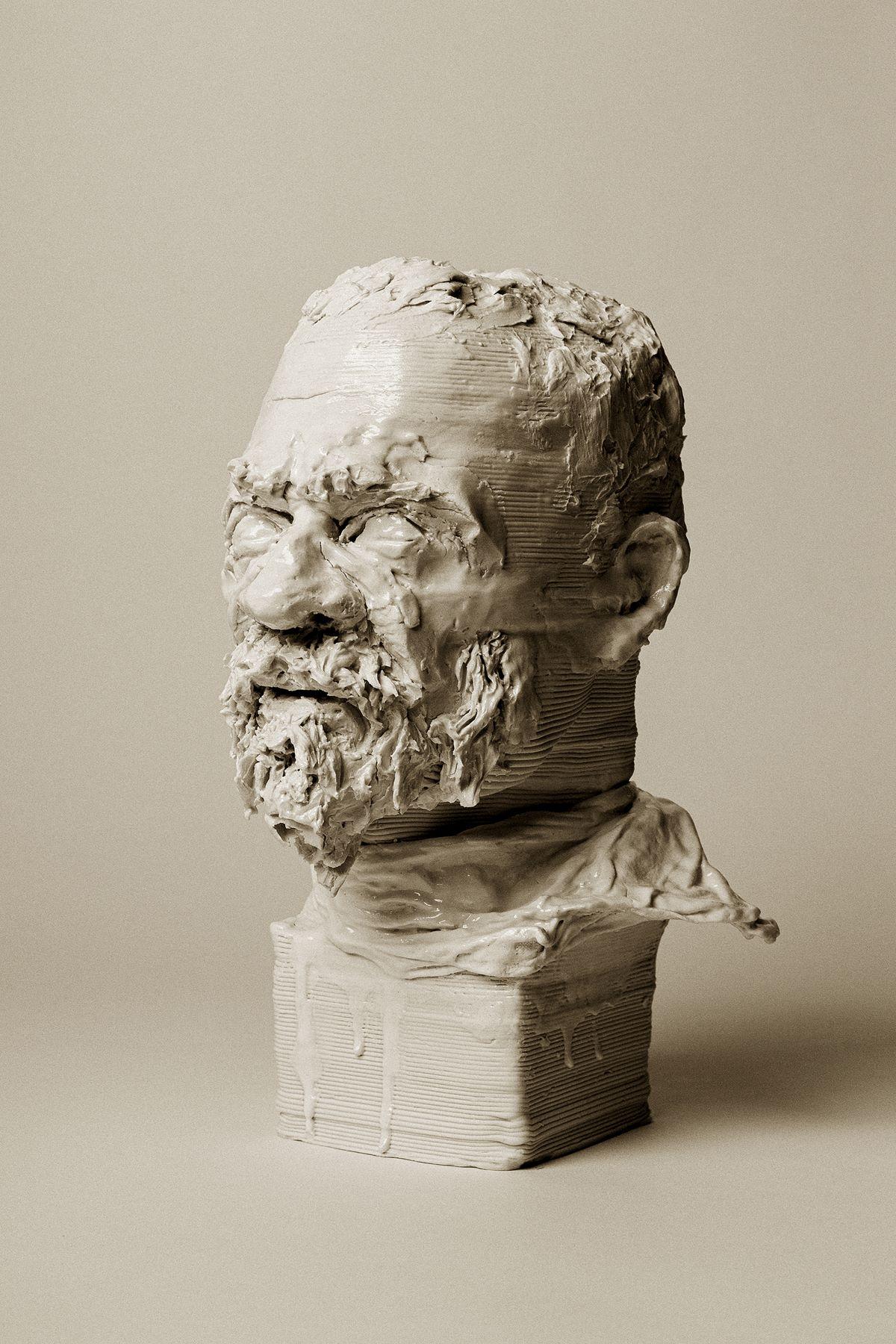 One of the sculptures
TM: In this project you deliberately intervene in, disrupt and reshape machine-generated forms. How has this process of “overwriting” the digital influence your understanding of authorship, control and the human-machine relationship?
FB: This is really what the exhibition is about. We are at the point of singularity, the point in time when artificial intelligence exceeds human intelligence and this is something I think about constantly.
I still feel that the human mind, heart and hand has some advantages over the machine and the exhibition is a demonstration of this. We still have the upper hand. But just – and perhaps not for much longer.
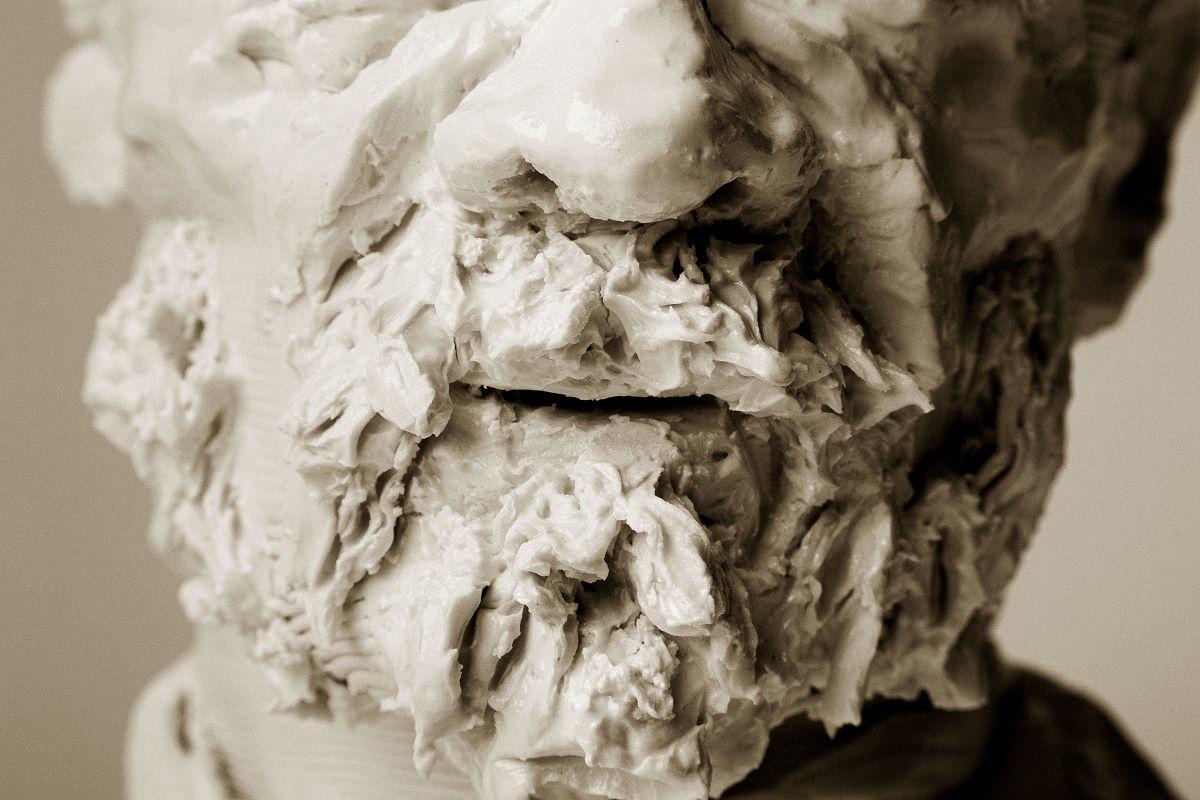 A detail of one of the sculptures.
You can clearly see in every sculpture which passages are overwritten by me, turning generic stylised robotic faces into individuals with life-like expressions. Moreover, I glazed only the places where I had intervened with my hand-modelling and left the concentric layers of the 3D print unglazed to make it obvious to the viewer where I had intervened.
Ultimately the entire sculpture is conceived by me. I used the machine as a tool and overwrote each print to the extent that each resulting character is unique and clearly made by me. You could see the 3D print as a generic skull and the freehand sculpting as the flesh that makes the sculpture a human visage with character, individuality and spirit.
 A page from Incunabula 12, showing the author’s portrait printed in 1496. Image courtesy of the National Library of Malta
TM: The National Library of Malta is not just the venue but a conceptual anchor for the exhibition. How did engaging so intimately with its incunabula collection and architectural space shape the exhibition’s narratives and material choices, particularly your decision to work exclusively in porcelain?
FB: When the curator, Justine Balzan Demajo, early in 2024 first proposed an exhibition at Bibliotheca and suggested I work in porcelain, I loved the idea. The beauty and value of porcelain lies in its pure white colour and the ability to thin it out so much that it becomes translucent.
These qualities allow it to resemble paper, echoing the materiality of the collections at the National Library. The incunabula gave me the characters I depicted, whether they were the authors, the 15th-century printers, the owners of these books or even the researchers and librarian who pored over them.
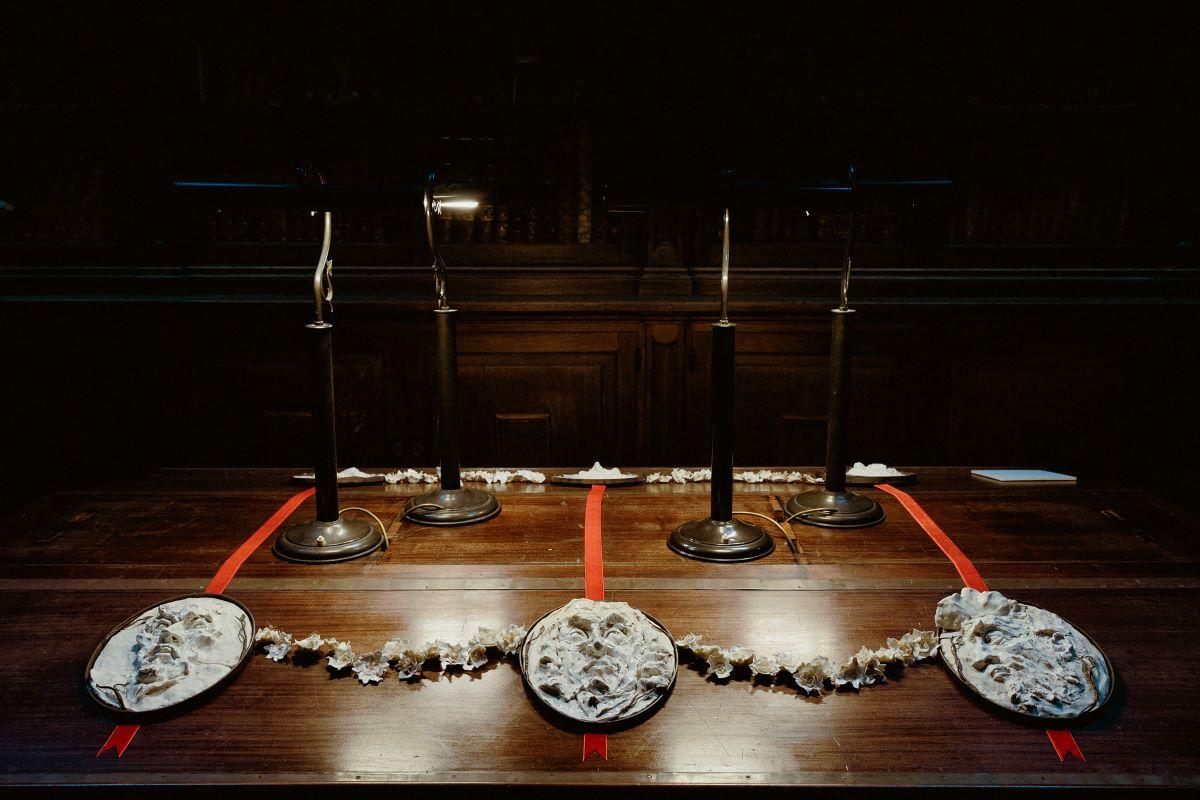 Installation view of the sculptures in place at the National Library of Malta.
The monumental architectural space of the Bibliotheca is neo-classical in expression and white porcelain is one of the materials associated with that period. It was therefore an appropriate, precious material to use immediately evoking that period.
Moreover, the existing empty oval shapes intended for high relief portraits present in the ceiling of the staircase (I’m not sure why they were never completed) prompted the idea to create high-relief porcelain cameos with characters drawn from the incunabula.
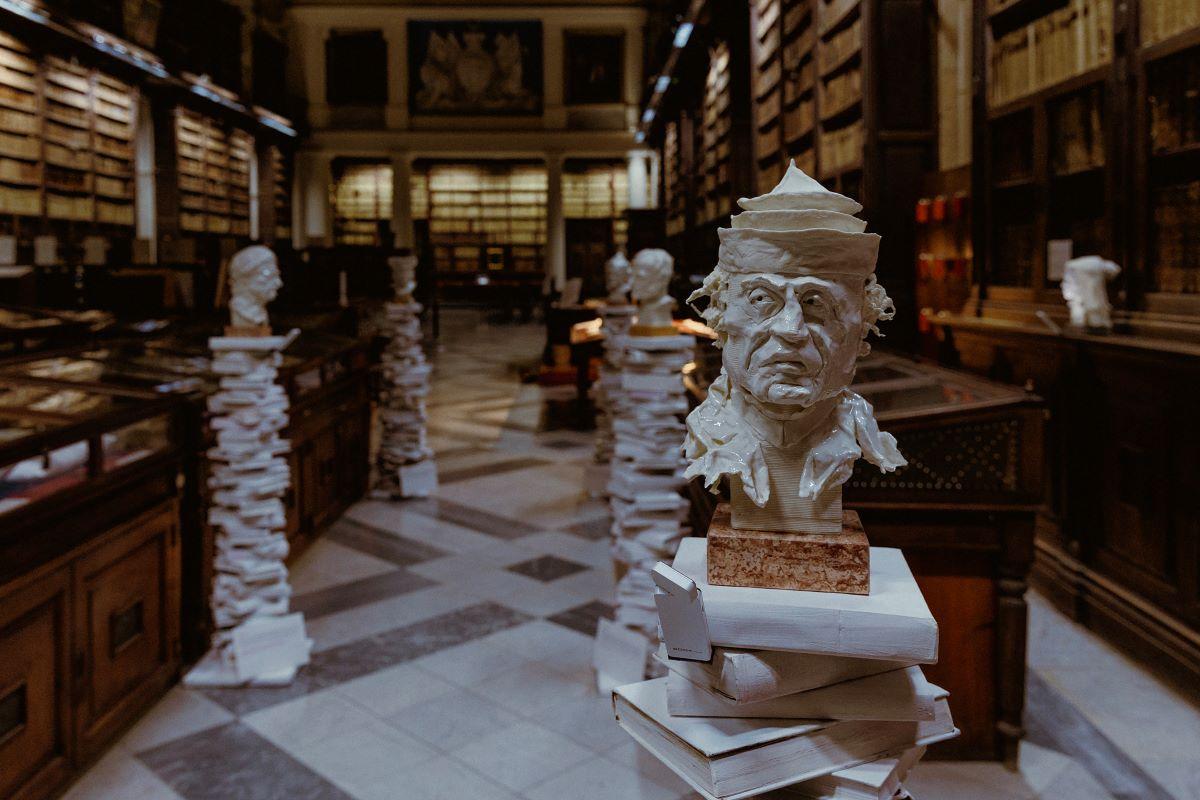
Installation views of the sculptures at the exhibition.
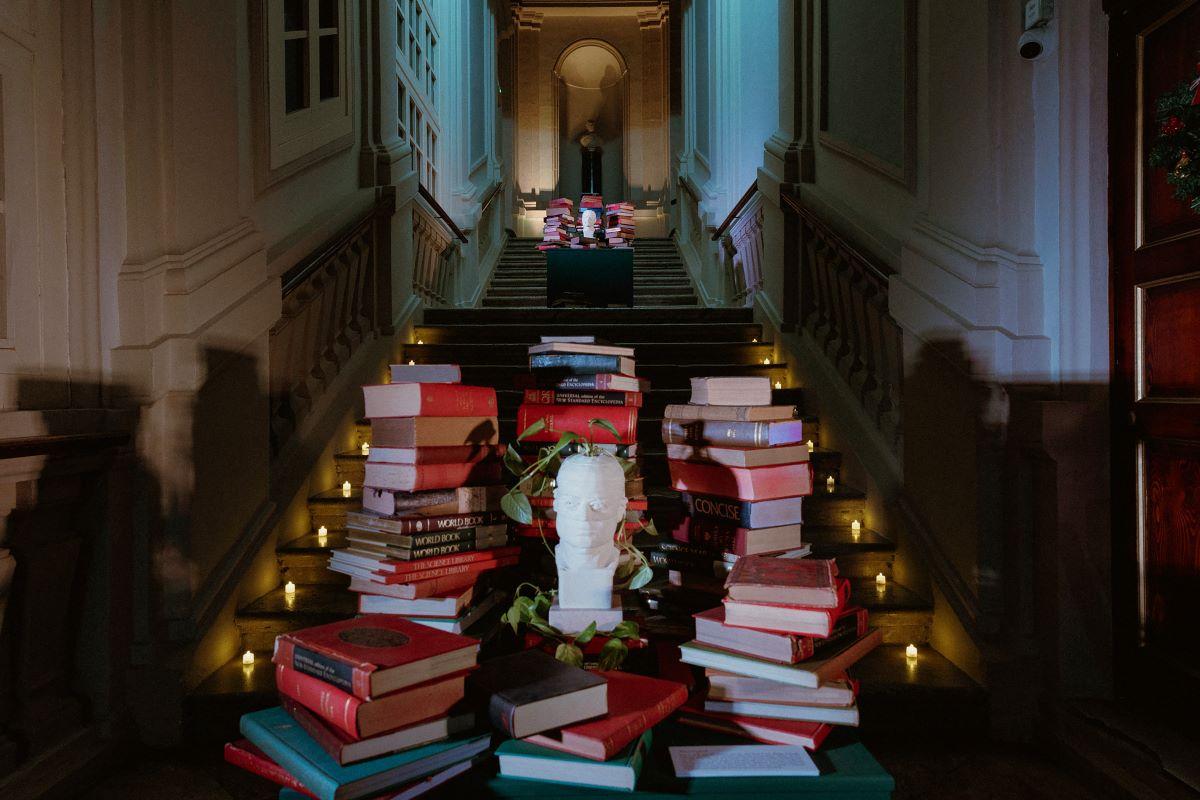
.
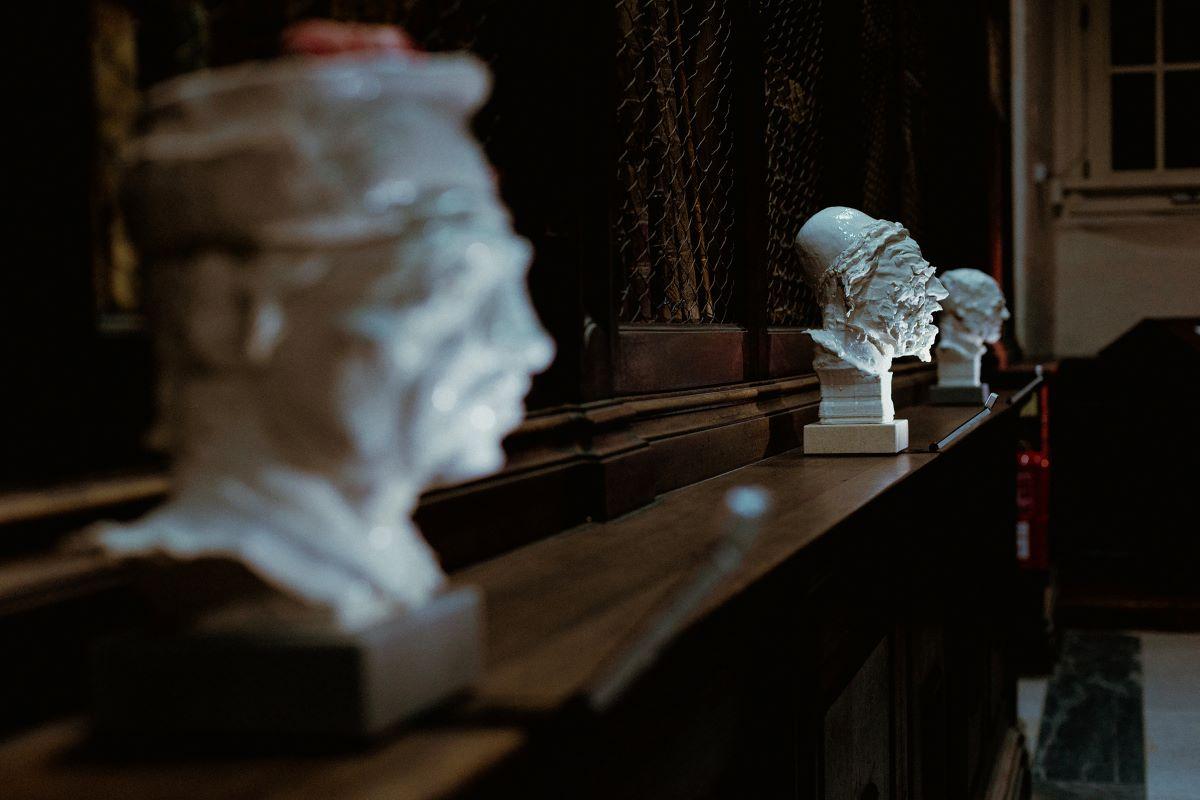
.
I linked these cameos with paper-thin porcelain flower garlands to echo the neo-classical decorations in the same monumental staircase. The exhibition is entirely site-specific, whether in spirit (drawing from the incunabula) or in reaction to the space.
Early on together with the curator, Balzan Demajo, we decided where the sculptures would be displayed even before I started modelling them so when I did start sculpting them, I already could envisage where they would be placed and knew that the pure white of the porcelain would contrast beautifully with the honeyed tones of the centuries-old book collections and the dark wood of the library.
Incunabula 1474-2025 is Francesca Balzan’s solo exhibition at the National Library Valletta, curated by Justine Balzan Demajo. Opening hours of the National Library of Malta: Monday to Friday 8.30am-4.30pm and Saturday 8.30am to 12.30pm. Entrance is free of charge. The exhibition will be open until December 12. An exhibition catalogue is available. The exhibition is supported by Arts Council Malta, the National Library of Malta, Visit Malta, APS Bank, GO, Atlas Insurance, RLautier – The Natural Stone Workshop, M Demajo Wines-Spirits.