A robot has entered Saint James hospital, marking a new era for local surgery
Three to four surgeries a week planned, amounting to around 170 procedures in first year
The first robotic surgery in the private sector was recently carried out, following a €3.2 million investment in the system by Saint James Hospital.
A patient’s prostate was removed by four arms, instead of two, operated via a joystick-controlled console from a booth – and the intervention was a success, with robotic procedures considered the “gold standard” for a prostatectomy.
Saint James Hospital has since carried out another general surgery procedure using the Intuitive Da Vinci Xi robotic system, designed for greater precision, fewer complications and smaller incisions, and resulting in speedier recovery times.
The hospital was planning to carry out three to four surgeries a week, amounting to around 170 procedures in the first year, it had said at the launch last December.
Following a big shift from open surgery to laparoscopy, it was believed that all the hospital’s theatres in the next 10 years will be robotic, according to Jean Claude Muscat, CEO and director of Saint James Hospital in Malta and Hungary.
The hospital’s chief operations officer, Andrei Camenzuli, explained how the surgeon carrying out the first prostatectomy docked the robot onto the patient to emit a laser, indicating the position of four holes in the abdomen.
This, in itself, was a lengthy procedure, he said, going through the motions of remote robotic surgery.
The surgeon played a major role – but from a booth and using a joystick, controlling the robot via a screen, he explained.
He directed its arms into the holes and was able to rotate them 360 degrees, particularly handy when it came to suturing, he said, adding that the robotic system provided more firmness and no tremor.
“This is better for a surgeon, who only has two hands,” Camenzuli said about the additional flexibility.
Among the advantages of this surgical system, particularly in the case of prostate procedures, was less chance of post-operation complications in bodily functions, including urine leaks, due to its enhanced precision and the surgeon’s better 3D visibility.
Described by the private hospital as “the most sophisticated advanced technology robot of its kind in the world”, the robotic system would be used for complex major general surgery in the abdomen, and for cancer interventions, as well as for urology, bariatric and gynaecological procedures.
Gold standard
It was also considered the gold standard for pancreatic cancer, Camenzuli pointed out.
Asked whether patients were willing to undergo such a procedure or felt daunted by the idea of a robot doing the job and needed to be convinced, Camenzuli said the benefits had to be well explained, adding that some already travelled to the UK for this sort of procedure.
These were also carried out via keyhole, or open surgery, but robotic surgery was the next major step forward.
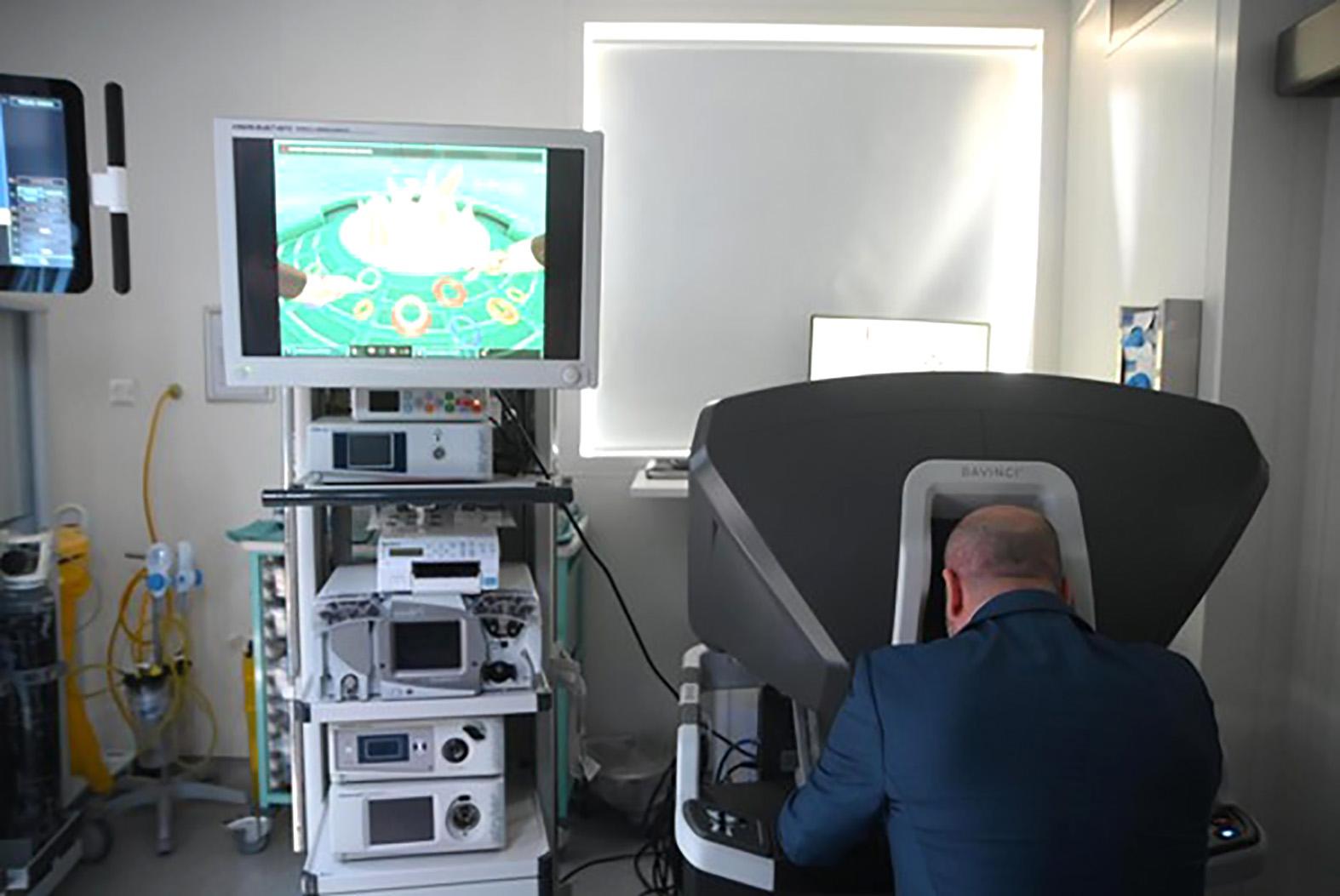 Camenzuli showing how surgeons use the machine. Photo: Jonathan Borg
Locally trained surgeons were expected to begin using the machine in January, and the hospital planned to expand training so that robotic surgery would become the new standard in their hospitals.
Meanwhile, the first prostate operation, which took three hours, was carried out by Italian urologist Prof. Antonio Carbone, and the second was in the hands of general surgeon Charles Cini.
Camenzuli said surgeons had to retrain in robotic procedures, adding it was a “learning curve” and they needed to be supported to gain experience as training was quite extensive.
Expertise was, as yet, limited, with Malta currently having three general surgeons and one urologist trained in robotic procedures. These were supported by foreign doctors, he said, adding they needed to be trained via government schemes.
Doctors are “super interested” in this, Camenzuli said.
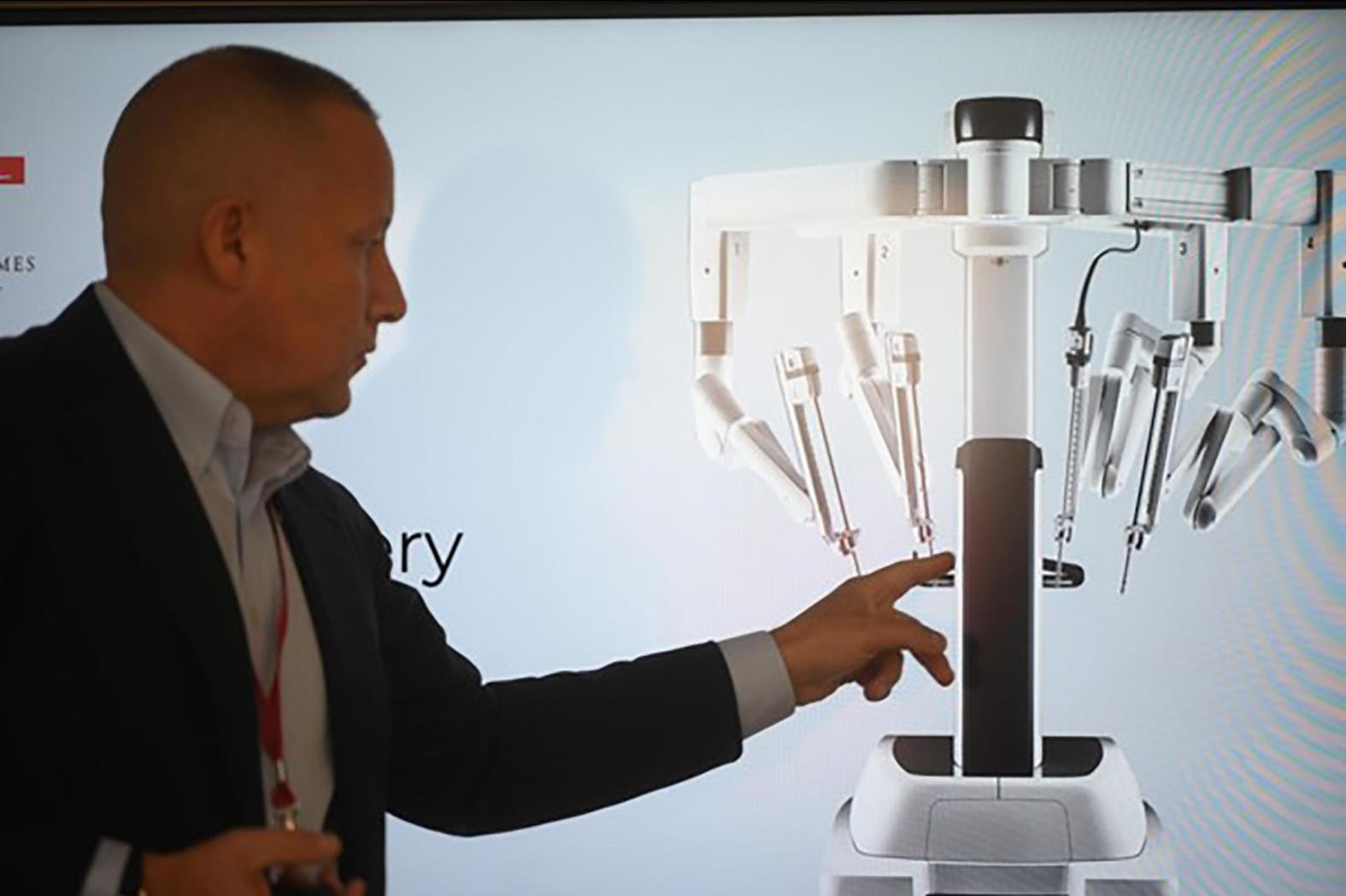 Jean Claude Muscat presenting the new robot. Photo: Jonathan Borg
The da Vinci machine has been on the market for 25 years and it has taken Malta a while to introduce it, he said.
Robotic operations have been carried out at Mater Dei Hospital since 2019, but having the service in a private hospital meant the possibility of avoiding waiting lists and choosing a surgeon, Camenzuli continued.
The €3.2 million investment was the largest by the private hospital to date. But the idea was to “take it to another level and not about return on investment”, he said.
“This is to show we are not just a clinic or a basic hospital.”
Going forward, there was also the potential for cross-border operations, with a surgeon controlling the robot from abroad while the patient was in Malta.