A new lease of life for Gudja’s rosary altarpiece
Originally hanging at St Mary's chapel of Bir Miftuħ, 'Our Lady of the Rosary' was probably completed by 1594
Gudja’s Assumption of Our Lady parish church is graced by a remarkable oil-on-canvas altarpiece of Our Lady of the Rosary. It originally hung at St Mary’s chapel of Bir Miftuħ and was probably completed by 1594, a date deduced from the reports of Bishop Tommaso Gargallo’s pastoral visitations in 1588, 1594 and 1600.
Iconography
In their celestial radiant realm, the enthroned Virgin and Child pass down rosary beads to St Dominic (left) and St Catherine of Siena (right). Their black-and-white Dominican habits identify them immediately. The tonsured Dominic lacks the typical star and dog with a burning torch, while the visionary Catherine is complete in appearance by her crown of thorns and stigmata.
These two staple rosary protagonists feature with four other religious figures in the lower wordly register. They are symmetrically arranged, echoing the diagonal sweep of light grey and aquamarine clouds that define the heavenly sphere above. Here the Queen of Heaven reigns, her divine royalty celebrated by the bejewelled crown that her cherubs hold. At the apex of the pyramidal composition and of this hierarchy of holies, the dove of the Holy Spirit sanctifies this ‘sacra conversazione’.
By St Dominic, the mitred St Nicholas of Bari is present possibly to commemorate Nicola Farrugia, one of the procurators who advocated for an altarpiece to be commissioned. In full regalia, the haloed Pope St Gregory the Great is merited a place for his promotion of the recital of the Hail Mary, essentially the foundation of the rosary. Behind St Catherine, the partially visible nun remains obscure.
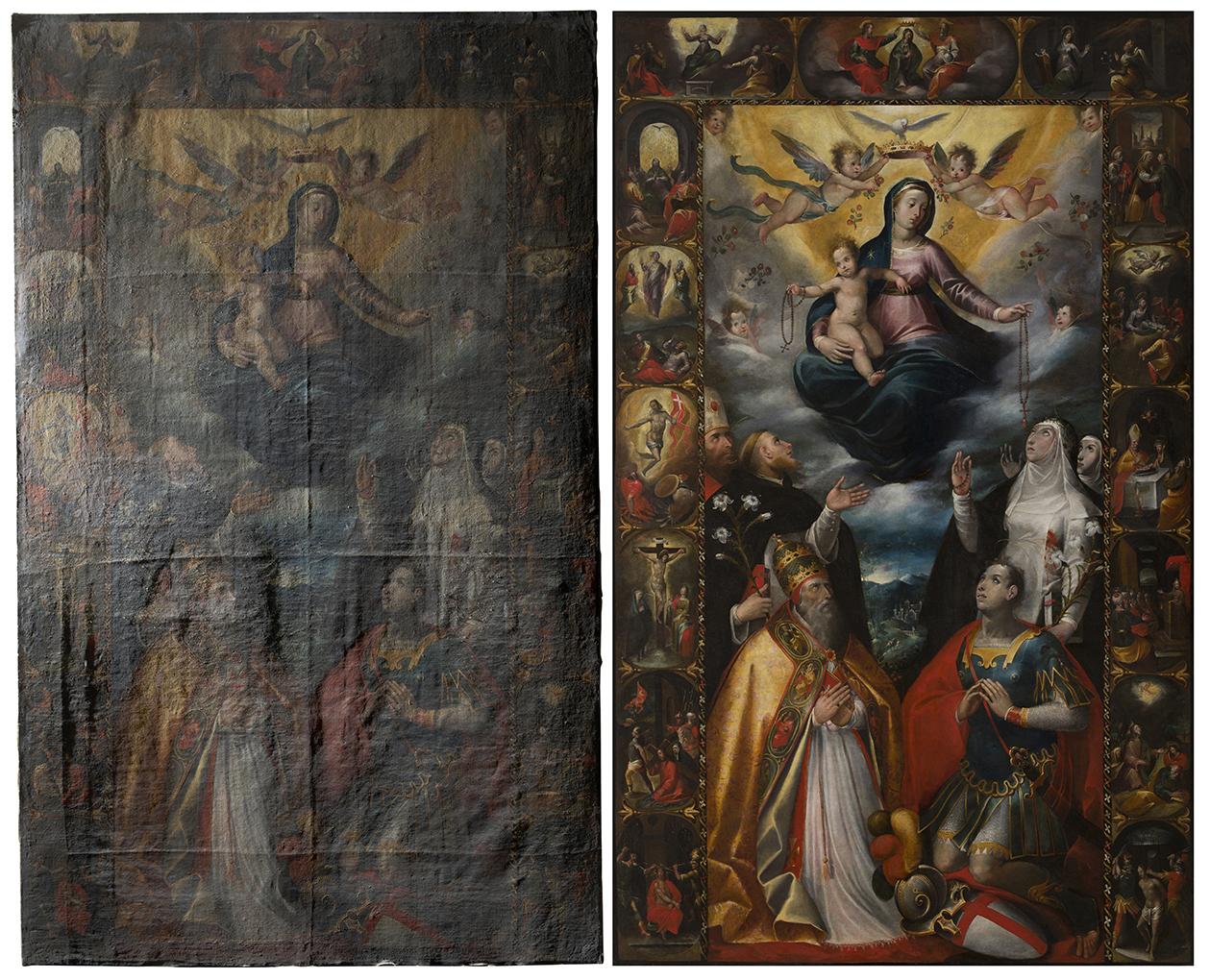 Gudja’s altarpiece of Our Lady of the Rosary, before conservation treatments (RAK) and after. Photo: Manuel Ciantar and Suzanne Ciantar Ferrito obo ASC Conservation Centre Ltd.
St George, on the other hand, is easily recognisable from his military dress, plumed helmet and iconic shield bearing a red cross on a white field. His purpose is to pay tribute to an older altar once dedicated to him but later reconsecrated with its new Marian title to host the Our Lady of the Rosary inside Bir Miftuħ church.
Mysterious Mysteries
In keeping with tradition, this painting incorporates the 15 ‘Mysteries of the Rosary’ in small rectangular panels framed by floral motifs, and running along the top and sides of the canvas. Commencing from the upper right, their reading then descends, shifts to the lower left and finally rises to the central culminating ‘Coronation of the Virgin’.
What is anomalous and unexplained is the ‘Transfiguration’ instead of the ‘Ascension of Christ’ in the Glorious Mysteries series. Similarly intriguing is the ‘The Carrying of the Cross’, the fourth of the Sorrowful Mysteries. In this scene, Christ is driven to Golgotha not by Roman soldiers but by turbaned cavalry. It is not a vexillum, the symbol of Roman might, that the mounted soldier rides away with but a swallowtail standard of a white crescent moon on a red field. This is the unequivocal emblem of Islam.
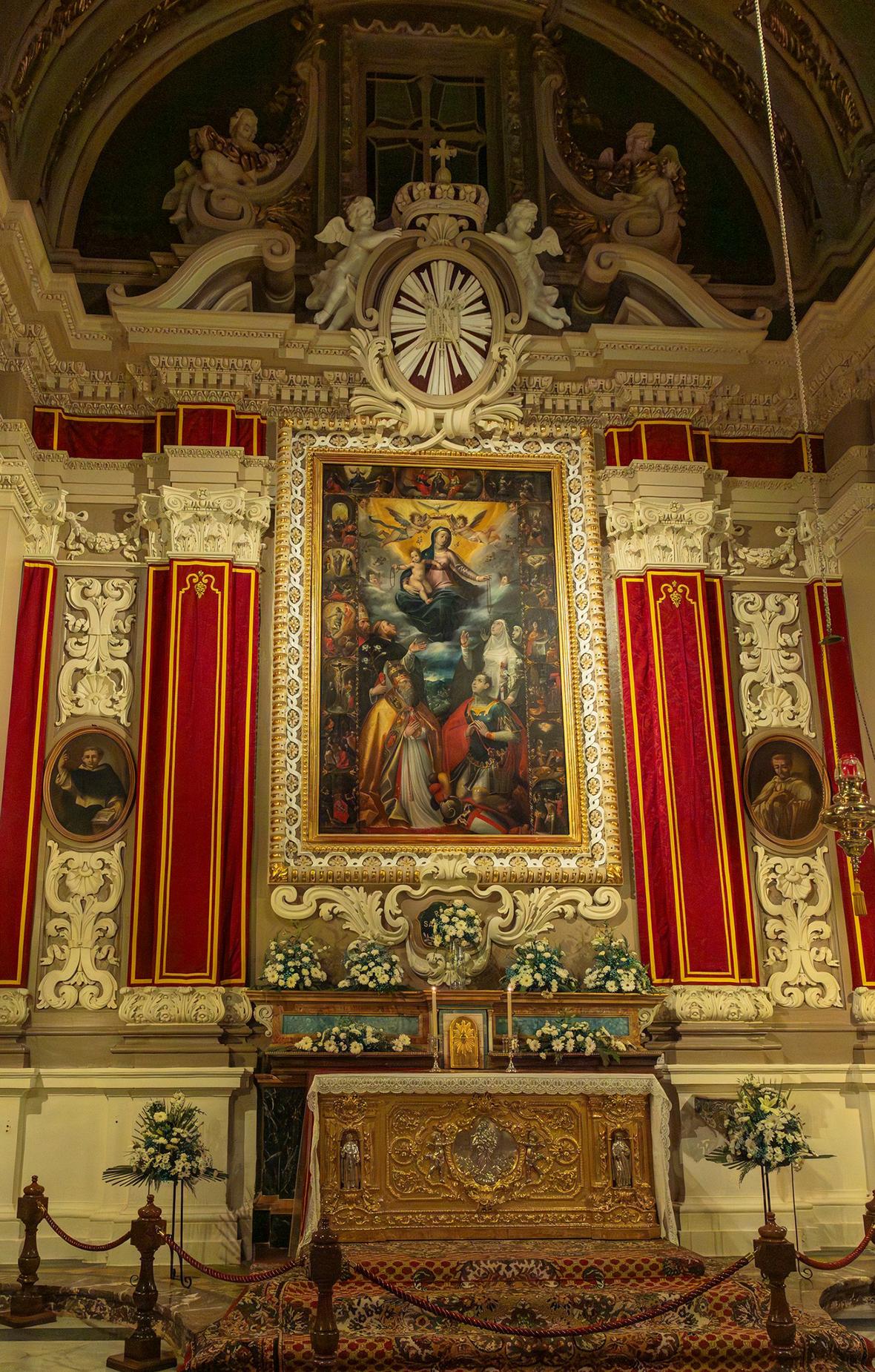 The painting during the inauguration ceremony at Gudja’s parish church on September 21, 2025. Photo: Sebio Aquilina – Audio Visuals
In the 16th century, the Catholic Alliance was in a relentless state of clear dread and present danger of a final invasion by the Muslim Ottoman Turks. To the Christian faithful, that lunar crescent spelled terror.
Its merging into the Sorrowful Mystery’s narrative and the conversion of Roman legionaries into Muslim horsemen served to impress upon the devoted the idea of solidarity with Christ whose foes personified the adversaries that loomed in their very own precarious lifetime.
War and rosary
As veneration for the rosary spread across Europe throughout the 15th and 16th centuries, belief in its force and resistance against the enemy – be it Islam or Protestantism − intensified.
Up in arms, the faithful’s chant of the rosary became the cry for combat. In fact, the Christian triumph of the Battle of Lepanto in 1571 was credited to the miraculous intercession of the rosary, a dogma fervently advanced by the Dominican pope, Pius V.
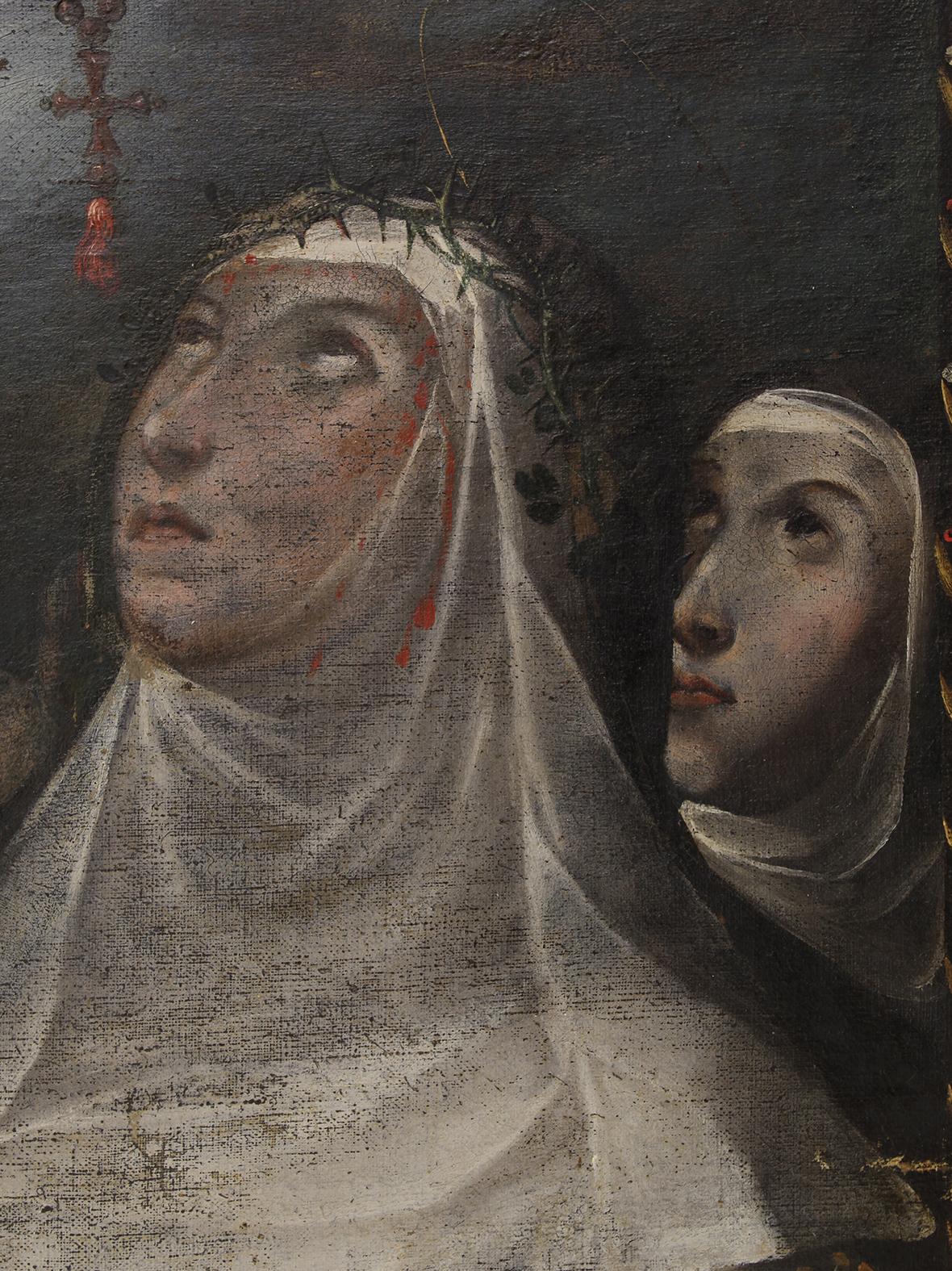 A detail of the painting taken during the thinning down / cleaning of aged varnish coatings and of past retouchings, which were concealing significant areas of the painting. Photo: ASC Conservation Centre Ltd.
It was in this politically fraught climate that the Maltese islands, then under the Order of St John, stood vulnerable to the constant threat of the Ottoman Turkish Empire set on possessing the Mediterranean. It was in this turbulent context that Gudja’s Our Lady of the Rosary emerged and nourished the souls of its pastoral community with steadfast resolve.
The mystery of the artist
Much as the rosary cult reached Malta from neighbouring Sicily, so too in all probability did the artist of this altarpiece. He was clearly a cut above the Maltese islands’ largely vernacular artistic milieu of the day. His confident command of oil, relatively sound draughtsmanship, accomplished crisp transparencies, heraldically bold hues and fluid tonal harmonies point to a background of formal training. They reveal an affinity with the late mannerist style flowing into Malta from south Italy and Sicily.
Active in Sicily in the late 16th century, Gaspare Bas/ssano or Vaz/zzano (1562-c.1630) and his pupil Giuseppe Salerno (poss. 1573-1632) have both been tentatively ascribed with authorship of this piece. Stylistic parallels such as the treatment of the drapery folds and the characteristically smudgy globular eyes support comparison between paintings by or attributed to these two foreign artists and the Gudja work.
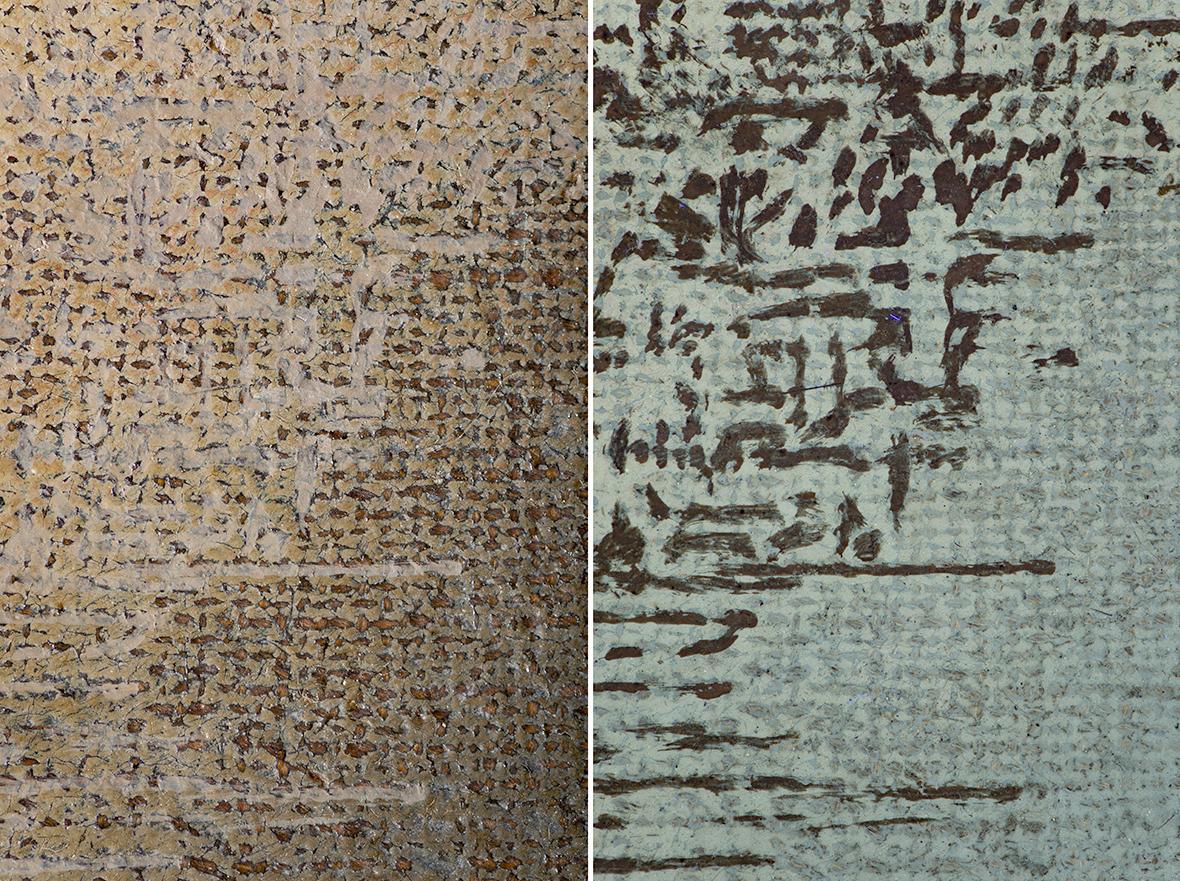 Details taken before treatments, under diffuse and ultraviolet light, and showing the abraded (left photograph) and retouched surface of the painting. Photo: Manuel Ciantar and Suzanne Ciantar Ferrito obo ASC Conservation Centre Ltd.
Yet it should be more cautiously assigned to a close follower within their circles of influence, especially since both artists were, somewhat bemusingly, known by the sobriquet ‘lo Zoppo’ (cripple) or ‘lo Zoppo di Gangi’ (southeast of Palermo).
Gaspare Bas/ssano or Vaz/zzano tentatively ascribed authorship of this piece
One wonders whether the Italian romanesque church, baptistery, convent or castle set against the distant mountainous backdrop of the Our Lady of the Rosary may be a latent citation to Gangi or another hometown or place of personal significance to the artist, which, if ever decoded, might uncover who he actually was.
The altarpiece and its conservation treatments: a physical history
This outstanding altarpiece had various restoration interventions over the course of time. The first was in 1663, specifically to adjust the scene of the Scourging at the Pillar. Between 1838-1841, the painting was restored by Giuseppe Hyzler – a notable Maltese 19th-century artist.
Following this, Lazzaro Pisani worked on the painting during the early 20th century as stated in the parish records. The most recent interventions, prior to the latest, were carried out in 1988. In that year, art historian Dominic Cutajar published this information, tracing the physical history of the painting in Programm tal-Festi Solenni f’Egħluq l-400 Sena mit-Twaqqif tal-Wisq Antika Fratellanza tas-S.Smu. Rosario li ser jiġu ċċelebrati fil-Parroċċa Arċimatriċi ta’ Santa Marija, Gudja.
This publication, issued by the Soċjetà Filarmonika La Stella, Il-Gudja, AD 1919, commemorated the fourth centenary of the founding of the Confraternity of the Holy Rosary of the same village, as the two entities collaborate in the organisation of the annual festivities in honour of Our Lady of the Rosary.
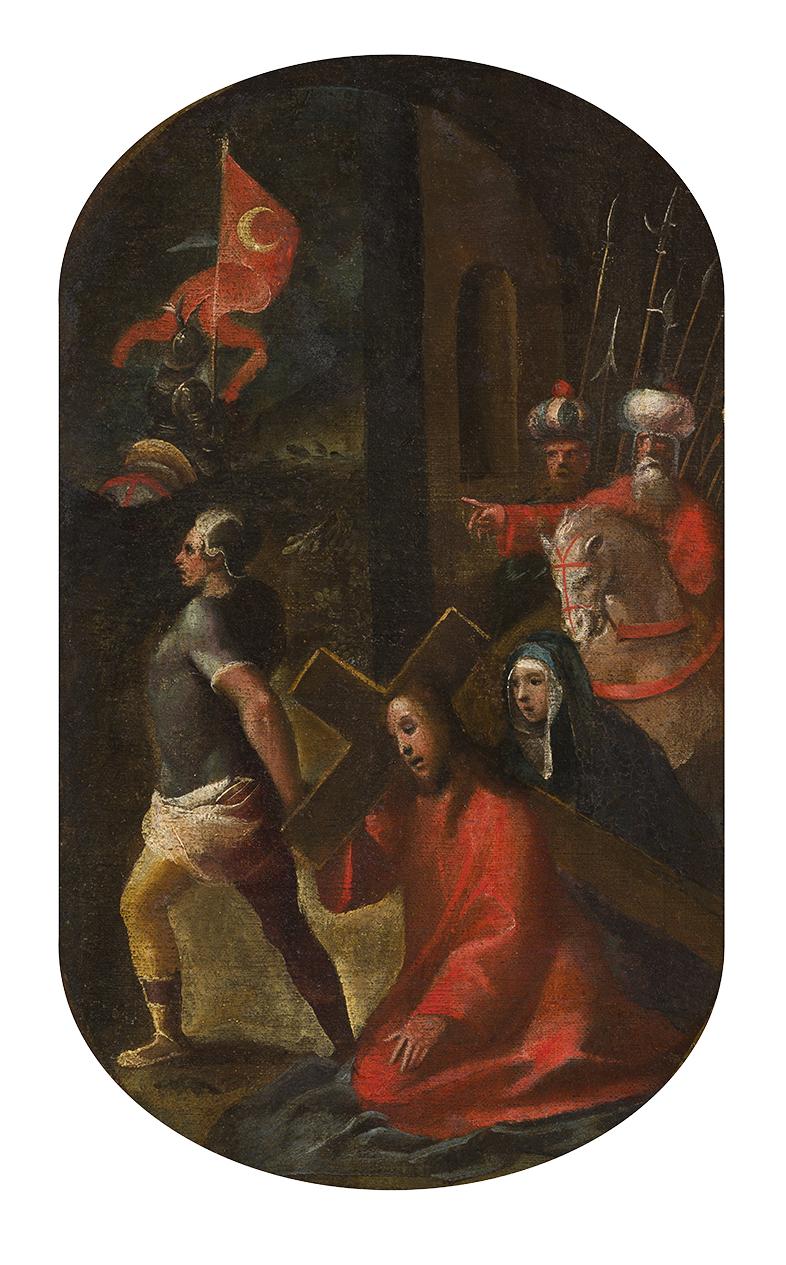 The scene illustrating the ‘Carrying of the Cross’, one of the Sorrowful Mysteries in the Our Lady of the Rosary altarpiece. Photo: Manuel Ciantar and Suzanne Ciantar Ferrito obo ASC Conservation Centre Ltd.
Attestation to the numerous interventions endured during the course of the centuries was obtained through the conservation and restoration carried out between 2024 and 2025 by ASC Conservation Centre Ltd under the direction of co-author and conservation director Amy Sciberras.
Scientific examinations and studies carried out within the conservation laboratory showed extensive retouching and thick varnish layers. Throughout the course of scientific investigations and conservation treatments, past retouchings were found, both over and under the thick layers of yellowed varnish. There was also a layer of grime further impeding the legibility of the painting.
Significant areas of this oil-on-canvas, which were overpainted and re-emerged during the latest interventions by Sciberras and team, include: the blue cloak of the Madonna; the black habit of St Dominic, St Catherine of Siena and the other nun; St George; various scenes along the perimeter; and the lilies on the left. These are among the most noticeable changes which came to light during cleaning treatments.
Additionally, the conservators discovered a second set of putti on either side of the Madonna. These are pentimenti i.e. the reappearance of original details which were painted over by the artist himself during the course of execution. These putti re-emerged by time due to fading of the paint layers and, unfortunately, previous restorers had them covered while retouching.
This discovery was documented and the emerged putti retained, since such a discovery throws light on the execution of the painting. At times, pentimenti are also helpful in attributing paintings to particular artists.
Past retouchings were also covering widespread abrasions of the paint layer, whereby one could literally see the canvas support showing through the paint layer in vast areas. The old chromatic interventions concealing the abrasions were overlapping the original and had also discoloured by time. Hence these could not be retained.
Other forms of deterioration, presented on the altarpiece of the rosary, included canvas deformations and sagging. Addressing deformations was a time-consuming process especially considering the surface area in question (3.47m by 2.12m). Consolidation treatments then strengthened and reinstated adhesion between all the layers, while the attachment of new strips of canvas to the painting’s perimeter allowed its eventual re-stretching.
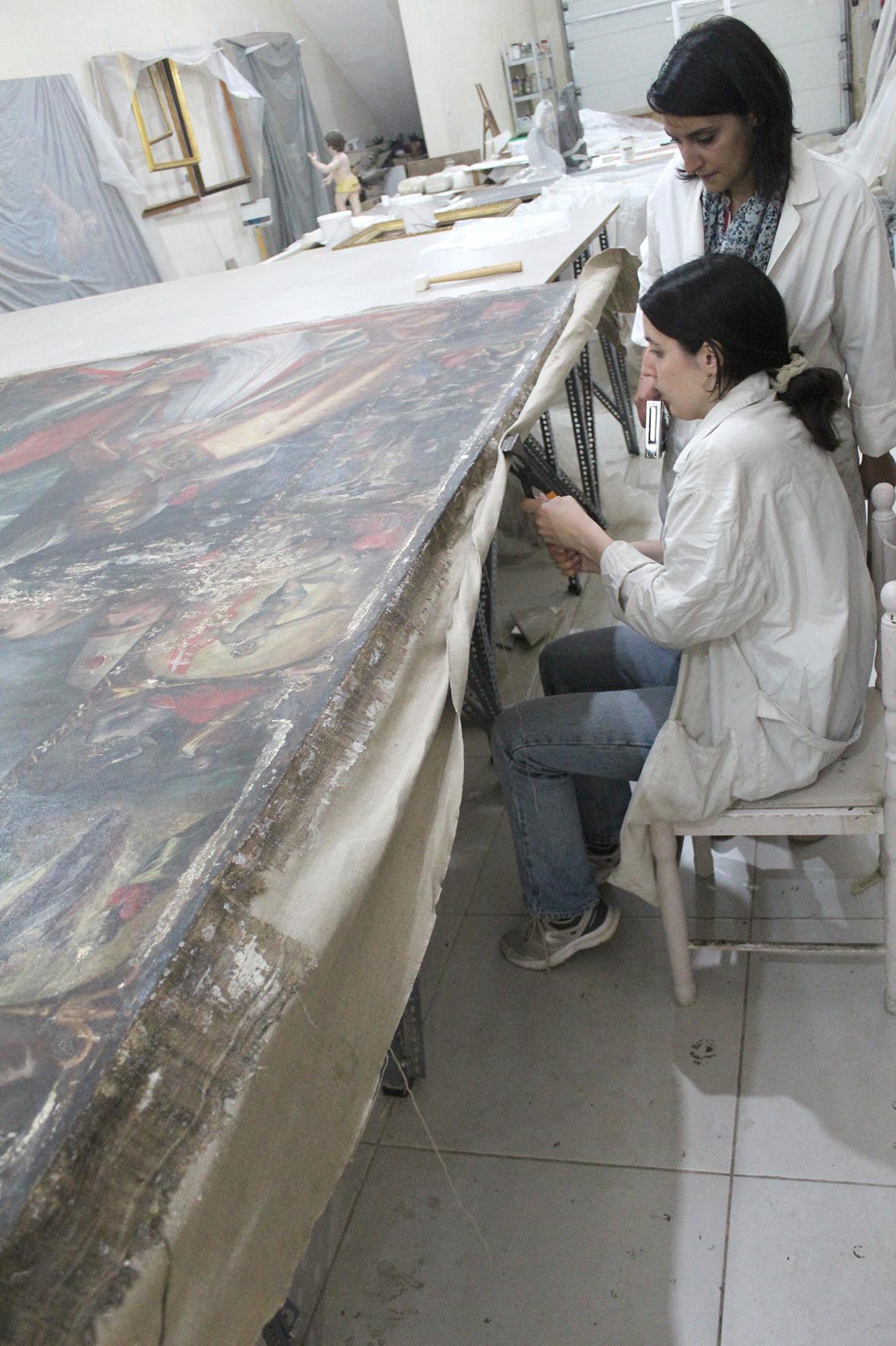 Re-stretching of the large-scale painting, following treatments of the canvas support. Photo: ASC Conservation Centre Ltd.
A new stretcher frame encompassing more cross-bars than the previous one was manufactured, thus allowing the proper tensioning of the painting. The very final phases involved the integration of the abundant losses and abrasions in the upper preparation and paint layers, which took several months to complete.
This conservation project was inaugurated by Archpriest Can. Chev. Norman Zammit on September 21, in a joyful celebration where solemn spiritual significance, the dissemination of historical research, and scientific examinations and treatments blended in an atmosphere of communal unity.
Acknowledgements
This conservation and restoration project was entrusted to ASC Conservation Centre Ltd and to Bernadine Scicluna for art historical research by archpriest Norman Zammit and Fratellanza S.Smu Rużarju, Il-Gudja, AD 1588. The project was made possible by Arts Council Malta.
Special thanks also go to Randolph Micallef, who coordinated the project, and all the members of the Fratellanza S.Smu Rużarju, Il-Gudja, AD1588, Soċjetà Filarmonika La Stella Il-Gudja, A.D.1919, church volunteer Martin Gravina, technical art photographers Manuel Ciantar and Suzanne Ciantar Ferrito, the Curia’s Administrative Secretary Comm. Michael Pace Ross and to all who have contributed to its success.
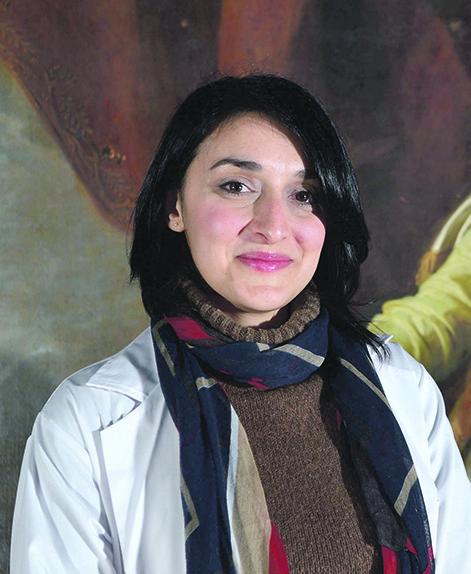 Amy Sciberras
 Bernardine Scicluna