New multi-patient hyperbaric unit among upgrades at Gozo General Hospital
Patients suffering from decompression sickness would not have to be flown to Malta
Gozo will soon have a hyperbaric unit that can treat six divers up from one as its current hospital undergoes expansion and improvement to “bridge over” until the new one is ready.
On a temporary lease, the extended hyperbaric unit, providing emergency treatment to divers, will be up and running in a couple of weeks, Gozo General Hospital CEO Carmen Ogilvie-Galea said.
This meant that, in the eventuality of a diving accident that involves more than one person, patients suffering from decompression sickness would not have to be flown to Malta.
Promoted as a niche diving destination, with a rise in technical diving and the mushrooming of dive centres, Gozo has been serviced by a one-person chamber hyperbaric unit, with an anteroom for one nurse, until now.
Eventually, this freed-up space will be replaced by a new permanent unit with a dual chamber, catering for 10 patients, Ogilvie-Galea said.
 Gozo General Hospital CEO Carmen Ogilvie-Galea
The medical response to diving accidents is also being beefed up by the leasing of specialised SUVs that can access tight areas ambulances cannot reach.
In the low season, the hyperbaric unit setup will also be used for tissue viability treatment, avoiding travel to Malta for this.
“Now they can be treated here, six at a time, opening up a new service,” the CEO said.
‘Illness does not wait for a new hospital to be built’
The unit was among imminent interim upgrades at Gozo General Hospital, planned to be carried out between this year and 2029 and spearheaded by Ogilvie-Galea – “so patients who are sick today can be treated today”.
While a detailed masterplan for the new hospital is being drafted, the existing building and services are being invested in, “because patients in Gozo must not wait for its completion to benefit from an improved health service on the island”, she said.
“Illness does not wait until a new hospital is built,” Ogilvie-Galea insisted. “If we need to fix processes, let us fix them now, so we will be ready for the new hospital and patients will be catered for immediately.”
The new hospital, on the cards since 2013, could take a “good seven years” from contracts approval, Ogilvie-Galea envisaged, with tender and planning processes kicking off after the masterplan is finalised this year.
‘Like a Tetris video game’
Based on assessments and reassessments of the situation over two years in the job, the new hospital will be heralded by the “essential” relocation of buildings, patients and services and the juggling around of wards – a project the CEO has likened to a “Tetris” video game.
Ogilvie-Galea, whose background is in economics, stepped into her seat after the hospitals returned to state control in 2023, following the court annulment of their concessions to Vitals and Steward Health Care, whose obligations included building a state-of-the-art hospital.
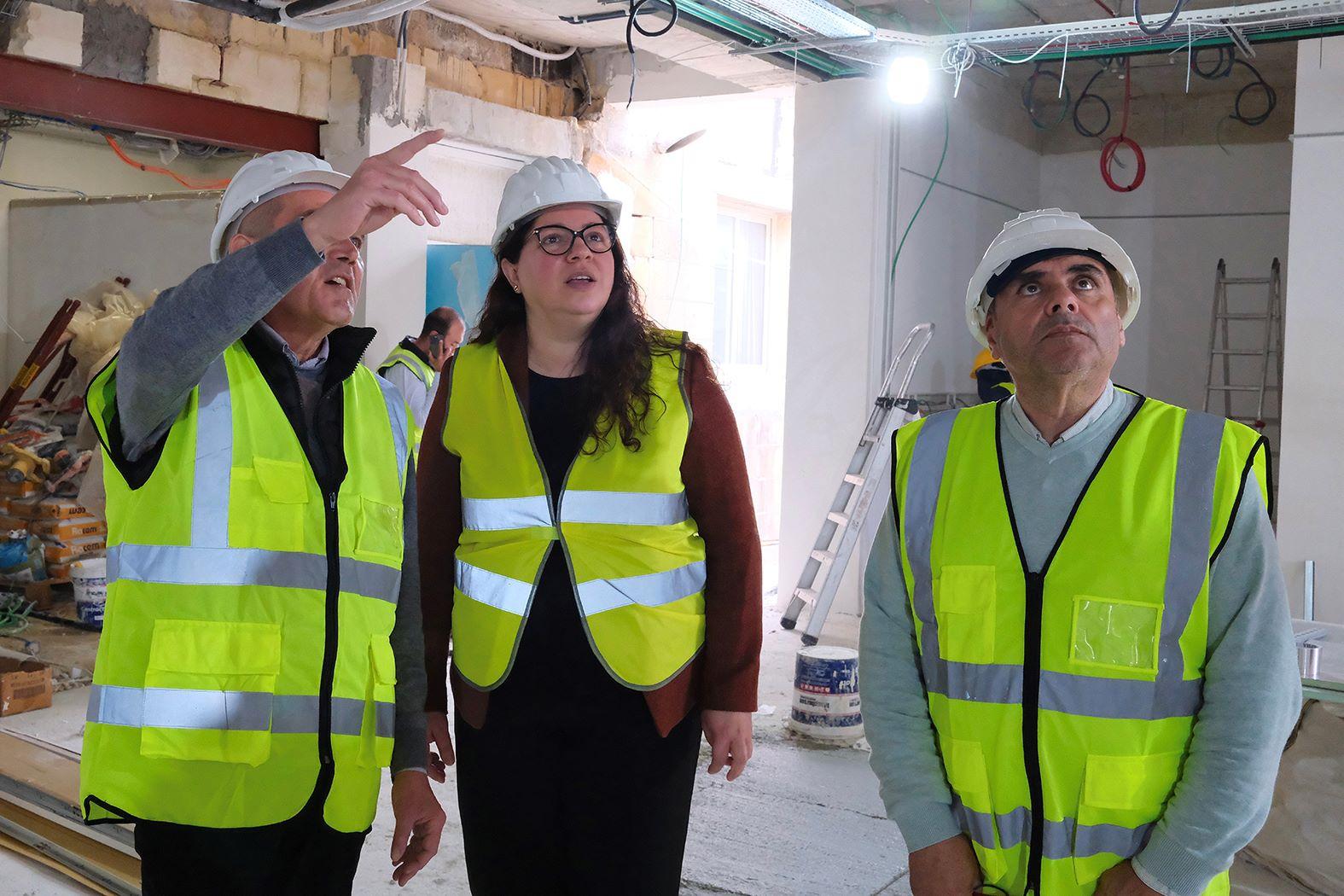 Carmen Ogilvie-Galea on site with her team.
She would not be drawn into describing the state of Gozo General Hospital when she took it over but was focused on where it was going.
Having started with “quite a clean slate”, Ogilvie-Galea said she took stock of the situation, built a team from scratch and created a pipeline of projects.
The Gozo Healthcare Campus, as it is being called, would have to cater for the future. “We are building a hospital for the next 60 years,” she said.
“This is not about painting a wall and changing the colour if we do not like it. We are talking about millions of euros, so it must be planned really well.
“Meanwhile, people have been told they will have a new hospital since 2013, and we cannot keep them waiting to up the service,” Ogilvie-Galea continued. “Why should we leave patients frustrated?”
Equating the scenario to someone getting home hungry and wanting to eat but finding the food is not ready, she said: “You do not wait for it to cook, but you eat something else before to bridge you.”
All projects must be carried out while the hospital is still running, which is an added challenge- Gozo General Hospital CEO Carmen Ogilvie-Galea
Ogilvie-Galea said it was “easy to say we are building a new hospital, but we have to realise that the current one has to keep on functioning.
“People may not understand, but there is so much groundwork before you can even place the first stone.”
To start works, buildings had to be demolished, with services and patients relocated from the site earmarked for the new hospital.
“All projects must be carried out while the hospital is still running, which is an added challenge,” Ogilvie-Galea said. This meant “two parallel streams” – the new hospital and the current one – were ongoing.
“The easiest way would be to get everyone out, demolish and rebuild. But we have to find realistic solutions – not excuses – to accommodate the community.”
To make way for the new hospital at the entrance of the campus, buildings that house the anatomy centre for the Barts Medical School, the Allied Health Services, short- and long-term psychiatric and the male geriatric wards, must be demolished and their functions reestablished elsewhere.
Key to the plan and to keeping up the momentum is moving out of campus the elderly patients, occupying 163 long-term beds. But the tender failed because the only bid received was ineligible.
It was, therefore, decided that those who do not need to be institutionalised would go back into the community in homes with empty beds – a process that is underway – with the rest moving out into a hospital-serviced acute setup.
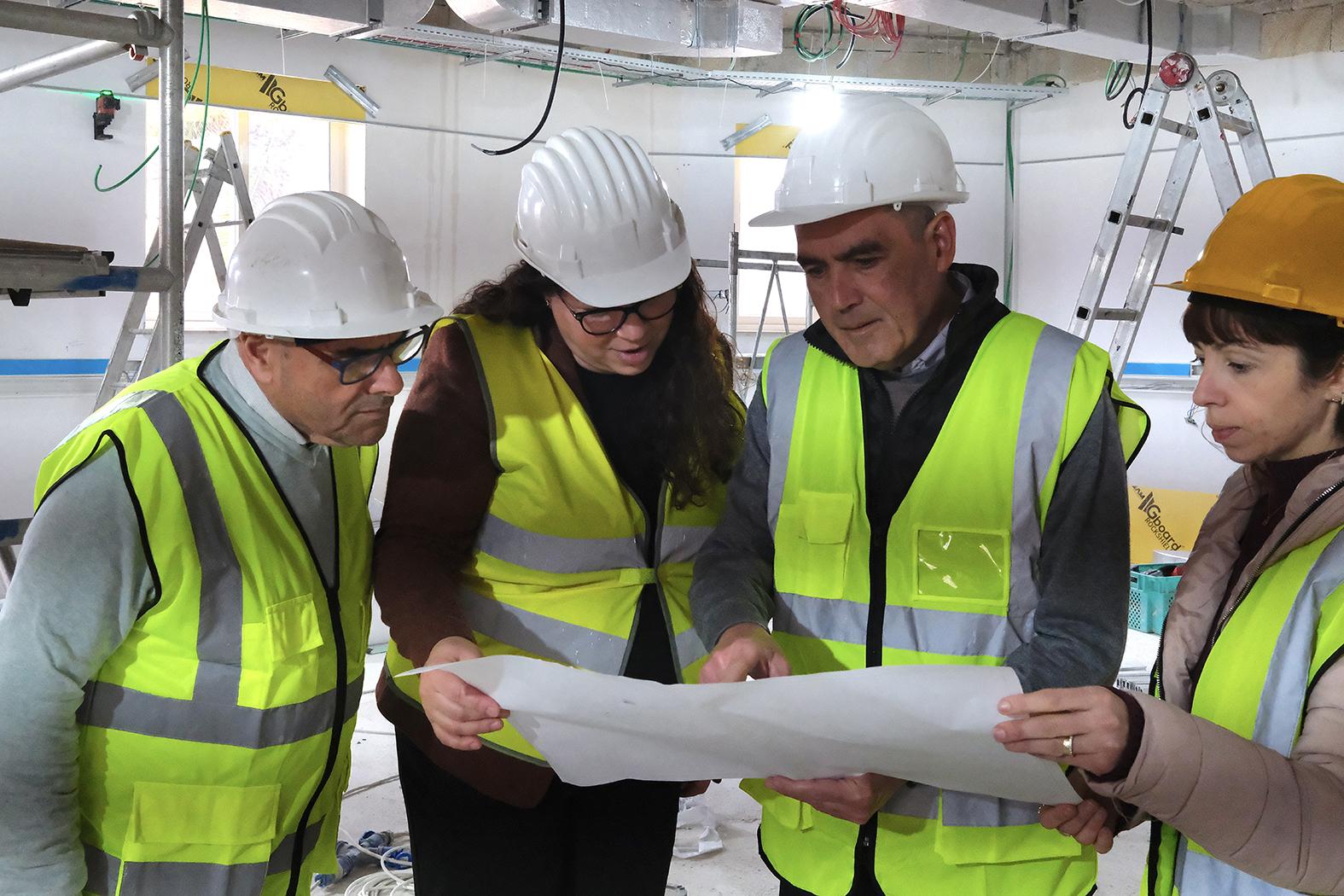 Carmen Ogilvie-Galea with her team.
A new tender is now about to be reissued, and Ogilvie-Galea is confident the lower number of elderly patients in long-term care that need to be catered for should ensure its success.
Meanwhile, the outpatient department’s 13 clinics have been stripped, refurbished and expanded by an additional nine, while the health ministry recently announced a €500,000 Cardio-Respiratory Department, offering 23 new specialised services, allowing Gozo residents to access care closer to home.
Among the changes, sleep studies can now be carried out in Gozo, meaning patients no longer had the “unacceptable hassle” of going to Malta to get fitted with the required apparatus and back again the next morning to remove it.
Severe skin ailments can also now be treated in Gozo with investment in PUVA phototherapy, while the island’s first haematology clinic has started functioning.
Gozo’s intensive care unit is also doubling its six beds and one isolation room by 2028, while another two theatres are being added to the existing three to meet the increased demand for surgery.
The hospital has also invested in new generators to tackle any power outages, ensuring “we are covered for everything now and not just the essential”.
The real game changer
But the “real game changer” for Ogilvie-Galea is the upcoming reconstitution unit in the new pharmacy, meaning all oncology patients from Gozo – up from around 25 per cent in 2023 – will have chemotherapy at the hospital.
The plan builds on the recently issued tender for drones to bring more chemotherapy agents safely to Gozo, adding to the 14 currently available, until the reconstitution unit is up and running,
These agents cannot withstand the land-transport trip, but will arrive uncompromised via the drones, Ogilvie-Galea explained, adding that, one day, the treatments could be reconstituted in Gozo and flown over to Malta too.
“We can help out at some point, rather than always having to depend on Mater Dei,” she said.
The hospital’s chemo lounge has also increased the number of couches from four to six to meet the demand.
“But that is still not enough,” Ogilvie-Galea said, especially for those who need multi-day infusions and must go to Malta and six more beds will be added soon.
“You may ask: why all this investment if you are building a new hospital? But the economist in me asks: What is the opportunity cost? Does the hardship of patients today have a price on it? How much can Mater Dei cope with more pressure?
“We depend a lot on Malta, but we have one goal: to bring as many medical services as possible here so residents will not need to travel.”