New waste plant to power 2,500 homes and double organic processing capacity
The WasteServ organic plant is set to be up and operating in two years time
A new organic waste processing plant will generate enough renewable energy to power 2,500 households once operational, more than doubling current output.
The new WasteServ facility in Magħtab will also increase Malta's capacity to treat organic waste, increasing annual processing capacity from around 36,000 to over 74,000 tonnes.
At present, the existing WasteServ plant, also in Magħtab, produces enough electricity to supply about 1,200 households annually. The new plant is expected to raise energy generation from 8.5 GWh to up to 20GWh, powering 2,500 households on renewable energy.
The figures were provided during the signing ceremony of the new plant, attended by Environment Minister Miriam Dalli, European Funds Stefan Zrinzo Azzopardi and WasteServ CEO Richard Bilocca.
More than half cost covered by EU
Works on the €75 million project are expected to begin in the coming weeks, with the facility set to become operational within two years. Around €45 million of the investment will be co-financed through European funds.
The procurement process was concluded earlier this year, and the contract was awarded to Greenmed Malta.
The contract for the project was signed between the Department of Contracts and GreenMed JV.
Speaking during the conference, Dalli said the project reflected a shift in how waste is managed, noting that a record 36 million kilogrammes of organic waste was collected last year.
“The new facility will be a key piece of Malta’s national waste infrastructure,” Dalli said. “By significantly increasing processing capacity, the new plant will complement the ongoing waste separation efforts of households and businesses. It will play a central role in strengthening Malta’s circular economy, while also expanding the country’s use of renewable energy.”
 Environment and Energy Minister Miriam Dalli on Monday. Photo: Jonathan Borg
Like the existing plant, the new facility will convert organic waste into electricity and compost. It will also include on-site packaging, allowing compost to be distributed directly to farmers free of charge.
Bilocca said the plant currently processes around 700 tonnes of organic waste per week. He described the plant as a "modern, future-ready plant designed to adapt to changes needed".
“By maximising efficiency through modern technology and automation, the facility will recover organic waste as renewable energy and compost within a single, integrated operation, while also improving operational efficiency, enhancing worker safety, and delivering higher environmental performance,” he said.
Zrinzo Azzopardi said the project demonstrated effective use of EU funding, contributing to environmental improvements while generating clean energy for communities.
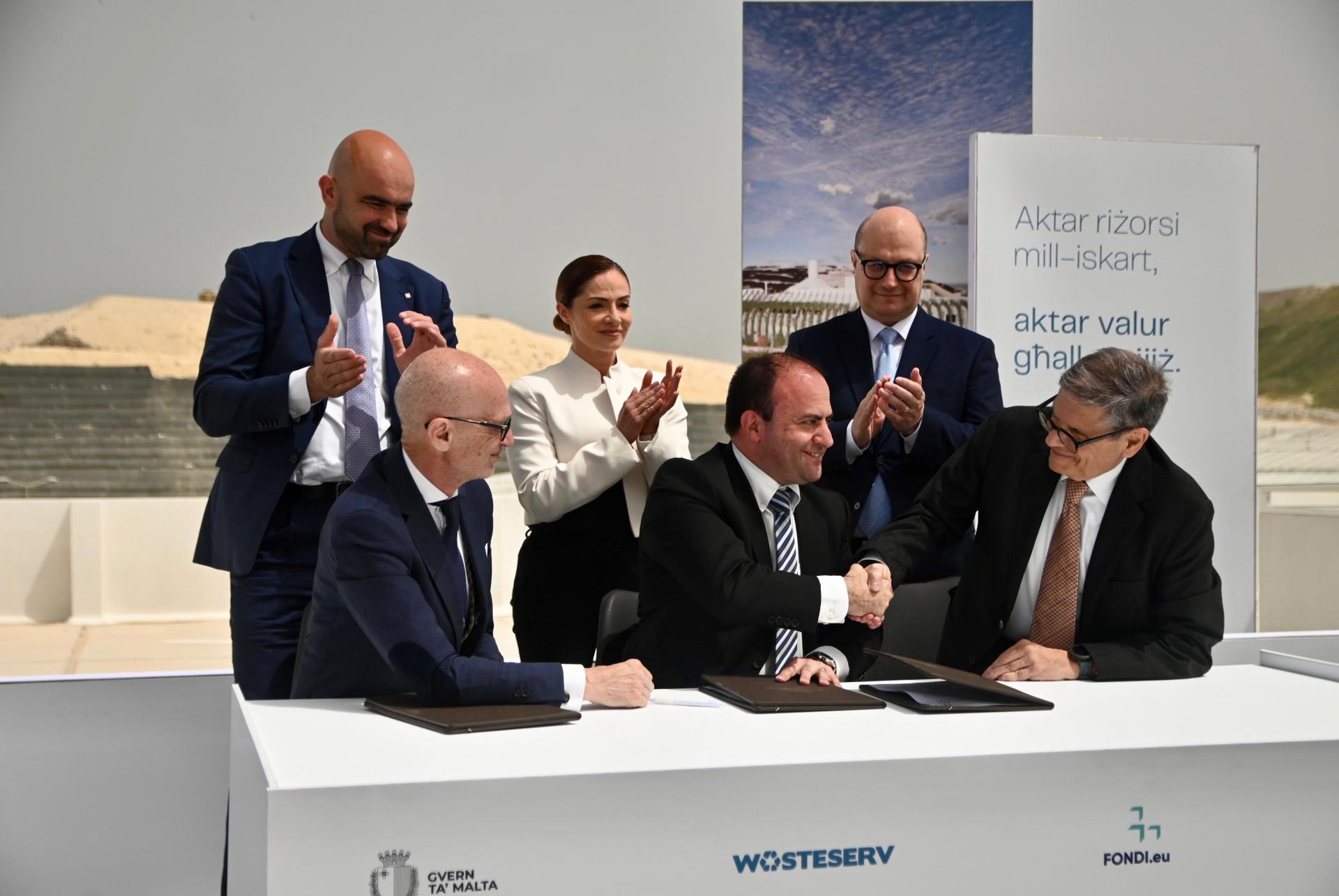 Left to right: Francesco Galanzino from GreenMed, Adrian Dalli director general of Department of Contracts, and Dionysios Georgopoulos, a representative of GreenMed. Photo: Jonathan Borg