'No need for alarm': British tourist negative for meningitis B - health minister
Health authorities vigilant following UK outbreak
A British national who recently arrived in Malta has tested negative for meningitis B, the health minister has said.
In comments to MaltaToday, Health Minister Jo Etienne Abela said that tests of the British woman carried out at Mater Dei Hospital found “she does not have the type of meningitis B that there has been an outbreak of in England."
Abela’s statement follows the outbreak of the potentially deadly strain of meningitis that originated in a Canterbury nightclub popular with University of Kent students earlier this month.
As of last Friday, the number of UK cases had risen to 29, with two people, a student and a schoolgirl, having died.
The health minister said the Superintendence of Public Health was aware of the outbreak, but that testing for the condition was the “bread and butter of medicine”.
"We will continue to be vigilant, but there is absolutely no need for alarm”, said Abela.
What is meningitis?
Meningitis is an infection of the protective membranes surrounding the brain and spinal cord, and is most commonly found in younger age groups, from babies through to young adults.
Those with a weaker immune system, such as patients undergoing chemotherapy or with HIV, are also more susceptible to the infection.
 The tests at Mater Dei found the British national did not have meningitis. File photo.
While treatable, it can progress seriously if not treated quickly, potentially leading to life-threatening sepsis – when the body does not respond correctly to an infection, causing tissue damage and organ failure – and permanent brain and nerve damage.
Viral meningitis is more common and less dangerous, while its bacterial counterpart – detected in the UK – can be more serious, potentially deadly, if not treated. There are seven types of bacterial meningitis.
What are the symptoms?
The infection can cause a high temperature, vomiting, confusion, headache, stiff neck, shortness of breath, muscle and joint pain and increased sensitivity to light.
Other symptoms include pale and mottled skin, extreme fatigue – including being difficult to wake – seizures, spots and rashes. Babies may refuse feeding, emit high-pitched cries, be stiff or floppy and unresponsive or display a bulging soft spot on their head.
There is absolutely no need for alarm- Health Minister Jo Etienne Abela
Symptoms can appear in any order, or in some cases not at all, making it sometimes difficult to determine if someone has meningitis.
Those suspected of suffering from the condition are advised to urgently seek medical help, with the condition liable to quickly worsen without appropriate treatment.
How does it spread?
Meningitis is typically caused by close contact, such as kissing, sharing drinks, cigarettes or vapes.
Those living close to, or those in a close relationship with, someone infected are more likely to contract the infection.
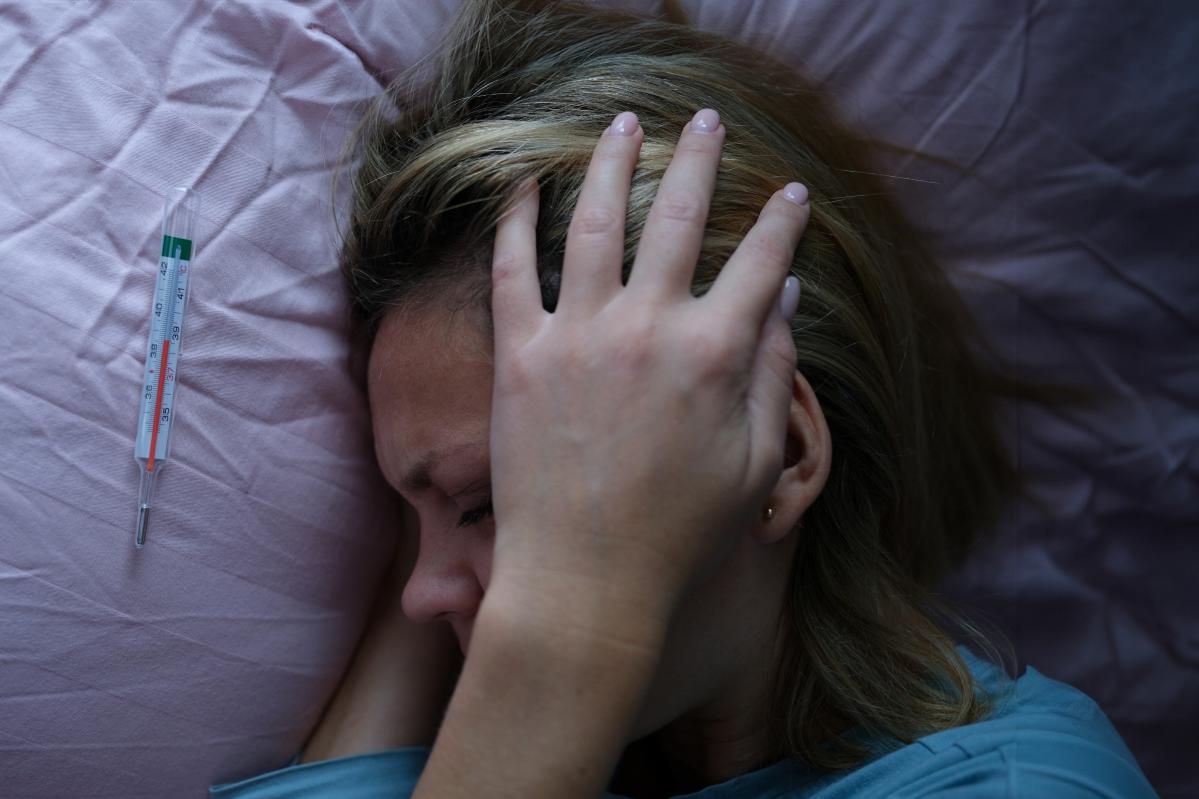 Meningitis can cause a high temperature, a headache and chills, among other symptoms. Photo: Shutterstock.
Between 2016 and 2019, just under two-thirds of the 34 cases of meningitis reported to health authorities were adults. Three people died from the infection over those three years, including a 13-month-old baby, a four-year-old and a 19-year-old.
How is it treated?
Hospital treatment for meningitis includes antibiotics, steroids to reduce swelling in some cases, and the administering of oxygen and fluids.
Treatment typically takes a few days but can last a few weeks.
Once at home, patients should get plenty of rest and take anti-sickness and painkiller medications as required or prescribed.
Antibiotics can also be given as a precaution to those spending time in close proximity to people diagnosed with the infection.
Those with concerns should contact health authorities for further guidance.