No to a ‘one size fits all’ EU approach
The EU Emissions Trading System is designed primarily for continental economies and does not reflect the realities of island states whose economic lifelines depend on transport connectivity, Edward Zammit Lewis
As chairman of the Foreign and European Parliamentary Standing Committee, a legislative proposal recently came before the committee concerning the subsidiarity and proportionality test which EU national parliaments are duty-bound to conduct in relation to the Market Stability Reserve. This is a regulatory tool designed to balance the supply and demand of carbon allowances within the EU Emissions Trading System (ETS).
This development once again highlighted the importance of the ETS for our environment but also the significant impact it can have on the EU’s competitiveness – particularly for small island economies such as Malta. This concern has become even more relevant now that the scheme has come fully into force in 2026. It is for this reason that, through a letter dated February 26, I initiated a political dialogue with the European Parliament on this matter in my capacity as committee chairman.
I had already cautioned those concerned – and those entrusted with safeguarding Malta’s economy – about the adverse effects of this scheme (vide my contribution in Times of Malta dated January 14, 2024, ‘Unreasonable and untimely EU tax’). The ETS applies across EU member states and covers greenhouse gas emissions from around 10,000 installations in the energy sector and manufacturing industries. It also applies to aircraft operators flying within the EU and now includes emissions from maritime transport.
There is no doubt that the principle underpinning this initiative is a positive one. It seeks to provide EU citizens with a cleaner environment and is an important tool in combating climate change. This is clearly aligned with the objectives of the EU Green Deal, one of the Union’s flagship policies, which Malta has always supported.
However, the timing of this initiative is highly questionable. At a time when the European economy has been struggling for years to remain competitive – particularly when compared to other global regions such as Asia and the United States – political wisdom dictates that economic growth, job creation and improving citizens’ living standards should be an urgent EU priority.
The initiative taken by Maltese MEPs to introduce an ‘island clause’ to ease the ETS burden is commendable
European competitiveness has repeatedly featured at the top of the agenda of successive Council of the EU Presidencies, including the current Cypriot Presidency. While some progress has been made, much more remains to be done in the short to medium term.
This urgency was underscored by Prime Minister Robert Abela during the recent informal meeting of EU leaders last month where he called for a coordinated EU strategy on competitiveness and trade diversification, as well as a stronger single market to shield small economies.
With the ETS now in force, lucrative shipping and transhipment activity is likely to be diverted to Mediterranean ports outside the EU that are not subject to the same obligations –particularly in North Africa. This presents a clear risk to Malta’s economic positioning.
Beyond competitiveness and job losses, the ETS will also have a direct impact on EU citizens. The cost of the scheme will inevitably be passed on to the end consumer, further fuelling inflation at a time when many citizens across member states are already struggling with high energy prices and rising living costs, as reflected in recent protests across Europe.
The scheme presents several key disadvantages. In the maritime sector in particular, Malta has consistently maintained that regulatory measures should be adopted at the level of the International Maritime Organisation (IMO), which sets global standards for the industry. Acting unilaterally at EU level increases the risk of carbon leakage, whereby companies relocate activities to jurisdictions with less stringent climate policies.
Additionally, over-allocation and mismanagement of allowances may result in lower carbon prices, thereby reducing the effectiveness of emissions reduction incentives. Conversely, companies may pass the full cost of compliance onto consumers, exacerbating inflationary pressures. Furthermore, carbon price volatility makes it difficult for businesses to plan and predict future costs, raising further doubts about the long-term effectiveness of the current ETS framework.
Most importantly, the system fails to cater for structural exceptions for island economies such as Malta and Cyprus – economies whose connectivity and competitiveness are inherently dependent on maritime and air transport.
In this context, the initiative taken by Maltese MEPs in the European Parliament to introduce an ‘island clause’ to ease the ETS burden is both commendable and necessary.
This initiative must, however, be taken very seriously at government level. I was encouraged to note that during a recent conference organised by ATTO – the association representing Malta’s international trailer operators – Transport Minister Chris Bonett acknowledged that while decarbonisation is essential, the costs of the ETS will ultimately fall on consumers.
I therefore urge the government to make a robust and urgent case for effective derogations from the ETS, both with the European Commission and within the Council of the EU under the Cypriot Presidency. It must be clearly demonstrated that a ‘one size fits all’ approach is not viable in this instance. The scheme is designed primarily for continental economies and does not adequately reflect the realities of island states whose economic lifelines depend on transport connectivity.
This action is needed before consumers, maritime operators, businesses, SMEs and micro-enterprises begin to feel the full pinch of the ETS.
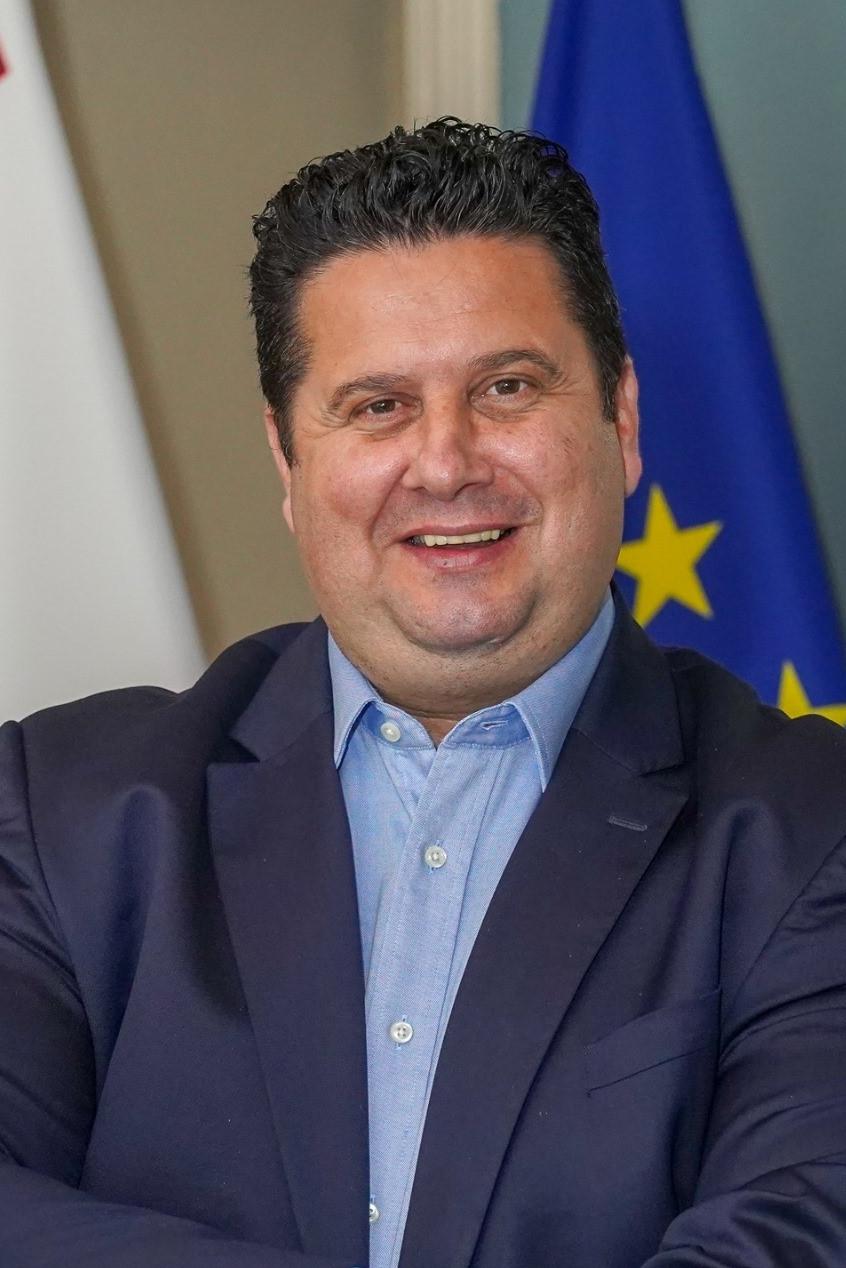
Edward Zammit Lewis is the chairman of the Parliamentary Standing Committee for Foreign & EU Affairs and a former minister for EU affairs.