Noel Arrigo, former Chief Justice, central figure in judicial scandal, dies
Arrigo was infamously convicted for taking bribe to reduce the sentence of convicted trafficker
Former Chief Justice Noel Arrigo, a towering figure in Malta’s legal system whose dramatic rise and fall shook the country, died on Sunday. He was 75.
A lecturer at the University of Malta since 1976, Arrigo had served as president of the Chamber of Advocates, and chairman of the Malta branch of the Institute of Directors.
After a distinguished career, he was appointed Chief Justice in July 2002. Yet, just weeks into his new role, a scandal erupted that would define his legacy.
In what was dubbed one of Malta’s "blackest days" in judicial history, he was accused of accepting a bribe of €11,650 to reduce the prison sentence of a convicted drug trafficker from 16 to 12 years, while also leaking details of the judgement before its formal delivery.
Fellow judge Patrick Vella was also charged in a case which shocked the country.
The details were announced by then Prime Minister Eddie Fenech Adami who gave a press conference as the two judges were being arrested.
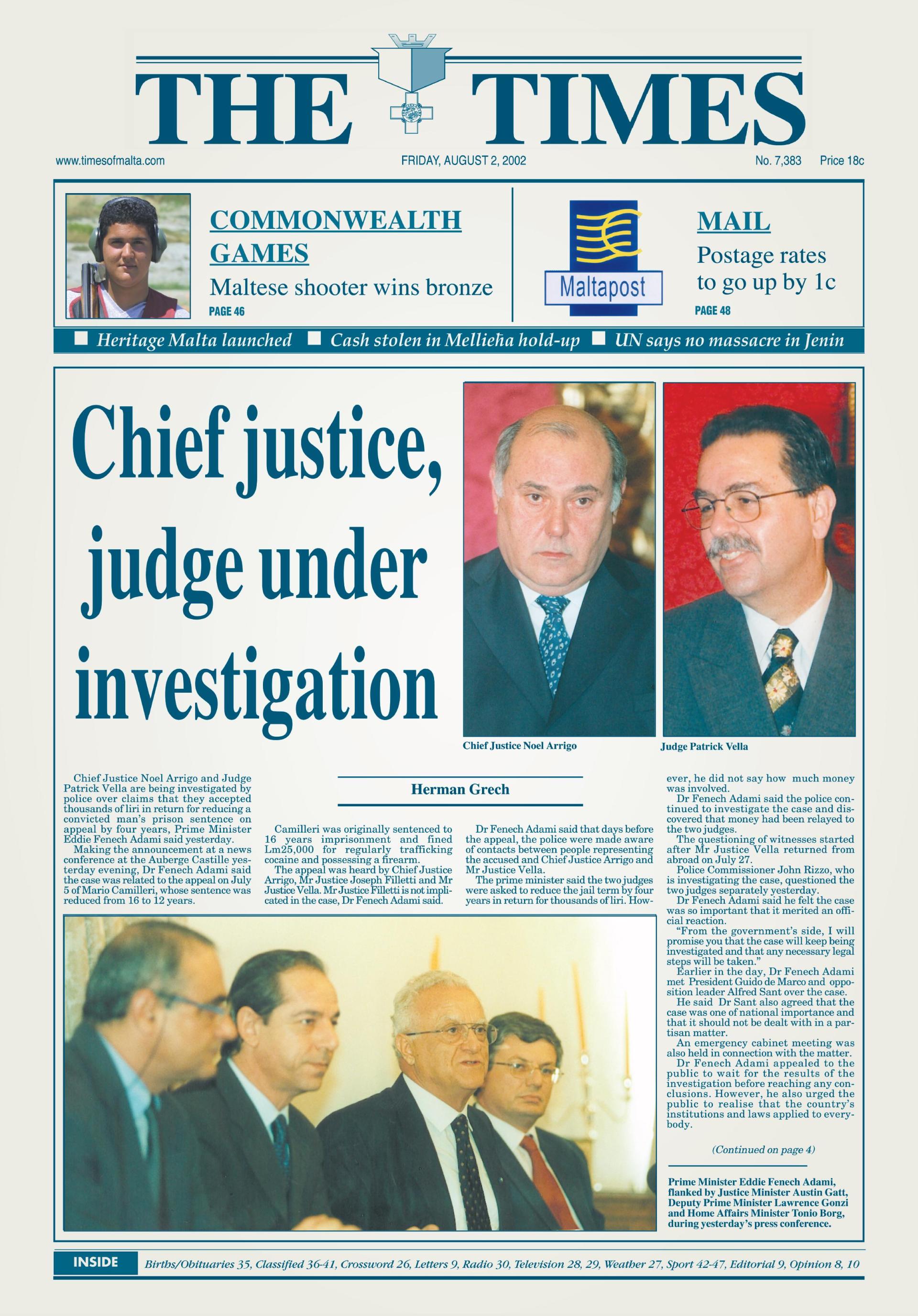 The 2002 Times of Malta report announcing the scandal.
Facing charges of bribery, trading in influence, and revealing official secrets, Arrigo tendered his resignation on August 5, 2002, acknowledging the damage inflicted upon the judiciary but insisting on his innocence until proven guilty. His dramatic fall triggered impeachment proceedings and plunged Malta's courts into turmoil.
In November 2009, after a high-profile trial, he was convicted on all counts and sentenced to two years and nine months in prison, along with a lifelong interdiction from public office. The appeals court upheld the verdict and sentence in 2010.
During sentencing, the presiding judge described Arrigo’s wrongdoing as stemming from personal weakness and poor associations, rather than greed, highlighting his plan to donate the bribe money to charity as evidence of his character. In court, he professed remorse, maintained he never intended to keep the funds, and emphasised that his motivation was conscience, not corruption.
Sliema-born Arrigo served 22 months of his sentence from 2009 in the secure forensic unit at Mount Carmel Hospital before his early and controversial release in September 2011.