Old and new slavery
Evarist Bartolo says it is shameful that Malta abstained in the UNGA vote on March 25, which declared transatlantic slave trade the 'gravest crime against humanity'
In 1657, the Order of the Knights of Malta used military force to crush a slave uprising in St Croix, rebelling because of their harsh living conditions.
Between 1651 and 1665, the Order owned thousands of slaves working on their sugar and cotton plantations in the four Caribbean colonies of Saint Christopher, Saint Martin, Saint Barthélemy and Saint Croix.
By the time they left, they had increased the number of slaves to 50 per cent of the islands’ population, leaving a legacy of entrenched plantation slavery on the islands.
The Knights’ administrators managed these estates with the same brutality as other colonial powers.
Between 1530 and 1798, the Knights turned Malta into one of the most prominent slave markets in the Mediterranean alongside those of Algiers and Istanbul.
The slave trade generated revenue through the selling and ransom, and was the backbone of Malta’s economy.
The galleys were rowed by slaves. Slaves were used for hard labour in the quarries and construction. Others worked in the bakeries of the Order and as domestic servants for Knights and wealthy Maltese.
Over the centuries, thousands of Maltese and Gozitans had been carried into slavery by Muslim corsairs and subjected to the same harsh treatment by Muslim slave owners.
Only five per cent of these slaves were ransomed and came back to Malta and Gozo.
One to 1.25 million Europeans were enslaved by Barbary corsairs between the 16th and 19th centuries. A similar number of Muslims were enslaved by Christian powers across Southern Europe.
Like their Christian counterparts, many Muslim men spent decades chained to oar benches on their masters’ galleys, often drowning if the ship sank.
Jews were frequently enslaved by Christian corsairs specifically for ransom, as Jewish communities had highly organised funds for their redemption.
Very few enslaved Africans were ransomed, as their home societies were far away. In the Ottoman Empire, many African slaves worked as military guards or eunuchs, while most faced appalling conditions and high death rates in agricultural tasks.
Christian men were often forced into brutal conditions as galley rowers or as construction workers living in overcrowded quarters, building harbours or fortifications.
Skilled slaves could serve as tutors, artisans, or palace attendants and were allowed to occupy top posts in the Ottoman administration. Women often served as domestic servants or concubines in harems.
From the 16th century onwards, the Catholic Church and Muslim rulers regarded slavery as an ethically acceptable practice. Both religions, however, tried to temper the hardships of captivity by enjoining their respective adherents to treat the slave in a humane manner.
Through what was called “the reciprocity of suffering”, the treatment of one group directly influenced the other.
If Muslim slaves in Malta complained to authorities in Algiers about ill-treatment, those authorities would often threaten to retaliate against Christian slaves in North Africa in a similar manner. This forced intermediaries, such as Vatican officials, to negotiate religious rights for slaves on both sides of the sea.
65 per cent in favour
As slavery is such an integral part of our history, it is shameful that Malta was one of the 52 states that abstained in the vote in the General Assembly of the United Nations (UNGA) on March 25, declaring the transatlantic slave trade as the “gravest crime against humanity”.
The resolution was adopted by 123 votes (5.4 billion people). The United States, Argentina and Israel (with a total of 400 million people) voted against it, while 52 countries (with 800 million people) abstained, including the United Kingdom and EU member states.
It is shameful that Malta abstained in the vote declaring the transatlantic slave trade as the ‘gravest crime against humanity’- Evarist Bartolo
More than 12 million Africans were transported as slaves across the Atlantic over a 400-year span, between 1526 and 1866, before ending up as slaves in the plantations of sugar, rice, cotton and tobacco in the Americas and the Caribbean.
Between 1.2 and 2.4 million died on the trip, 38 million died crossing the desert, and millions more died in camps in the Caribbean after arriving in the New World.
Welcoming the UNGA vote, UN Secretary-General Antonio Guterres said that the wealth of many Western nations was “built on stolen lives and stolen labour”.
Noting the “barbaric punishments that maintained control – from shackles and iron collars to flogging and sexual violence”, he said it “was not simply forced labour… It was a machinery of mass exploitation and deliberate dehumanisation of men, women and children. The wounds run deep and often go unrecognised.”
The resolution is not legally binding, but it sends a powerful message.
The resolution invites United Nations member states to open discussions on restorative justice and changes in laws to address racism and systemic discrimination. The resolution also calls for the return “immediately and without obstacles” of cultural assets … to their respective countries of origin, free of charge.
While slavery is legally abolished in every country, it still exists in hidden, illegal forms with a higher number of people affected today than at any other time in history. Modern slavery is estimated to involve roughly 50 million people, with millions forced into labour, sex trafficking, and forced marriage.
Over half, 28 million, are in forced labour, mostly in high-income or upper-middle-income countries. Another 22 million are in forced marriage.
Modern slavery generates an estimated €130 billion. It is deeply integrated into global supply chains for products like chocolate, clothing, and electronics.
Migrant workers are three times more likely to be in forced labour in agriculture, construction and manufacturing.
“The most important thing to understand is that nobody is trying to change the past, but to address its consequences in the present,” says Dr Celeste Martinez, a researcher who specialises in Spanish colonialism in Africa.
“Slavery legacies still endure today in the shape of racism and inequality. Recognising the past is crucial if we want fairer and more democratic societies…. It is not about punishing the living for the sins of the dead, but about recognising that the consequences of those sins, structural inequalities, systemic racism, inherited poverty, continue to shape the present.”
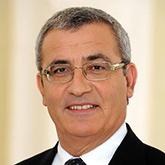
Evarist Bartolo is a former Labour foreign and education minister.