Old right, new tools: making equal pay a reality
The EU’s Pay Transparency Directive is, in many respects, a simple idea: workers should not have to guess whether they are being treated equally, they should be able to know, writes Helena Dalli
Last Sunday, June 7, an important deadline arrived across the European Union. Member States are required to have transposed the EU Pay Transparency Directive into national law, bringing into effect new measures designed to strengthen one of Europe’s oldest and most fundamental rights: equal pay for work of equal value.
The significance of this moment lies in a simple but often overlooked fact. Equal pay is not a new right.
The principle was first enshrined in the Treaty of Rome in 1957, at the very foundation of the European project.
For nearly 70 years, European law has recognised that women and men performing the same work, or work of equal value, should receive equal pay.
Yet, legal recognition alone has not been enough.
Today, women in the European Union still earn on average 13% less than men, a gap that has narrowed only slowly over the years despite decades of equal pay legislation. This persistent disparity shows why legal principles alone are insufficient without effective enforcement.
The reasons behind the gender pay gap are complex. They include occupational segregation, unequal caring responsibilities and barriers to career progression. But there is also a factor that cuts across all sectors and all member states: a lack of transparency. Too often, workers simply do not know whether they are being paid fairly. When pay information is hidden, discrimination can remain undetected and inequalities can persist without challenge.
Rights that cannot be exercised effectively are rights that risk remaining theoretical. That is why the European Union adopted the Pay Transparency Directive in 2023.
As European commissioner, I had the privilege of leading the work that resulted in this legislation. Throughout the negotiations, our objective was not to create a new right but to make an existing one enforceable.
The directive gives workers practical tools to understand and defend their rights.
Job applicants now will have the right to receive information about the salary or salary range attached to a position before they are hired. Employers will no longer be able to ask candidates about their salary history, a practice that can perpetuate inequalities from one job to the next.
Workers will also have the right to request information about pay levels for people carrying out the same work or work of equal value, broken down by gender. This allows employees to identify potential disparities and seek explanations where differences cannot be objectively justified.
Women in the EU still earn on average 13% less than men- Helena Dalli
Larger employers will be required to report on gender pay gaps within their organisations. Where significant unexplained gaps emerge, employers’ and workers’ representatives will need to examine the reasons and take corrective action.
These measures are described as transparency obligations. In reality, they are fairness measures.
Transparency is about creating trust. It is about ensuring that pay decisions are based on objective criteria rather than assumptions, stereotypes or practices that have simply gone unquestioned.
The benefits extend beyond individual workers.
Fair pay contributes to stronger workplaces, greater employee engagement and higher levels of productivity. It helps businesses attract and retain talent. It encourages a culture in which merit is rewarded and opportunities are genuinely open to everyone.
Thus, this is a matter of good economic sense and not only of equality.
Europe cannot afford to underutilise the skills, talents and ambitions of half its population. Economies thrive when people are rewarded fairly and when barriers to participation and advancement are removed. Greater equality supports growth, competitiveness and social cohesion.
For Malta, these objectives are particularly relevant.
Over the past decade, Malta has witnessed a remarkable increase in women’s participation in the labour market. More women are pursuing careers, establishing businesses and contributing to the country’s economic success than ever before. Ensuring that remuneration reflects skills, experience and responsibility rather than gender is the logical next step in that progress.
The transposition deadline should therefore not be viewed merely as a legal obligation arising from European legislation. It is an opportunity to modernise workplace practices, strengthen confidence in our labour market and reinforce the principle that fairness benefits everyone.
Nearly 70 years after equal pay was first written into the Treaty of Rome, Europe is taking decisive action to bring that promise closer to reality: the law adopted in 2023 gives that right new force. The deadline reached marks another step towards ensuring that it becomes a lived reality for every worker in Europe.
The Pay Transparency Directive is, in many respects, a simple idea: workers should not have to guess whether they are being treated equally, they should be able to know.
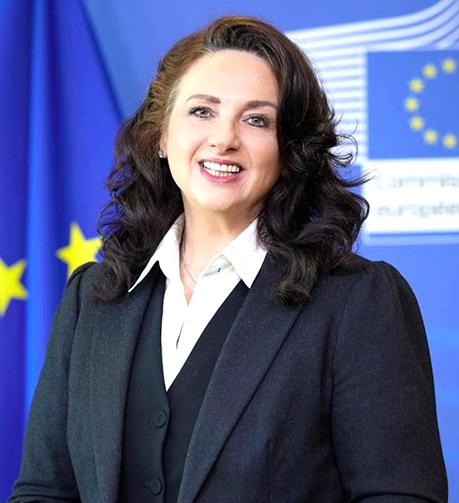
Helena Dalli is a former European commissioner and Labour cabinet minister.